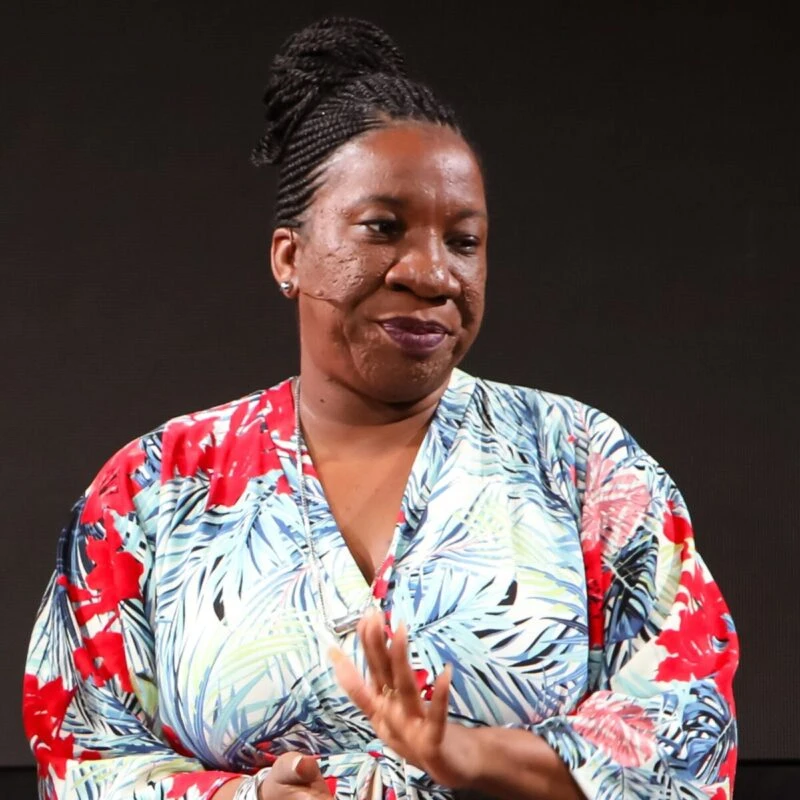
As BLACK ENTERPRISE marks the 25th anniversary of Sexual Assault Awareness Month in 2026, the statistics remain stark: Black women are 2.5 times more likely to experience sexual violence than their peers. Despite facing significant barriers like cultural stigma and institutional disbelief, phenomenal Black women are stepping up to ensure survivors receive the support and resources they need to thrive.
Tarana Burke: The Architect of ‘me too.’
Long before “me too.” became a global phenomenon, Tarana Burke founded the movement in 2006. Her work began with grassroots organizing and survivor-centered programming aimed at supporting Black girls who had experienced sexual violence but lacked adequate resources. Burke’s vision was to create a language of solidarity and healing for survivors from marginalized communities. While the movement gained worldwide recognition in 2017, its core mission remains focused on underserved populations and ensuring survivors receive essential support. Burke emphasizes that the movement is about dismantling the systemic issues of power and privilege that enable sexual violence, advocating for a cultural shift where bodily autonomy is recognized as a fundamental human right.
Aishah Shahidah Simmons: Storytelling for Change
Filmmaker and activist Aishah Shahidah Simmons uses the power of storytelling to address sexual violence within Black communities. Her 2006 film, “NO! The Rape Documentary,” was groundbreaking, offering a platform for Black survivor voices. Based in Philadelphia, Simmons leads dialogues and workshops, conducting screenings to break the silence and stigma surrounding sexual assault. Her work predated the global #MeToo movement by 11 years and continues to foster transformative resistance and healing.
Farah Tanis: Culturally Specific Advocacy
As the executive director and co-founder of Black Women’s Blueprint, Farah Tanis leads front-line efforts to combat sexual violence in Black communities through culturally specific advocacy and healing programs. From her Brooklyn-based organization, Tanis directs national campaigns addressing the long-term effects of sexual assault. Her organization’s 2016 testimony to the United Nations on the legacy of sexual violence against Black women in the U.S. was groundbreaking. Through policy work, international human rights collaboration, and grassroots initiatives, Tanis fights systemic inequities and amplifies Black survivor voices, notably highlighting the “sexual abuse-to-prison pipeline.”
Monique W. Morris: Addressing Systemic Inequities
Researcher and advocate Monique W. Morris focuses on the intersection of sexual violence and the treatment of Black girls within the school and juvenile justice systems. Through her book “Pushout” and her work with the National Black Women’s Justice Institute, Morris highlights how Black girls experiencing abuse are often criminalized rather than supported. Her advocacy calls for systems that prioritize trauma-informed approaches to protect and heal individuals. She co-leads the “Holding a Sister” initiative, which mobilizes resources specifically for trans girls and gender-expansive youth of color, moving beyond addressing structural oppression to investing in the liberated futures of marginalized youth.
The Ongoing Fight for Justice and Healing
These incredible women are on the front lines, challenging societal norms, demanding accountability, and creating vital support systems for survivors. Their work is essential in addressing the disproportionate impact of sexual violence on Black women and ensuring that all survivors have the resources and recognition they deserve.
Who are some other foot soldiers in the fight against sexual assault that inspire you? Share their stories and your thoughts in the comments below!
Leave a Reply