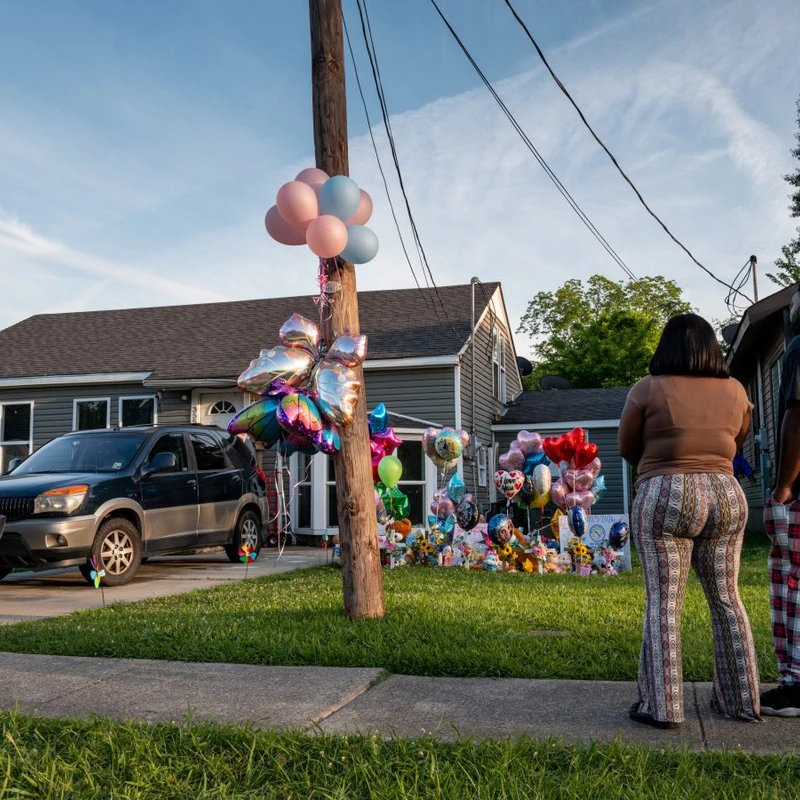
The morning of April 19, 2026, brought unimaginable horror to Shreveport, Louisiana. A devastating domestic violence incident left eight children dead, a 13-year-old boy critically injured, two mothers hospitalized, and the perpetrator deceased. The city, usually vibrant, was enveloped in a somber mood, a stark contrast to the beautiful day outside.
A Community Shattered
The rampage, carried out by Shamar Elkins, unleashed unimaginable chaos and fear. The loss of young lives – Jayla Elkins (3), Shayla Elkins (5), Braylon Snow (5), Khedarrion Snow (6), Kayla Pugh (6), Layla Pugh (7), Markaydon Pugh (10), and Sariahh Snow (11) – has irrevocably altered the fabric of the Cedar Grove neighborhood. The grief of their mothers, Shanequia Pugh and Christina Snow, is a profound darkness that will forever mark their lives.
While the immediate outpouring of love and support for the affected families is heartwarming, the question lingers: what happens next? As the cameras stop rolling and the world returns to its routine, these families will continue to relive the horror. For those left behind, life can feel like a dark, silent space, a silence that echoes loudly.
A Survivor’s Understanding of Trauma’s Aftermath
This profound loss is tragically familiar to the author, Ursula Brantley. In June 2008, her own 3-month-old son, Terrell Thornton, was killed by his father on the very same street where these eight children lost their lives. Eighteen years later, the pain and the challenges faced by survivors remain starkly similar.
Brantley emphasizes that surviving the initial traumatic event is merely the beginning of a long and arduous journey. Those who endure, along with the family members left to pick up the pieces, are forever changed. The aftermath often involves a high probability of mental health struggles, self-medication, and a fundamentally shifted worldview. People may break, transform into someone unrecognizable, or seek solace in something greater than themselves.
The Long Road to Healing
In the months and years to come, these families will require sustained support. Functionality does not equate to healing. The journey through trauma is perilous, and many can lose themselves or give up entirely. Brantley shares the gut-wrenching experience of replaying moments of rage and questioning her own survival while her child did not.
She poses critical questions about societal support: Will the world understand if the mothers spiral in the coming years? Will sympathy endure 15 years from now, when simply getting out of bed remains a struggle? The same energy and awareness shown now must be sustained long-term.
- The immediate aftermath: shock and support.
- The long-term reality: ongoing grief and potential mental health challenges.
- The need for sustained community support beyond initial media attention.
- The difficulty of ‘getting back to normal’ after profound loss.
- Finding a path toward healing, even when it feels impossible.
Brantley recounts the painful advice to “get back to normal” after her son’s death and the subsequent isolation she felt. It took her 18 years to begin seeing clearly again. While everyone’s recovery journey is unique, the path is one of walking through recovery, and the current days are just the beginning for the Shreveport families.
My son turned 18 years old on March 3, even though he never saw his first birthday on this side of Heaven. — Ursula Brantley
The author’s son, Terrell Thornton, suffered horrific injuries before his death. Brantley’s experience underscores the devastating impact of domestic violence and the critical need for ongoing compassion and support for survivors and grieving families. As time passes, their need for us will only grow.
How can we better support families affected by domestic violence in the long term? Share your thoughts and suggestions in the comments below.
Leave a Reply