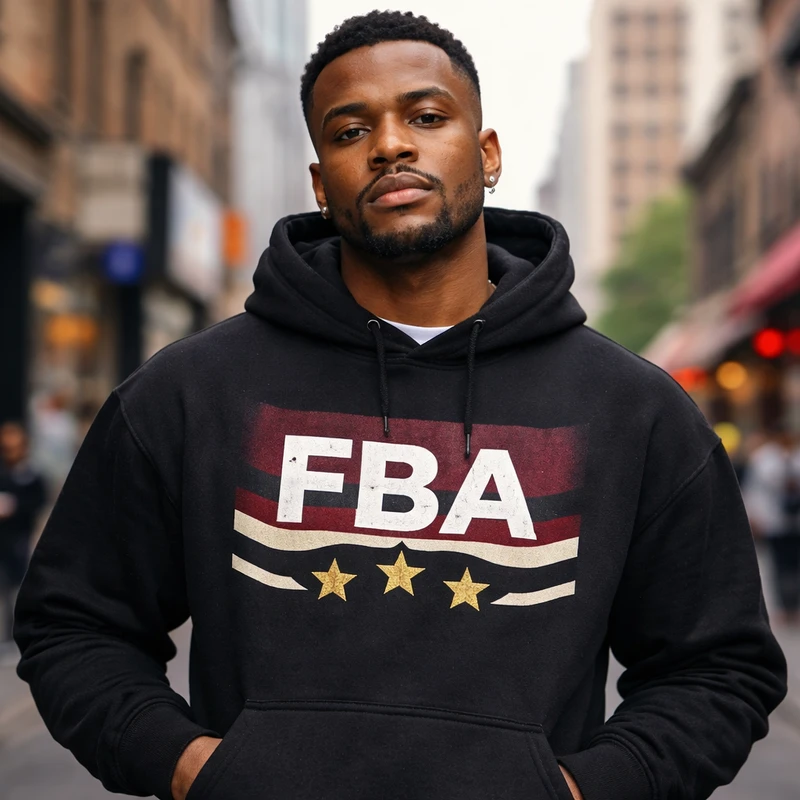
You’ve likely seen the acronym FBA popping up everywhere – on social media, merchandise, and in discussions about Black identity. But what exactly does FBA stand for, and what are the deeper meanings, history, and debates surrounding it? Let’s break down the concept of Foundational Black Americans without the spin.
What Does FBA Stand For?
FBA stands for Foundational Black Americans. This term specifically refers to Black individuals in the United States whose ancestors were subjected to chattel slavery within the U.S. and were subsequently emancipated after the Civil War. The core principle is lineage tracing directly back to those enslaved in America, as formalized by the 13th Amendment. This definition excludes African immigrants, Caribbean immigrants, Afro-Latinos, and their descendants, regardless of how long they’ve resided in the country, because their ancestors were not specifically enslaved in the United States.
The Origins of the FBA Movement
The modern FBA movement is largely attributed to media personality, filmmaker, and author Tariq Nasheed. In the early 2020s, Nasheed heavily promoted the term through platforms like Twitter Spaces, YouTube, and his documentaries. He framed FBA as a way to establish a distinct ethnic identity for Black Americans whose ancestors’ forced labor built the nation’s economic foundation. FBA emerged from an earlier movement called ADOS (American Descendants of Slavery), founded by Yvette Carnell and Antonio Moore. ADOS shares the central argument that descendants of American chattel slavery are owed specific reparations tied to that historical injustice. While FBA and ADOS share significant ideological overlap, they are led by different figures and operate on distinct platforms, with many FBA supporters viewing ADOS as a precursor and some ADOS supporters seeing FBA as an offshoot.
The Core Argument: A Debt Owed
At its heart, the FBA movement argues that the ancestors of Foundational Black Americans built the United States’ economic infrastructure through unpaid labor and without legal protection. They contend that the debt owed for this historical exploitation should not be diluted by including other Black populations who did not share this specific history of American chattel slavery. Supporters believe that broader terms like “African American” or “Black” obscure the unique and specific harm caused by slavery. Consequently, they advocate for reparations, political representation, and economic protections to be distributed based on this lineage, rather than broader racial categories.
Symbols of the Movement
The movement has adopted its own symbol: the Maroon Flag. This flag features five stars representing key regions where escaped enslaved Africans formed independent maroon communities – Virginia, Florida, Mississippi, Louisiana, and the Carolinas. It also includes an axe and a torch, symbols of the weapons maroons used during their revolts for freedom. Merchandise like hoodies, shirts, and pins bearing the flag and the FBA acronym are sold by independent vendors, contributing to the movement’s cultural presence.
What FBA Supporters Want
While specific political demands can vary among proponents, the common threads are consistent. Key goals include:
– **Lineage-Based Reparations:** Financial reparations paid by the U.S. government directly to descendants of American chattel slavery.
– **Verification Process:** Establishing a system to accurately determine who qualifies as FBA.
– **Specific Representation:** Advocating for representation in media, politics, and business led by FBA spokespeople, rather than what they term “anchored tethers” (Black individuals perceived as speaking for the group without sharing the specific lineage).
– **Policy Protection:** Implementing policies to safeguard resources perceived as intended for Black Americans from being diluted by immigration frameworks.
Criticism and Controversy
The FBA movement faces significant criticism, particularly from within the Black community. Critics on the left argue that FBA employs exclusionary logic, drawing parallels to MAGA-style “othering” by creating divisions within the Black community. Pan-Africanists contend that the movement fractures the diaspora, which they believe should be unified. They also point out the complexities of tracing lineage due to the historical movement of enslaved Africans across the Americas and the Caribbean. Furthermore, a Carnegie Mellon research paper suggested that FBA messaging tactics resemble right-wing disinformation patterns, sometimes used to suppress Black voter turnout, a comparison supporters reject. Some Black Americans also reject the FBA label on identity grounds, feeling it denies their broader African heritage and DNA.
Where the Movement Stands Today
In 2026, FBA has achieved a level of visibility unseen before its emergence on Black Twitter. The movement is increasingly influencing political discourse, with some FBA voices urging Black voters to withhold support from Democrats unless lineage-based reparations are included in party platforms. Merchandise sales are reportedly up, YouTube channels dedicated to FBA content are growing, and podcasts and online discussions are attracting large audiences. The debate within the Black community about FBA—between those who identify with it, those who reject it, and those still forming their opinions—is intensifying.
The Bottom Line
FBA is a lineage-based movement asserting that descendants of American chattel slavery constitute a distinct group deserving specific recognition, protection, and repair. Supporters view it as a necessary specificity and an honest acknowledgment of who built the nation. Critics, however, see it as an exclusionary ideology that echoes harmful historical patterns. Regardless of where one stands, the conversation surrounding FBA is becoming a significant cultural fault line within the Black community this decade.
What are your thoughts on the FBA movement? Do you identify with its principles, or do you have concerns about its exclusionary aspects? Share your perspective in the comments below!
Leave a Reply