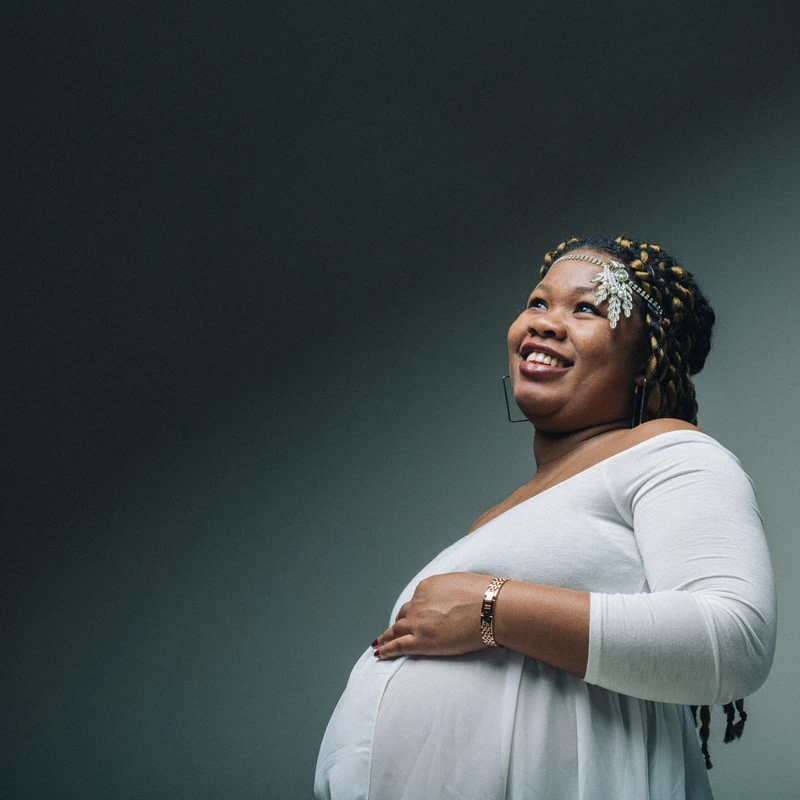
Imagine finding a moment of ease, a rare exhale in the constant demands of life. Now imagine that moment being interrupted by a powerful image that encapsulates a profound truth: Black mothers are the ‘mOtherboard’ of our communities. As a public health scholar, Black woman, and mother, I’ve spent years studying the strain placed on this essential system, a system that sustains everything but is not always sustained in return. The Black maternal health crisis is a stark manifestation of this reality.
From Risk to Reality: Normalizing the Crisis
For too many Black women, a positive pregnancy test doesn’t just signal joy; it arrives with a quiet, persistent awareness of risk. These aren’t abstract possibilities but well-documented statistics: higher rates of complications, preterm births, child loss, and a maternal mortality rate more than three times that of white women. These numbers, studied and repeated for decades, have become normalized. Explanations often focus on individual factors like age or pre-existing conditions, framing these outcomes as inevitable.
But normalization does more than shape systems; it shapes expectations and tolerance, eventually moving inward, settling into the body and living in the background of joy. This creates a state of vigilance, turning moments of possibility into ones requiring constant awareness of what could go wrong. Survival becomes the default frame, but survival has never been the ultimate goal.
Beyond Survival: The Need to Live Fully
We know what harms Black mothers’ bodies, communities, and futures. The urgent task now is to commit to building the conditions that allow Black mothers not just to survive, but to live fully. This requires moving beyond protection—which has been essential but insufficient—to restoring the ability to move through the world without constant vigilance, to breathe, dream, and live with ease.
This shift demands more than just measuring outcomes or funding initiatives; it requires a willingness to build something fundamentally different. If survival has shaped our systems, bodies, expectations, and imagination, we must understand why it runs so deep and what it has done to us. As Resmaa Menakem reminds us, the problem isn’t within Black women, but in the historical and ongoing harm they have endured.
Tending the Body, Reimagining the Future
For generations, Black women have been expected to give, hold, and absorb without full sovereignty. This reality embeds itself in every system, including our nervous systems. While individual adjustments like ‘more rest’ are often suggested, they fall short without addressing the systemic conditions that make them difficult to access. Instead, we need ‘tending’—the slow, relational work of helping bodies experience safety through connection, presence, and repetition.
Moving beyond survival isn’t a single event but a practice, a vigilance beneath joy, a tension that doesn’t fully release. The question becomes: what allows the body to experience something beyond survival? Safety isn’t just the absence of harm; it’s the presence of possibility. And that possibility hinges on imagination—not just seeing ourselves living fully, but questioning and reimagining what is possible.
Changing the Algorithm: The Power of Imagination
Artist Nettrice Gaskins poses a critical question: “What is the algorithm that runs the motherboard?” If Black women function as the backbone, the system, then we must ask if we are willing to change the underlying logic—the inputs, assumptions, and conditions—that perpetuate harm. Through an Afrofuturist lens, Gaskins shows how art, technology, and storytelling can expand our vision and reclaim the right to imagine a future where Black mothers can live fully, safely, and joyfully.
- Black maternal health is often framed around risk and survival, not living.
- Systemic issues, including historical harm and bias, contribute to disparities.
- Normalization of crisis leads to ingrained vigilance and impacts the body.
- Moving beyond survival requires tending to the body and fostering safety.
- Imagination and reimagining systems are crucial for creating possibility.
- Afrofuturism offers a lens to reclaim the future and envision Black mothers living fully.
As we mark the 10th anniversary of Black Maternal Health Week, we build on the legacy of Black women who have refused to accept harm. We’ve named the crisis, understood the harm, and identified racism as a root cause. Yet, we remain centered in survival. The theme “Rooted in Justice and Joy” is vital because joy signals safety, rest, and possibility—elements that, alongside justice, open the door to liberation. It’s time to move beyond merely surviving and create the conditions for Black mothers to truly live.
What does it mean for Black mothers to ‘live’ rather than just ‘survive’? Share your thoughts and reflections in the comments below.
Leave a Reply