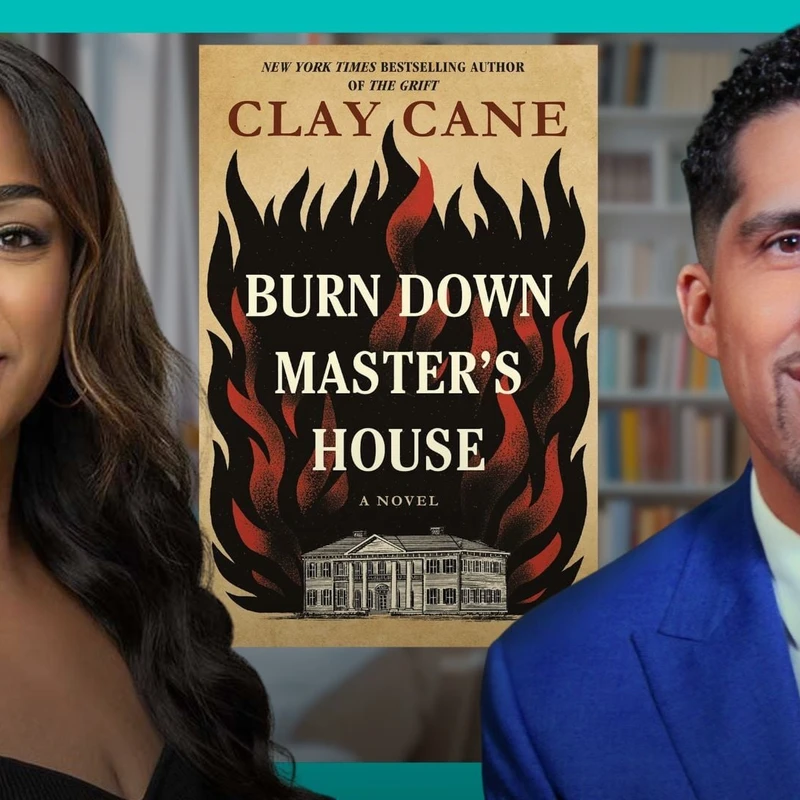
Award-winning journalist and SiriusXM host Clay Cane faced an unexpected silence from legacy media during the launch of his latest book, “Burn Down Master’s House.” Despite decades of community building and previous New York Times bestsellers, Cane found himself navigating a launch without the anticipated press coverage. However, this silence didn’t deter him; instead, it empowered him to lean into his community, a move that ultimately propelled his historical fiction novel to the prestigious New York Times Hardcover Fiction Bestsellers list, debuting at number five – even surpassing John Grisham.
A Decades-Long Journey for ‘Burn Down Master’s House’
The inspiration for “Burn Down Master’s House” struck Cane over 20 years ago while he was still in college. The novel, rooted in the real stories of enslaved people who fought back, was a deeply personal project. However, the publishing world initially wasn’t receptive. “Nobody would publish it,” Cane recalled. “You have an idea, nobody wants it, but I always held onto it.”
It wasn’t until the success of his nonfiction book, “The Grift,” which also hit the New York Times list, that Cane felt he had the platform and credibility to revisit his fiction project. The transition from nonfiction to fiction raised some eyebrows, with many advising against it. But for Cane, it felt like the right path, guided by his personal philosophy: “You have to go the way your blood beats. And I sometimes say you have to go where your blood boils.”
Fighting Misinformation with Historical Truth
Cane’s determination to publish “Burn Down Master’s House” was fueled by a desire to combat misinformation and lies about American history, particularly concerning slavery. He cited instances like Kanye West’s controversial statements and political figures’ downplaying the role of slavery in the Civil War as catalysts for his mission. “I said, I got to burn down misinformation. I got to burn down disinformation. I got to burn down lies about our history,” he explained. “And that’s my hope and my intention with ‘Burn Down Master’s House.’”
The novel centers on resistance, with its main characters—Josephine, Charity, Luke, Henry, and even a Black enslaver named Nathaniel—based on real historical figures. Cane spent years researching court records and old newspapers dating back to 1857, uncovering “gems” that informed his narrative. He also honored his ancestors by naming secondary characters after them, ensuring their memory lived on.
Portraying Underrepresented Narratives
A significant aspect of “Burn Down Master’s House” is its deliberate portrayal of enslaved women and LGBTQ+ characters, who are often marginalized in historical fiction about slavery. Cane noted the scarcity of narratives about Black women fighting back during that era, emphasizing their crucial, though often untold, roles. He also consciously chose to use the word “souls” instead of “slaves” to humanize the characters and move beyond the dehumanizing label of property.
The book’s creation was also deeply personal due to the profound friendship and loss Cane experienced. His best friend of over 20 years, Alexa Muñoz, an Afro-Latina and brilliant writer, assisted with editing the book from her hospital bed while battling lupus. Muñoz, who passed away in May 2025, is honored in the book’s dedication, with Cane stating, “She was my tribe,” and that “there’s a little bit of Alexa Muñoz in this book.”
Community Power Over Gatekeepers
When legacy media remained silent, Cane turned to the community he had spent years cultivating. He leveraged his Sirius XM show, independent media outlets, and trusted voices like Don Lemon and Karen Hunter to spread the word. Years of touring, sold-out shows, and organic social media support from early readers played a crucial role in the book’s success.
Cane highlighted the data confirming that Black communities purchase books at higher rates than other demographics. His New York Times bestseller status serves as validation not only for him but for all Black authors and creators who have faced barriers. “It just shows you the gatekeepers can’t tell you what you want,” he quoted Reecie Colbert. His message is clear: “At the end of the day, for real, for real — they need us more than we need them. They need the creators. They need people to come on their platform.”
Ultimately, “Burn Down Master’s House” is more than a historical account; it’s an invitation to introspection. Cane encourages readers to apply the book’s themes of resistance and transformation to their own lives, urging them to “burn down” what no longer serves them and break free from limiting chains. His hope is that the book creates a “beautiful domino effect,” inspiring people to reimagine their circumstances and find hope for a different future.
Clay Cane’s journey is incredibly inspiring! What does ‘burning down’ what no longer serves you mean in your own life? Share your thoughts and takeaways from his story in the comments below!
Leave a Reply