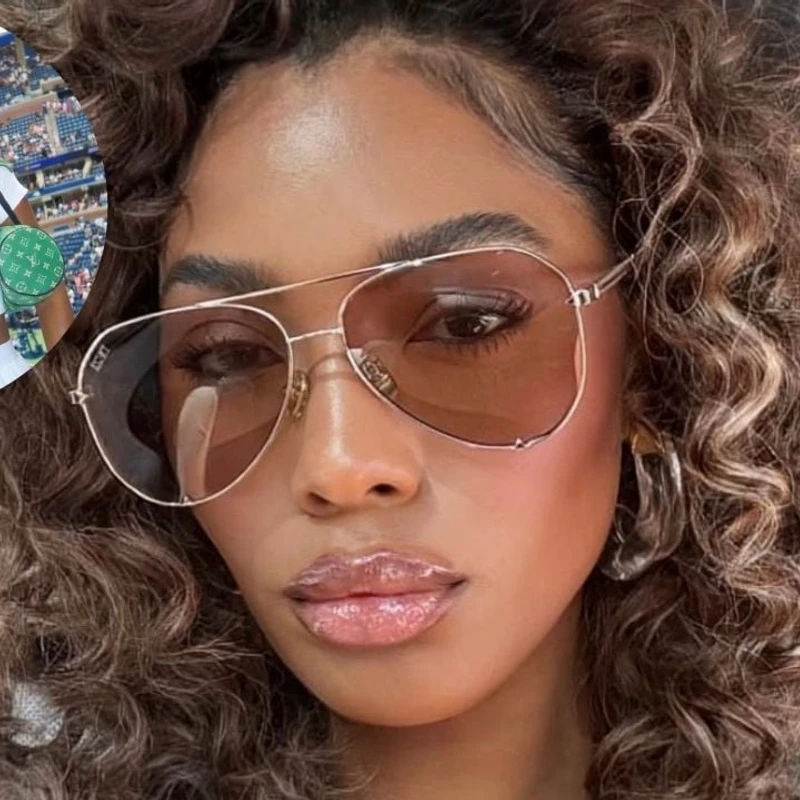
In a concerning development that highlights the growing anxieties around artificial intelligence, a Black influencer and entrepreneur has accused a white influencer of stealing her content and using AI to superimpose her own face onto it. This incident raises serious questions about authenticity, intellectual property, and the exploitation of Black creatives in the digital age.
A Disturbing Discovery
Tatiana Elizabeth, a skincare founder and content creator, took to Threads to expose influencer Lauren Blake Boultier. Elizabeth shared a side-by-side comparison showing Boultier’s post, which was nearly identical to Elizabeth’s original content—down to the outfit, watch, bag, and even the photo angle. The most alarming aspect? Boultier had allegedly used AI to place her face onto Elizabeth’s body.
Adding to the deception, Boultier had geotagged the location as Miami, implying she was at the Miami Open, when Elizabeth’s original photo was taken at the US Open two years prior. This wasn’t just a case of inspiration; it was a calculated attempt to replicate and claim another creator’s work.
Accountability and the Bigger Picture
Following Elizabeth’s public call-out, Boultier removed the post and sent a direct message apologizing. She claimed her team was experimenting with an AI tool and that the image was generated without her seeing the original. However, Elizabeth pointed out that this wasn’t an AI-generated influencer, but a real person using AI to steal. This explanation did little to quell the concerns about the ethical implications.
Elizabeth, who has spent over a decade building her career, emphasized the disproportionate effort Black creatives often have to exert. She highlighted navigating spaces where she was often the only Black woman and the hard work it took to earn opportunities, like being invited to the US Open by Serena Williams. She described the act as ‘completely and utterly disrespectful’ to minimize the work of creators with smaller platforms.
AI and the Erosion of Authenticity
This incident underscores a broader issue within influencer culture, where authenticity is increasingly commodified. As AI tools become more sophisticated and accessible, the line between genuine experience and fabricated content blurs. This makes it harder for audiences to discern reality and easier for individuals to replicate the aesthetics and ‘vibe’ of Black culture without lived experience.
Elizabeth warned that this trend risks further marginalizing Black women, who have been instrumental in shaping much of today’s internet culture. She urged everyone to be critical of what they see online, advising against creating insecurities based on potentially ‘fake lives’ presented by influencers.
This is just a lesson for all of us to not believe everything that we see on the internet. Do not create insecurities within yourself based on things that you see online, because some people are living a very, very fake life. — Tatiana Elizabeth
What are your thoughts on the use of AI in content creation and its impact on authenticity? Share your perspective in the comments below!
Leave a Reply