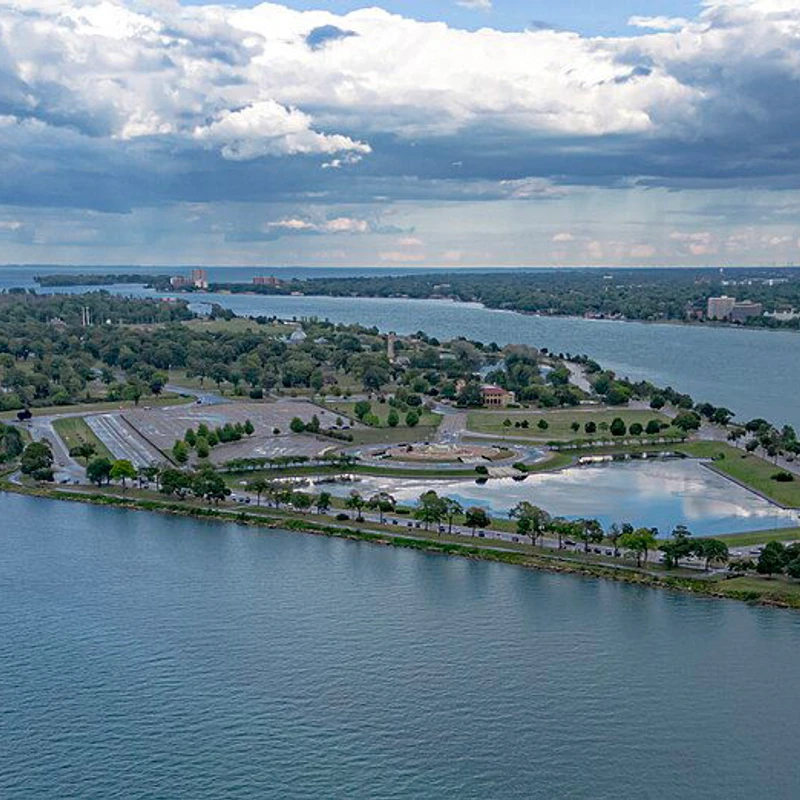
A bold proposal is gaining traction among Michigan voters: transforming Detroit’s Belle Isle into the country’s first special economic zone (SEZ). This ambitious plan, championed by Belle Isle Freedom City Chairman Rodney Lockwood, aims to revitalize the 982-acre island park through significant private investment and high-density development.
A Vision for a New Economic Hub
The proposal envisions Belle Isle as a bustling hub capable of housing up to 50,000 residents. Plans include high-end, mixed-use housing, entertainment venues, restaurants, retail spaces, and even a monorail system. Crucially, the project would be entirely privately funded, with developers making a substantial $1 billion one-time payment to Detroit, followed by $50 million annually for the city. This initiative would not require any local taxpayer dollars.
Lockwood describes the project as potentially the largest privately funded development in the United States. He argues that the island, currently operated as a state park by the Michigan Department of Natural Resources, is underutilized. The plan aims to integrate residential communities into the park while maintaining its status as a public space.
Voter Support and Economic Impact
A poll conducted in November 2025 revealed significant support for the concept. While initial backing stood at 42% statewide and 71% in Detroit, it rose to 51% statewide and 68% in Detroit after voters heard more details about the plan. This indicates a growing consensus among residents about the potential benefits of transforming Belle Isle.
The economic projections are impressive, with an estimated $50 billion investment expected to create 20,000 construction jobs over a decade and an additional 46,000 permanent positions. Lockwood believes this initiative would be a “slam dunk” for the economic uplift of Detroit, the surrounding region, and the state as a whole.
However, the path forward involves several hurdles. Federal legislation is needed to authorize special economic zones, the state must pass its own law, and the city of Detroit would need to approve the plan, either through its mayor and City Council or a voter referendum. Some residents have also voiced concerns about affordability, questioning whether the planned high-end housing will be accessible to the very people who currently enjoy Belle Isle as a public park.
What are your thoughts on the proposal to turn Belle Isle into a special economic zone? Do you think it’s a positive step for Detroit’s economy, or are there concerns about preserving public access and affordability? Share your views in the comments below!
Leave a Reply