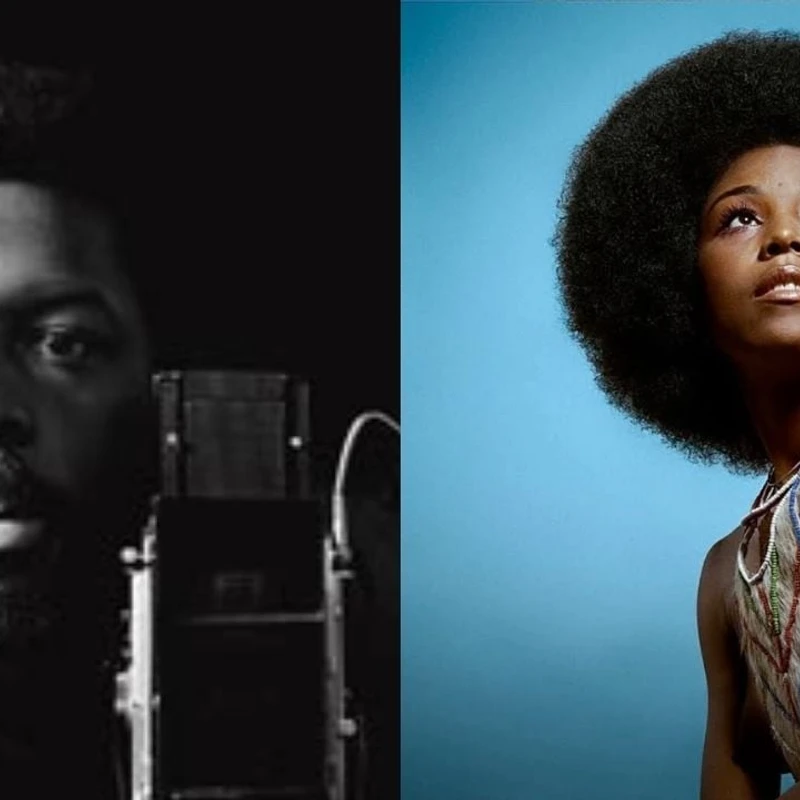
Long before natural hair became a celebrated movement and dark-skinned models graced global runways, a powerful cultural shift was already underway. In the early 1960s, the “Black Is Beautiful” movement emerged, challenging Eurocentric beauty standards and championing the natural beauty of Black people through fashion shows, cultural events, and groundbreaking photography.
The Visionary Photographer
At the heart of this revolution was Kwame Brathwaite, a young Harlem photographer whose work captured and amplified the essence of the movement. Inspired by Marcus Garvey’s teachings and coinciding with the Civil Rights and Black Power movements, Brathwaite’s vision was instrumental in affirming Black identity and aesthetics.
Now, Brathwaite’s profound influence is being honored in a new documentary, “Black Is Beautiful: The Kwame Brathwaite Story.” Directed by Yemi Bamiro, the film is executive produced by actor Jesse Williams, along with music power couple Alicia Keys and Swizz Beatz. It promises to chronicle the rise of the movement and Brathwaite’s enduring impact on fashion, beauty, and visual arts.
Challenging the Status Quo
The “Black Is Beautiful” movement wasn’t without its challenges. Brathwaite recalled the controversy surrounding the era’s “respectability politics,” noting the difficulty in finding Black models, especially those with darker complexions, featured in mainstream publications like EBONY magazine. This resistance only fueled their determination.
On January 28, 1962, Brathwaite and his brother Elombe Brath officially launched the movement with “Naturally ’62,” a fashion presentation at Harlem’s Purple Manor. The show boldly featured models with natural Afros, showcasing deep brown skin tones and fuller figures, adorned in dashikis and vibrant prints inspired by the African diaspora. Every element was a deliberate act of cultural affirmation.
Building a Collective
The success of “Naturally ’62” led to annual celebrations. The brothers, deeply influenced by Marcus Garvey’s “Back-to-Africa” philosophy, co-founded the African Jazz-Art Society and Studios (AJASS). This collective brought together artists dedicated to cultural expression and self-determination, launching the Grandassa Models, whose “Naturally ’62” showcase was their debut.
Brathwaite’s vision was clear: “We wanted Black women to take pride in their own selves, in their looks and heritage, and let them be beautiful in their own right,” he stated. His fashion and lifestyle photography further cemented this message, featuring women with natural hairstyles and portraits of iconic Black figures like Grace Jones and Stevie Wonder, alongside everyday Black people.
A Lasting Cultural Impact
Kwame Brathwaite’s work empowered Black communities to define beauty on their own terms, challenging prevailing Eurocentric standards. His influence is still felt today, inspiring modern fashion editorials and artists like Rihanna. Brathwaite, who passed away in 2023, lived to see his life’s work gain significant institutional recognition, including a major exhibition that introduced his powerful images to new audiences.
What does the ‘Black Is Beautiful’ movement mean to you? Share your thoughts on Kwame Brathwaite’s legacy in the comments below!
Leave a Reply