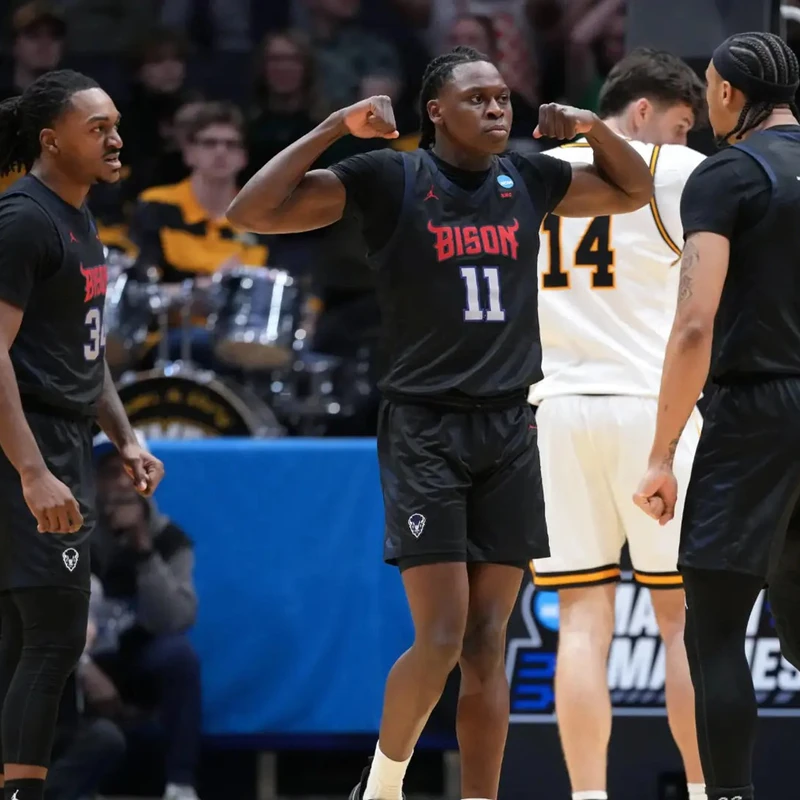
March Madness delivered more than just thrilling upsets this year; it showcased the undeniable power of HBCU basketball. Howard University’s journey through the NCAA Tournament wasn’t just a story of athletic achievement – it was a powerful demonstration of what happens when HBCU programs get national exposure, captivating audiences and proving they are not only culturally significant but also commercially viable.
Record-Breaking Viewership Numbers
The numbers don’t lie. The opening day of the 2026 men’s NCAA Tournament, featuring Howard’s compelling performance against No. 1 seed Michigan, averaged a staggering 9.8 million viewers across CBS, TBS, TNT, and truTV. This marked the most-watched opening day on record, a 6% increase from the previous year. The primetime window, including the Michigan-Howard game, pulled in an average of 4.52 million viewers, contributing to a record 12.5 million viewers for that slot.
This isn’t just about Howard; it’s a resounding affirmation of what HBCU fans have known for years: when Black college programs are given a platform on the biggest stage, people tune in. And it’s not just alumni or dedicated supporters – it’s a national audience.
More Than Just an Underdog Story
Framing Howard’s run as simply a plucky underdog pushing a top seed for a half misses the bigger picture. The real story is how the possibility of an HBCU making history electrified the tournament. Howard became appointment viewing because their presence brought drama, cultural significance, and a narrative that resonated with viewers far beyond the usual college basketball fanbase.
When the Bison, a No. 16 seed, made a top-ranked Michigan team uncomfortable, the game transformed from routine to a national event. This shift is crucial for the perception of HBCU basketball, proving they matter on a national scale, not just within their own communities. Audiences connect with stakes, identity, and momentum – all of which Howard brought to the court.
The Impact of Visibility
Howard’s journey wasn’t accidental. As MEAC regular-season and tournament champions, and survivors of the First Four, they entered the national conversation with established credibility. Their performance against Michigan – marked by confident shooting and a fast pace – created the kind of tension that March Madness thrives on.
For one half, the dream of a No. 16-over-No. 1 upset involving an HBCU felt incredibly real, drawing viewers in. This is a vital lesson for brands, networks, and decision-makers: visibility isn’t just about being included; it’s about being compelling when the spotlight shines. Howard proved HBCU programs can shine on the biggest stage.
Challenging Assumptions for Media and Sponsors
The viewership numbers for Howard’s games expose a market truth: HBCU sports are often treated as niche until a major moment forces broader industry attention. Suddenly, these programs, athletes, and storylines become valuable because they drive engagement. This pattern is outdated.
Howard’s success should challenge the lazy assumption that HBCU sports warrant limited investment. If a single nationally televised game can contribute to record-breaking broadcast numbers, it proves HBCU programs are not just culturally significant but commercially relevant. Media companies should consider more consistent coverage, and sponsors should recognize that HBCU audiences are active participants who amplify stories when given the chance.
Proof of HBCU Excellence
Beyond the ratings, Howard’s tournament run offered powerful proof. Proof that HBCU excellence doesn’t need a special qualifier. Proof that the gap between a ‘mid-major curiosity’ and a ‘national attraction’ can close rapidly with the right matchup and a strong performance. Proof that an HBCU program can anchor one of the most-watched NCAA Tournament windows.
This should prompt a broader reevaluation of how NCAA exposure is distributed and which programs are perceived as capable of drawing national interest. If audiences lean in when an HBCU nears history, the industry should stop acting surprised when it happens.
The Bigger Takeaway for HBCU Sports
Howard may not have secured the upset, but they undeniably moved the conversation forward. They demonstrated that HBCU sports are more than just legacy and pride; they are a vital part of the live-event economy, generating urgency, emotion, and, crucially, numbers that executives can’t ignore.
The real lesson? When HBCUs are given a genuine platform, the audience doesn’t just show up – it grows. This is the power of HBCU basketball, and Howard University just proved it on the grandest stage.
What are your thoughts on Howard’s performance and its impact on HBCU sports? Share your opinions in the comments below!
Leave a Reply