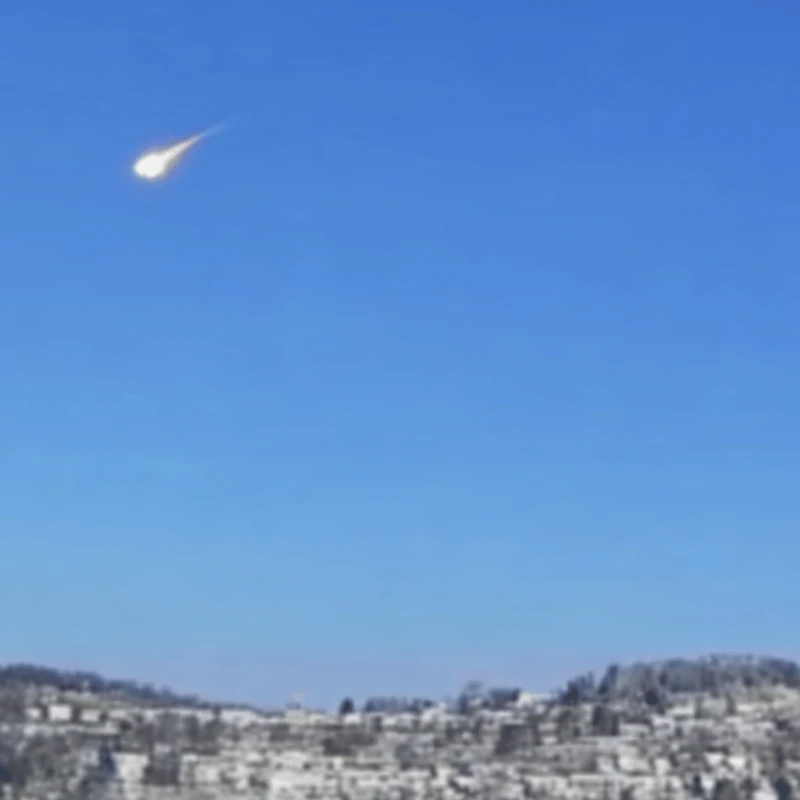
Ever feel like Earth is just minding its own business, only to have something unexpected drop in? Well, March 2026 was a stark reminder that our planet is constantly in a cosmic shooting gallery! NASA’s Meteoroid Environment Office had a particularly busy month, confirming two significant meteorite falls that brought pieces of space right down to Earth.
Ohio: A Daylight Fireball and Sonic Boom
The celestial excitement kicked off on the morning of Tuesday, March 17, 2026. Residents from Chicago all the way to Ontario were jolted awake by a massive daylight fireball. NASA confirmed that a hefty 7-ton asteroid, about six feet wide, made a fiery entrance into our atmosphere at a blistering 45,000 mph.
This space rock didn’t just burn up; it fragmented about 30 miles above Valley City, Ohio. The explosion released energy equivalent to 250 tons of TNT, creating a sonic boom so powerful it was detected by earthquake sensors and rattled windows in Cleveland and Akron. Meteorite hunters quickly descended upon Medina County, with fragments already being found in areas like Sharon Center. Early analysis suggests these could be rare Eucrite meteorites, possibly originating from the massive asteroid Vesta!
Texas: A Closer Encounter Near Houston
Just four days later, on Saturday, March 21, 2026, another celestial visitor made its presence known, this time over Southeast Texas. While this meteoroid was smaller than the one that hit Ohio – weighing in at around 1,000 pounds and measuring 3 feet wide – it made a more personal impact.
Traveling at 35,000 mph, this object broke apart about 29 miles above the ground near Houston. Radar data from the National Weather Service helped track the debris field, showing fragments falling between Willowbrook and Northgate Crossing. In a striking turn of events, reports indicated that some fragments actually struck a residential home, underscoring why NASA closely monitors these near-Earth objects.
What to Do If You Find a Meteorite
Finding a piece of space is incredibly exciting, but experts urge caution to preserve its scientific value. If you think you’ve found a meteorite, here’s what you should do:
- Do NOT use a magnet: This can damage the rock’s internal magnetic record.
- Wear gloves: Avoid transferring your natural oils to the specimen, which can affect analysis.
- Document your find: Take clear photos and note the location.
- Report it: Check resources like the American Meteor Society to report your find, helping scientists map the fall accurately.
These back-to-back events serve as a powerful reminder of the dynamic nature of our solar system and Earth’s place within it. It’s a thrilling time for space enthusiasts and scientists alike!
Have you ever witnessed a meteor shower or found something you suspected was a meteorite? Share your experiences in the comments below!
Leave a Reply