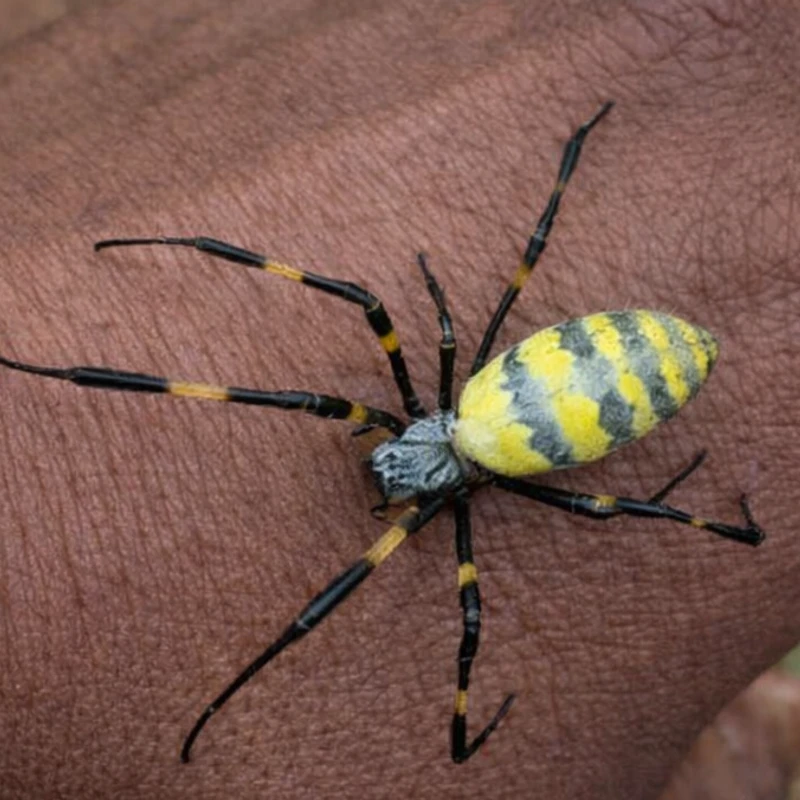
Get ready, Northeast! Those giant, colorful spiders you might have heard about are on the move. The Joro spider, a striking arachnid from East Asia, has been steadily expanding its territory across the United States, and its next potential stop could be your backyard.
A Multi-State Migration
First detected in Georgia in 2013, likely arriving through international shipping containers, the Joro spider has since established itself in at least 12 states. Its migration has extended through Tennessee, the Carolinas, West Virginia, and Maryland. Researchers are now closely watching to see if the predicted move into New York and New Jersey will occur after the spring hatching season.
What makes their spread so remarkable is their unique method of travel. After hatching in the spring, young Joro spiders engage in ‘ballooning.’ They release silk strands that act like tiny parachutes, allowing the wind to carry them potentially miles away, even over oceans. This ability helps them bypass natural barriers that would typically halt other crawling insects.
Urban Survivors
Interestingly, Joro spiders seem particularly well-suited for urban environments. A study from the University of Georgia’s Odum School of Ecology found that they are highly ‘urban tolerant.’ This means the noise and vibrations from heavy traffic don’t faze them, allowing them to thrive in busy areas where many native species struggle.
By late summer, female Joro spiders can grow up to four inches in leg span, constructing large, distinctive golden webs. While their size and appearance might seem intimidating, experts assure the public that there’s no need for alarm. These spiders are non-aggressive and tend to avoid human interaction.
No Threat to Humans, But a Concern for Native Species
Ecologist José R. Ramírez-Garofalo emphasizes that there have been no documented fatalities or medically significant bites from Joro spiders. They pose ‘no threat to humans or our pets.’ The primary concern for scientists is the potential impact on native spider populations, as the Joro spiders could outcompete them for resources.
If you encounter a Joro spider, especially around your home, they are generally easy to manage. Experts suggest using a broom or an aerosol spray for removal if they become a nuisance. To aid researchers in tracking their spread, the public is encouraged to log sightings on platforms like iNaturalist or Joro Watch.
Have you spotted a Joro spider in your area? Share your sightings and experiences in the comments below!
Leave a Reply