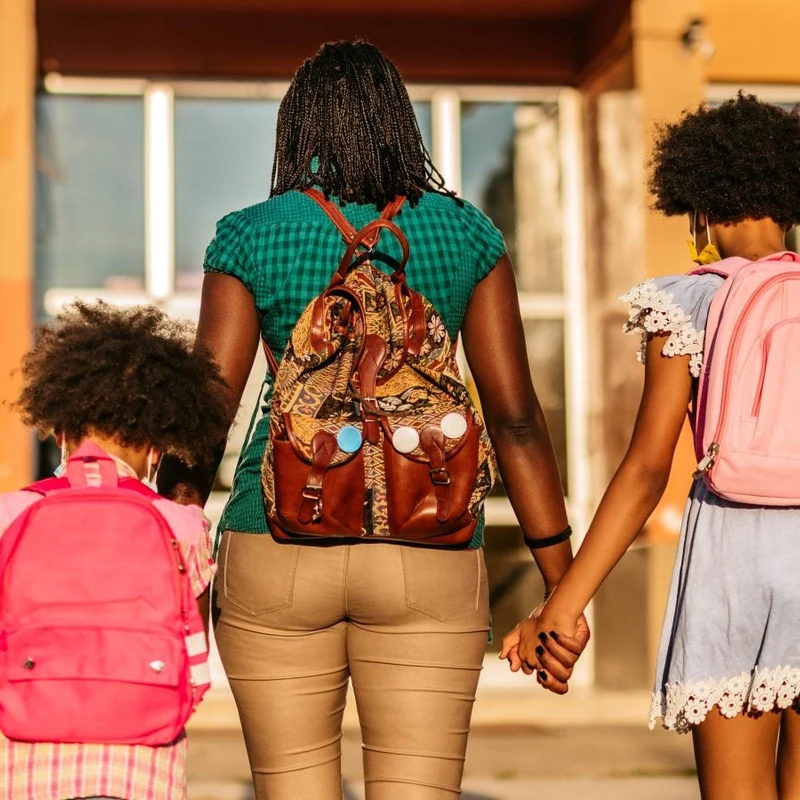
As the nation gears up for holiday gatherings, a disturbing incident in Chicago has cast a shadow, prompting a community to rally for justice. The story of Corshawna Hatter, a Black mother and her children who were brutally attacked, is a gut-wrenching reminder of the complex issues surrounding violence, bullying, and systemic challenges facing our communities.
A Vicious Attack and Its Aftermath
Just days ago, Corshawna Hatter and her children were walking home from school when they were followed, verbally assaulted, and physically beaten by a group of young people. The horrifying incident was captured on video and quickly spread across social media, sparking outrage and concern. The world watched as a 33-year-old mother and her 9-year-old son endured a violent assault, with a younger sister looking on.
In the days following the attack, the community mobilized. Some adults gathered at the school seeking street justice or to support Hatter, while others aimed to protect the accused children. This raw display of emotion highlights the deep-seated pain and frustration many feel when witnessing such senseless violence, especially when children are involved as both perpetrators and victims.
The Question of Justice and Response
Many viewers reacted online, sharing how they would have responded in Hatter’s situation. Shante Holley, a Chicago-based trauma-informed mental health coach, notes that the incident has triggered people because it underscores how easily one can become a victim while simply trying to live their life. “That you can become victimized while minding your own business is really what has triggered people,” Holley explains. “People immediately put themselves in her shoes.”
Hatter herself addressed the online commentary, explaining that she has sickle cell anemia and was unwell at the time of the attack. Even if she were at 100%, she posed a critical question: Is it ever appropriate for an adult to physically retaliate against children? This question has sparked a larger community conversation about what justice truly looks like in such complex situations.
Legal Actions and Community Support
Chicago police have arrested a 10-year-old, charging them with misdemeanor battery. This juvenile was diverted to family and social services through the Youth Intervention Pathways program, an alternative to traditional juvenile court. Sources indicate a 13-year-old, who reportedly confessed on social media, is also likely to face arrest. The Chicago Police Department states the investigation, which reportedly involved children aged seven to 13, is ongoing.
Chicago Housing Authority officials have been discreet about Hatter’s relocation, likely aiming to de-escalate the situation. As a resident of the South Side and a parent with children in Chicago Public Schools (CPS), the ripple effects of this violence are deeply felt. The lack of community supports, such as the absence of “Safe Passage” workers at Bright Elementary and the closure of the local Boys and Girls Club due to funding issues, exacerbates the problem.
Addressing Systemic Issues and Seeking Healing
Femi Skanes, an educational leader and former principal, emphasizes the need for wraparound services for all children involved. She understands the community’s strong reaction but cautions against acting solely on social media information. “We’re all watching something unfold on social media and we need to be careful because we don’t know the details,” Skanes advises. “It is complex. What heals violence is empathy, understanding and individual reconstructive work. Violence does not heal violence.”
Organizations like Youth Advocate Programs (YAP) offer a path forward through individualized services that support families and incorporate restorative justice. Kelly Williams, YAP’s chief communications officer, notes that their approach, which includes cognitive behavioral therapy and comprehensive support, has proven successful, with 87% of participants not reoffending. This focus on empathy, understanding, and reconstructive work is crucial for healing the cycle of violence.
What does restorative justice mean to you in situations like this? Share your thoughts on how communities can heal from violence in the comments below.
Leave a Reply