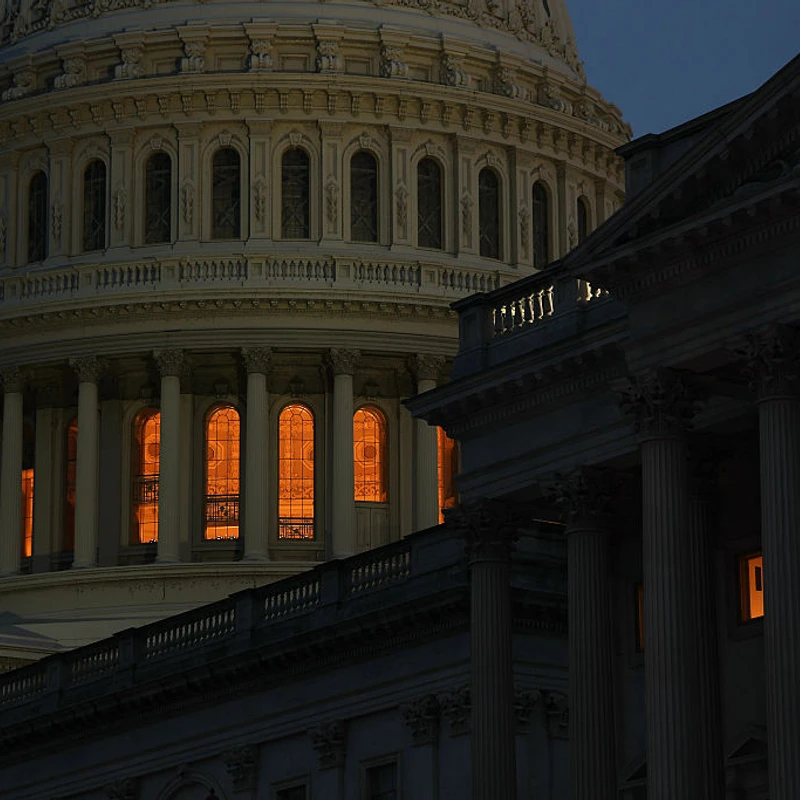
After a prolonged period of uncertainty, the U.S. Senate has approved a compromise spending bill that could finally bring an end to the longest government shutdown in history. The deal, passed on Monday, November 10, 2025, aims to restore funding for federal agencies and prevent immediate layoffs. However, not everyone is celebrating, as many Democrats are expressing frustration over the handling of crucial health subsidies.
The Compromise Deal Explained
The Senate’s vote, which passed 60-40 with bipartisan support, extends government funding through January 30, 2026. This agreement will prevent federal agencies from losing funding that began on October 1 and temporarily halts President Trump’s plans to reduce the federal workforce. The deal also ensures funding for the Supplemental Nutrition Assistance Program (SNAP) through September 30, 2026, safeguarding millions from potential disruptions.
This measure now moves to the House of Representatives, where Speaker Mike Johnson plans to bring it to a vote soon. President Trump has indicated his support for the deal, calling it “very good.” The agreement is projected to add approximately $1.8 trillion annually to the nation’s existing $38 trillion debt.
Frustration Over Health Subsidies
A major point of contention for Democrats was the inclusion of health subsidies under the Affordable Care Act (ACA). These subsidies benefit around 24 million Americans and are set to expire at the end of the year. Democrats had strongly advocated for tying government funding to the extension of these vital health benefits.
However, the final agreement only schedules a vote on the ACA subsidies for December. This delay leaves many Democrats feeling sidelined and concerned, as there’s no guarantee that the Republican-controlled Congress will ultimately approve the extension. Senator Dick Durbin (D-IL) voiced this sentiment, stating, “We wish we could do more. The government shutting down seemed to be an opportunity to lead us to better policy. It didn’t work.”
The Impact of the Shutdown
The government shutdown, which began on October 1, 2025, stemmed from a congressional deadlock over funding. It resulted in the furlough of hundreds of thousands of federal employees and left many others working without compensation. The shutdown also significantly disrupted SNAP benefits, impacting 40 million Americans who faced a suspension of aid on November 1.
In response to the SNAP disruption, several notable figures stepped in to offer support. Billionaire Tyler Perry donated nearly $1.4 million to nonprofits, Jasmine Crowe-Houston of Goodr launched a food distribution fund, and influencer Keith Lee spearheaded a separate fundraising initiative. These efforts highlighted the immediate human cost of the funding impasse.
Legal Battles Over SNAP
Adding to the complexity, federal judges ruled the Trump administration’s suspension of SNAP funding “unlawful.” Judges Indira Talwani and John J. McConnell Jr. ordered the USDA to reinstate benefits from emergency reserves. Judge McConnell emphasized the “irreparable harm” and “terror” caused by the uncertainty surrounding food availability for families.
The administration pursued an emergency appeal, leading to a temporary pause from the Supreme Court. However, with the Senate’s spending bill nearing approval, these legal proceedings may become moot, potentially resolving the SNAP funding issue and ending the government shutdown.
What are your thoughts on the Senate’s deal and the delayed vote on health subsidies? Share your perspective in the comments below!
Leave a Reply