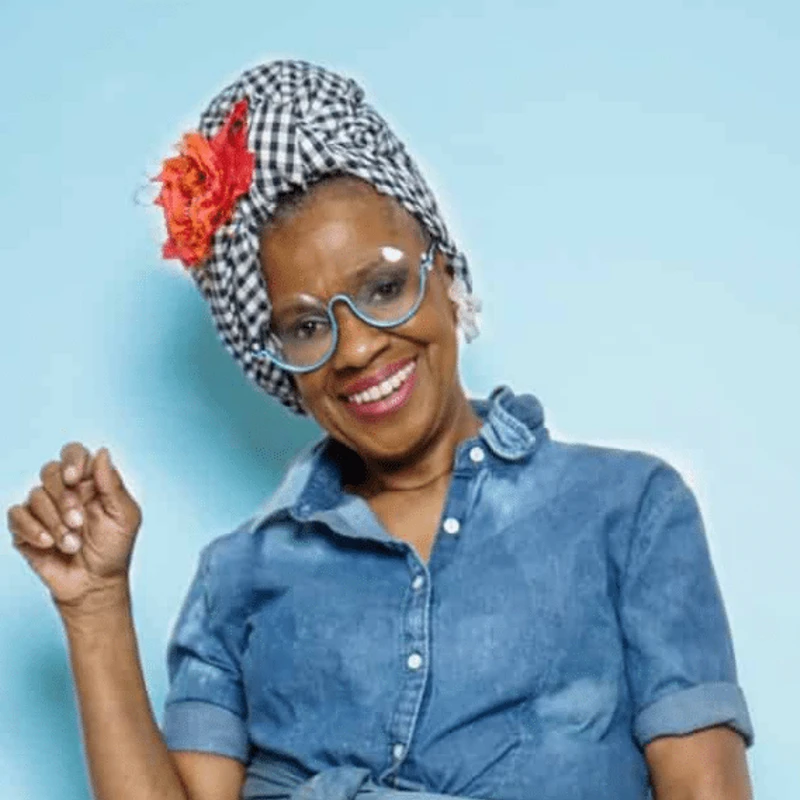
For designer Arlinda McIntosh, fashion is far more than just clothing – it’s a powerful medium for preserving memories and telling family stories. The New Jersey-based creator behind Sofistafunk: The Skirt Company has dedicated her career to transforming fabric into narratives. Her latest project, the custom “Memory Skirt,” takes this mission to a deeply personal level, beautifully blending creativity, family history, and vital awareness about cognitive health.
A Legacy Woven from Love and Loss
Arlinda’s passion for design was sparked early, influenced by her mother, a dressmaker. This creative foundation led her to launch Sofistafunk in 1999, where she gained recognition for her unique, sustainable skirts crafted from upcycled materials. However, as Arlinda witnessed memory and cognitive issues affect her own family – her mother, grandmother, and later her brother – her craft took on a profound new purpose.
“I didn’t want to just make clothes,” Arlinda shares. “I wanted to make something that could matter — something we could add to as life goes on.” This desire led to the creation of the Memory Skirt, a garment designed to encapsulate the essence of a person’s life story.
The ‘Memory Skirt’: Fashion as a Storyteller
For Rita Flynn, a former news reporter, Arlinda crafted a Memory Skirt that was deeply personal. Arlinda studied Rita’s background and favorite things, meticulously hand-stitching meaningful elements into the design. “She loved embroidery, so I embroidered her children’s names,” Arlinda explains. “I made a gold ‘forget-me-not,’ her favorite color, and added butterflies and shamrocks to honor her Irish and Texan roots.”
The power of these skirts lies in their ability to evoke memories. “You might forget a name,” Arlinda notes, “but you’ll remember the butterfly, the texture, the feeling. Familiar things can spark something inside you.”
Introducing ‘Skirt Therapy’ and Brain Health
Arlinda’s work extends beyond individual commissions through “Skirt Therapy.” In workshops and group sessions, she guides families in transforming sentimental fabrics, buttons, and patches into cherished wearable keepsakes. These creative gatherings often open the door for important conversations about brain health, a topic Arlinda believes needs to be normalized. “We check our teeth, we check our hearts,” she says. “Why not check our brains? These talks shouldn’t be taboo.”
She partners with Eli Lilly’s “More Than Normal Aging” campaign to help distinguish between typical age-related memory changes and the early signs of Alzheimer’s disease. Arlinda emphasizes that her brand offers more than just garments; it provides valuable information and encourages open dialogue, because “everything matters.”
Sustainability with a Soulful Purpose
Sustainability has always been a core principle for Arlinda, but her designs are infused with even deeper sentiment. Many creations start with recycled denim, a practice inspired by the loss of her brother. “My brother had this old pair of Wranglers I used to tease him about,” she recalls. “After he passed, I couldn’t let them go. I cut them up and made skirts for my children. That’s when I realized every scrap can hold a story.”
Today, each Sofistafunk skirt embodies this philosophy: fashion as therapy, and sustainability as a way to honor legacy. “What we wear reflects how we feel,” Arlinda says. “Our clothes can become memory keepers.”
Looking Ahead: Expanding the Conversation
Arlinda aims to bring Skirt Therapy to more venues, including art museums, schools, and senior centers, through virtual workshops. She encourages everyone to see old garments not as discarded items, but as potential storytellers. “Maybe your favorite shirt doesn’t fit anymore,” she suggests. “Don’t throw it out. Cut out a heart-shaped patch, sew it onto something new, and carry that memory forward. A stain isn’t a flaw — it’s a new direction.”
Through programs like “Camp Sofistafunk” and “Older & Bolder,” she empowers women, especially those over 50, to embrace health, confidence, and self-expression. “The older we get, the bolder we should be — in what we wear, how we live, and how we care for ourselves,” she asserts.
Creating Rita’s Memory Skirt was more than a design project; it was a calling. Arlinda McIntosh reminds us that fashion has the profound ability to heal, connect, and help us remember who we are. “Fashion doesn’t have to be shallow,” she concludes. “It can remind us who we are.”
How do you preserve your family’s stories? Share your thoughts on using fashion for memory-keeping in the comments below!
Leave a Reply