Tag: Workforce

  • ‘Next Little Black Book’ Updated for Black Women Leaders

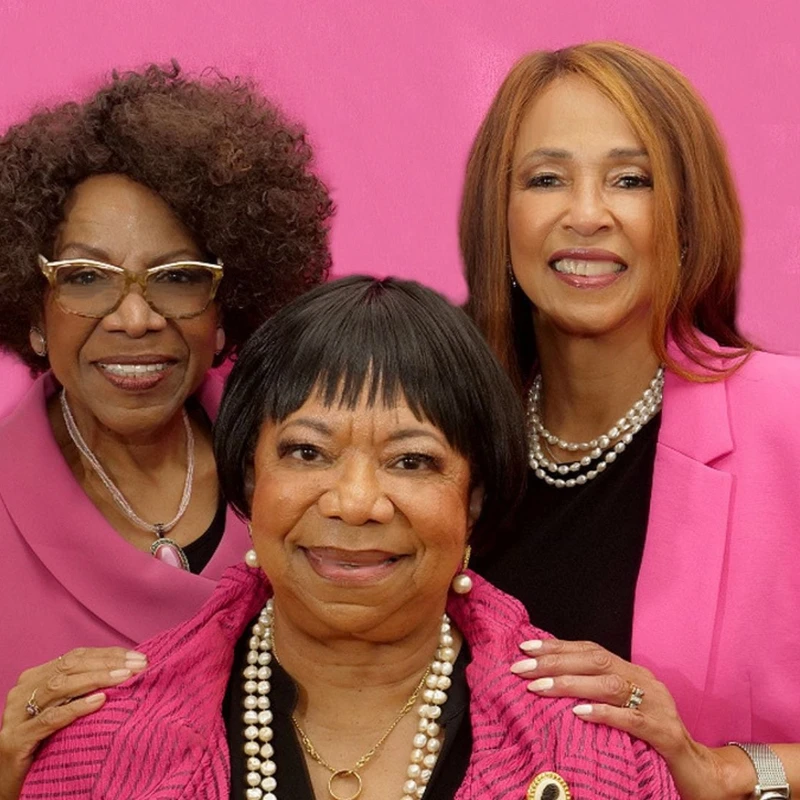
    In a professional landscape marked by significant layoffs, the rollback of DEI initiatives, and a shifting political climate, three veteran executives have updated a leadership guide specifically for Black women. The newly republished “The Next Little Black Book of Success” aims to provide a roadmap for navigating today’s complex workplace, offering timeless lessons on resilience, leadership, and overcoming loss.

    A Timely Update for a Crucial Audience

    Co-authors Elaine Meryl Brown, a Daytime Emmy Award-winning writer and executive producer, and Rhonda Joy McLean, president and CEO of RJMLEADS LLC, have decades of experience navigating professional spaces not always designed for them. They are joined by the legacy of their late co-author, Marsha Haygood, who passed away earlier this year. The original 2010 edition sold over 60,000 copies, and this updated version addresses contemporary challenges like mass layoffs, the impact of AI on industries, and a political environment that can feel openly hostile to Black women in professional roles.

    “This book is a roadmap to the future,” McLean stated. “We really try to anticipate changes in the workplace, changes in the workforce — we talk about AI. We talk about trying to be an authentic Black woman in the workplace.”

    The Power of Soft Skills and Self-Leadership

    Central to the book’s message, honed over nearly two decades, is the argument that the skills crucial for workplace survival and advancement are often not the ones formally taught. Brown emphasizes that these essential ‘soft skills’ are universally applicable to Black women at any career stage. “It’s the hard skills that really get us in the door, but it’s the soft skills that really sustain us,” Brown explained. “And our mantra for this book — the first person you lead is yourself.”

    The authors also address the complexities of generational differences in the workplace. Brown notes that Millennials, Gen X, Gen Y, and Boomers all approach work and problem-solving differently, highlighting the need for mutual listening and collaboration. Achieving this requires more than just professionalism; it demands understanding the distinction between being liked and being respected.

    Lessons Forged Through Personal Experience

    McLean’s own experiences underscore the book’s themes. Integrating an all-white high school in North Carolina in 1965, she faced hostility but found strength in community with the two other Black girls who joined her. This early lesson in resilience taught her the importance of standing firm against ignorance and fear, even when isolated.

    Decades later, as one of the few Black women in 1980s New York law firms, McLean encountered assumptions and was often mistaken for support staff. She learned the hard way that waiting for others to define her role was not an option, sharing a poignant anecdote about refusing to serve coffee to male colleagues, asserting her professional standing despite the painful and uncomfortable dynamics.

    Addressing Workplace Dynamics and Grief

    These experiences inform the book’s chapter, “Don’t Be the Office Mammy,” which tackles the tendency for Black women to prioritize others’ needs over their own, often without seeking credit. The authors caution that while helpfulness is valued, failing to promote oneself or take credit in corporate America can lead to professional invisibility.

    The book also delves into leading through personal loss. McLean wrote a chapter on grief while navigating the devastating loss of her stepdaughter to cancer, followed by her husband’s death just months later. She credits her friends, family, and co-authors for supporting her through a period where she couldn’t write. Brown and McLean later reciprocated this support when Haygood battled her illness, with the authors stepping in to help complete her work.

    This experience reinforced their belief in the foundational importance of relationships – friends, family, and faith. Haygood’s presence is felt throughout the book, with her chapters included and her voice resonating on every page, even after her passing in January.

    Expanding the Definition of Loss and Building Networks

    The concept of grief is expanded in the book to include professional losses, such as job displacement due to DEI rollbacks or demotions that diminish one’s sense of value. McLean emphasizes that these are significant losses that require grieving.

    For Black women facing these challenges, the authors stress the importance of proactive relationship building. “You need to not have waited until you were laid off to have a network of people who can help you,” McLean advises, encouraging connections from high school, college, church, and sororities. Brown adds the crucial point of diversifying one’s network beyond familiar circles to include people of different backgrounds and beliefs.

    Ultimately, McLean expresses deep admiration for the creativity and resourcefulness of Black women, likening their ability to make much out of little to the biblical story of the loaves and fishes. She believes this inherent skill is often underestimated.

    The insights from “The Next Little Black Book of Success” were recently shared in an in-person discussion hosted by the Alpha Kappa Alpha Sorority, Incorporated® – Rho Gamma Omega Chapter in New Jersey, moderated by TheGrio’s Natasha S. Alford. This event highlighted the urgent need for conversations around leadership and advancement, especially in the current climate.

    What lessons from ‘The Next Little Black Book of Success’ resonate most with you? How do you build and maintain your professional network? Share your thoughts and strategies in the comments below!


  • Polyworking: Black Americans Juggle Jobs

    In today’s unpredictable economy, many Black Americans are finding creative ways to make ends meet. One growing trend is “polyworking” – essentially holding multiple jobs. This isn’t just about earning extra cash; it’s becoming a strategic move for financial stability and fulfillment, especially as traditional work structures evolve.

    The Rise of Polyworking

    A recent study by Deputy, titled “The Big Shift 2026,” highlights that polyworking is becoming increasingly common. While millennials and women in healthcare and hospitality were early adopters, the trend is now being driven by younger generations. Gen Z, in particular, is leading the charge, making up 55 percent of those holding multiple jobs.

    This shift is happening against a backdrop of economic challenges, including inflation, rising costs, and significant layoffs across various sectors. For many, polyworking isn’t a choice for added income but a necessity to navigate the current financial landscape. The study also points out a growing divide between those who can choose flexibility and those who are forced into multiple jobs.

    A Longstanding Practice for Black Americans

    Interestingly, Black men and women have been ahead of the curve in embracing multiple income streams, even before the term “polyworking” became mainstream. What was once called a “side hustle” or “gig economy” work was often pursued for personal fulfillment, to combat job burnout, and to expand professional networks. The rise of hybrid and remote work has further enabled this flexibility.

    Despite challenges like microaggressions and discrimination in the workforce, Black workers are adapting. The flexibility offered by new work models allows many to juggle multiple roles, especially amid economic stagnation and the ever-increasing cost of living.

    The Double-Edged Sword: Productivity vs. Burnout

    While polyworking can offer benefits, it also comes with risks. A 2025 Monster study revealed mixed results regarding productivity, with some participants reporting increased output while others experienced a decrease. More concerning is the potential impact on mental health.

    A significant portion of participants in the Monster study believed that continuous polyworking could negatively affect their mental well-being over time. Given that stress is a major factor contributing to Black individuals leaving jobs, the long-term effects of juggling multiple roles warrant careful consideration.

    As the workforce continues to get younger, particularly in sectors like healthcare and hospitality, the desire to work more than one job is likely to persist. In March 2025, over 8.9 million Americans held at least two jobs, a figure not seen since 1994. Until wages and job stability improve, this number is expected to keep climbing.

    Are you practicing polyworking or considering it? What are your biggest challenges and rewards? Share your experiences in the comments below!

  • Salesforce Cuts 4,000 Jobs as AI Agents Take Over

    The world of work is changing fast, and artificial intelligence is at the forefront of this transformation. If you’re in the tech industry, or even just keeping an eye on major companies, you’ve likely heard the buzz. Salesforce, a giant in enterprise cloud applications, is making significant moves, and it involves a substantial shift in its workforce.

    Thousands of Roles Impacted by AI

    Salesforce CEO Marc Benioff recently confirmed a significant reduction in customer support roles. The company has cut approximately 4,000 support jobs, bringing their support team down from 9,000 to around 5,000 employees. This move is directly linked to the increasing capabilities and deployment of AI agents within the company.

    According to reports, these AI agents are now handling a large portion of customer interactions, leading to increased efficiency. Salesforce states that these agents can manage tasks like responding to pricing inquiries, creating marketing materials, and even managing websites, all with less direct human oversight.

    AI’s Growing Role at Salesforce

    Benioff himself highlighted the scale of this shift, noting on ‘The Logan Bartlett Show’ that he needed ‘less heads’ due to the AI integration. This isn’t the first time AI’s impact has been discussed at Salesforce; Benioff previously mentioned that AI was handling up to 50% of the company’s internal workload back in June 2025.

    While these job cuts might sound alarming, Salesforce has also been actively redeploying hundreds of employees. These individuals are being moved into other crucial areas such as professional services, sales, and customer success, indicating a strategic reallocation of talent rather than a complete elimination of human roles.

    Reconnecting with Unaddressed Leads

    Beyond internal efficiencies, Salesforce’s AI agents have also been instrumental in tackling a massive backlog. Benioff shared that the company has managed to reconnect with over 100 million previously unaddressed leads accumulated over 26 years, showcasing AI’s power in data management and outreach.

    The Future of Work: Partnership, Not Replacement?

    Despite the significant changes, Benioff maintains that automation won’t entirely replace human workers. He envisions a partnership where AI agents handle routine and repetitive tasks, freeing up human employees to focus on more complex problem-solving and strategic initiatives. ‘Humans are not going away,’ he stated, emphasizing this collaborative future.

    Salesforce isn’t the only tech giant embracing AI for efficiency. Companies like Workday have introduced their own AI agent systems, and Walmart has rolled out AI-powered ‘super agents’ to enhance customer experience and operations. This trend highlights a broader industry shift towards leveraging artificial intelligence to optimize business processes.

    What are your thoughts on these job shifts due to AI? Do you see AI as a partner or a replacement in the workplace? Share your perspective in the comments below!

  • 300,000 Black Women Out of Workforce: An Economic Crisis

    It’s a deeply distressing reality: in just one quarter, over 300,000 Black women have exited or been pushed out of the workforce, according to alarming data from the U.S. Bureau of Labor Statistics. This means that within a mere 90 days, hundreds of thousands of individuals who are heads of households, parents, caregivers, and vital contributors to local economies have lost their livelihoods.

    The Devastating Impact of Job Losses

    These job losses are attributed to various factors, including government efficiency cuts and a broader attack on diversity, equity, and inclusion (DEI) initiatives. When you add these 300,000 women to the more than 518,000 Black women who haven’t returned to the workforce since the COVID-19 pandemic, the scale of economic devastation facing Black women and their families becomes starkly clear. The unemployment rate for Black women currently stands at over 6.4%, significantly higher than the national average of 4.1%.

    It’s crucial to remember that official unemployment figures often don’t account for those who have stopped actively seeking work, meaning the true unemployment rate for Black women could be even higher. Yet, there’s a concerning lack of media coverage that humanizes these women or explores how they are coping with job loss and federal cuts.

    The Economic Fallout and Systemic Issues

    Gender economist Katica Roy highlights the severe economic consequences, noting that the decline in Black women’s labor force participation in the last three months alone has resulted in a $37 billion drop in the Gross Domestic Product. This economic blow is compounded by the persistent gender pay gap: Black women working full-time, year-round earn only 66 cents for every dollar earned by white, non-Hispanic men.

    While some Black women may turn to entrepreneurship, this isn’t a guaranteed solution if businesses don’t scale. Many who lost jobs didn’t opt for early retirement; they face diminished resources for self-care, family support, economic contribution, and generational wealth. This comes at a time when federal government cuts are reducing essential support systems like healthcare, childcare, and education.

    A Call for Race and Gender-Conscious Policies

    The disproportionate suffering of Black women in terms of economic mobility, pay equity, and health disparities is a critical issue, often met with derision rather than support. Despite being one of the most educated demographics, their plight remains largely unaddressed. This data should serve as an urgent call for gender and race-conscious policies. Policies that are race-neutral risk further harming marginalized communities, as our fates are interconnected. The struggles faced by Black women often foreshadow broader societal challenges. It is imperative to support Black women to ensure the well-being and progress of the entire nation.

    What are your thoughts on the alarming number of Black women leaving the workforce? How can policy changes address this crisis? Share your insights in the comments below!