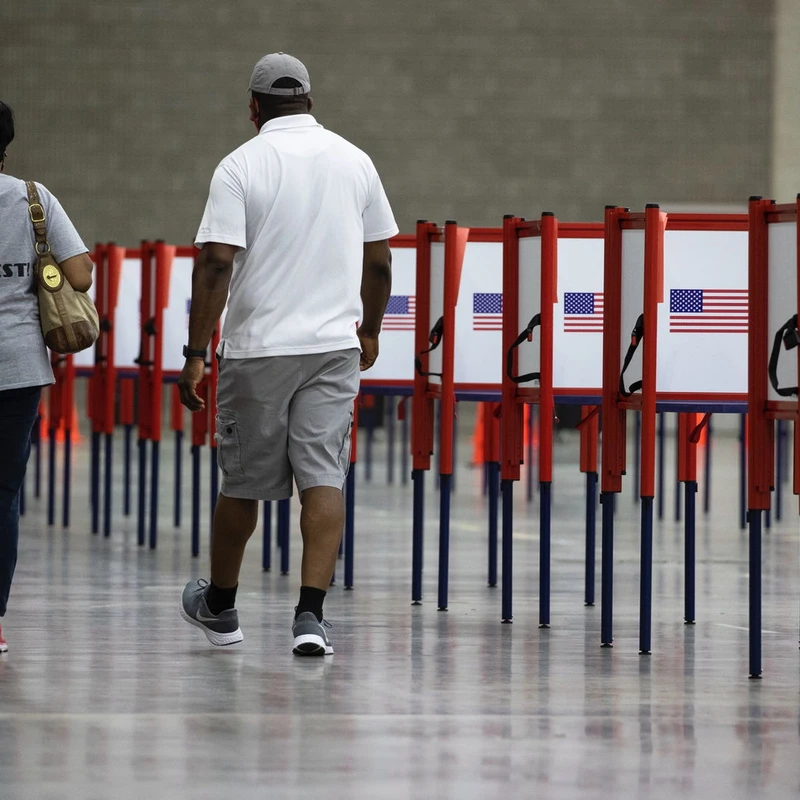
A significant legal battle over voting access in Georgia has taken a new turn. A federal appeals court has revived a state law that prohibits giving food and drinks to people waiting in line to vote. This decision overturns a previous federal judge’s ruling that had allowed such provisions, reigniting debates about voter influence and civic engagement.
The Election Integrity Act and Its Controversies
The law in question, part of Georgia’s Election Integrity Act (Senate Bill 202), was enacted in 2021 following the 2020 presidential election. It established a 25-foot buffer zone around polling places where offering food and water to voters is forbidden. Supporters argue this measure is necessary to prevent voter influence and interference, ensuring fair elections.
However, critics view the ban as an unnecessary restriction on basic kindness and civic engagement. The law carries a misdemeanor penalty, including up to a year in jail, for violations. This strictness led to significant backlash, famously prompting Major League Baseball to move its 2021 All-Star Game from Atlanta.
Legal Back-and-Forth and First Amendment Concerns
The 11th Circuit Court of Appeals recently ruled that the federal district judge, J.P. Boulee, did not properly analyze the First Amendment implications of the ban. The appeals court stated that the district court failed to conduct a required facial analysis, instead focusing on specific justifications offered by the government and the plaintiffs’ particular activities without adequately considering the varying protections the First Amendment offers across different actions.
Georgia Secretary of State Brad Raffensperger defended the appeals court’s ruling, asserting that the state has the right to prevent voter influence. He criticized opponents like Stacey Abrams, stating, “Georgia has the right and the responsibility to shield voters from influence and interference at the polls… our laws safeguard every Georgian’s right to free, fair, and fast elections.”
Broader Election Law Changes
SB 202 introduced several other changes to Georgia’s election laws, including restrictions on absentee ballot drop boxes, new ID requirements for absentee ballots, and modifications to early voting periods. These changes, alongside the food and drink ban, have been central to ongoing legal challenges.
The Biden-Harris administration’s Department of Justice had previously sued Georgia over the ban, with former President Joe Biden labeling it “Jim Crow in the 21st Century.” However, the Trump administration’s DOJ dismissed the lawsuit in March 2025, adding another layer to the complex legal history of this legislation.
- A federal appeals court reinstated Georgia’s ban on providing food and drinks in voting lines.
- The law, part of SB 202, carries misdemeanor penalties for violations.
- Critics argue it hinders basic kindness and civic engagement.
- Supporters claim it prevents voter influence.
- The ruling is based on a failure to conduct a proper First Amendment facial analysis.
The reinstatement of this ban continues to fuel the national conversation about election laws, voter access, and the balance between election integrity and the right to participate freely in the democratic process.
What are your thoughts on Georgia’s ban on food and drinks in voting lines? Do you believe it’s necessary for election integrity or an infringement on voters’ rights? Share your views in the comments below!