Tag: Vaccines

  • Ben Crump Alleges Gov’t Used Black Infants in Vaccine Trials

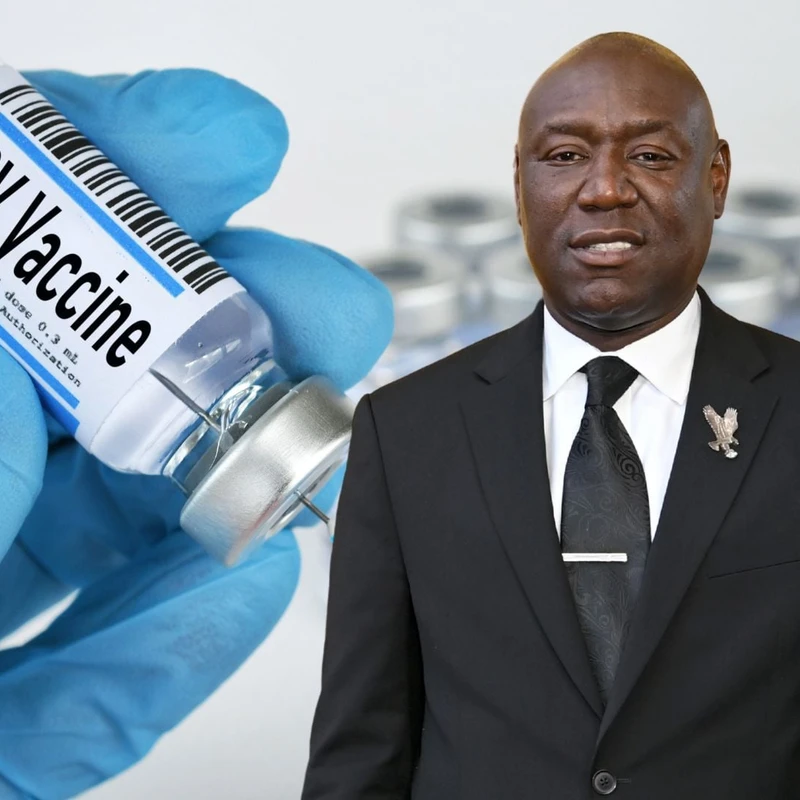
    A significant federal lawsuit has been filed, accusing the U.S. government of a deeply disturbing practice: the alleged secret testing of experimental RSV vaccines on Black infants back in the 1960s. Civil rights attorney Ben Crump, representing the families of two infants, Ross Otto Hambrick and Victor Marcellus King, claims these trials were conducted without the families’ knowledge or consent.

    Allegations of Unethical Vaccine Trials

    The lawsuit, filed under the Federal Tort Claims Act, details how the infants were allegedly enrolled in a National Institutes of Health (NIH)-sponsored study between 1965 and 1966. Tragically, both infants passed away in January 1967. Attorneys describe the experimental trial, known as “Lot 100,” as dangerous and highly concentrated.

    A key, and deeply concerning, allegation is that tissue samples taken during the infants’ autopsies were later used in the development of RSV vaccines that received FDA approval as recently as 2023. This raises profound questions about consent, exploitation, and the long-term impact of historical medical practices.

    Seeking Justice and Accountability

    According to the press release from Ben Crump Law, neither the Hambrick nor the King families were informed about these alleged experiments for decades. They have reportedly never received compensation or any form of acknowledgment from the federal government regarding the use of their infants’ samples.

    The legal team, which includes attorneys William H. Murphy Jr., Carol Lexing Powell, Malcolm P. Ruff, and Nabeha Shaer, is demanding full accountability from the United States government. They aim to secure justice for the Hambrick and King families, highlighting the vulnerability of the infants and the alleged intentional selection of Black infants from low-income backgrounds.

    Details of the Lawsuit

    • Federal lawsuit filed under the Federal Tort Claims Act.
    • Alleges government secretly used Black infants in experimental RSV vaccine trials in the 1960s.
    • Infants allegedly selected from low-income families without parental consent.
    • Tissue samples from autopsies allegedly contributed to FDA-approved RSV vaccines (2023).
    • Families seeking compensation, acknowledgment, and accountability.

    The attorneys were scheduled to discuss the intricate details of the lawsuit at a news conference in Washington, D.C. This case brings to light critical issues surrounding medical ethics, historical injustices, and the ongoing fight for accountability for vulnerable communities.

    What are your thoughts on these serious allegations regarding past government vaccine testing? Share your views in the comments below.

  • Trump Taps Dr. Erica Schwartz for CDC Director

    President Donald Trump has put forward a significant nomination for the U.S. Centers for Disease Control and Prevention (CDC), selecting Dr. Erica Schwartz as his choice for the agency’s permanent director. This move, announced on April 16, 2026, could make Dr. Schwartz the first Black woman to ever head the CDC, marking a potentially historic milestone.

    A Public Health Veteran with Military Experience

    Dr. Schwartz is a seasoned public health professional with a distinguished career that includes service in the U.S. Military. She previously served as Deputy Surgeon General during Trump’s first term, playing a key role in the U.S. response to the COVID-19 pandemic. Her nomination comes at a time when the CDC is navigating complex policy changes and staffing shifts.

    Potential Shift in Vaccine Approach?

    The timing of Dr. Schwartz’s nomination is particularly noteworthy. It arrives shortly after Robert F. Kennedy Jr., the Secretary of Health and Human Services, made supportive remarks regarding vaccine safety during a congressional hearing. Kennedy, who recommended Schwartz and other leadership picks, stated that the measles vaccine is safe and effective for most people. This nomination, coupled with Kennedy’s comments, suggests a possible shift in the administration’s stance on vaccines.

    A Team Poised for Change

    Kennedy expressed confidence in the incoming team, stating, “I think this new team is really going to be able to revolutionize CDC and get it back on track and get it doing the job that it does better than any other health agency in the world.” Other key appointments include Sara Brenner as public health adviser, Jennifer Shuford as deputy director and chief medical officer, and Sean Slovenski as deputy director and chief operating officer.

    Navigating Challenges at the CDC

    Dr. Schwartz’s potential leadership comes as the CDC faces significant challenges, including proposed budget cuts and the need to rebuild public trust. The agency has been operating without a permanent director, with the previous leader removed by Kennedy. Under the Federal Vacancies Act, the role had a deadline of late March to be filled, a deadline that has now passed.

    A Look at Dr. Schwartz’s Extensive Background

    Dr. Schwartz brings a wealth of experience, including 24 years in the U.S. Public Health Service Commissioned Corps and service as a Coast Guard rear admiral. She holds degrees from Brown University and the University of Maryland. Her expertise spans disease surveillance, vaccination programs, pandemic policy, and federal disaster response efforts.

    Her confirmation hearing before the Senate Health, Education, Labor and Pensions Committee will be a crucial step in her potential appointment. If confirmed, Dr. Schwartz will be tasked with guiding the CDC through a critical period, focusing on its core public health mission while adapting to new challenges and strategies.

    What are your expectations for Dr. Erica Schwartz if she is confirmed as the new CDC Director? Share your thoughts in the comments below!

  • Bernie Sanders Calls for RFK Jr. to Resign

    A significant shakeup at the Centers for Disease Control and Prevention (CDC) has drawn sharp criticism from Senator Bernie Sanders, who is now calling for the resignation of Health and Human Services Secretary Robert F. Kennedy Jr. The turmoil began with the abrupt firing of CDC Director Susan Monarez, which led to the resignation of four senior officials who accused the administration of politicizing public health decisions.

    Sanders Condemns Kennedy’s Leadership

    Senator Sanders, a prominent voice on the Senate Health Committee, has voiced serious concerns about what he perceives as Kennedy’s anti-vaccine agenda. In a strong op-ed published in The New York Times, Sanders didn’t hold back, condemning Kennedy for allegedly spreading conspiracy theories and disregarding scientific consensus. He stated that Kennedy’s leadership poses a “direct threat to public health.”

    While President Trump and Kennedy have defended the recent changes as necessary steps to restore trust in the CDC, Sanders issued a stark warning. He fears that under Kennedy’s direction, Americans could face reduced access to essential vaccinations, potentially leading to the resurgence of diseases that were once under control. Sanders pointed to the administration’s decision to cut $500 million from mRNA vaccine research as evidence that the country is less prepared for future health crises.

    Secretary Kennedy is putting lives at risk. He must resign. — Senator Bernie Sanders

    In the wake of these resignations, Deputy HHS Secretary Jim O’Neill has been appointed as the acting CDC director. The situation highlights a growing tension between political leadership and established public health protocols, raising questions about the future direction of health policy in the United States.

    What are your thoughts on the recent CDC shakeup and Senator Sanders’ call for RFK Jr.’s resignation? Share your views in the comments below!

  • Essential Vaccines for Back-to-School

    As back-to-school season approaches, parents are busy preparing everything their children need for the classroom. Among the most critical preparations are school physicals and vaccinations. Dr. Marc Watkins, Chief Medical Officer of Kroger Health, emphasizes that these steps are vital not only for meeting school requirements but also for ensuring a child’s overall health and well-being.

    The Importance of Routine Vaccinations

    Dr. Watkins notes that vaccination rates haven’t fully recovered since the COVID-19 pandemic, citing factors like general mistrust of healthcare within the Black community and overall vaccine fatigue. “It’s a challenge to help people understand that vaccines remain incredibly safe, effective, and important to our overall health,” he told BlackDoctor.org. “It’s similar to other proactive choices people make, like wearing seatbelts, not smoking, and exercising.”

    He encourages parents to schedule regular visits with pediatricians or family practitioners, or to consult clinicians at Kroger pharmacies and clinics. Dr. Watkins recommends making healthcare appointments during your birth month as a proactive way to stay on top of routine check-ups, vaccinations, and screenings like vision, dental, colonoscopies, and prostate health checks.

    Key Vaccines Recommended for School

    Ensuring your child is up-to-date on age-appropriate vaccines is vital for their health and the health of the school community. Dr. Watkins recommends the following:

    • **Ages 4-6:** Tetanus, Diphtheria, Pertussis (Tdap); Measles, Mumps, Rubella (MMR); Varicella (Chickenpox); Polio; Annual Flu Shot; COVID-19 Vaccine.
    • **Middle Schoolers:** Human Papillomavirus (HPV) Vaccine; Annual Flu Shot; COVID-19 Vaccine.
    • **High Schoolers:** Meningitis Vaccine; Annual Flu Shot; COVID-19 Vaccine.

    Addressing Vaccine Hesitancy

    Dr. Watkins acknowledges parental hesitancy and encourages a proactive approach to health. He stresses the importance of finding a trusted primary care provider and building a relationship with them. “If you can’t see your regular pediatrician or healthcare provider, our team of healthcare professionals at Kroger pharmacies and clinics across the nation can step in to support you,” he notes, highlighting Kroger Health’s commitment to accessible and convenient care.

    The Role of School Physicals

    Beyond vaccinations, routine physical exams are crucial for back-to-school preparation. Sports physicals, or pre-participation physical evaluations (PPEs), ensure children can safely participate in activities. They also provide a comprehensive health review, checking major body systems and addressing behavioral health and nutrition.

    Nutrition: Fueling Academic Success

    Proper nutrition is vital for a child’s ability to focus and succeed in school. Dr. Watkins recommends a balanced diet rich in colorful fruits and vegetables (“Eat the rainbow”), lean proteins, and adequate hydration. He advises parents to check food labels for added sugars, sodium, and saturated fats, consuming these in moderation. Meal prepping on weekends can also make healthy eating more manageable for busy families.

    What are your top tips for ensuring your child is healthy and ready for the school year? Share your advice in the comments below!

  • Pediatricians Differ from CDC on COVID-19 Shots

    In a notable shift, the American Academy of Pediatrics (AAP) has released new COVID-19 vaccination recommendations for children that diverge from the U.S. government’s current guidance. This marks the first significant difference between the AAP and the Centers for Disease Control and Prevention (CDC) in three decades, adding to a year of evolving public health advice.

    Diverging Recommendations

    The AAP is now strongly recommending COVID-19 shots for children aged 6 months to 2 years. For older children, the AAP advises vaccination if parents wish for their kids to be protected. This stance contrasts with the guidance issued under U.S. Health Secretary Robert F. Kennedy Jr., which does not recommend the shots for healthy children of any age but allows for physician consultation.

    Dr. James Campbell, vice chair of the AAP’s infectious disease committee, acknowledged the potential for confusion but stressed the importance of making the right choices for children’s protection. He highlighted that children aged 6 months to 2 years are particularly at high risk for severe illness from COVID-19, making vaccination crucial for this age group.

    Context of the Changes

    The AAP’s recommendations also include vaccinations for older children with chronic lung diseases or other conditions that increase their risk for severe COVID-19. While the AAP and CDC have had minor differences in recommendations over the years, such as HPV vaccinations, this is the first substantial divergence in 30 years.

    This shift comes after Health Secretary Robert F. Kennedy Jr. announced in May that COVID-19 vaccines are no longer recommended for healthy children and pregnant women, a change from previous CDC advice that urged annual boosters for most age groups. The CDC subsequently updated its language to suggest healthy children “may” get the shots, removing the term “should.”

    Advisory Panel and Flu Vaccines

    The differing recommendations also touch upon flu vaccines. While Kennedy’s newly appointed advisory panel, which includes vaccine skeptics and excluded major medical organizations like the AAP, voted to recommend only single-dose flu vaccines without thimerosal, the AAP maintains there’s no evidence of harm from the preservative and recommends using any licensed flu vaccine product.

    What are your thoughts on these differing vaccine recommendations? Share your perspective in the comments below!