Tag: US Economy

  • US Job Market Takes a Hit: June Losses, August Slowdown

    The U.S. job market has just received a significant reality check. The latest report from the Bureau of Labor Statistics reveals that June’s employment numbers have been drastically revised, turning what was initially thought to be job growth into an actual net loss. This, coupled with a disappointing August report, is raising new concerns about the economy’s momentum.

    June’s Numbers Take a Sharp Turn Negative

    Originally reported as a gain of 147,000 jobs, then revised down to 14,000, the June figures have now landed at a net loss of 13,000 jobs. This significant downward revision paints a much bleaker picture than previously understood, suggesting a weakening labor market.

    Adding to the unease, August saw a mere 22,000 jobs added, falling considerably short of the 75,000 economists had predicted. While July received a slight upgrade to 79,000 jobs added, it wasn’t enough to counteract the shock of June’s massive revision and August’s sluggish performance.

    Unemployment Rises, Key Sectors Show Weakness

    The unemployment rate has also climbed to 4.3 percent, marking the highest level since 2021. This increase suggests that the labor market may be losing the strong momentum it previously held. While sectors like healthcare and social assistance continue to hire, significant job cuts in manufacturing, wholesale trade, and federal government positions have dragged down the overall numbers.

    Further evidence of this slowdown comes from private payroll data. ADP reported only 54,000 jobs added in August, confirming the fears of many analysts that the job market isn’t as robust as it seemed earlier in the summer. For average workers, this translates to a more challenging hiring environment and increased pressure on wage growth. Policymakers are now facing urgent questions about whether the economy is cooling down too rapidly.

    What are your thoughts on these latest job market reports? How do you think this will impact the economy? Share your views in the comments below!

  • AI Could Impact 45 Million U.S. Jobs, Report Warns

    Get ready for a potential economic shift! A groundbreaking report suggests that Artificial Intelligence (AI) could dramatically reshape the U.S. job landscape, potentially impacting over 45 million jobs by 2028. Researchers from The Gerald Huff Fund for Humanity have released a stark warning: we’re heading towards an “economic upheaval on a scale seen only once a century.”

    The AI Disruption Report: Key Findings

    The report, titled “Impact of AI on Workers in the United States,” analyzed 745 occupations across 20 major industries. It evaluated the likelihood of tasks within each role being automated by AI, assigning an “AI Disruption Score.” The findings indicate that AI’s influence is expanding beyond traditional physical labor into white-collar, cognitive, and administrative roles.

    Sectors facing the highest projected impact include Retail Trade, with an estimated 6.6 million jobs at risk, followed closely by Healthcare and Social Assistance (6.4 million jobs). Educational Services (4.6 million jobs) and Finance and Insurance (2.2 million jobs) are also identified as industries where AI could significantly alter the workforce.

    The Limits of Retraining and the Case for UBI

    Gisele Huff, founder of the Gerald Huff Fund for Humanity, emphasizes that simply retraining workers may not be enough to combat this scale of change. “We can’t retrain our way out of this,” she stated. Her late husband, Gerald Huff, a former principal software engineer at Tesla and an advocate for Universal Basic Income (UBI), believed UBI is crucial for providing individuals with the security and agency needed to navigate AI-driven transitions.

    Historical data suggests that retraining efforts often result in lower wages and long-term income loss, underscoring the need for more comprehensive solutions like UBI as a transitional support system.

    Human-Centric Skills as a Defense

    While AI’s automation capabilities are advancing rapidly, the report also highlights the enduring value of human-centric skills. Qualities such as empathy, adaptability, and sound judgment are identified as the most effective defenses against automation. These skills are difficult for AI to replicate and will likely become increasingly important in the evolving job market.

    The report encourages proactive measures and a deeper understanding of AI’s potential effects. As we move closer to 2028, the conversation around AI’s impact on employment, the economy, and the need for supportive policies like UBI will undoubtedly intensify.

    What are your thoughts on the potential impact of AI on jobs? Do you believe Universal Basic Income (UBI) is a necessary solution? Share your perspectives in the comments below!

  • US Job Growth Slows Dramatically, Unemployment Rises

    Hold onto your hats, folks – the latest jobs report from the Bureau of Labor Statistics (BLS) paints a picture of a U.S. economy that’s hitting the brakes. Hiring has slowed down considerably, and it’s raising some serious questions about just how strong our economy really is right now.

    August’s Disappointing Numbers

    In August, the economy only added a mere 22,000 jobs. To put that in perspective, economists were expecting a much higher number, around 76,500. On top of that, the unemployment rate crept up to 4.3%, a slight increase from July’s 4.2%. While still historically low, this is the highest it’s been since October 2021.

    A Fragile Job Market Revealed

    After years of showing incredible resilience, the U.S. job market is starting to look a bit fragile. What’s more concerning are the revisions to previous months’ data. June’s job gains were dramatically revised downwards, turning an initial gain of 14,000 jobs into an actual loss of 13,000. This marks the first monthly decline since December 2020, breaking a streak of nearly five years of uninterrupted job growth.

    Sector-Specific Trends: A Mixed Bag

    Looking at different industries, the picture is quite varied. Sectors like construction and manufacturing saw job losses in August, with manufacturing experiencing its fourth consecutive month of decline despite support efforts. However, the healthcare and social assistance sector continues to be a bright spot, adding nearly 47,000 jobs and accounting for a significant portion of private-sector job creation this year.

    Implications for the Federal Reserve

    This weak jobs report is already influencing expectations for the Federal Reserve. Many investors now anticipate that the hiring slowdown will likely lead to an interest rate cut in September. This move, which the White House has been advocating for due to low inflation, now seems more probable given the sluggish job growth and rising unemployment.

    The next U.S. jobs report, covering September 2025, is scheduled for release on October 3rd. All eyes will be on this data to see if this slowdown is a temporary blip or the start of a more significant trend.

    What do you think this jobs report means for the economy? Share your insights in the comments below!

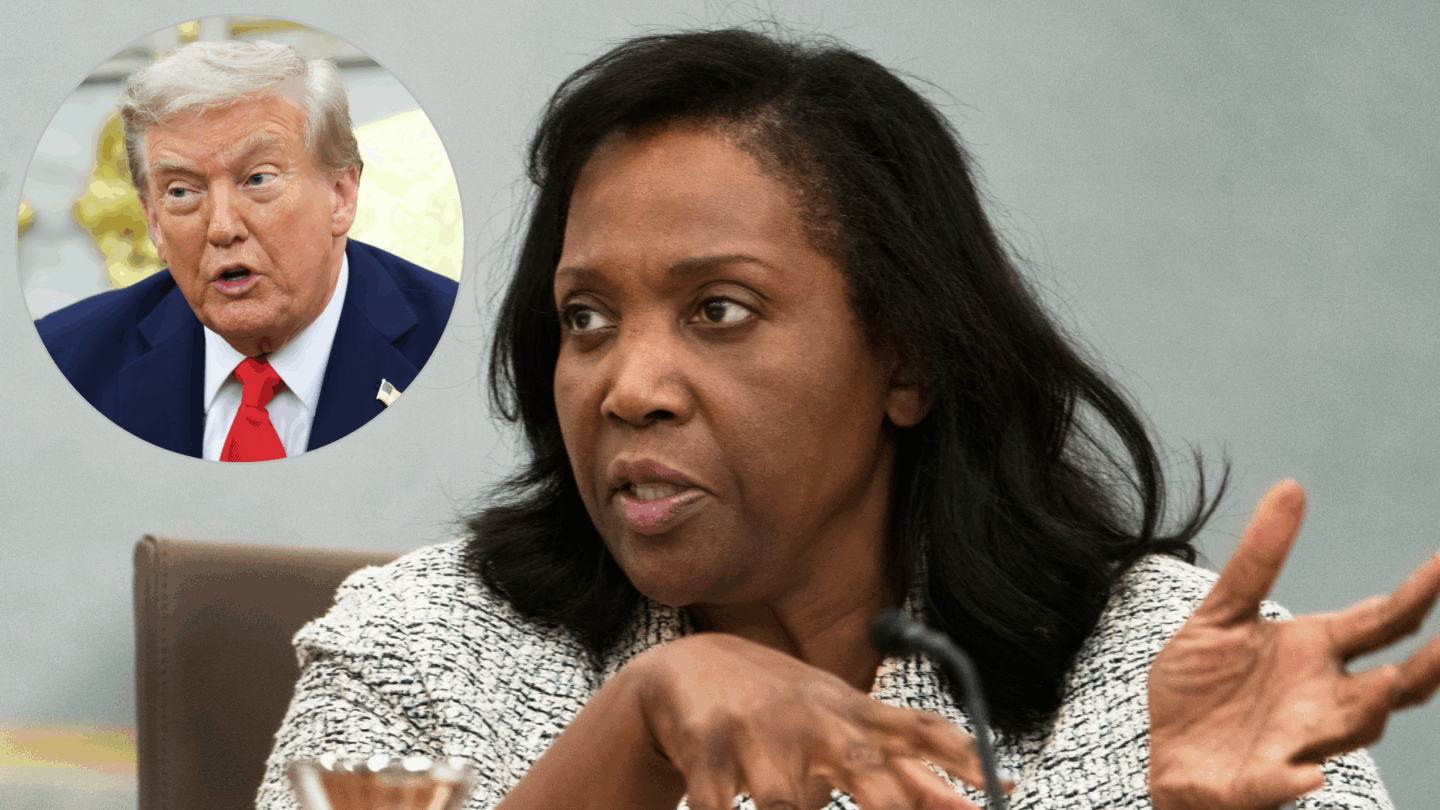
  • Trump Fires Fed Governor Lisa Cook: What You Need to Know

    In a move that’s sending ripples through the financial world, President Trump has fired Federal Reserve Governor Lisa Cook. This decision marks a significant escalation in his ongoing efforts to gain more control over the central bank, an institution traditionally shielded from day-to-day political influence. Cook, notably the first Black woman to serve on the Federal Reserve Board, was removed late Monday.

    The Allegations Behind the Firing

    President Trump stated in a letter shared on his Truth Social platform that the reason for Cook’s dismissal stems from allegations of mortgage fraud. These accusations were brought forward last week by Bill Pulte, an individual appointed by Trump to an agency overseeing mortgage giants like Fannie Mae and Freddie Mac.

    Pulte’s claim centers on Cook allegedly declaring two primary residences – one in Ann Arbor, Michigan, and another in Atlanta – back in 2021. The accusation suggests this was done to secure more favorable mortgage terms, as rates can be higher for second homes or properties intended for rental income.

    A Standoff and Potential Legal Battles

    This firing comes just days after Cook publicly stated she would not step down from her position, despite previous calls for her resignation from President Trump. With the Federal Reserve’s board comprising seven members, this action has the potential for significant economic and political consequences.

    Trump asserts his constitutional authority to remove Cook, but this move is sure to spark debate about the independence of the Fed. Legal experts anticipate a potential legal battle, during which Cook might even be able to remain in her seat while the case progresses. If a legal fight ensues, Cook would likely have to pursue it as an individual rather than the Federal Reserve itself.

    Broader Implications for the Fed’s Independence

    This situation is the latest in a series of attempts by the Trump administration to assert control over independent government agencies. President Trump has been vocal in his criticism of Fed Chair Jerome Powell, particularly regarding interest rate policies, and has even hinted at firing him.

    Removing Cook from the board could pave the way for Trump to appoint someone more aligned with his views, especially his desire for lower interest rates. This development raises critical questions about the future of the Federal Reserve’s autonomy and its role in managing the nation’s economy, free from political pressures.

    What are your thoughts on President Trump’s decision to fire Federal Reserve Governor Lisa Cook? Share your perspective in the comments below!