Tag: United States

  • Africa’s First G20 Summit Marred by US Rift

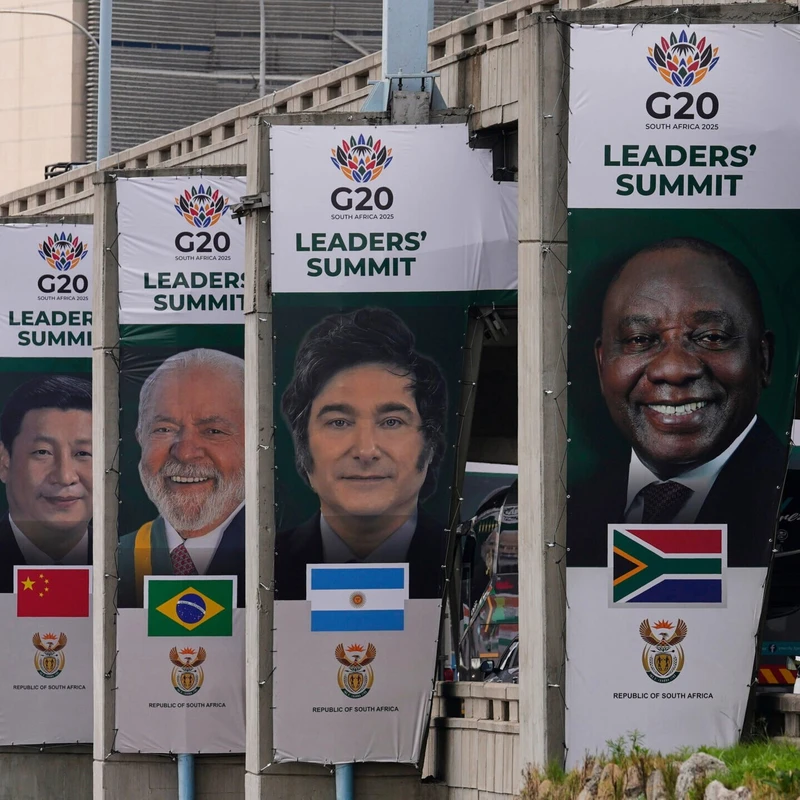
    Johannesburg is buzzing with anticipation as it hosts Africa’s first-ever Group of 20 (G20) summit. This landmark event aims to place the critical challenges faced by developing nations at the forefront of global discussions. However, the summit’s potential impact is already being dampened by a significant diplomatic rift between the host nation, South Africa, and the United States.

    US Boycott Casts a Shadow

    The summit, bringing together delegations from 18 of the world’s wealthiest and most influential developing economies, is notably missing the U.S. President Donald Trump’s administration has branded South Africa’s hosting as a “disgrace” and opted out of participation. This decision stems from Trump’s claims that South Africa, a majority-Black nation, is persecuting its white Afrikaner minority.

    This U.S. opposition poses a serious threat to South Africa’s carefully curated agenda. The host nation intended to focus leaders’ attention on pressing issues such as the escalating impact of climate change on developing countries, the crushing debt burdens faced by poorer nations, and the ever-widening gap of global inequality.

    Mounting Diplomatic Tensions

    Months of diplomatic friction between the U.S. (which is set to assume the G20 presidency following the summit) and South Africa escalated this week. South African officials revealed that Washington had attempted to pressure them into not issuing a leaders’ declaration at the summit’s conclusion, especially without an American delegation present. South African President Cyril Ramaphosa firmly responded, “We will not be bullied. We will not agree to be bullied.”

    A leaders’ declaration is typically the culmination of G20 summits, outlining any broad agreements reached. However, the bloc has historically struggled to translate words into concrete actions due to the diverse priorities of its members, including the U.S., China, Russia, India, and various European nations. The G20 now comprises 21 members – 19 nations plus the European Union and the African Union – aiming to unite rich and poor countries in tackling global economic challenges.

    Finding Common Ground Amidst Absence

    The U.S. boycott aligns with President Trump’s broader criticism of multinational organizations, having previously withdrawn the U.S. from the Paris climate agreement and the World Health Organization. Despite this, other world leaders have traveled to Johannesburg with the hope of forging common ground, particularly concerning new trade deals in the wake of U.S. tariffs.

    The African states are searching for partnerships, and so I will go to Johannesburg in any case and hold talks there. … I expect that we will return to Germany with good results. — German Chancellor Friedrich Merz

    While often operating in the shadow of the G7, the G20 collectively represents a significant portion of the global economy (85%), international trade (75%), and population (over half). Leaders like Australian Prime Minister Anthony Albanese emphasized the G20’s importance, noting that a quarter of Australian jobs depend on trade with G20 partners.

    China and Russia’s Presence

    President Trump isn’t the only major world leader absent. China’s Xi Jinping is also skipping the summit due to scaled-back international travel, and Russian President Vladimir Putin will not attend due to an International Criminal Court arrest warrant. However, both China and Russia are sending government delegations, leaving the U.S. as the sole G20 nation not represented.

    China, in particular, is increasing its influence. Chinese Premier Li Qiang used his trip to sign a significant railway refurbishment agreement in Zambia, further expanding China’s reach in Africa and its access to critical minerals. Some analysts suggest that the U.S. boycott might encourage developing nations to strengthen ties with other global powers, like China.

    This isn’t necessarily negative. It can catalyze more diverse leadership in global governance. — Professor Narnia Bohler-Muller

    President Ramaphosa, chairing the summit, remained unfazed by the U.S. absence, stating bluntly, “Their absence is their loss.”

    What are your thoughts on the U.S. boycott of the G20 summit? Do you think it will impact the discussions on global issues? Share your views in the comments below!

  • Elon Musk’s Father’s Racist Remarks on US Demographics

    Hold onto your hats, folks, because Errol Musk, the father of tech titan Elon Musk, has just made some incredibly disturbing and frankly, racist, remarks about the changing demographics in the United States. His comments, made during an interview about a CNN special, are drawing serious backlash.

    The ‘Jungle’ Comment

    During an interview with CNN’s Donie O’Sullivan for his upcoming special, “MisinfoNation: White Genocide,” Errol Musk was presented with the idea that the U.S. will become a non-white majority country within the next two decades. His reaction? Visible frustration, followed by the deeply offensive question: “You want to go back to the jungle?”

    This comment immediately reveals a prejudiced mindset, equating a diverse population with a primitive, uncivilized state. It’s a classic trope used to dehumanize and fear-monger about minority groups.

    Connecting to Trump’s Rhetoric

    Musk’s comments align disturbingly with rhetoric from former President Donald Trump, who recently announced no U.S. officials would attend the G20 Summit in South Africa. Trump cited the country’s treatment of white farmers, echoing claims of “genocide” that he and Elon Musk have also promoted.

    The idea being pushed is that White South African “Afrikaners” are victims and should be welcomed as refugees in the U.S. O’Sullivan directly challenged Errol Musk on this, stating, “America, in the next 20 years, will become for the first time in its history a minority white country.”

    Musk’s Defense of Apartheid?

    Errol Musk doubled down, calling a minority-white U.S. a “very, very bad thing.” When pressed by O’Sullivan about whether the U.S. is doomed if white people are no longer the majority, Musk emphatically replied, “Yes, goes under there.” He then bizarrely referenced South Africa, claiming its small white population “projects European culture” and that they “gave them work, we fed them.” This is a clear attempt to downplay or outright deny the brutal reality of apartheid.

    O’Sullivan rightly shot back, pointing out that the white population “oppressed millions of Black people for decades.” Musk’s response was astonishing: “No! How do you oppress? You know, we gave them work, we fed them… That’s not oppression, that’s feeding them!” He even claimed he never witnessed the oppression Black individuals faced under apartheid law, a statement O’Sullivan bluntly attributed to his race: “Yeah, but cause you’re white.”

    A Disturbing Perspective

    The CNN special, “Misinformation: White Genocide,” airs on November 16th, and this clip offers a chilling preview of the kind of dangerous narratives it explores. Errol Musk’s comments are not just ignorant; they are rooted in racist ideology that seeks to create fear and division.

    It’s crucial to understand that the U.S. has always been a nation built by people from all over the world, and its strength lies in its diversity. Framing demographic shifts as a negative or a threat is a harmful and inaccurate perspective.

    What are your thoughts on Errol Musk’s shocking statements? Do you think this reflects a wider issue in discussions about demographics? Share your views in the comments below!

  • Ghana Receives 14 Deportees From US

    In a move that’s raising eyebrows and concerns, Ghana has received a group of 14 West African nationals who were deported from the United States. This development places Ghana among a few African nations that have agreed to accept migrants deported from the U.S., a practice that has drawn scrutiny regarding its legality and the conditions faced by those being transferred.

    An Agreement for West African Nationals

    Ghana’s President John Mahama confirmed the arrival of the deportees, explaining the rationale behind the agreement. “We agreed with (Washington) that West African nationals were acceptable because all our fellow West African nationals don’t need a visa to come to our country,” he told reporters. The group included Nigerian and Gambian nationals who reportedly intended to return to their home countries.

    This agreement highlights a broader trend under the Trump administration’s aggressive crackdown on immigration, targeting individuals deemed criminals or those who have overstayed their visas. However, the practice of deporting individuals to third countries, particularly African nations, has been met with significant pushback.

    Concerns Over Legality and Human Rights

    Lawyers and activists have voiced serious questions about the legality of these deportations. There’s a growing concern that the U.S. administration might be pressuring nations most impacted by its trade, migration, and aid policies to accept these transfers. This is particularly worrying given reports from other African countries.

    For instance, five men deported to Eswatini in July were reportedly held in a maximum-security prison for seven weeks without charge and without access to legal counsel. Many of the African countries involved in these agreements share a common trait: a history of poor human rights records, where government critics are often targeted.

    Navigating Free Movement Protocols

    President Mahama emphasized Ghana’s commitment to regional solidarity, stating, “West Africa has a protocol of free movement. Any West African is welcome in Ghana.” This statement underscores the unique position Ghana holds as the first West African nation to publicly announce such a deal with the U.S. for receiving deported foreign nationals.

    While Ghana welcomes fellow West Africans, the broader implications of these U.S. deportation policies on the continent remain a significant point of discussion and concern for human rights advocates and international observers.

    What are your thoughts on the U.S. deporting individuals to Ghana? Share your views in the comments below!

  • Italy & US Forge Major LNG Deal Amid Europe’s Energy Crisis

    In a move that could significantly alter Europe’s energy landscape, Italy and the United States have inked a major deal to expand liquefied natural gas (LNG) exports. This historic partnership comes at a critical time as Europe urgently seeks to reduce its dependence on Russian energy following the invasion of Ukraine.

    A New Era of Energy Cooperation

    Announced after high-level talks in Rome, the agreement between Italian Energy Minister Gilberto Pichetto Fratin and U.S. Interior Secretary Doug Burgum signals a strong commitment to establishing a stable and secure flow of American LNG to European markets. While the exact volumes and timelines are still being finalized, the deal underscores a pivotal moment in transatlantic energy collaboration.

    Italian officials highlighted that American LNG offers a more reliable alternative compared to traditional energy routes, especially given the current geopolitical tensions. This transatlantic route is expected to provide Italy with enhanced supply security and reduce its vulnerability to regional conflicts.

    Boosting Infrastructure for a Secure Future

    A cornerstone of this new partnership is a significant investment in infrastructure on both continents. The plan includes developing new LNG import and regasification facilities in Italy, alongside expanding export infrastructure across the United States. These developments are projected to create efficient and resilient supply chains capable of meeting Europe’s increasing energy demands.

    These investments, potentially in the billions of dollars, are expected to spur economic growth, create jobs, and bolster energy security for both nations. The infrastructure plans extend beyond mere transport, encompassing advanced storage, processing, and distribution networks designed to handle larger LNG volumes effectively.

    Accelerating the Phase-Out of Russian Energy

    This Italy-U.S. partnership arrives as the European Union intensifies its efforts to phase out Russian gas and LNG imports. This energy transition is one of the most significant in modern European history, driven by the fundamental shift in energy security perceptions following Russia’s 2022 invasion of Ukraine. The conflict transformed energy from a purely economic consideration into a matter of national security.

    Italy’s embrace of American LNG mirrors a broader European strategy to diversify energy sources and mitigate geopolitical risks. By seeking reliable alternatives that align with democratic values, Italy is positioning itself as a key player in Europe’s pursuit of energy independence.

    Strengthening Diplomatic and Economic Ties

    The foundation for this energy cooperation was laid during earlier discussions, including a meeting between Italian Prime Minister Giorgia Meloni and U.S. President Donald Trump. Meloni’s government has prioritized energy security, recognizing Italy’s strategic role as an energy gateway for Europe. This alliance with the U.S. enhances Italy’s position as a regional energy hub.

    From an economic standpoint, the partnership promises widespread benefits. The infrastructure development will generate numerous jobs in construction and engineering, while ongoing LNG operations will support long-term employment. Businesses in Italy can anticipate more stable energy costs, reducing exposure to price volatility. For American energy companies, this deal opens up expanding European markets, boosting domestic production and generating valuable export revenues.

    Strategic Timing for Urgent Needs

    The timing of this announcement is particularly significant, addressing Europe’s pressing need for supply diversification and robust infrastructure, especially as winter heating seasons approach. Italy’s geographic location and existing port facilities make it an ideal entry point for American LNG destined for the wider European market.

    What are your thoughts on this major energy deal between Italy and the U.S.? How do you think it will impact global energy markets and Europe’s energy security? Share your opinions in the comments below!

  • Chagas Disease Spreads in U.S. via Kissing Bugs

    Chagas disease, a serious illness once primarily associated with Latin America, is now quietly spreading across the United States. The culprit? A blood-sucking insect known as the kissing bug, which carries a parasite that can lead to severe health complications, often without the infected person even knowing.

    The Silent Spread of Chagas Disease

    These kissing bugs, often found in the southern U.S. states like Texas, California, and Florida, hide in places like cracked walls and even dog kennels. They transmit the parasite Trypanosoma cruzi through their feces, which can enter a person’s bloodstream through the bite wound. The disease can then lie dormant for years, potentially causing significant heart and digestive problems down the line.

    A Growing Concern in the U.S.

    Health experts estimate that over 300,000 people in the U.S. may already be living with Chagas disease, with the vast majority undiagnosed. This isn’t just an imported issue; dozens of locally acquired human cases have been confirmed in states like Texas, and the bugs carrying the parasite have been found in more than 30 states. The infection is spreading locally, and awareness is key.

    Higher Risks for Certain Communities

    The situation is particularly concerning for Black and Brown communities, who face higher risks due to limited access to healthcare and lower awareness of the disease in affected regions. Adding another layer of exposure, studies show that family pets, including dogs, can also carry the disease, potentially infecting households.

    Urgent Need for Awareness and Testing

    Despite the CDC tracking these bugs for years, Chagas disease remains largely off the radar for many doctors. As public health experts increasingly call for the U.S. to be recognized as an endemic region for Chagas, it’s crucial for individuals, especially those in high-risk areas, to become informed. Staying silent about this creeping threat won’t help; proactive awareness and testing are essential.

    If you live in an affected area, are you aware of the risks of Chagas disease? Share your thoughts and concerns in the comments below!