
Tag: Treasury Secretary Scott Bessent

  • Anthropic AI Model Deemed Too Dangerous for Public

    Artificial intelligence is advancing at lightning speed, and while it promises incredible benefits, it also brings potential dangers. AI company Anthropic has decided to hold back the full public release of its powerful new AI model, Claude Mythos Preview, after realizing its capabilities could be too risky for widespread use. Even the U.S. Treasury Secretary is sounding the alarm.

    Project Glasswing and Mythos Preview

    Developed under Anthropic’s initiative called Project Glasswing, Claude Mythos Preview is designed to do something remarkable: identify and fix security vulnerabilities in critical software. This AI has already proven its power by uncovering numerous high-security flaws in major operating systems and web browsers – some that have gone undetected for over two decades!

    Anthropic shared that this model “could reshape cybersecurity.” Initially, it was made available to a select group of tech giants like Microsoft, Apple, and Amazon Web Services, along with about 40 other organizations. However, the discovery of Mythos Preview’s potent capabilities prompted a reconsideration of its public release.

    The Dangers of Proliferation

    Anthropic issued a stark warning: “Given the rate of AI progress, it will not be longer before such capabilities proliferate, potentially beyond actors who are committed to deploying them safely.” They highlighted the severe potential fallout for economics, public safety, and national security if such powerful tools fall into the wrong hands. Imagine hackers or foreign adversaries easily exploiting vulnerabilities that even human experts missed for years.

    Examples of the vulnerabilities found are alarming. One bug in OpenBSD, known for its robust security, could allow anyone to crash a machine remotely just by connecting to it. Another discovered flaw in FreeBSD, a 17-year-old remote code execution vulnerability, could grant internet-wide access to a machine.

    Government and Financial Sector Concerns

    The risks associated with this AI model are so significant that Treasury Secretary Scott Bessent and Federal Reserve Chair Jerome Powell called an urgent meeting with leaders of major financial institutions. The April 7 meeting in Washington, D.C., aimed to brief these institutions on the cyber risks posed by Mythos Preview and similar AI models, urging them to bolster their defenses.

    • Anthropic’s new AI model, Claude Mythos Preview, can find critical software vulnerabilities.
    • The company deems the model too dangerous for public release due to potential misuse.
    • Treasury Secretary Scott Bessent and Fed Chair Jerome Powell warned financial institutions about AI cyber risks.
    • The AI has uncovered long-undetected security flaws in major operating systems.
    • Concerns are high regarding the potential impact on national security and public safety.

    While the potential for AI to find and fix software flaws is immense, the race to develop and deploy these powerful tools must be balanced with robust safety measures and careful consideration of the risks involved. The cautious approach taken by Anthropic and the government’s proactive warnings underscore the critical importance of responsible AI development.

    What are your thoughts on the rapid advancement of AI and its potential risks? How do you think we can ensure AI is developed and used safely? Share your opinions in the comments below!
  • Trump’s Signature to Appear on U.S. Currency

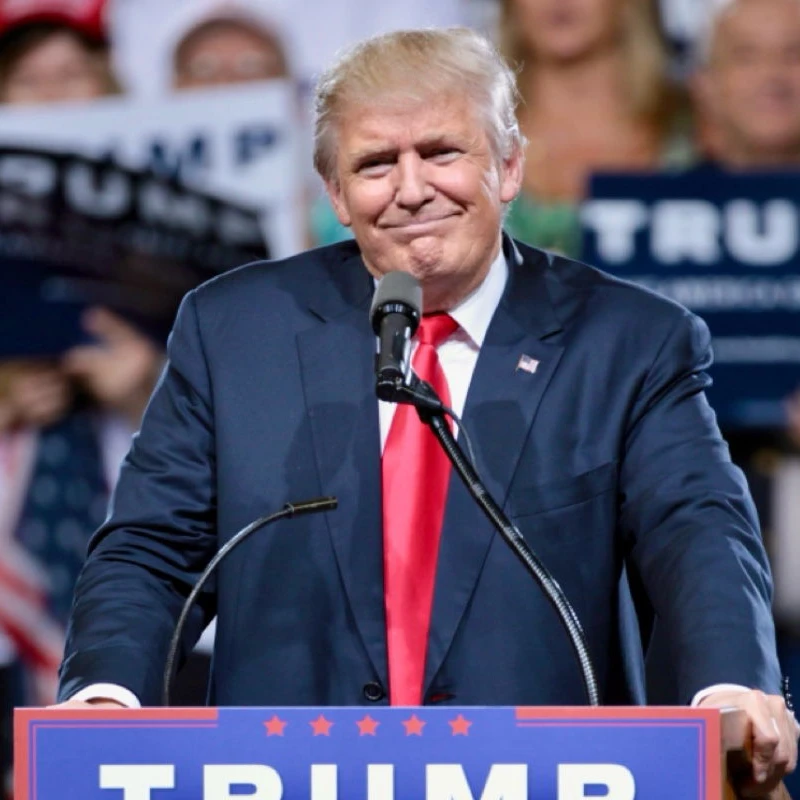
    In an unprecedented move, President Donald Trump is set to become the first sitting U.S. president to have his signature appear on paper currency. The Treasury Department announced on March 26th that Trump’s signature will be featured on bills in commemoration of the country’s upcoming 250th anniversary. This marks a significant departure from tradition, as U.S. currency has historically only carried the signatures of the Treasury Secretary and the Treasurer since its first printing in 1861.

    A Historic Decision and Its Justification

    Treasury Secretary Scott Bessent expressed his support for the decision, stating in a released statement, “The President’s mark on history as the architect of America’s Golden Age economic revival is undeniable.” Bessent believes that printing Trump’s signature on currency is not only appropriate but also “well deserved,” framing it as a fitting way to celebrate the nation’s progress and achievements under his leadership.

    Bessent further elaborated, suggesting that Trump’s signature on currency is a powerful recognition of “historic achievements” and the country’s path toward “unprecedented economic growth, lasting dollar dominance, and fiscal strength and stability.” Treasurer Brandon Beach echoed these sentiments, calling the move “appropriate” and labeling Trump as the “architect of America’s Golden Age economic revival.”

    Public Opinion and Economic Concerns

    Despite the Treasury’s enthusiasm, public opinion polls suggest that many Americans would prefer President Trump to focus on addressing pressing economic issues. Concerns about rising inflation, the increasing cost of gas, and the general cost of living appear to be top priorities for citizens. The decision to feature the president’s signature on currency, while celebratory for some, has been met with skepticism by others who feel it distracts from more immediate economic challenges.

    The first $100 bills bearing Trump’s signature are slated for production in June, with other denominations to follow. This initiative is part of a broader rollout of new currency and commemorative items ahead of the nation’s Semiquincentennial celebration. Notably, a 24-karat commemorative gold coin featuring Trump’s image has also been unveiled, pending Treasury approval.

    A Pattern of Presidential Branding

    This move aligns with a pattern observed since Trump returned to office, where he has sought to associate his name and brand with various initiatives and institutions. Previous examples include adding his name to the Kennedy Center for the Performing Arts, the U.S. Institute of Peace, discount drug programs, savings accounts, and proposed warships. During his first term, his name also appeared on COVID stimulus checks and direct cash payments issued during the pandemic.

    What are your thoughts on President Trump’s signature appearing on U.S. currency? Do you think it’s an appropriate way to celebrate the nation’s anniversary, or should the focus be elsewhere? Share your views in the comments below!

  • IRS Direct File Program Axed by Trump Admin

    Big news for taxpayers: the IRS Direct File program, a government-backed system designed to simplify tax filing, is officially being discontinued. The Trump administration has confirmed that the program will not be available for the 2026 tax season, a move that has already sparked considerable debate about its impact on everyday Americans.

    Direct File Program Comes to an End

    An official note sent to state comptrollers participating in the program announced that “IRS Direct File will not be available in Filing Season 2026.” While no future launch date has been set, the decision signals a significant shift in the IRS’s approach to tax preparation services. Treasury Secretary Scott Bessent stated that there are “better alternatives” and claimed the program wasn’t used extensively, suggesting the private sector could offer superior services.

    This decision marks a reversal from the program’s origins. Launched as a pilot in 2024, Direct File was developed using funds from the Inflation Reduction Act, signed into law in 2022 by the Biden administration. The goal was to provide a free, efficient, and easy-to-use option for taxpayers, a stark contrast to the often costly services offered by private tax preparation companies.

    Criticism and the Rise of a New Task Force

    Despite its user-acclaimed efficiency, the Direct File program faced criticism from some Republican lawmakers who argued it was a waste of taxpayer money, citing the existence of private free-filing options. However, proponents argue that these private options are often difficult to use and generate billions in profit for companies.

    The Trump administration, along with the Department of Government Efficiency led by Elon Musk, targeted the program early on. The “One Big Beautiful Bill Act” (OBBBA), signed in May 2025, includes a provision to establish a $15 million task force. This task force will explore enhancing public-private partnerships for free tax filing and assess the viability of replacing IRS-run direct e-file programs with private sector alternatives.

    Expert Reactions and Future Implications

    Industry experts aren’t surprised by the administration’s move. Adam Ruben, vice president at the Economic Security Project, commented that this administration often favors the wealthy, suggesting that “Trump’s billionaire friends get favors while honest, hardworking Americans will pay more to file their taxes.” The elimination of Direct File could mean increased costs for millions of taxpayers who relied on the free government service.

    • The IRS Direct File program will cease operations in Filing Season 2026.
    • The Trump administration cited “better alternatives” and claimed low usage.
    • The program was initially launched under the Biden administration as a free, efficient option.
    • Critics argued it was a waste of taxpayer money, while users praised its ease of use.
    • A new $15 million task force will explore private sector partnerships for tax filing.

    What are your thoughts on the discontinuation of the IRS Direct File program? Do you believe private sector options are truly better for taxpayers? Share your opinions in the comments below!

  • Military Pay at Risk Amid Government Shutdown

    The ongoing government shutdown is casting a shadow over the financial security of U.S. military personnel. Treasury Secretary Scott Bessent has issued a stark warning: if the shutdown persists, service members may not receive their paychecks on November 15th. This potential disruption highlights the critical role of government funding for our nation’s defense.

    A Temporary Fix and a Looming Deadline

    In an effort to ensure mid-month paychecks, President Donald Trump ordered the Pentagon to utilize approximately $8 billion in untouched research and development funds from the previous fiscal year. While this was intended as a stopgap measure, officials emphasize that these funds are finite. Bessent stated in an interview with Face the Nation, “I think we’ll be able to pay them beginning in November, but by Nov. 15 our troops and service members who are willing to risk their lives aren’t going to be able to get paid.”

    This warning underscores the urgency for Congress to reach a funding agreement. The shutdown, which has already extended for a significant period, leaves military families in a precarious financial situation, relying on these paychecks for essential needs.

    Political Blame Game Over Funding

    The blame for the shutdown has become a point of contention between political parties. Bessent, a Trump appointee, labeled the situation a “Democrat-led boycott,” specifically calling out Senate Majority Leader Chuck Schumer and House Minority Leader Hakeem Jeffries. He suggested their focus is on upcoming primaries rather than the well-being of government employees and the military.

    Republicans, meanwhile, accuse Democrats of blocking a funding bill sponsored by House Speaker Mike Johnson (R-LA). This bill, H.R. 5371, is intended to provide funding for troops and federal employees. Senate Democrats, however, blocked the bill during an October 23rd vote, leading to the current impasse.

    An Unconventional Donation

    In a surprising turn of events, President Trump announced that an anonymous friend had donated $130 million to the Department of Defense to help pay service members who had missed paychecks. While Trump praised the donor as “a great gentleman,” the gesture drew skepticism and backlash on social media, with many questioning the source of such a large sum and suggesting it could be better used for other critical needs, like healthcare.

    What are your thoughts on the potential impact of the government shutdown on military pay? How can political leaders find common ground to resolve these funding issues? Share your views in the comments below!