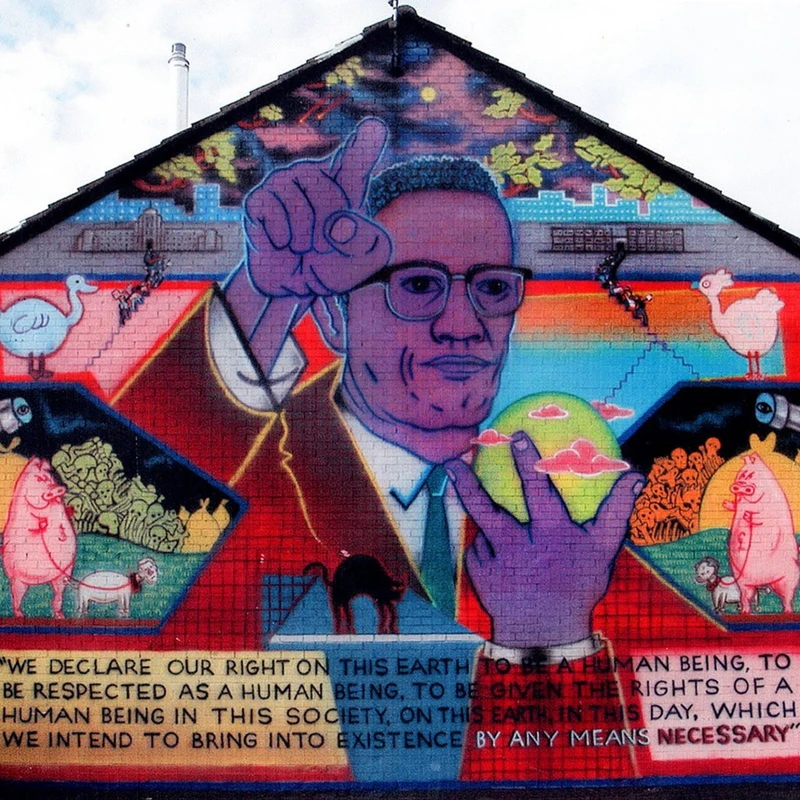
Tag: The Life and Times of Malcolm X

  • 7 Powerful Malcolm X Quotes on Black Empowerment

    Born Malcolm Little on May 19, 1925, and later known as El-Hajj Malik El-Shabazz, Malcolm X was a towering figure in the civil rights movement. Until his tragic assassination on February 21, 1965, he fiercely advocated for Black dignity, equality, and justice. Whether speaking from a mosque, on a global stage, or in an interview, Malcolm X’s message was unwavering: Black people deserve freedom, self-determination, and economic power.

    Challenging Self-Hate and Embracing Blackness

    Malcolm X’s powerful oratory and raw honesty about Black empowerment still resonate deeply today. As we reflect on his legacy, here are seven of his most impactful quotes that continue to inspire Black communities worldwide.

    1. “Who taught you to hate your own kind?”

    Delivered during a 1962 speech, this question directly confronted the internalized racism that leads Black people to devalue themselves. Malcolm X urged his audience to question the origins of self-hatred and to actively resist by embracing Blackness and practicing self-love.

    2. “Education is the passport to the future, for tomorrow belongs to those who prepare for it today.”

    From a 1964 speech, this quote powerfully links education directly to empowerment and liberation. Malcolm X reminded Black people that knowledge is not merely a credential but a vital tool for freedom, encouraging investment in the education of Black youth.

    3. “You can’t separate peace from freedom because no one can be at peace unless he has freedom.”

    In this 1965 statement, Malcolm X challenged the notion of peace without justice. He called out the hypocrisy of expecting oppressed people to remain silent while their rights are suppressed, asserting that true peace can only emerge from the presence of freedom and justice.

    4. “The most disrespected person in America is the Black woman. The most unprotected person in America is the Black woman. The most neglected person in America is the Black woman.”

    During a eulogy, Malcolm X placed Black women at the center of liberation struggles, a perspective ahead of its time. This quote remains a powerful rallying cry for respect and justice, resonating deeply in today’s climate of disparity against Black women.

    5. “I’m for truth, no matter who tells it. I’m for justice, no matter who it is for or against.”

    From his posthumously published autobiography, this quote exemplifies Malcolm X’s commitment to principles over popularity. It encourages embracing truth, even when uncomfortable, and pursuing justice universally, reflecting his evolving and inclusive worldview.

    6. “It is time for the Black Americans to band together and do whatever is necessary to see that we get the type of protection we need.”

    This profound statement underscores that Black liberation requires organized resistance and strategic planning. Malcolm X’s words serve as a battle cry for movements demanding strength, determination, and the demonstration of power when polite requests are insufficient.

    7. “By any means necessary.”

    Perhaps his most famous line, delivered in a 1964 speech, this phrase encapsulates the urgency and determination needed for freedom. It signifies that Black people have the right to pursue liberation through any available channel—political action, cultural resistance, or self-defense—without waiting for permission.

    • Challenge internalized racism and embrace self-love.
    • Recognize education as a key tool for liberation.
    • Understand that true peace requires freedom and justice.
    • Uphold the dignity and rights of Black women.
    • Commit to truth and justice, regardless of the source.
    • Organize and act decisively to secure necessary protection.
    • Pursue freedom and self-determination actively.

    Which of Malcolm X’s quotes resonates most with you? How do his words continue to inspire your journey towards empowerment? Share your thoughts in the comments below!
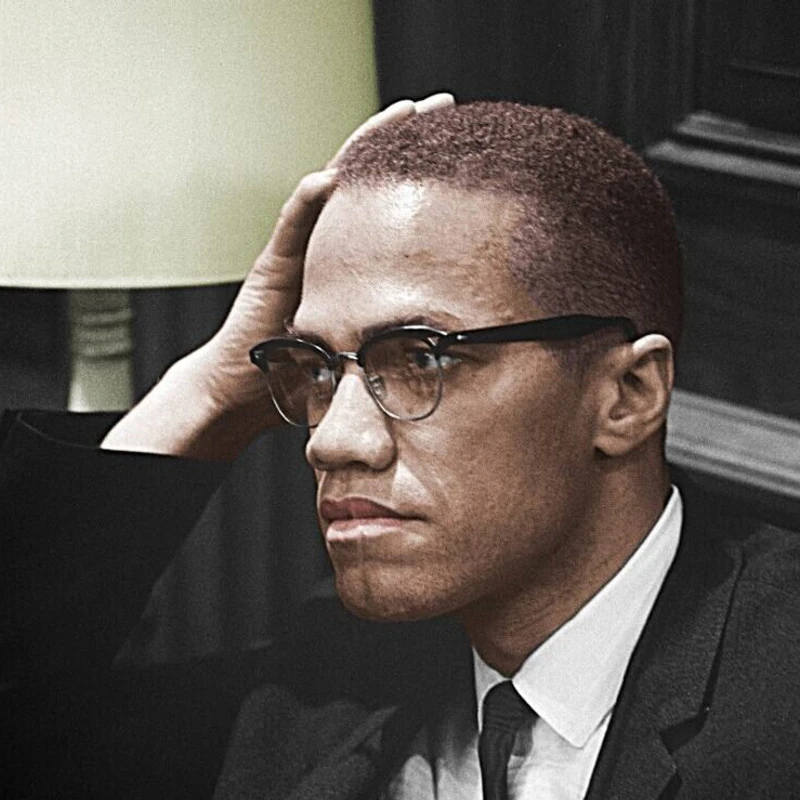
  • Malcolm X’s Vision for Black Liberation: A Centennial Look

    On what would have been his 101st birthday, we take a moment to reflect on the enduring legacy of Malcolm X. Born Malcolm Little on May 19, 1925, his journey from a young man scarred by racism to the influential figure El-Hajj Malik El-Shabazz remains a profound source of inspiration for Black liberation. His sharp critiques of systemic racism and his passionate calls for self-determination resonate deeply in today’s world.

    Forged in the Fires of Racism

    Malcolm’s early life was a harsh introduction to the realities of white supremacy. The discrimination faced by his family, including the loss of their home and the suspected murder of his father, Earl Little, laid bare the devaluation of Black lives in America. These early traumas, coupled with the subsequent challenges his mother faced, instilled in young Malcolm a powerful awareness of racial oppression.

    Transformation Through Education and the NOI

    His time in prison became an unexpected period of intense intellectual growth. Through self-education and the influence of fellow inmates, Malcolm discovered the teachings of Elijah Muhammad and the Nation of Islam (NOI). He shed the surname ‘Little,’ viewing it as a symbol of slavery, and adopted ‘X’ to represent his lost ancestral identity and the forging of a new consciousness.

    Initially concerned about the NOI’s slow growth, Malcolm became a driving force behind a massive recruitment effort. As a charismatic minister and the national spokesperson, he powerfully articulated a vision of Black self-defense, advocating for action ‘by any means necessary.’ This approach stood in contrast to the nonviolent strategies of the mainstream Civil Rights Movement, resonating with many Black Americans who felt marginalized.

    A Global Awakening: The Hajj and Beyond

    Malcolm’s intellectual and spiritual journey continued, marked by a transformative pilgrimage to Mecca in 1964. Witnessing Muslims of all races worshipping together led him to embrace Sunni Islam and adopt the name El-Hajj Malik El-Shabazz. This experience profoundly shifted his perspective on race and brotherhood.

    Following his Hajj, he founded the Muslim Mosque, Inc. (MMI) and the secular Organization of Afro-American Unity (OAAU). The OAAU, inspired by the Organization of African Unity, advocated for Pan-Africanism and Black self-determination on a global scale. Malcolm began framing the struggle for racial justice in the U.S. within the broader context of international anti-colonialism and human rights, even bringing the grievances of African Americans before the United Nations.

    I saw all races, all colors, blue screened and brown screened and black screened and white screened… displaying a spirit of unity and brotherhood like I have never witnessed before. — Malcolm X on his Hajj experience

    Enduring Relevance Today

    Nearly six decades after his assassination, Malcolm X’s legacy remains incredibly vital. In an era still grappling with stark racial disparities, his demand for equality and self-determination is more urgent than ever. The overrepresentation of Black individuals in the prison system, a statistic Malcolm fiercely critiqued, continues to highlight systemic injustices.

    His condemnation of police brutality and his assertion of the right to self-defense find resonance in contemporary calls for police reform. Debates surrounding Black history education and diversity initiatives also echo Malcolm’s insistence on historical truth and the importance of Black-led institutions. His vision of global Black solidarity continues to empower movements fighting for racial justice worldwide.

    Malcolm X’s enduring impact stems from his intellectual courage, his unwavering commitment to justice, and his remarkable capacity for growth. He challenged not only external oppression but also the internal limitations imposed by racism. On his 101st birthday, we honor a voice whose evolving vision for self-determination and liberation remains a powerful force in our pursuit of a more just world. Inshallah.

    How does Malcolm X’s vision continue to influence your understanding of Black liberation today? Share your thoughts in the comments below!