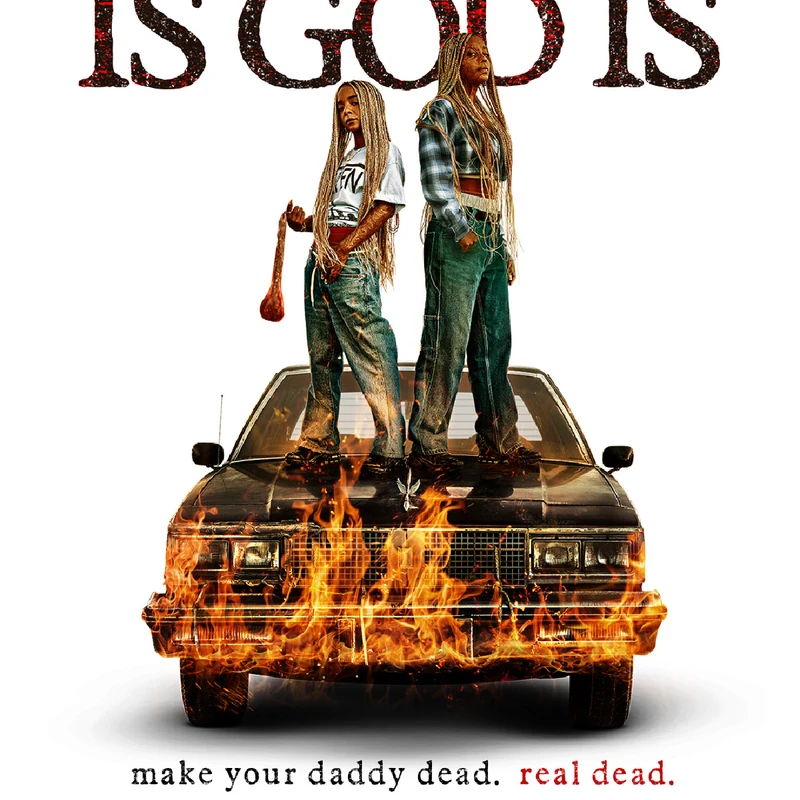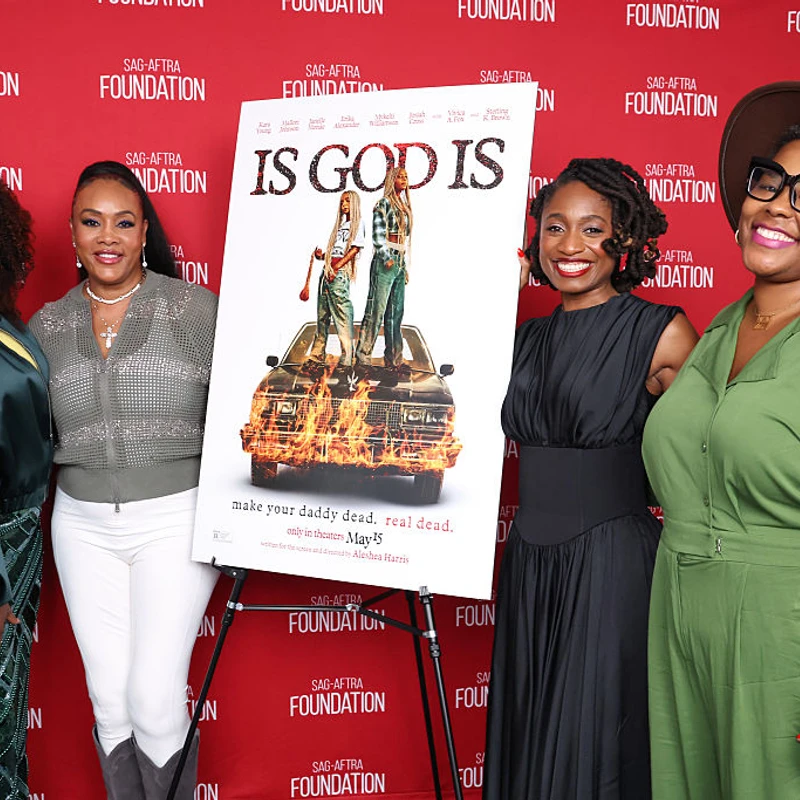
In a cinematic landscape that has often asked Black women to endure rather than express their anger, Aleshea Harris’s film ‘Is God Is’ offers a powerful and necessary counter-narrative. The film directly confronts the disturbing rise of Black femicide, presenting a revenge story that hands Black women their rage, validating it as righteous and long overdue.
A Mission Fueled by Rage
The film follows twin sisters, Racine and Anaia, who are tasked by their dying mother to kill the father who brutally attacked her. This mission, described as ‘destiny sh-t,’ forms the core of a revenge narrative that is groundbreaking for Black cinema. Harris boldly portrays the fury of her protagonists not as something to be suppressed, but as a righteous and earned response to profound trauma.
This on-screen portrayal mirrors a harsh off-screen reality. Statistics reveal that Black women experience intimate partner violence at twice the rate of white women, with over 40% facing physical abuse in their lifetimes. Recent high-profile cases, like that of Pastor Tammy McCollum, Vice Mayor Nancy Metayer Bowen, and Dr. Cerina Fairfax, tragically underscore the urgency of this issue, highlighting how societal expectations and trust in systems failed to protect these women.
Interrogating Systems of Protection and Complicity
Harris uses the film to scrutinize the systems that often fail Black women, particularly the role of the Black church. Erika Alexander delivers a masterful performance as Divine, a pastor who, despite being wronged by the twins’ father (the ‘Monster’), has built an altar to him. Divine represents the complex relationship between Black women, faith, and the men who are often protected by these institutions.
Alexander notes that Divine’s character encourages viewers to question how institutions can ironically shield abusers. She highlights the contrast between the power and agency Black people can find within the church—where roles like ‘king,’ ‘queen,’ and ‘first lady’ are prominent—versus the lack of power they often face in a racist society. This creates a closed system where critiques of Black men, even those who perpetrate abuse, are often rebuked, turning a potential haven into a space where abuse can go unchecked.
I think she turned herself inside out in order to stand next to a demon. — Erika Alexander on her character Divine
Challenging Archetypes and Expectations
Sterling K. Brown plays against type as the ‘Monster,’ a man whose charming and disarming facade allows him to commit terrible acts. Harris intentionally cast Brown, known for playing dignified Black men, to make a statement about how abusers often rely on a trustworthy appearance to operate.
Janelle Monáe portrays Angie, the Monster’s current wife, in another against-type casting. Monáe, known for her Afrofuturist roles centered on liberation, embodies a woman trapped in a curated bourgeois existence. Angie’s quiet departure from the Monster’s life and her dismissive attitude towards the twins highlight how societal structures can isolate women, even those who appear to have it all.
Vivica A. Fox as the Force of Nature
Vivica A. Fox, an actress often seen playing Black women crushed by larger forces, is cast as the Mother who sets the revenge plot in motion—a character named ‘God.’ Harris’s audacious choice to cast Fox in this pivotal role, considering her past performances, imbues the character with immense power. Fox embodies the force that drives the narrative, a stark contrast to the victims she often portrayed.
The film’s focus remains on the twins, Racine and Anaia, whose traumas extend beyond their mother’s actions, stemming from abuse within the foster care system after being removed from their father’s influence. Harris illustrates how grief and abuse ripple outward, hardening into silence and inherited rage within families. The duplicated wound of the twins dramatizes this shared trauma, showing how it burns through two bodies from the same fire.
A Precedent-Setting Narrative
‘Is God Is’ stands apart in Black cinema for allowing Black women to seek revenge without punishment, criminalization, or coded villainy. Unlike films that resolve abuse narratives within restrictive Christian frameworks, as seen in some of Tyler Perry’s work, Harris refuses such resolutions. There is no redemptive Black man, no return to grace for the male characters—only revenge.
The film captures the full spectrum of Black women’s experiences with abuse: their anger, grief, desire for vengeance, and refusal to disappear. As Erika Alexander emphasizes, disrupting these narrow cinematic narratives can change how Black women are perceived and treated in all aspects of life. By portraying their full humanity, ‘ugly parts included,’ Harris suggests, is what will ultimately keep them alive.
What are your thoughts on the themes presented in ‘Is God Is’? How important is it to see Black women’s rage and trauma represented authentically on screen? Share your perspectives in the comments below!