Tag: South Africa

  • Trump’s Refugee Program: 6,000 White South Africans Admitted

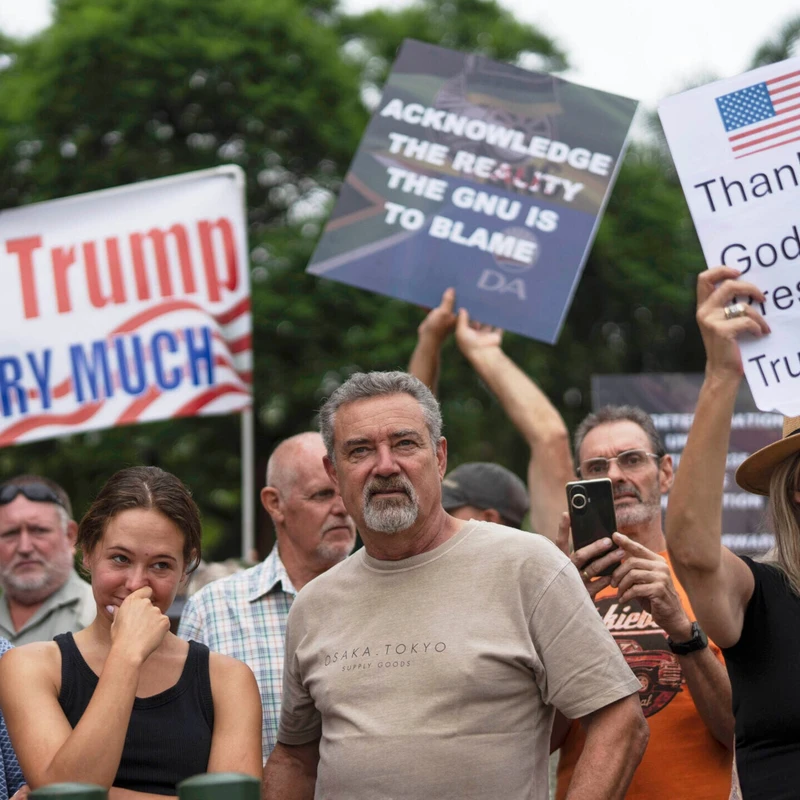
    President Donald Trump’s administration has reportedly prioritized admitting white South Africans into the U.S. through a refugee program, even as other refugee initiatives faced cancellation. This move comes after Trump asserted that this demographic is facing a “genocide” in their home country, a claim that has been widely disputed.

    Refugee Admissions Focus on South Africa

    According to reports from the Washington Post, out of 6,069 individuals granted refugee status in the U.S. since October, an overwhelming majority – all but three – were from South Africa. The administration’s goal is to further increase this number, with plans to admit approximately 10,000 more Afrikaners.

    The Afrikaners, an ethnic group with Dutch, French, and German roots, were historically the ruling class in South Africa until the end of apartheid in 1994. In a country that is now 80% Black, Black presidents have led since Mandela’s term began in 1994.

    The ‘Genocide’ Claim and Land Inequality

    Trump has framed his resettlement program as a response to the alleged persecution of white farmers in South Africa due to their race. This narrative largely stems from his interpretation of a 2022 policy by South African President Cyril Ramaphosa aimed at addressing historical land inequality. At the time, white South Africans, who constituted 7% of the population, owned 72% of the agricultural land, compared to 4% owned by the Black majority.

    Trump viewed Ramaphosa’s efforts to rectify this imbalance as an attack on white South Africans. However, research indicates that violent incidents in South Africa, including those affecting farmers, impact people of all racial backgrounds.

    Shifting Immigration Policies

    Initially, the resettlement program targeted 7,500 South Africans. However, the White House recently announced an increase to the target, citing “unforeseen developments in South Africa” creating an “emergency refugee situation.” This specific focus on South Africans stands in contrast to the administration’s broader anti-immigration stance, including the suspension of the Refugee Admissions Program upon taking office.

    Relations between the U.S. and South Africa have been strained. During a meeting last May, Trump and his administrators presented President Ramaphosa with articles and a video as purported evidence of persecution, though some information was later found to be inaccurate. The South African government has consistently refuted the “white genocide” claim, with a spokesperson for the international relations department stating it is “widely discredited and unsupported by reliable evidence.”

    What are your thoughts on the U.S. refugee program’s focus on white South Africans? Share your perspective in the comments below.
  • Cynthia Shange, SA’s First Black Beauty Queen, Dies

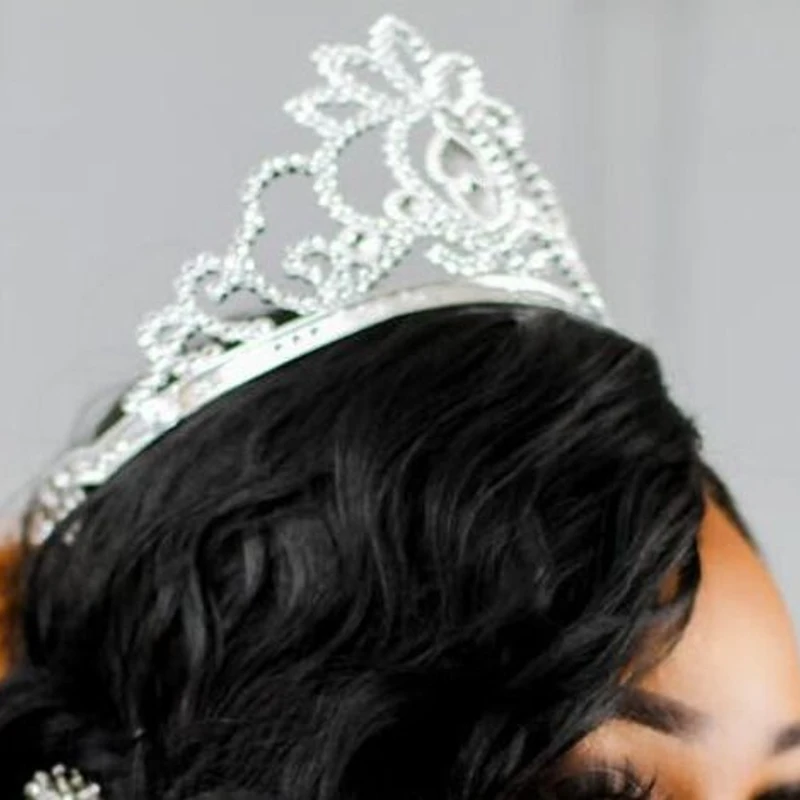
    A true pioneer has left us. Cynthia Shange, celebrated as South Africa’s first Black beauty queen, has passed away at the age of 76. Her daughter, Nonhle Thema, shared the heartbreaking news on Instagram, remembering her mother as a beacon of warmth, dignity, and kindness.

    Breaking Barriers in Beauty and Beyond

    Born on July 27, 1949, Cynthia Philisiwe Shange made history in the early 1970s when she won the Miss Africa South title. This pageant was created specifically for Black women, as they were excluded from the official Miss South Africa competition due to the country’s deeply racist apartheid system.

    Shange’s impact didn’t stop there. She went on to compete in the Miss World pageant in London, where she achieved a remarkable fifth-place finish. This achievement was monumental, especially as she competed alongside the white Miss South Africa contestant, challenging the racial segregation of the time.

    A Legacy in Acting and Social Reflection

    Following her success in beauty pageants, Cynthia Shange transitioned into a beloved actress. She starred in ‘Udeliwe,’ recognized as one of South Africa’s earliest Black feature films, and later captivated audiences as Mkabi KaSodubo in the award-winning mini-series ‘Shaka Zulu.’

    Her contributions were further recognized in 2024 when she received the Lifetime Achiever Award at the KZN Simon Mabhunu Sabela Awards. Thamsanqa Ntuli, Premier of KwaZulu-Natal, honored her legacy, stating, “She played a vital role in advancing the arts as a vehicle for social reflection, healing and nation-building in a democratic South Africa.”

    Remembering a Courageous Icon

    Ntuli added, “We have lost not only a cultural icon, but a courageous woman who paved the way for many.” Cynthia Shange leaves behind four children: Sihle, Nonhle, Ayanda, and Benele Thema. Funeral arrangements are expected to be announced soon.

    Her journey from breaking racial barriers in beauty pageants to becoming a prominent actress and cultural figure serves as an enduring inspiration. Cynthia Shange’s legacy will undoubtedly continue to influence generations to come.

    What are your favorite memories or performances from Cynthia Shange? Share your thoughts and tributes in the comments below.

  • Trump Prioritizes White South Africans for Refugee Status

    Recent data released by the State Department is shedding light on a striking shift in U.S. refugee admissions. In 2026, nearly all of the refugees admitted to the United States have come from South Africa, a move that aligns with President Donald Trump’s stated commitment to prioritizing white Afrikaners.

    A Focused Approach to Refugee Admissions

    According to data released on April 6th, out of 4,499 refugees admitted so far in 2026, a staggering 4,496 are from South Africa. This number already surpasses half of the 7,500-person cap set for the year. The administration’s focus on white South Africans stems from claims of ‘white genocide’ and a pledge to protect them from discrimination.

    While farm attacks are a reality in South Africa, experts argue they do not constitute genocide, nor do land reform efforts equate to widespread confiscation. Despite this, the Trump administration announced plans in February to process up to 4,500 refugee applications monthly from white South Africans, even installing trailers at the U.S. Embassy in Pretoria to facilitate the process. This signals a significant push to increase admissions from South Africa while limiting those from other regions.

    A Departure from Traditional Refugee Programs

    This concentrated effort marks a significant departure from the bipartisan refugee program established in 1980, which traditionally involved years of vetting for refugees fleeing identity-based persecution. In stark contrast, over 100,000 refugees were admitted during the final full year of the Biden administration, representing a three-decade high.

    Upon his return to office, Trump moved swiftly to alter immigration policies, including suspending the U.S. Refugee Admissions Program on his first day, citing security and assimilation concerns. The current approach prioritizes a single ethnic group, a notable change from previous administrations.

    • Nearly all refugees admitted to the U.S. in 2026 are from South Africa.
    • The policy prioritizes white Afrikaners, citing discrimination concerns.
    • Admissions from South Africa exceed the program’s annual cap.
    • This approach contrasts with previous administrations’ broader refugee policies.
    • The U.S. Refugee Admissions Program has seen significant changes under the current administration.

    Resettlement Locations and Future Implications

    More than 500 South African refugees have been resettled in Texas, with Florida and California receiving the next largest numbers. The few non-South African arrivals occurred in November, with three refugees from Afghanistan resettled in Colorado. This focused approach raises questions about the future of global refugee resettlement and U.S. immigration policy.

    What are your thoughts on this shift in U.S. refugee policy? How do you think it impacts global humanitarian efforts? Share your views in the comments below!

  • Coca-Cola Invests $1 Billion in South Africa

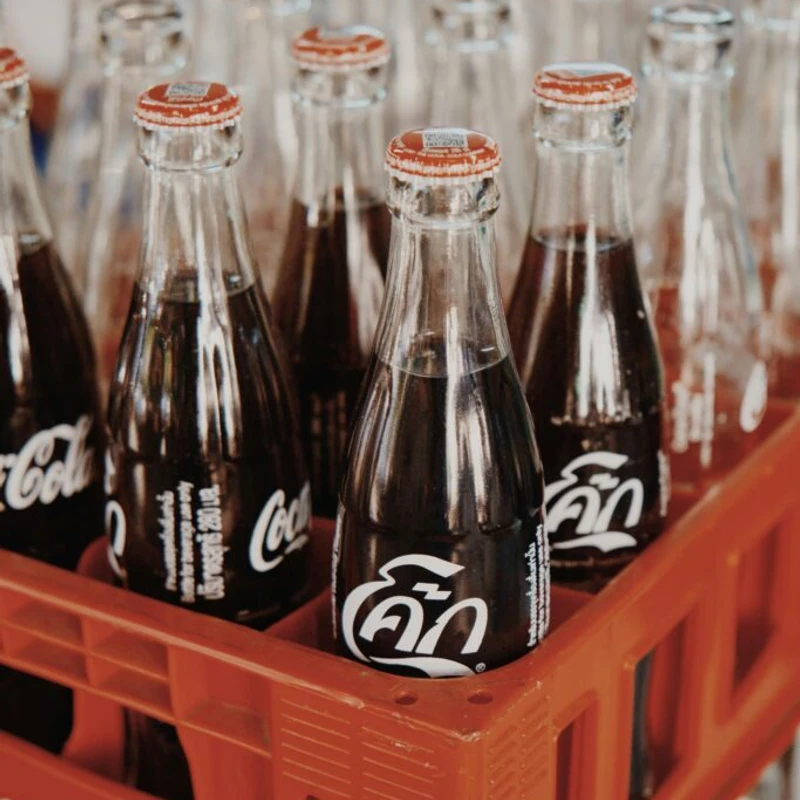
    Get ready for a major economic boost in South Africa! The Coca-Cola Company has just announced a substantial investment of $1 billion, set to roll out through 2030. This massive injection of capital is aimed at supercharging the company’s operations across the nation.

    Boosting Operations and Local Economy

    The investment, totaling 17.6 billion rand, will be channeled through Coca-Cola and its authorized bottlers, Coca-Cola Beverages South Africa and Coca-Cola Peninsula Beverages. The funds are earmarked for expanding production capabilities, strengthening distribution networks, fostering innovation, and attracting further investment into the region.

    Luis Felipe Avellar, president of The Coca‑Cola Company’s Africa operating unit, shared the exciting news at the sixth South Africa Investment Conference (SAIC) in Johannesburg. He emphasized the company’s commitment to South Africa’s potential and its dedication to growing alongside the communities it serves. “We hire locally, produce locally, distribute locally and, where possible, source locally, helping to build a stronger, more integrated economy in South Africa,” Avellar stated.

    Significant Economic Impact

    The economic ripple effects of this investment are expected to be substantial. A study by Steward Redqueen indicates that Coca-Cola and its subsidiaries already contributed 1.2 billion rand to South Africa’s economy in 2024, supporting over 87,000 jobs across various sectors like retail, agriculture, and manufacturing. This new investment is poised to amplify that impact.

    Charl Goncalves, chief executive of Coca-Cola Peninsula Beverages, expressed optimism about South Africa’s future, highlighting a continued focus on business investment and initiatives promoting economic inclusion and sustainable prosperity.

    Expanding Footprint in Africa

    This move in South Africa is part of Coca-Cola’s broader strategy to deepen its presence across the continent. Just last year, Coca-Cola Hellenic Bottling Company (CCBA) announced plans to acquire a 75% stake in Coca-Cola Beverages Africa for $2.6 billion. CCBA, founded in 2014, already operates in 14 Sub-Saharan African countries and produces a significant portion of Coca-Cola beverages sold on the continent.

    While the acquisition aims to boost long-term investment and operational sustainability, it has also raised concerns about potential job losses due to restructuring. Local unions are advocating for job security to be a priority alongside efficiency goals.

    What are your thoughts on Coca-Cola’s massive investment in South Africa? Share your perspective in the comments below!

  • Doja Cat’s Dad Accuses Mom of “Brainwashing”

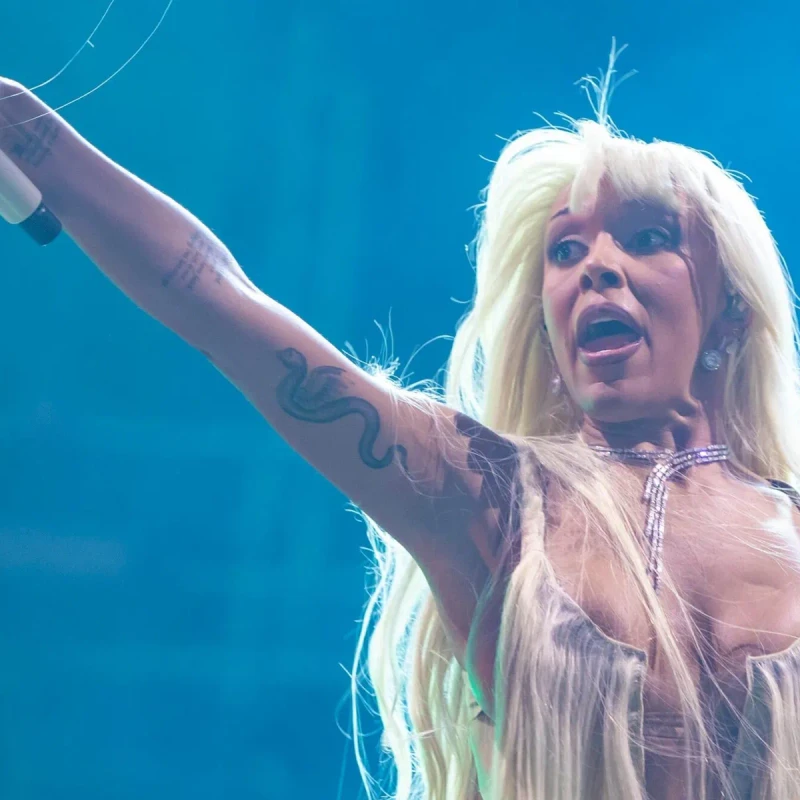
    The complex relationship between Doja Cat and her father, South African actor Dumisani Dlamini, has once again taken center stage. Following Doja’s recent TikTok video where she labeled him a “deadbeat dad,” Dlamini has responded, accusing Doja’s mother, Deborah Sawyer, of “brainwashing” their daughter.

    Accusations Fly Amidst Family Feud

    In a now-deleted Instagram video, Dlamini defended his reputation, stating he worked hard to build his name and supported his children. He claimed that Sawyer, whom he referred to as a “white woman with three kids,” influenced Doja to resent him. “That white woman brainwashed my baby, that I left her,” Dlamini stated, asserting he never abandoned his child and that Sawyer manipulated the situation.

    Dlamini’s comments suggest a long-standing conflict, with him feeling unfairly portrayed by Doja and her mother. He implied that Sawyer used her influence to create a narrative of his absence.

    The Concert Prank That Ignited the Drama

    The latest flare-up began when Doja Cat shared a story on TikTok about her father declining an invitation to her concert in Pretoria, South Africa, on March 20th. She claimed he cited insufficient contact as the reason for his absence.

    As a playful form of revenge, Doja revealed she sent her father a prank ticket link containing gay pornography. Dlamini’s response, which he reportedly sent to his management, further fueled the public narrative. Doja Cat’s concert was part of her ongoing “Tour Ma Vie World Tour,” supporting her fifth studio album, “Vie.”

    A History of Estrangement

    • Doja Cat (Amala Ratna Zandile Dlamini) was raised in the United States.
    • Her father, Dumisani Dlamini, is a South African actor.
    • The two have had a reportedly distant relationship for years.
    • Doja Cat has previously spoken about her father’s absence in her life.

    This ongoing saga highlights the complexities of celebrity family dynamics and the public nature of personal disputes. As Doja Cat continues her world tour, the drama surrounding her relationship with her father adds another layer to her public persona.

    What are your thoughts on this family drama? Share your opinions in the comments below!

  • Walmart Lands in Africa: First Store Opens

    Get ready, Africa! Retail giant Walmart has officially landed on the continent, opening its very first store in Johannesburg, South Africa. This major move comes just in time to tap into the massive shopping frenzy of Black Friday.

    A New Era for South African Shoppers

    The Johannesburg mega-store, which celebrated its grand opening on Saturday, November 22nd, is offering local shoppers access to a wide array of products that were previously hard to find in the region. Think international brands and, yes, even the highly sought-after children’s toy, Labubus!

    But it’s not just about new products; it’s about Walmart’s signature “roll back” prices. Shoppers are already looking to take advantage of Walmart’s famously low prices, especially with Black Friday just around the corner, promising even bigger deals.

    More Than Just a Store Opening

    This Johannesburg location is just the beginning. Walmart has ambitious plans to open numerous more stores across South Africa and potentially the wider continent. Andrea Albright, executive vice president of Walmart, stated that this opening is a commitment to helping customers save money and live better by consistently delivering the lowest total cost for their shopping baskets.

    Beyond serving consumers, the new store is also a boon for the local economy. It has created new jobs and is actively partnering with local businesses to stock community-sourced products. Plus, a new delivery service has launched, directly competing with services like Checkers’ Sixty60.

    Eyes on Black Friday Sales

    With Black Friday poised to be a major sales driver globally, all eyes will be on Walmart’s inaugural African store. It will be fascinating to see how its sales figures stack up on one of the world’s biggest shopping days.

    Are you excited about Walmart’s arrival in Africa? What do you hope to see from their expansion? Share your thoughts in the comments below!

  • Africa’s First G20 Summit Marred by US Rift

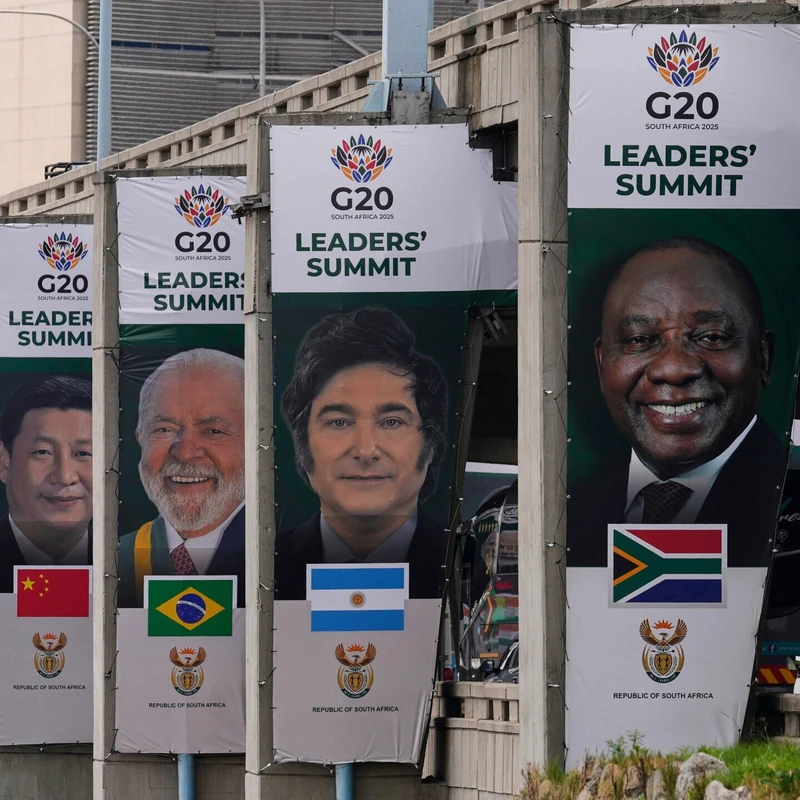
    Johannesburg is buzzing with anticipation as it hosts Africa’s first-ever Group of 20 (G20) summit. This landmark event aims to place the critical challenges faced by developing nations at the forefront of global discussions. However, the summit’s potential impact is already being dampened by a significant diplomatic rift between the host nation, South Africa, and the United States.

    US Boycott Casts a Shadow

    The summit, bringing together delegations from 18 of the world’s wealthiest and most influential developing economies, is notably missing the U.S. President Donald Trump’s administration has branded South Africa’s hosting as a “disgrace” and opted out of participation. This decision stems from Trump’s claims that South Africa, a majority-Black nation, is persecuting its white Afrikaner minority.

    This U.S. opposition poses a serious threat to South Africa’s carefully curated agenda. The host nation intended to focus leaders’ attention on pressing issues such as the escalating impact of climate change on developing countries, the crushing debt burdens faced by poorer nations, and the ever-widening gap of global inequality.

    Mounting Diplomatic Tensions

    Months of diplomatic friction between the U.S. (which is set to assume the G20 presidency following the summit) and South Africa escalated this week. South African officials revealed that Washington had attempted to pressure them into not issuing a leaders’ declaration at the summit’s conclusion, especially without an American delegation present. South African President Cyril Ramaphosa firmly responded, “We will not be bullied. We will not agree to be bullied.”

    A leaders’ declaration is typically the culmination of G20 summits, outlining any broad agreements reached. However, the bloc has historically struggled to translate words into concrete actions due to the diverse priorities of its members, including the U.S., China, Russia, India, and various European nations. The G20 now comprises 21 members – 19 nations plus the European Union and the African Union – aiming to unite rich and poor countries in tackling global economic challenges.

    Finding Common Ground Amidst Absence

    The U.S. boycott aligns with President Trump’s broader criticism of multinational organizations, having previously withdrawn the U.S. from the Paris climate agreement and the World Health Organization. Despite this, other world leaders have traveled to Johannesburg with the hope of forging common ground, particularly concerning new trade deals in the wake of U.S. tariffs.

    The African states are searching for partnerships, and so I will go to Johannesburg in any case and hold talks there. … I expect that we will return to Germany with good results. — German Chancellor Friedrich Merz

    While often operating in the shadow of the G7, the G20 collectively represents a significant portion of the global economy (85%), international trade (75%), and population (over half). Leaders like Australian Prime Minister Anthony Albanese emphasized the G20’s importance, noting that a quarter of Australian jobs depend on trade with G20 partners.

    China and Russia’s Presence

    President Trump isn’t the only major world leader absent. China’s Xi Jinping is also skipping the summit due to scaled-back international travel, and Russian President Vladimir Putin will not attend due to an International Criminal Court arrest warrant. However, both China and Russia are sending government delegations, leaving the U.S. as the sole G20 nation not represented.

    China, in particular, is increasing its influence. Chinese Premier Li Qiang used his trip to sign a significant railway refurbishment agreement in Zambia, further expanding China’s reach in Africa and its access to critical minerals. Some analysts suggest that the U.S. boycott might encourage developing nations to strengthen ties with other global powers, like China.

    This isn’t necessarily negative. It can catalyze more diverse leadership in global governance. — Professor Narnia Bohler-Muller

    President Ramaphosa, chairing the summit, remained unfazed by the U.S. absence, stating bluntly, “Their absence is their loss.”

    What are your thoughts on the U.S. boycott of the G20 summit? Do you think it will impact the discussions on global issues? Share your views in the comments below!

  • Elon Musk’s Father’s Racist Remarks on US Demographics

    Hold onto your hats, folks, because Errol Musk, the father of tech titan Elon Musk, has just made some incredibly disturbing and frankly, racist, remarks about the changing demographics in the United States. His comments, made during an interview about a CNN special, are drawing serious backlash.

    The ‘Jungle’ Comment

    During an interview with CNN’s Donie O’Sullivan for his upcoming special, “MisinfoNation: White Genocide,” Errol Musk was presented with the idea that the U.S. will become a non-white majority country within the next two decades. His reaction? Visible frustration, followed by the deeply offensive question: “You want to go back to the jungle?”

    This comment immediately reveals a prejudiced mindset, equating a diverse population with a primitive, uncivilized state. It’s a classic trope used to dehumanize and fear-monger about minority groups.

    Connecting to Trump’s Rhetoric

    Musk’s comments align disturbingly with rhetoric from former President Donald Trump, who recently announced no U.S. officials would attend the G20 Summit in South Africa. Trump cited the country’s treatment of white farmers, echoing claims of “genocide” that he and Elon Musk have also promoted.

    The idea being pushed is that White South African “Afrikaners” are victims and should be welcomed as refugees in the U.S. O’Sullivan directly challenged Errol Musk on this, stating, “America, in the next 20 years, will become for the first time in its history a minority white country.”

    Musk’s Defense of Apartheid?

    Errol Musk doubled down, calling a minority-white U.S. a “very, very bad thing.” When pressed by O’Sullivan about whether the U.S. is doomed if white people are no longer the majority, Musk emphatically replied, “Yes, goes under there.” He then bizarrely referenced South Africa, claiming its small white population “projects European culture” and that they “gave them work, we fed them.” This is a clear attempt to downplay or outright deny the brutal reality of apartheid.

    O’Sullivan rightly shot back, pointing out that the white population “oppressed millions of Black people for decades.” Musk’s response was astonishing: “No! How do you oppress? You know, we gave them work, we fed them… That’s not oppression, that’s feeding them!” He even claimed he never witnessed the oppression Black individuals faced under apartheid law, a statement O’Sullivan bluntly attributed to his race: “Yeah, but cause you’re white.”

    A Disturbing Perspective

    The CNN special, “Misinformation: White Genocide,” airs on November 16th, and this clip offers a chilling preview of the kind of dangerous narratives it explores. Errol Musk’s comments are not just ignorant; they are rooted in racist ideology that seeks to create fear and division.

    It’s crucial to understand that the U.S. has always been a nation built by people from all over the world, and its strength lies in its diversity. Framing demographic shifts as a negative or a threat is a harmful and inaccurate perspective.

    What are your thoughts on Errol Musk’s shocking statements? Do you think this reflects a wider issue in discussions about demographics? Share your views in the comments below!

  • South Africa Criticizes Trump’s Refugee Policy

    Tensions are high between South Africa and the United States following a significant shift in U.S. refugee policy. The Trump administration’s decision to prioritize white Afrikaners, a minority group in South Africa, for refugee status has drawn sharp criticism from the South African government, which calls the underlying premise factually inaccurate and racially biased.

    A Drastic Reduction in Refugee Ceilings

    The Trump administration announced a new refugee ceiling of 7,500 for the upcoming fiscal year, a drastic cut from the previous 125,000 spots. Within this new policy, Afrikaners were specifically mentioned as a group to be given preference over others, citing humanitarian concerns and national interest. This move has been met with strong disapproval from South Africa’s international relations department.

    President Trump has repeatedly claimed that Afrikaners are facing a “genocide” in South Africa due to redress policies and high crime rates. However, South African government spokesman Chrispin Phiri stated that the claim of “white genocide” is widely discredited and lacks reliable evidence. He further noted that the program designed to facilitate Afrikaner immigration as refugees is flawed and disregards South Africa’s constitutional processes.

    Divisive Debate and Rejection of ‘White Genocide’ Claim

    The U.S. asylum offer for Afrikaners has ignited a divisive debate within South Africa. Even many within the Afrikaner community have rejected the notion that they require special asylum status based on race. A group of prominent Afrikaners, including politicians and activists, penned an open letter arguing that vulnerability, not race, should be the guiding principle for humanitarian policy.

    While some Afrikaner groups remain critical of the South African government’s handling of crime and redress policies, they do not support the “white genocide” narrative. An Afrikaner lobbyist group, Afriforum, acknowledged concerns about the safety of white people but stated they do not label the murder of white farmers as genocide. However, they also noted that some Afrikaners might apply for the U.S. refugee status, particularly those who have been victims of farm attacks or discriminatory policies.

    Diplomatic Relations Under Strain

    This policy shift has exacerbated existing diplomatic tensions between the two nations. Trump had previously suspended financial aid to South Africa and imposed high tariffs on its exports to the U.S. The ongoing dispute over refugee policy and the “white genocide” claim continues to strain relations, highlighting a significant divergence in perspectives on human rights and immigration.

    What are your thoughts on prioritizing specific ethnic groups for refugee status? Share your perspective on this complex issue in the comments below.

  • Walmart Launches First Stores in Africa

    Get ready, Africa! Retail giant Walmart is making a significant move by opening its very first branded stores on the continent, with South Africa being the initial launchpad. This expansion marks a major milestone for the U.S. company as it aims to bring its well-known shopping experience to a new market.

    Walmart’s African Debut

    While Walmart has had a presence in South Africa through its subsidiary Massmart (which it fully acquired in 2022), this new venture involves launching stores under the iconic Walmart name. This strategic move is designed to establish Walmart’s distinct brand identity and compete directly with established local players like Shoprite, Woolworths, and Pick n Pay.

    The company plans to open several locations by the end of this year, with initial openings expected as early as October. This expansion isn’t just about selling products; it’s about integrating into the local business landscape and culture.

    Focus on Local Integration and Affordability

    A key part of Walmart’s strategy is to work closely with African-based suppliers. This means stocking shelves with locally sourced products, celebrating the country’s rich culture, and offering goods that resonate with the South African customer base. President and CEO Kath McLay emphasized this commitment, stating that they aim to deliver “signature every day low prices and global standards while celebrating the country’s rich culture.”

    The product mix will feature a blend of grocery items, technology, and household essentials, all aligned with Walmart’s core mission of providing affordable merchandise. This approach aims to make high-quality goods accessible to a broader range of consumers.

    Competing in the Digital Space and Community Impact

    The launch also positions Walmart to better compete in South Africa’s growing e-commerce sector, where players like Amazon and Takealot.com currently hold significant market share. By establishing a physical presence, Walmart can enhance its omnichannel strategy.

    Beyond commerce, Walmart is highlighting its commitment to uplifting South African communities. Plans include supporting food security, disaster relief efforts, and local entrepreneurs. They also aim to create new workforce opportunities and implement sustainability initiatives to contribute positively to the South African economy.

    What are your thoughts on Walmart’s expansion into Africa? Are you excited to see what they bring to South Africa? Share your opinions in the comments below!