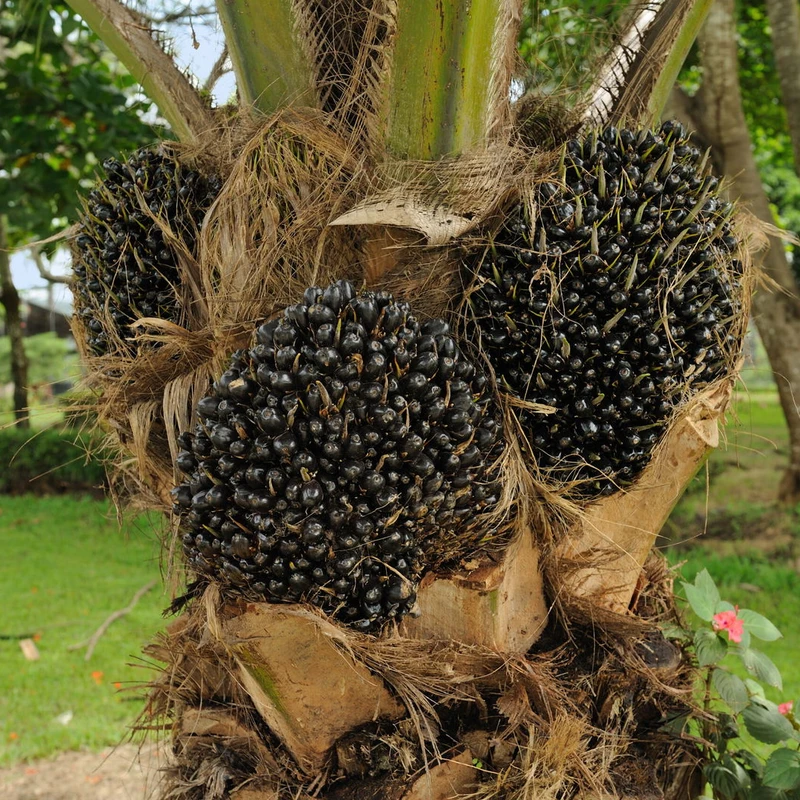
Two Nigerian-American entrepreneurs are making waves back in their homeland by tackling a significant challenge in the oil palm market. Ikenna Nzewi and Uzo Ayogu founded Releaf in 2017 with a mission to turn palm waste into environmentally friendly profits, bringing technological innovation to the agricultural sector.
The ‘Kraken’ System: Boosting Farmer Yields
Releaf developed a groundbreaking palm nut processing system called ‘Kraken.’ This technology is designed to eliminate excessive waste for small-scale farmers, a crucial demographic in Nigeria’s agricultural sector. By improving the efficiency of the palm oil process, Releaf helps these farmers achieve higher production yields while simultaneously reducing the release of harmful chemicals into the environment.
The inspiration for Kraken came after Nzewi and Ayogu traveled across Nigeria, connecting with local farmers to identify the most pressing needs. They discovered that Nigeria’s decline as a leading global palm oil producer was largely due to outdated processing systems. Small farmers often rely on manual methods, which are labor-intensive and yield minimal returns, leading to nearly a quarter of produce being discarded.
Environmental Impact and Biochar Production
Releaf’s commitment to sustainability is evident in its recycling of leftover palm kernel shells. Through its climate arm, Releaf Earth, these kernels are repurposed for industrial biochar production. Biochar, a stable form of carbon created by heating organic material in a low-oxygen environment, can remain in soil for centuries, effectively sequestering carbon and preventing it from entering the atmosphere.
This process offers a “win-win” situation: it reduces environmental harm by storing carbon and enriches the soil, boosting agricultural productivity. Nzewi highlighted the technology’s potential, stating, “These are technologies that remove carbon and store it in a way that it can’t return to the atmosphere for up to 1,000 years.”
Scaling Challenges and Investor Appeal
Despite the numerous benefits, scaling Releaf has faced challenges, partly due to decreased funding initiatives across Africa. However, the company’s dual focus on environmental impact and economic profit has attracted investor interest. Releaf recently delivered carbon removal credits to Salesforce, establishing significant partnerships with major corporations.
With ambitious goals to reduce up to 700,000 metric tons of CO₂e and recycle 50,000 metric tons of waste biomass by the end of the decade, Releaf is poised to demonstrate the effectiveness of its innovative processes on a global scale. They are also actively seeking to expand collaborations and partnerships, bringing African innovators into crucial global discussions on agricultural technology.
What are your thoughts on Releaf’s innovative approach to agriculture and waste management? Do you think more companies should focus on environmental impact alongside profit? Share your opinions in the comments below!