Tag: racial gerrymandering

  • Court Blocks Alabama Map Diluting Black Voting Power

    In a significant victory for Black voters in Alabama, a federal court has issued a preliminary injunction blocking the state’s newly drawn congressional map. This ruling temporarily preserves a second majority-Black district, a crucial element for ensuring equal representation in a state with a substantial Black population.

    A Temporary Reprieve for Black Voters

    The decision by a three-judge panel means that Alabama’s 2024 congressional map, which includes two districts where Black voters form a majority, will remain in place for now. This comes as a moment of relief following the U.S. Supreme Court’s recent decision that weakened protections under the Voting Rights Act of 1965, which had previously made it harder to challenge discriminatory redistricting.

    Black Alabamians, who constitute about a third of the state’s population, have been engaged in a protracted legal battle to maintain fair representation. Lawyers representing Black voters argued that the map passed by Alabama Republicans intentionally discriminated against them and would eliminate the Democratic-leaning district represented by U.S. Rep. Shomari Figures.

    The Legal Battle and Potential Appeals

    While this ruling is a step in the right direction, the fight is far from over. Alabama could still appeal the decision to the U.S. Supreme Court. The Supreme Court’s recent ruling in Louisiana v. Callais, which argued that a map with two majority-Black districts was discriminatory against white voters, sets a precedent that could be used by the state.

    Rep. Figures expressed cautious optimism, stating, “I am pleased with the Court’s decision, but this case is still not over.” He anticipates an appeal to the Supreme Court and acknowledges that “there is still a long way to go before this fight is settled.”

    A Trend of Diluting Black Voting Power

    This legal battle in Alabama is part of a broader trend across several Southern states, including Tennessee, South Carolina, Mississippi, and Florida. Following the Supreme Court’s decision, these Republican-controlled states have redrawn congressional maps, often targeting majority-Black districts represented by Black members of Congress. Voting rights advocates and the Congressional Black Caucus (CBC) have strongly condemned these actions.

    The NAACP and the CBC have called for boycotts against public universities in states where Black voters’ power is being diluted. NAACP President and CEO Derrick Johnson stated, “Our goal is to ensure that Black communities can elect candidates of their choice. These are states with long-standing histories of racial discrimination… Race is the predominant factor.”

    A Call for Corporate Action

    The CBC has also urged U.S. companies to speak out against these redistricting efforts, which they argue are designed to boost Republican power. U.S. Rep. Yvette D. Clarke, chairwoman of the CBC, emphasized that corporate silence in the face of dismantling Black political representation is not neutrality but complicity. She called on corporations to reaffirm their commitments to voting rights and equal representation, principles many pledged to uphold just a few years ago.

    What are your thoughts on the ongoing fight for voting rights and fair representation? Share your views in the comments below.

  • TN Democrats Suspended After Redistricting Protest

    In a dramatic move, Tennessee House Speaker Cameron Sexton has suspended all 24 House Democrats from their committee assignments. This action comes as a direct response to a protest staged by the Democratic caucus during a special session vote on a controversial congressional redistricting map.

    The Redistricting Controversy

    The heart of the conflict lies in a new congressional redistricting plan that effectively splits Tennessee’s only majority-Black, Democrat-held congressional district in Memphis. This move disproportionately affects areas like Memphis and has drawn sharp criticism from Black legislators across the South who are resisting similar efforts by Republican-led legislatures.

    Reps. Justin Jones and Justin Pearson, both prominent figures in the protest and directly impacted by the new map, were among those suspended. This isn’t the first time these lawmakers have faced repercussions; they were previously expelled from the chamber in 2023 but were later reinstated following significant public outcry.

    Accusations of Decorum Violations

    Speaker Sexton cited violations of House decorum rules in a letter to House Minority Leader Karen Camper. These alleged violations included Democrats linking arms during the vote, distributing earplugs, and using prohibited props and noisemakers. However, Sexton provided no evidence to support claims that protesters in the gallery were paid.

    The map in question, passed by the Republican majority, divides the former 9th Congressional District into two seats. These new districts are designed to dilute the Black voting power by incorporating rural and suburban white counties. Republican sponsors openly admitted the map was redrawn to “maximize partisan advantage.”

    A Power Play and Retaliation

    This special session was called by Governor Bill Lee at the request of former President Trump, following the Supreme Court’s decision to weaken key provisions of the Voting Rights Act. The goal was to secure a clean sweep of Tennessee’s congressional seats for Republicans. The suspension of Democrats from committees is seen as the latest move by the GOP supermajority to consolidate its power.

    House Minority Leader Karen Camper strongly condemned the speaker’s actions, stating, “This is about power and control.” She argued that the response to Democrats speaking out and exposing issues within the chamber is simply retaliation. Camper also pointed out the limited debate time allowed, suggesting symbolic references to the 47th president and the landmark 1954 Brown v. Board of Education decision.

    The Impact of the Suspension

    The suspension is set to last until the end of the year, significantly limiting the Democrats’ ability to influence legislation. Despite her public defiance, Camper described the punishment as deeply hurtful, comparing it to a “stab in the back, then having the knife pushed in deeper and turned to finish the job.”

    What are your thoughts on the suspension of Tennessee House Democrats? Do you believe this is a fair response to their protest? Share your views in the comments below!

  • Redistricting Maps Harm Black Voters

    In a concerning trend for Black communities across the South, redistricting efforts are rapidly reshaping political landscapes, potentially diminishing the influence of Black voters. Recent rulings and legislative actions in Virginia and South Carolina highlight a significant challenge to Black political power at a time when these communities are already facing critical issues like affordability, environmental injustice, and healthcare disparities.

    Virginia Supreme Court Delivers a Blow

    Virginia’s Supreme Court recently delivered a significant setback to efforts aimed at protecting Black voters. Despite a voter-approved congressional map that favored Democrats, the court ruled the process was unconstitutional. This decision comes amidst a nationwide trend of Republican-led gerrymandering, allegedly orchestrated to maintain control of the U.S. House of Representatives.

    Virginia’s Attorney General, Jay Jones, the state’s first Black AG, criticized the ruling, stating the court contorted the law to fit a political agenda. The NAACP echoed this sentiment, calling the decision “unfortunate” and emphasizing that the voter-approved map was crucial for maintaining democratic balance.

    The Shadow of Louisiana v. Callais

    These developments are further exacerbated by the Supreme Court’s recent ruling in Louisiana v. Callais, which weakened the Voting Rights Act of 1965. This decision permits maps that dilute the influence of Black voters, provided the intent is political rather than explicitly racial. Critics argue this ruling effectively requires Black voters to prove overt racism to challenge discriminatory maps.

    NAACP President Derrick Johnson compared the Callais ruling to infamous 19th-century Supreme Court decisions like Dred Scott and Plessy v. Ferguson, signaling a grave concern for the future of voting rights and Black representation.

    GOP Maps Target Black-Majority Districts

    Across the South, Republican lawmakers are actively pushing maps that appear to dilute the voting power of Black communities. In Tennessee, the state’s only Black-majority district in Memphis was eliminated. South Carolina Republicans are targeting their sole Black-majority district, currently held by U.S. Rep. James Clyburn.

    Similar actions are underway in Alabama and Louisiana, where Republican lawmakers are considering eliminating districts that have historically ensured Black representation. U.S. Rep. Jasmine Crockett decried these moves as evidence that “the confederate states are for sure showing that they were never ridded of their racism.”

    A Call for Broader Engagement

    House Minority Leader Hakeem Jeffries condemned the Virginia ruling as “unprecedented and undemocratic” and highlighted the broader pattern of Republican “voter suppression.” He linked these actions to the Supreme Court’s weakening of the Voting Rights Act, warning of a “Jim Crow-like attack on Black representation.”

    The NAACP’s Derrick Johnson urged all Americans, not just African Americans, to recognize the stakes. He emphasized that with Black Americans making up only 13% of the population, the fight for inclusive representation and equitable policies requires a collective effort. The current attacks on voting rights, he argues, threaten the very foundation of American democracy.

    What steps do you believe are most crucial to protect voting rights for all Americans? Share your thoughts in the comments below.

  • NAACP Fights TN Redistricting Map in Court

    The fight for fair representation is heating up in Tennessee! Just hours after Governor Bill Lee signed a controversial new congressional redistricting map into law, the NAACP has stepped in, filing an emergency lawsuit to block its implementation. This legal challenge aims to halt the map’s use ahead of the crucial 2026 elections.

    A Controversial Map and a Legal Challenge

    The lawsuit, filed in Davidson County Chancery Court, centers on a map that significantly reshapes voting districts across the state. A major point of contention is Shelby County, home to Memphis. The new map carves up the county into three districts that lean Republican. Republican lawmakers have openly stated this move is intended to create an all-Republican congressional delegation for Tennessee, which currently has eight Republicans and just one Democrat, Steve Cohen, whose district is directly impacted.

    The NAACP argues that this redistricting violates Tennessee law, which they claim prohibits such map changes between federal census cycles. According to the organization, lawmakers improperly repealed existing protections during a special legislative session and overstepped the authority granted by the governor’s proclamation. This special session itself was marked by protests and heated partisan debate at the State Capitol.

    Beyond Redistricting: Other Measures Challenged

    The NAACP’s legal filing also challenges another measure passed during the same special session: the temporary suspension of residency requirements for congressional candidates in the 2026 election. The lawsuit contends that this change was unrelated to redistricting and therefore fell outside the legal scope of the session convened by the governor.

    Furthermore, the NAACP warns that the rapid rollout of this new map could create significant logistical headaches for election officials and widespread confusion for voters. Issues like precinct changes, ballot updates, and shortened candidate qualifying timelines are all cited as potential problems ahead of the upcoming primaries.

    What Happens Next?

    Despite the legal challenge, Tennessee’s Secretary of State, Tre Hargett, announced that the revised congressional maps are officially in effect. His office has also opened a special qualifying period for congressional candidates, running through May 15. The NAACP is asking the court to declare the new map invalid and prevent state officials from using it in future elections.

    This legal battle is set to intensify an already charged political climate surrounding voting representation and redistricting in Tennessee, setting the stage for a closely watched 2026 election cycle.

    What are your thoughts on the NAACP’s lawsuit and the redistricting changes in Tennessee? Share your perspective in the comments below!

  • Voting Rights Under Fire: Black Legislators Lead the Charge

    Imagine this: you’ve fought for decades to have your voice heard, and just when you think progress is made, the very foundations of your voting power are shaken. That’s the reality many Black communities are facing right now, following a significant Supreme Court decision that weakened the Voting Rights Act of 1965. But instead of silence, there’s a powerful chorus of resistance rising, led by Black legislators determined to protect democratic principles.

    Redrawing Maps, Diluting Voices

    In the wake of the Supreme Court’s ruling, Republican-controlled state legislatures, particularly in the South, are swiftly moving to redraw congressional maps. The concerning pattern? These new maps often target districts with majority Black and brown populations. While Republicans hold strong majorities in these states, making the political outcomes seem inevitable, Black Democratic legislators are refusing to go down without a fight.

    These lawmakers are using their platforms to raise awareness and organize resistance. Their goal? To highlight what they see as a deliberate effort by President Trump and Republicans to consolidate power by undermining fair representation and over 60 years of voting rights protections for Black Americans. It’s a move that many are calling a direct attack on Black political power.

    A Direct Challenge in Tennessee

    Take Tennessee State Rep. Justin J. Pearson, for example. He’s directly impacted by the redistricting efforts in his state. The Republican majority is aiming to eliminate the 9th Congressional District, the sole Democratic district in Tennessee, which is based in the majority-Black city of Memphis. Pearson, who is running for that very seat, sees this as more than just political maneuvering.

    The proposed map would split Memphis, a city where over 60% of residents are Black, into three separate districts. Critics argue this will significantly dilute the voting power of Black residents, making it harder for their voices and policy interests to be represented in Congress. This is precisely the kind of outcome that the Voting Rights Act was designed to prevent.

    The Legal Landscape Shifts

    The Supreme Court’s April 29th decision changed the game. Now, proving racial discrimination in redistricting requires demonstrating intentionality. The conservative majority stated that targeting Black voters is permissible if the justification is political. This, critics argue, gives Republicans a clear path to carve out majority-Black districts, simply by claiming a political motive, especially since Black voters overwhelmingly support Democratic candidates.

    In response, Pearson and other Democrats have introduced bills to protect voting rights and are actively protesting. Pearson even led a 9-mile march to “Defend District 9” and joined hundreds at the State Capitol. He emphasizes that resistance is crucial, stating, “This is our moment in time to resist, to persist, to fight back.”

    Florida’s Fight for Representation

    The battle isn’t confined to Tennessee. In Florida, Republicans have also passed a new congressional map that redraws districts previously held by Black members of Congress. State Rep. Angie Nixon made her voice heard loud and clear on the House floor, using a bullhorn to denounce the map as a violation of the Constitution and an attempt to destroy democracy.

    Nixon explained her disruptive tactics were necessary because the map illegally diminished representation for Black, Latino, and Jewish communities. She believes this is a move to benefit Donald Trump and grant him unchecked power. “We have to do something different!” she urged.

    Florida State Senator Shevrin Jones is also calling out Republicans, reminding them that Florida voters approved a ban on political gerrymandering in 2010. He stated, “Black Floridians should be mad as hell, but motivated at the same time.” Jones warns that weakening historically underrepresented communities’ voting strength raises serious questions about racial gerrymandering disguised as politics. He’s ready for a fight, declaring, “going backward is not an option.”

    Appealing to Conscience and Courage

    Beyond civil disobedience, some legislators are appealing to the moral conscience of their colleagues. In Tennessee, State Senator London Lamar addressed the Senate floor, calling the move to eliminate Memphis’s sole Black voting district “one of the most racist actions taken in the modern history of this legislature.” She urged her colleagues to find the courage to do the right thing, emphasizing that gerrymandering to avoid fair elections is simply wrong.

    Lamar pleaded, “I’m calling on the soul of you to do the right thing. Let’s not carve out Memphis because you can’t fairly win in a ballot box or to favor one member in this body’s path to Congress. If you do this, this is racist, and it’s intent…Let’s call it what it is.”

    The Resistance Continues

    As other states like Alabama and Louisiana also advance maps that target majority-Black districts, the resistance from Black legislators is expected to intensify. Rep. Pearson, highlighting Memphis’s role in the civil rights movement, stressed the importance of continued investment in the South’s political infrastructure for the long term. “We can never lose hope,” he stated. “This is a moment, particularly in the South, where we have to start investing in our infrastructure… As long as Democrats participate in U.S. races, gubernatorial races, we might be able to change the way that the country is functioning and operating. And so I’m not giving up on us.”

    What are your thoughts on the current fight for voting rights? Share your perspective in the comments below!

  • Supreme Court Allows Texas’ Disputed Voting Map, For Now

    Hold onto your hats, folks! The U.S. Supreme Court has stepped in, granting Texas a temporary win by allowing it to use its recently redrawn congressional voting map for the upcoming 2026 midterm elections. This decision comes as a relief for Republican lawmakers but is a point of contention for civil rights groups who argue the map unfairly dilutes the voting power of minority communities.

    A Temporary Reprieve for Texas

    Late Friday, Justice Samuel Alito issued an administrative stay, essentially pausing a lower court’s ruling that had blocked the map. This move gives the full Supreme Court more time to consider the case and decide whether Texas can keep the map in place while the legal challenges play out. Justice Alito also set a quick deadline for responses, suggesting the high court might be eager to address this issue.

    This decision followed an urgent request from Texas Attorney General Ken Paxton, who asked the justices to allow the state to proceed with the map approved by Republican lawmakers over the summer. This redistricting effort is part of a larger push, reportedly backed by former President Donald Trump, to redraw political boundaries in GOP-led states before the midterms.

    The Lower Court’s Ruling and Paxton’s Response

    Just days before the Supreme Court’s intervention, a three-judge federal panel in El Paso delivered a blow to Texas Republicans. They ruled 2-1 that the new map was likely an unconstitutional racial gerrymander. U.S. District Judge Jeffrey V. Brown, appointed by Trump, even stated there was “substantial evidence” of racial gerrymandering in the 2025 map.

    The panel ordered Texas to revert to its 2021 congressional map while the case proceeded. However, Attorney General Paxton was quick to announce his intention to appeal to the Supreme Court, asserting Texas’s sovereign right to draw districts for partisan advantage. He expressed confidence that the court would uphold this right.

    A Nationwide Redistricting Battle

    The situation in Texas is just one piece of a larger, nationwide puzzle. Redistricting, typically a once-a-decade process tied to the census, is happening with unusual intensity ahead of the 2026 midterms. While some states are following Trump’s lead on redrawing maps, others, like Indiana, have pushed back against his influence.

    Adding to the complexity, the Supreme Court is already considering another significant redistricting case involving Louisiana’s map. This case, brought by white voters challenging the creation of a second majority-Black district, could set a precedent for how the court approaches the Texas dispute. The outcome of these cases could significantly impact the balance of power in Congress for years to come.

    What are your thoughts on the Supreme Court’s decision to allow Texas to use the disputed map for now? Do you think it’s fair to voters of color? Let us know in the comments below!

  • NC Judges Uphold GOP-Drawn House Districts

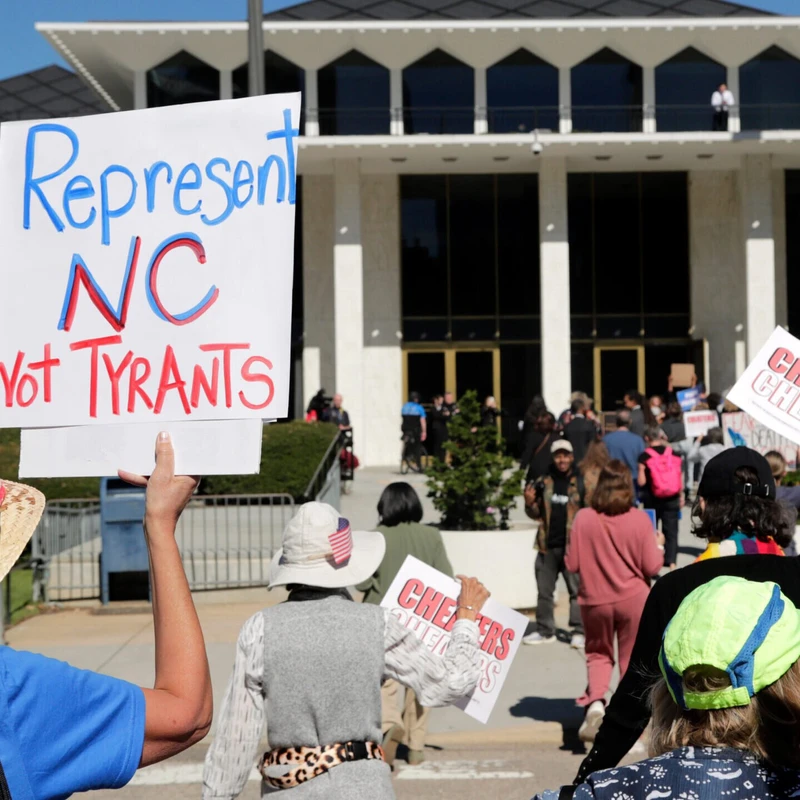
    In a significant ruling for North Carolina politics, federal judges have upheld several U.S. House districts drawn by Republicans in 2023. This decision comes after accusations that the maps unlawfully fractured and packed Black voters, thereby weakening their political power. The ruling, issued by a panel of three judges nominated by GOP presidents, means these districts will likely remain in place for upcoming elections.

    Upholding the 2023 Redistricting Map

    The judges rejected claims that the Republican-drawn lines discriminated against Black voters, violating the U.S. Constitution and the Voting Rights Act. The map, enacted in 2023, significantly benefited the GOP, helping them flip North Carolina’s congressional delegation from a 7-7 split to a 10-4 Republican advantage in the 2024 elections. This shift led three incumbent Democrats to decide not to seek reelection, citing the near impossibility of winning under the new district configurations.

    The judges, including 4th U.S. Circuit Court of Appeals Judge Allison Rushing and District Judges Thomas Schroeder and Richard Myers, concluded in a 181-page order that ‘the General Assembly did not violate the Constitution or the VRA in its 2023 redistricting.’ Their decision focused on five congressional districts and three state Senate districts, finding that the lines were not drawn with racial discrimination as a primary motivation.

    Focus on Partisan vs. Racial Gerrymandering

    Attorneys representing Republican leaders argued that partisan considerations, rather than racial ones, guided the redistricting process. They pointed to a 2019 U.S. Supreme Court decision that largely limited federal claims of illegal partisan gerrymandering. The judges’ order echoed this, stating that the ‘circumstances surrounding the plans’ enactment and the resulting district configurations and composition are consistent with the General Assembly’s non-racial motivations.’

    The plaintiffs, including the state NAACP and Common Cause, had argued that the maps split and diluted the voting power of Black communities, particularly in the Greensboro region and around Charlotte. They cited the example of then-Rep. Kathy Manning, a Greensboro Democrat, who chose not to run again after her district shifted significantly to the right. The decision can still be appealed to the U.S. Supreme Court.

    Ongoing Scrutiny of the 1st Congressional District

    Notably, Thursday’s ruling did not address changes made in October 2025 to the 1st Congressional District. This alteration, reportedly influenced by President Donald Trump, aims to unseat Democratic Rep. Don Davis in 2026. The panel is still considering whether to block the use of the 1st and adjoining 3rd Districts for the upcoming elections while further legal arguments are heard. Candidate filing for the 2026 elections is scheduled to begin on December 1st.

    • Federal judges upheld several Republican-drawn US House districts in North Carolina.
    • The ruling rejected claims of racial discrimination and voter dilution.
    • The 2023 map helped Republicans win 10 out of 14 seats in 2024.
    • Judges cited partisan considerations and traditional districting criteria.
    • Changes to the 1st Congressional District are still under review.

    What are your thoughts on the federal judges’ decision regarding North Carolina’s congressional districts? Do you believe these maps fairly represent the state’s voters? Share your views in the comments below!

  • Texas Congressional Map Blocked by Judges Over Racial Gerrymandering

    Texas Republicans aimed to gain an advantage in the upcoming 2026 midterm elections by redrawing the state’s congressional map. However, their plan has hit a major roadblock. A panel of three federal judges has blocked the new map, ruling that it constitutes racial gerrymandering and violates federal law.

    A Blow to Political Redistricting Efforts

    The ruling is a significant setback for efforts, reportedly encouraged by former President Donald Trump, to redraw state maps to benefit Republican candidates. Texas was the first state to implement such changes, with Missouri and North Carolina following suit. The judges stated, “Substantial evidence shows that Texas racially gerrymandered the 2025 Map,” making it clear that politics alone wasn’t the issue.

    This decision came after a nearly two-week trial in El Paso, where civil rights groups representing Black and Hispanic voters argued that the map diluted minority voting power. They contended that the map was a racial gerrymander, violating both the federal Voting Rights Act and the U.S. Constitution. The judges’ 2-1 decision suggests they believe these groups have a strong chance of winning their case at trial.

    The Impact on Minority Representation

    The newly drawn map reduced the number of congressional districts where minorities form a majority of voting-age citizens, decreasing them from 16 to 14. It also eliminated five “coalition” districts, where minority groups collectively outnumber non-Hispanic whites, even if no single group holds a majority. This move disproportionately affects Black and Hispanic Democratic lawmakers, with five of six drawn into districts with other incumbents.

    Republicans argued that the map actually benefits minority voters by creating an eighth Hispanic-majority district and two new Black-majority districts. However, critics dismiss these new districts as ineffective, suggesting that the slim majorities will still leave control in the hands of white voters who tend to have higher turnout rates.

    A Political Chess Match

    The U.S. Supreme Court’s 2019 ruling that partisan gerrymandering is a political issue beyond federal court reach has fueled these redistricting battles. Democrats view these map changes across the country as a Republican power grab aimed at undermining democratic processes. The blocking of Texas’ map is a significant development in this ongoing political struggle.

    What are your thoughts on the federal judges’ decision to block Texas’ new congressional map? Do you believe redistricting efforts are fair? Share your opinions in the comments below!

  • Indiana Gov. Braun Calls Special Session for Redistricting

    Indiana is stepping into the national spotlight as Governor Mike Braun has called for a special legislative session to redraw the state’s congressional district boundaries. This move comes amid significant pressure from former President Donald Trump, who is urging Republican governors to adjust electoral maps to bolster the party’s chances of maintaining control of the House of Representatives in the upcoming midterms.

    A National Push for Redistricting

    While states like Texas and Missouri have already moved to enact new district maps, and California Democrats are pursuing their own redistricting efforts, Indiana lawmakers have been notably more hesitant. After weeks of discussions, Governor Braun has now officially requested the General Assembly convene on November 3rd. However, it remains uncertain if there are enough votes within the Republican Senate majority to pass new maps.

    The White House has reportedly held multiple meetings with Indiana lawmakers who were initially resistant to the idea. Legislative leaders have kept their strategies close to the vest, leaving many to speculate whether Indiana, known for a more moderate approach to Republican politics, would indeed answer the redistricting call. High-profile meetings involving Trump, Braun, and legislative leaders have fueled these discussions.

    Challenges and Political Considerations

    Despite the pressure, some Indiana Republican lawmakers have voiced opposition to midcycle redistricting, citing costs and potential political backlash. Senate President Pro Tem Rodric Bray’s spokesperson indicated on Wednesday that the Senate currently lacks sufficient votes to pass a new map, casting doubt on the special session’s success. Braun, a strong Trump ally in a state that overwhelmingly supported the former president in 2024, had previously stated he wouldn’t call a special session without assurance of legislative backing.

    Historically, states redraw congressional district boundaries every ten years following the census. Any new maps drawn by Indiana lawmakers now would likely face legal challenges from opponents. Republicans hold a significant supermajority in both chambers of the Indiana General Assembly, meaning Democrats cannot block a special session by refusing to attend.

    Potential Targets for the GOP

    Republicans currently hold a 7-2 advantage in Indiana’s congressional delegation. However, many within the party see an opportunity to potentially gain another seat. The primary focus is often on Indiana’s 1st Congressional District, a Democratic stronghold in the northwest corner encompassing Gary and surrounding cities. This seat, currently held by third-term Democratic U.S. Rep. Frank Mrvan, has been eyed by Republicans as a potential pickup.

    While the district’s borders were adjusted slightly to favor Republicans in 2022, Mrvan still secured reelection. Another potential target could be Indiana’s 7th Congressional District, which covers Marion County and the Democratic stronghold of Indianapolis. However, altering this district could be more controversial, potentially involving the division of the state’s largest city and impacting the influence of Black voters.

    The upcoming special session in Indiana is a critical moment in the national battle over political representation. Will the state legislature redraw the maps to favor the GOP, or will the existing boundaries hold? What are your thoughts on midcycle redistricting and its impact on democracy?

    What are your thoughts on midcycle redistricting and its impact on democracy? Share your views in the comments below!

  • NC Redistricting Sparks ‘Surgical Racism’ Outrage

    A new congressional map drawn by North Carolina Republicans has ignited a firestorm of criticism, with opponents labeling the move as “surgical racism.” The redistricting strategy, reportedly influenced by former President Donald Trump, specifically targets districts held by Black members of Congress, threatening to disenfranchise minority voters.

    Targeting the 1st Congressional District

    The 1st Congressional District, currently represented by North Carolina’s only Black congressman, U.S. Rep. Don Davis (D-NC), has been significantly redrawn. This alteration effectively makes the seat unwinnable for Democrats, despite the district historically electing a Black Democrat since 1992 and comprising a substantial number of Black rural voters.

    Civil rights leader Bishop William J. Barber II, a prominent voice in the fight for voting rights, condemned the map’s creation. He described it as “surgical racism with surgical precision — the use of redistricting and voting laws to divide, diminish, and deny.” Barber vowed to fight back through legal challenges, public demonstrations, and at the ballot box to protect the will of the people.

    Congressman Davis Speaks Out

    Rep. Don Davis, who has served in Congress since 2023, expressed his deep disappointment, calling the new map “one of the darkest moments in our state’s history” and “morally wrong on all fronts.” He criticized the timing, noting that while families in eastern North Carolina face pressing issues, the state prioritized a map that predetermines election outcomes nearly a year in advance.

    Davis also pointed to the limited public participation allowed during the map’s creation, with committee hearings offering only one minute per speaker. He stated that Republicans ignored the voices of affected constituents and failed to provide adequate opportunities for public input.

    Echoes of Past Struggles and Future Fights

    Bishop Barber invoked the spirit of the Civil Rights Movement, comparing the current situation to the fight at the Edmund Pettus Bridge. He declared, “We will fight back in the courts, in the streets, and at the ballot box—Black, white, and brown together—because our democracy is not for sale.” This sentiment reflects a broader concern about the potential erosion of voting rights.

    This move by North Carolina Republicans follows a similar redistricting effort in Texas, which also aimed to create advantages for the party by diminishing the influence of Black and Latino voters. While redistricting typically occurs every ten years after the U.S. Census, the current mid-decade redistricting at Trump’s alleged request is seen as an unprecedented attempt by a president to maintain party power.

    The map in Texas is already facing legal challenges under the Voting Rights Act. Furthermore, a case before the U.S. Supreme Court, Louisiana v. Callais, could potentially weaken or dismantle the Voting Rights Act, further empowering Republicans to draw maps that dilute minority voting power.

    Political Ramifications and Resistance

    Democratic National Committee (DNC) Chairman Ken Martin criticized North Carolina Republicans for aligning with Donald Trump’s agenda. Martin asserted that Trump is attempting to secure power in Congress for the 2026 midterm elections, citing policies that negatively impact North Carolinians’ healthcare and rural hospitals.

    The DNC has vowed to continue fighting against what they describe as Trump’s attempts to “cheat” and ensure fair representation for all North Carolinians. The controversy underscores the ongoing battle for fair representation and the critical role of redistricting in shaping the political landscape.

    What are your thoughts on the new congressional map in North Carolina? Do you believe it constitutes ‘surgical racism’? Share your opinions in the comments below!