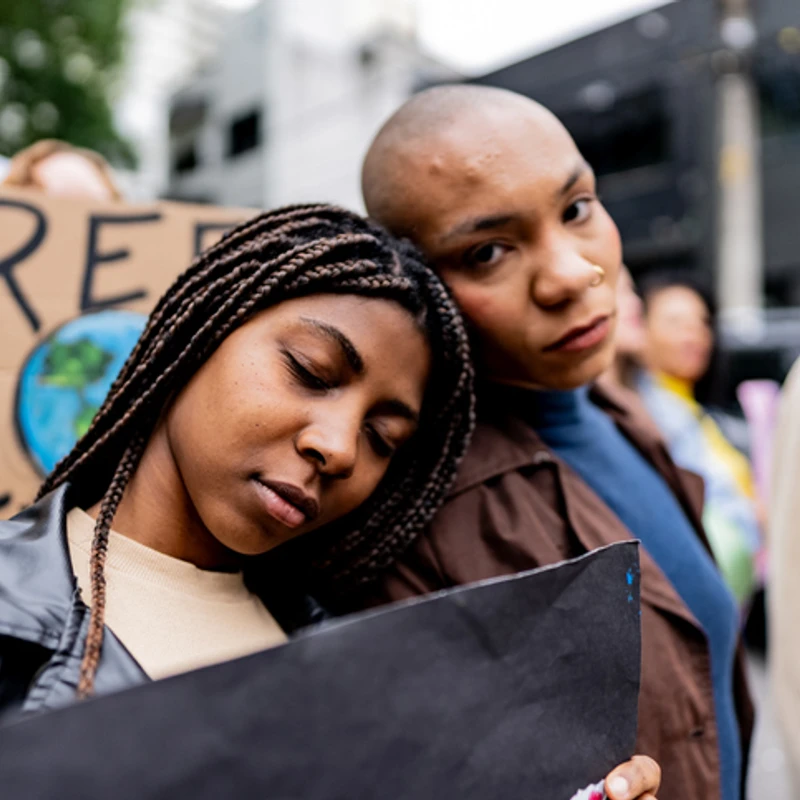
Tag: protest

  • Massive ‘No Kings’ Protest Planned for March 28

    Get ready for a historic event! The ‘No Kings’ movement is gearing up for a massive nationwide protest on March 28, with organizers anticipating it could be the largest demonstration in American history. This mobilization reflects a growing wave of public concern over the current political climate and the future of democracy in the U.S.

    Unprecedented Scale of Mobilization

    With over 3,000 community-led events already planned across all 50 states and every congressional district, the scale of this upcoming protest is staggering. This number surpasses even previous large-scale ‘No Kings’ demonstrations, including one in October 2025 that reportedly drew an estimated 7 million participants nationwide. The rapid expansion signals a diverse coalition of Americans united by a common message.

    The core philosophy of the ‘No Kings’ movement is simple yet powerful: power resides with the people, not with any single authority. Their rallying cry, “In America, we have no kings,” resonates across political and geographic lines, bringing together a wide array of advocacy groups like Indivisible, the ACLU, and the American Federation of Teachers.

    Driving Forces Behind the Movement

    Leaders within the movement point to a variety of pressing issues fueling this widespread participation. Concerns range from economic instability and controversial immigration enforcement practices to ongoing military conflicts abroad. Ezra Levin, co-executive director of Indivisible, emphasized the shared urgency felt by Americans, noting that the demonstrations will take place in “every single congressional district.”

    A Sustained Push for Civic Engagement

    The momentum for the ‘No Kings’ movement has been building steadily over the past year. Previous large-scale protests in June and October 2025 drew millions, indicating a sustained and growing commitment to civic engagement. This latest action is seen as a continuation of that energy, with new events being added daily.

    Organizers are also emphasizing that the demonstrations will be nonviolent and firmly rooted in democratic principles. The goal is to foster a space for collective expression and to reinforce the idea that active participation is a potent tool for driving change. With another major action, including a planned May Day general strike, on the horizon, the March 28 protests represent a pivotal moment for the movement.

    • Nationwide protest planned for March 28.
    • Organizers anticipate it could be the largest in U.S. history.
    • Over 3,000 community-led events across all 50 states.
    • Rallying cry: ‘In America, we have no kings.’
    • Concerns include economic instability, immigration, and foreign conflicts.
    • Movement emphasizes nonviolence and democratic principles.

    The ‘No Kings’ movement is poised to make a significant impact. What are your thoughts on this upcoming protest and its potential to shape the national conversation? Share your views in the comments below!

  • Bill Maher Questions Diversity at ‘No Kings’ Protests

    Have you noticed the demographics at recent protests? Bill Maher recently brought up a question that’s been on some minds: why did the nationwide “No Kings” protests, organized in response to concerns about democratic norms under Donald Trump, seem to lack racial diversity? It’s a point that adds another layer to the ongoing conversation about political engagement.

    Maher’s Observation on Protest Participation

    During the October 24th episode of his show, “Real Time,” Maher highlighted a report from The Baltimore Sun. The newspaper noted that its photographers had a tough time finding Black demonstrators among the millions who gathered nationwide. Maher posed the question directly to panelist Michael Steele, a former Republican National Committee chairman: “Here’s a question that I saw — I did not realize until it hit the news a lot — was that it was very white. What do you make of that?”

    Steele, known for his sharp wit, initially responded with humor. However, he then emphasized that focusing on race could be a distraction from the movement’s core message. He pointed out the sheer scale of the protests, noting that over seven million Americans participated in this iteration, a significant increase from previous demonstrations. For Steele, the trend line of participation is what truly matters.

    Exploring Potential Reasons for Lower Black Participation

    Maher offered his own speculation as to why fewer Black participants might have been present. He raised the possibility of fear of surveillance or professional repercussions. “In China, if they see you at a rally — and they always do because they have cameras everywhere — and they may have that here,” Maher suggested. He added, “Maybe when I go into work, I’m not going to be welcome there. And I think Black folks have a greater understanding of this than the white folk, which is why they might not have shown up, and I don’t blame them.”

    This perspective touches on the unique considerations that Black communities might face when engaging in public demonstrations, especially in the current political climate. The potential for increased scrutiny or negative professional consequences is a valid concern that could influence participation.

    The Broader Conversation on Representation

    The “No Kings” movement itself was a powerful expression of concern over democratic norms. Maher’s comments, while potentially controversial, have undeniably added a new dimension to the discussion, prompting a closer look at representation within these large-scale political actions. It raises important questions about who feels empowered to participate and what barriers might exist.

    Ultimately, understanding the diverse motivations and considerations behind participation in protest movements is crucial for a comprehensive view of civic engagement. It’s a complex issue with many factors at play.

    What are your thoughts on Bill Maher’s comments about diversity at the ‘No Kings’ protests? Share your perspective in the comments below!

  • D.C. Students Protest Federal Occupation

    Tensions are high in Washington D.C. as college students have taken to the streets to voice their opposition to the ongoing federal occupation of the nation’s capital. On Tuesday, September 9, 2025, students from prominent institutions like Howard University, Georgetown University, and George Washington University staged walkouts, demanding an end to the deployment of national troops and federal police.

    Concerns Over Federal Presence

    The presence of federal law enforcement and the National Guard has left many D.C. residents feeling uneasy. Protesters highlighted concerns about potential profiling and unwarranted stops, with individuals fearing they could be targeted for speaking another language or simply for their appearance. Howard University freshman Funmilayo Coates shared her anxieties, stating, “I feel so bottled up in my emotions in this overwhelming time of occupation in D.C. I even feel targeted myself, as I am part Nigerian.”

    The walkouts, organized in part by The Sunrise Movement, aimed to put pressure on Congress ahead of a vote to extend President Donald Trump’s federal control over the D.C. Metropolitan Police Department. The movement’s demands included calls for university administrations to protect their students and for Congress to reverse the “state of exception.”

    Students Demand Action

    Chanting slogans like “We keep us safe,” students staggered their walkouts throughout the day, starting with Georgetown at 10 a.m. and concluding with American University students at 2 p.m. The message was clear: students want their educational institutions to actively resist cooperation with federal authorities and prevent the National Guard and ICE from entering their campuses.

    Hope for the Future

    Although the local emergency order was set to end before midnight on September 10th, the National Guard’s deployment is extended until at least November. While a complete reversal of the federal presence might seem unlikely, the students remain hopeful that their collective advocacy will make a difference, even if the impact is felt by future generations. “Even if this is for something that won’t materialize in our present… I still have hope,” shared one anonymous Howard student, emphasizing the long-term fight for change.

    What are your thoughts on the student walkouts and the federal occupation in D.C.? Share your perspective in the comments below!

  • Protesters Confront Trump at DC Dinner

    Imagine sitting down for a nice dinner, only to have your meal interrupted by a political statement right outside. That’s exactly what happened when Donald Trump decided to dine out in Washington D.C. on Monday night, September 9, 2025. This outing was particularly notable as it marked his first time back at a D.C. restaurant since returning to the White House, and he was keen to highlight his administration’s federal crime crackdown.

    A Divided Welcome

    While Trump aimed to project an image of a safer capital, the scene outside Joe’s Seafood, Prime Steak & Stone Crab told a different story. Protesters were on hand, making their voices heard loud and clear. Chants of “Free D.C.! Free Palestine!” echoed, and some demonstrators didn’t hold back, shouting, “Trump is the Hitler of our time.”

    Inside the restaurant, videos captured the moment demonstrators managed to break through the cheers of supporters. They directly called out to Trump as he greeted diners, creating a stark contrast between his supporters’ ovations and the protesters’ strong opposition. It was a clear reminder that his presence in the capital remains a deeply divisive issue.

    Balancing Praise and Pushback

    Despite the vocal dissent, Trump’s supporters were also present, offering standing ovations and snapping selfies as he moved through the dining room. He engaged with the crowd, even joking, “don’t drink too much,” as he assured them they could head home without worrying about crime. This dinner was clearly a strategic move to reinforce his message about Washington’s safety under his leadership.

    The event saw Trump dining with key members of his Cabinet, including Vice President J.D. Vance and Secretary of State Marco Rubio. Even with the intense comparisons to historical figures, Trump continued his dinner, using the occasion to underscore his administration’s narrative of a secure and controlled Washington D.C. The clash of reactions outside and the supportive atmosphere inside painted a vivid picture of the ongoing political landscape.

    What are your thoughts on the protest during Donald Trump’s D.C. dinner? Share your perspective in the comments below!

  • Will Thilly Breakdances Protest Property Tax Hike

    In a move that’s quickly gone viral, Cranford, New Jersey, town council candidate Will Thilly decided to make a statement against a proposed property tax hike in a way no one expected: with a full breakdancing routine. This unconventional protest turned a typical town hall meeting into a headline-grabbing event.

    A Dance of Disagreement

    During the public comment portion of the meeting, Thilly didn’t just approach the podium; he danced his way there. Showcasing spins, footwork, and even a moonwalk, he delivered an impromptu performance that left the audience in stunned silence. After his dance, he transitioned back to the serious matter at hand, questioning the council about the tax proposal.

    The Internet Reacts to the Performance

    The clip of Thilly’s protest quickly spread across the internet, garnering widespread attention. Many viewers praised his creativity and unique approach to political expression, while others simply enjoyed the spectacle of civic duty meeting dance floor energy. Even an official at the meeting lightheartedly commented, “Thank you, Mr. Thilly. I liked the interpretive dance.”

    A Reputation for Unconventional Tactics

    For those familiar with Will Thilly, this latest stunt isn’t entirely out of character. He’s reportedly developed a reputation for using unconventional methods to voice his opinions at civic meetings. While this breakdancing protest might be his most memorable act yet, it certainly succeeded in putting the Cranford town council meeting on the map.

    Whether viewed as performance art, a genuine political protest, or simply entertaining spectacle, Will Thilly’s breakdancing moment has made a lasting impression. It’s a reminder that sometimes, the most impactful statements come in the most unexpected forms.

    What do you think of Will Thilly’s breakdancing protest? Let us know your thoughts in the comments below!

  • Protest Disrupts Minnesota State Fair Entrance

    Visitors heading to the Minnesota State Fair on Saturday afternoon encountered a temporary disruption when dozens of activists gathered near the main entrance, leading officials to close Gate 5 for about 90 minutes. The peaceful demonstration, organized primarily by Black Lives Matter, aimed to raise awareness for various social justice causes.

    Gate 5 Temporarily Closed Due to Protest

    The protest began around 1:08 p.m. at the intersection of Snelling Avenue and Midway Parkway. This strategic location near the fair’s primary entry point prompted fair organizers to temporarily close Gate 5, affecting vehicle and pedestrian access. Security personnel were able to reopen the gate at 2:32 p.m. after the demonstrators moved away from the immediate vicinity, allowing normal operations to resume.

    St. Paul Police Sergeant Toy Vixayvong confirmed that law enforcement maintained a watchful presence throughout the event, describing the gathering as entirely peaceful with no incidents requiring intervention. Officers were positioned to ensure constitutionally protected free speech activities could proceed without disruption.

    10th Annual Demonstration Honors Social Justice Causes

    This year marked the 10th consecutive year for the demonstration, which originated at Hamline Park before moving to the fairgrounds entrance. Black Lives Matter spearheaded the event, with participants carrying signs addressing a range of issues, including a notable call for boycotts of the Target Corporation. Importantly, the protesters remained outside the fairgrounds perimeter and did not attempt to enter the fair itself.

    Monique Cullars-Doty, a key Black Lives Matter activist, founded this annual tribute to honor her nephew, Marcus Golden, who died in a 2015 officer-involved shooting in St. Paul. Her continued participation keeps his memory alive and draws attention to ongoing concerns about police accountability. This year’s demonstration also included a solemn balloon release to commemorate two children tragically killed in a recent shooting incident at Annunciation Catholic Church.

    Diverse Coalition Unites for Advocacy

    The demonstration was supported by at least 10 different organizations that issued a joint news release outlining a broad set of progressive demands. These included calls for state divestment from Israel, increased community oversight of police departments, and stronger legal protections for LGBTQ+ individuals. This multi-group approach highlights how modern social justice movements often unite diverse causes under a common advocacy umbrella.

    Fair officials had contingency plans in place to redirect visitors to alternative entrances, minimizing the impact on the overall fair experience. Bus transportation services that typically use Gate 5 temporarily suspended operations until the entrance was reopened.

    Minnesota State Fair Continues Through Labor Day

    The Minnesota State Fair is scheduled to continue its run through Labor Day, September 1st. Daily hours are from 7 a.m. to 11 p.m. Monday through Sunday, with shortened hours on Labor Day itself, closing at 9 p.m. General admission is $20 for adults aged 13-64, with discounts for seniors and children. The temporary disruption caused by the protest is expected to be a minor footnote in what organizers anticipate will be a highly successful fair season.

    What are your thoughts on protests at public events? Share your perspective in the comments below!

  • D.C. Jury Rejects Felony Charge for ‘Sandwich Guy’

    In a move that has resonated with many D.C. residents, a grand jury has rejected a felony indictment against Sean Charles Dunn, a 37-year-old former Justice Department paralegal. Dunn faced charges after allegedly throwing a Subway sandwich at a Customs and Border Protection agent during a period of heightened federal presence in the city.

    Jurors Say No to Felony Assault Charge

    The incident, which quickly went viral online and sparked numerous memes and public discussion, resulted in Dunn’s arrest on felony assault charges. However, the grand jury’s decision not to indict means that the severe charge, which could have carried up to eight years in prison, will not move forward.

    This marks the second time in recent days that D.C. jurors have refused to hand down felony assault charges against individuals accused of interacting physically with federal agents deployed under President Trump’s controversial initiative. The jury’s decision suggests a skepticism towards escalating minor incidents into serious felony offenses, especially concerning food items.

    Prosecutors Weighing Next Steps

    Federal prosecutors are now faced with deciding whether to pursue the case as a misdemeanor, which does not require a grand jury indictment, or to attempt to seek a felony indictment again. Regardless of the outcome, Dunn’s case has become a symbol of local resistance against what many residents perceive as an overreaching federal presence on their streets.

    The incident, complete with dramatic video footage of Dunn’s apartment raid, underscores how public sentiment and jury decisions can shape the legal process. For many in D.C., the “Sandwich Guy” case represents a powerful, albeit unconventional, form of pushback against perceived heavy-handed tactics.

    What do you think about the grand jury’s decision? Should throwing a sandwich be considered a felony? Share your thoughts in the comments below!

  • Rep. Collier’s Protest Echoes History of Black Women’s Resistance

    In 1835, Harriet Jacobs endured seven years of confinement in a cramped crawl space to escape enslavement and oppression. More than a century later, Texas Rep. Nicole Collier chose a different form of confinement—sleeping on the House floor—to protest a system she felt was designed to humiliate her. Both acts, separated by time and circumstance, stem from the same powerful logic: Black women resisting being boxed in.

    A Legacy of Defiance

    Collier’s protest involved refusing to sign a “permission slip” that would have subjected her to constant police escort during a redistricting standoff. By choosing to remain on the House floor, she framed her action as “civil disobedience,” echoing Congressman John Lewis’s call to “make good trouble.” Her protest wasn’t just about a legislative rule; it was a deliberate act of resistance rooted in a deep historical understanding.

    When Collier drew parallels between her protest and the historical resistance of enslaved people fleeing oppression and Jewish people escaping the Holocaust, she ignited significant backlash. Critics, particularly from conservative and some Jewish outlets, accused her of trivializing atrocities and being “historically inappropriate.” Headlines like “Texas Democrat Sparks Outrage After Comparing Herself to Runaway Slaves and Holocaust Victims” quickly emerged.

    Beyond Equivalence: Claiming Lineage

    However, the criticism often flattened Collier’s words into a caricature. She wasn’t claiming personal equivalence to enslaved people or Holocaust victims; rather, she was asserting a historical continuity of resistance. Her point was that oppressed people, across different contexts, inevitably resist systems designed to break them. This historical literacy, rather than “historical cosplay,” highlights the enduring patterns of survival against imposed power.

    The backlash, critics argue, often serves to police the language of Black resistance. By twisting Collier’s words and manufacturing outrage, these outlets distract from the uncomfortable truth she was highlighting: America’s ongoing demand for resistance from the oppressed. This manipulation aims to silence dissent and reinforce systems of denial, rather than grapple with the historical context she invoked.

    The Uncomfortable Truths of Comparison

    The comparison also touches a raw nerve for some Jewish individuals, potentially stirring up a “competition over historical suffering.” When Black activists place slavery and Jim Crow in the same continuum as the Holocaust, it can feel like a trespass to those who view the Holocaust as a singular, untouchable atrocity. However, this defensiveness can mask complicity in perpetuating white supremacy, as some Jewish communities have assimilated into whiteness by accessing structures from which Black people were historically excluded.

    Collier’s analogy threatens this assimilation bargain by exposing the shared architecture of oppression—the white supremacy that underpins slavery, lynching, the Holocaust, and contemporary legislative actions. The outrage, therefore, isn’t solely about “historical inappropriateness” but about guarding whiteness and refusing to acknowledge the interconnectedness of oppressive systems.

    Honoring History Through Defiance

    Comparisons like Collier’s are effective precisely because they are uncomfortable. They remind us that authoritarian creep doesn’t always announce itself with overt symbols of hate; it can manifest in smaller humiliations, legislative maneuvers designed to silence dissent, and demands for conformity. Collier’s defiance honored history by reminding us that resistance is not polite; it is disruptive and meant to unsettle those who benefit from oppression.

    Jacobs’s seven years in a crawl space and Collier’s night on the House floor, though separated by centuries, are united by a fundamental truth: resistance is an inevitable response to systems designed to break marginalized people. In a moment when Black women are often urged to be quiet or dilute their words, preserving and amplifying their refusal to yield is crucial. Their acts of defiance, whether hiding or protesting, are part of the same enduring story of survival.

    What are your thoughts on Rep. Collier’s protest and the historical parallels she drew? Share your perspective in the comments below!

  • VP Harris Calls Rep. Collier Amid Texas Protest

    In a powerful display of solidarity and principle, Texas State Representative Nicole Collier has been sleeping on the House floor for two consecutive nights. Her protest stems from her refusal to sign a mandated “permission slip” required by House Speaker Dustin Burrows to leave the floor, even when accompanied by a police officer. This move is a stand against what Collier describes as racially biased gerrymandering proposed by Republicans.

    A Stand Against Gerrymandering and Power Plays

    Collier views the “permission slip” as a petty and controlling tactic. “I didn’t feel like I should be obligated to sign a piece of paper to be able to leave the floor, because we’re all adults here,” she stated. “It’s a show of power over people, and that’s what they’re doing now. They’re showing that they have power over us, and that’s why they’re using the force of law enforcement.”

    While her Democratic colleagues haven’t joined her in sleeping on the floor, many have shown their support by “ripping the slip” – tearing up the document they were forced to sign. This act of defiance highlights the growing tension and solidarity within the Democratic party in response to the Republican-led initiatives.

    Support from Vice President Kamala Harris

    Adding to the significant support, Rep. Collier received a surprising and encouraging phone call from none other than Vice President Kamala Harris. Harris called to offer her support, letting Collier know that her sacrifice is being seen, felt, and deeply appreciated. “When you’re in those rooms, and it feels like you’re the only one there, we are all in that room with you,” Harris reportedly told Collier, emphasizing the collective effort needed to combat the MAGA agenda.

    This call from the Vice President underscores the national attention Collier’s protest is garnering and the importance of the fight for fair representation. It serves as a powerful reminder that elected officials are expected to represent the interests of their constituents, even when it requires significant personal sacrifice.

    What do you think about Rep. Nicole Collier’s protest? Do you believe elected officials should make such sacrifices? Share your thoughts in the comments below!

  • Collier’s Protest: A Warning Against Fascism

    Texas State Representative Nicole Collier’s decision to sleep on the House floor, refusing to sign a document that would essentially surrender her rights, is more than just a protest; it’s a stark warning. Her stand against what she calls “racist as hell” gerrymandering, orchestrated by Republicans with the backing of Donald Trump, illuminates a dangerous trend of suppressing voter power and undermining democratic processes.

    A Fight Against Voter Suppression Tactics

    Collier, along with over 50 other Texas Democrats, initially fled the state to break quorum and block Republican efforts to redraw congressional maps. These proposed maps aim to create five additional GOP seats, thereby diluting the voting power of Black and Latino communities. When Democrats returned, House Speaker Dustin Burrows imposed a new rule: members who had arrest warrants issued against them could only leave the chambers after signing a document agreeing to be present and under 24-hour police surveillance.

    Collier’s refusal to sign this document, which she views as an “unnecessary use of state funds” and a “show of power over people,” has drawn national attention. “I refused to sign. I will not agree to be in DPS custody. I am not a criminal. I am exercising my right to resist and oppose the decisions of our government. So, this is my form of protest,” she explained, emphasizing her commitment to resisting government overreach and protecting her community.

    A Warning Against Fascist Tendencies

    Collier’s defiance is not just about redistricting; it’s a broader resistance against what she perceives as fascist tendencies. She stated her refusal to participate in a process that would “give him [Trump] more reinforcement to harm my community and my people.” This sentiment has resonated with prominent Democrats, including former Vice President Kamala Harris, who called Collier a “hero of this moment” and assured her, “Nicole, we are all in that chamber with you.”

    Senator Cory Booker and the Sunrise Movement have also lauded Collier’s actions as powerful leadership against fascism. While the phrase “we are all in that chamber with you” offers comfort, the reality is that Collier is making a profound personal sacrifice. Fortunately, some of her colleagues, particularly women, have pledged to stand with her by ripping up their signed slips and remaining in the chambers, demonstrating solidarity.

    Collier’s courageous stand serves as a critical reminder that the fight for democracy requires active resistance against tactics that aim to disenfranchise voters and consolidate power. Her actions are a powerful example of how individuals can push back against governmental overreach, even when facing significant personal consequences.

    What do you think of Rep. Nicole Collier’s protest and her stance against gerrymandering? Do you believe her actions are a necessary warning for the future of democracy? Share your thoughts in the comments below!