Tag: political commentary

  • Maryland Limits Rap Lyrics in Court with PACE Act

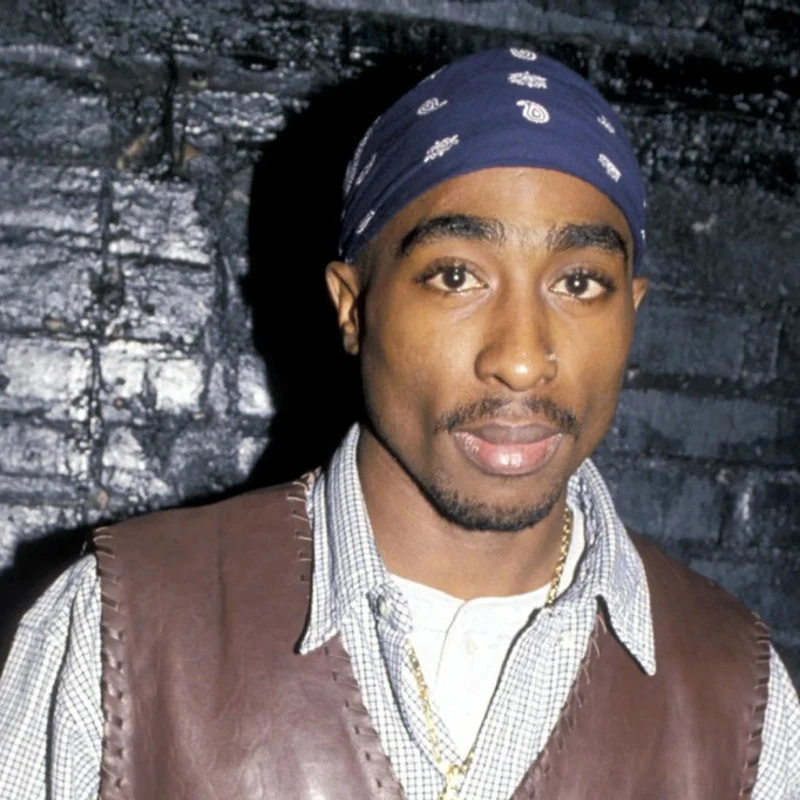
    For years, the justice system has grappled with a deeply problematic practice: using rap lyrics as evidence to convict artists. This trend, often rooted in racial bias and a misunderstanding of hip-hop culture, has led to unfair convictions. However, Maryland is taking a significant step forward by passing the Protecting Artists’ Creative Expression (PACE) Act, aiming to limit this weaponization of art in criminal trials.

    The Montague Case: A Dangerous Precedent

    The issue gained national attention following the Maryland Court of Appeals ruling in *Montague v. Maryland*. Lawrence Montague’s rap lyrics, recorded in jail and posted online, were used as evidence against him in a murder case. The court controversially ruled that these lyrics could be admitted as proof of guilt, reflecting a biased assumption about the genre’s inherent violence.

    This decision set a dangerous precedent, particularly for Black and Brown artists who have historically been disproportionately targeted. Since the 1980s, rap lyrics have been used against these artists in over 820 cases, often ignoring the genre’s roots in storytelling, social commentary, and artistic expression.

    The Rise of the Free Our Art Coalition

    The *Montague* ruling, and similar cases, spurred the formation of the Free Our Art coalition. This powerful alliance, comprising academics, defense attorneys, civil rights advocates, and prominent music industry organizations like the Black Music Action Coalition and the Songwriters of North America, has been instrumental in advocating for legislative change.

    Led by music executive Kevin Liles and co-chaired by the article’s authors, Dina LaPolt and Willie “Prophet” Stiggers, the coalition has built bipartisan support, urging lawmakers to protect artistic freedom. Their efforts have now culminated in Maryland becoming the third state, following California and Louisiana, to pass legislation addressing this critical issue.

    How the PACE Act Offers Protection

    The PACE Act establishes clear standards for admitting creative works as evidence. If signed into law by Governor Wes Moore, it will require prosecutors to demonstrate specific criteria before artistic expression can be presented to a jury. These include proving the artist intended the work to be literal, that it contains specific factual details tied to the offense, that it’s directly relevant to a disputed issue, and crucially, that its probative value outweighs any unfair prejudice.

    This legislation aims to curb the racial bias that has long permeated how rap lyrics are interpreted in courtrooms. It acknowledges that rap music, born from experiences of poverty, violence, and systemic injustice, is often misunderstood and unfairly characterized as inherently criminal. The law seeks to protect the First Amendment rights of artists, ensuring their creative expression isn’t automatically misconstrued as a confession.

    A Movement Gaining Momentum

    Maryland’s PACE Act is a significant victory, but the movement for artistic freedom is far from over. Legislatures in New York, Georgia, and Missouri are currently discussing similar laws. The goal is to ensure that Black artists, and indeed all artists, can express fear, anger, trauma, and lived experiences without their art being used against them in court. This legislation provides crucial front-end protection, moving beyond mere damage control after wrongful convictions.

    What are your thoughts on the PACE Act and the use of artistic expression in legal proceedings? Share your perspective in the comments below!

  • Rep. Crockett Responds to Stephen A. Smith’s Critique

    Texas Democratic Representative Jasmine Crockett is making it known that she heard Stephen A. Smith’s recent commentary criticizing her outspokenness against President Donald Trump. While she hasn’t directly addressed Smith by name, her response strategy speaks volumes: she’s amplifying the voices of other prominent Black women who are defending her and pushing back against the sports analyst’s remarks.

    Rallying Support from Fellow Leaders

    Smith’s comments, made on his Sirius XM show ‘Straight Shooter With Stephen A.,’ questioned Crockett’s effectiveness, asking if her continuous criticism of Trump was helping her district or merely serving as an “impediment.” This sparked pushback from colleagues, fans, and voters who rallied around the Congresswoman. Crockett responded by reposting commentary from figures like social justice activist Tamika Mallory, suggesting a pattern of Smith targeting Black women.

    Mallory’s post, which Crockett shared, stated, “Stephen A. Smith’s actions are intentional. At what point will you lead the charge to TURN HIM OFF?!” This collective response frames Smith’s critique not as a difference of opinion, but as an intentional act against outspoken Black women in the public sphere.

    Critiques of Smith’s Commentary

    The pushback against Smith extended to other prominent voices. On the ‘Native Land Pod,’ hosts Angela Rye, Andrew Gillum, and Tiffany Cross claimed Smith exhibits “little d*** energy” when criticizing Black women and suggested he needs to address his “Black woman issues,” even linking it to self-hate. Guest host Bakari Sellers noted that Smith rarely praises Black women in his commentary.

    Rapper Willie D also weighed in, reposting commentary that called Smith’s shots at Crockett “messy” and “weak.” He argued that Smith, with his significant platform, should be uplifting Black women like Crockett who are “out here putting in real work,” rather than tearing them down. This sentiment was also echoed by Crockett, who reposted Willie D’s comments with a praying hands emoji.

    Broader Context and Pushback

    Smith has faced criticism from various corners, not only for his political commentary but also for perceived “advice” given to athletes. Notably, Serena Williams’ husband, Alexis Ohanian, schooled Smith on staying in his lane regarding advice, drawing parallels to building billion-dollar companies versus giving unsolicited opinions. This context suggests a pattern of Smith engaging in commentary that draws significant backlash.

    Rep. Crockett’s strategy of reposting and amplifying the support she’s receiving highlights her solidarity with other Black women leaders and commentators who feel Smith’s critiques are misplaced and potentially harmful. Her silence on directly addressing Smith, coupled with the reposts, effectively communicates her stance and the broader message that she stands with those defending her approach.

    What are your thoughts on Stephen A. Smith’s critique of Rep. Jasmine Crockett? Do you agree with the pushback from other Black women leaders? Share your perspective in the comments below!

  • Charlie Kirk Diss Track Goes Viral: Millions of Streams!

    Hold up, did you hear about this? A diss track targeting none other than Charlie Kirk has completely taken over the internet, and the numbers are absolutely wild! We’re talking millions upon millions of streams across TikTok, Instagram, Twitter, and YouTube. It seems like everyone’s talking about this track that’s viciously mocking the controversial political activist.

    Who is Charlie Kirk and Why the Backlash?

    For those who might not be familiar, Charlie Kirk is a figure who often finds himself in the spotlight for his provocative speeches and campus tours. He’s built a reputation for making remarks that many critics label as racist, homophobic, and divisive. He’s definitely a lightning rod, thriving on controversy, but this diss track might just be the biggest cultural clapback he’s ever encountered.

    The original tweet that brought this to light:

    The Lyrics Are Brutal, and the Internet is Divided

    This song is pulling no punches, and online fans are already calling it one of the most ‘disrespectful diss tracks of the decade.’ What’s even more intense is that the lyrics reportedly make light of a recent tragedy on a Utah campus, which has only fueled the controversy and, consequently, the streams. It’s a sensitive topic, and the song’s approach has definitely stirred the pot.

    Clips of the track are everywhere – popping up in memes, TikToks, and remixes, spreading like wildfire. People are sharing their reactions, with one viral comment saying, ‘I don’t even like diss tracks, but this one hits different.’ Another chimed in with, ‘This is savage, but lowkey addictive.’

    Social Media’s Wild Reaction

    On TikTok, creators are jumping on board, using snippets of the diss track for everything from dance challenges to comedy skits and reaction videos. Meanwhile, Twitter/X is a battleground. Some users are blasting the song for being insensitive, while others can’t get enough, calling it ‘straight-up heat.’

    The division is clear. One fan tweeted, ‘The track is wrong on so many levels… but I can’t stop replaying it.’ On the other hand, a different user countered, ‘Disrespectful doesn’t even begin to cover it. Some lines go way too far.’

    Kirk’s Silence Amidst the Storm

    As of now, Charlie Kirk himself hasn’t issued a public response to this viral phenomenon. However, given the sheer scale of the buzz – with some estimating the song has garnered as many as 50 million plays and is still climbing – it’s safe to say he’s definitely aware of it. This diss track has become a major cultural talking point, catching even his critics by surprise.

    The Power of Viral Culture in 2025

    Whether you’re a fan of the track or find it problematic, this situation perfectly illustrates the incredible speed and power of music and memes colliding in today’s digital landscape. One week you’re making headlines for a speech, and the next, you’re the subject of the internet’s latest viral takedown. It’s a wild ride!

    What are your thoughts on this viral diss track? Is it a clever commentary or just plain disrespectful? Let us know in the comments below!

  • Trump Downplays Domestic Violence as ‘Little Fight’

    In a speech delivered at the Museum of the Bible in Washington, D.C., on September 8, 2025, Donald Trump made deeply concerning statements that appear to downplay the severity of domestic violence. While discussing crime statistics in the capital, Trump suggested that incidents of domestic disputes were being unfairly categorized as serious crimes, effectively minimizing their impact.

    Minimizing Domestic Violence as a ‘Little Fight’

    Trump bragged about his deployment of federal troops, claiming it transformed Washington into a “totally safe zone” with crime rates plummeting. However, he then attributed the remaining crime figures to domestic disputes. “Much lesser things, things that take place in the home, they call crime, you know — they’ll do anything they can to find something,” Trump stated. He further elaborated, “If a man has a little fight with the wife, they say, ‘This was a crime, see,’ so now I can’t claim 100 percent. But we are a safe city.”

    These remarks have drawn widespread criticism, as they equate serious acts of violence within intimate relationships to minor disagreements, ignoring the profound physical, emotional, and psychological harm victims endure. Domestic violence is a critical issue with devastating consequences, and framing it as a “little fight” is seen by many as dangerously dismissive.

    A Pattern of Controversial Remarks and Allegations

    Trump’s comments on domestic violence are particularly alarming given his own history of allegations. Over the years, more than a dozen women have accused him of harassment, abuse, or sexual assault, claims he has consistently denied. This context adds another layer of concern to his recent remarks.

    The timing of his speech also follows a federal appeals court upholding an $83 million defamation judgment awarded to writer E. Jean Carroll, who accused Trump of sexual assault in the 1990s. This verdict came after a 2023 ruling that found Trump liable for sexually abusing Carroll. Furthermore, last year saw his conviction on 34 felony counts related to falsifying business records to conceal hush money payments made to adult film star Stormy Daniels during the 2016 campaign.

    Broader Implications of Dismissive Language

    Language that minimizes domestic violence can have serious repercussions. It can discourage victims from coming forward, embolden abusers, and undermine efforts to create effective legal and social support systems. By referring to domestic disputes as a “little fight,” Trump risks normalizing violence and eroding the seriousness with which these crimes should be treated.

    Advocates emphasize that domestic violence is never just a “little fight”; it is a pattern of coercive control and abuse that can have life-altering consequences for victims and their families. The continued dismissal of such issues by public figures raises significant concerns about public safety and the pursuit of justice.

    What are your thoughts on Donald Trump’s comments regarding domestic violence? Share your perspective in the comments below.

  • JD Vance Dismisses War Crime Concerns Over Cartel Strikes

    Vice President JD Vance is making waves with his outspoken views on combating drug cartels. In a recent online exchange, Vance declared that using the U.S. military to target cartel members responsible for poisoning Americans is the “highest and best use of our military.”

    Dismissing International Law Concerns

    When political commentator Brian Krassenstein raised concerns that targeting foreign civilians without due process could be considered a war crime, Vance’s response was blunt: “I don’t give a s*** what you call it.” This strong stance has ignited a firestorm of debate online and across media outlets.

    While some supporters applaud Vance’s no-nonsense approach to national security and the drug crisis, critics are accusing him of disregarding international law and promoting dangerous rhetoric. As Vice President, his words carry significant weight, amplifying the impact of his statements.

    A Controversial Stance on National Security

    Vance’s comments come shortly after the administration authorized a controversial strike targeting a suspected drug operation in Venezuela. He publicly defended this action, reiterating his belief in its necessity for national security. This approach highlights a clear division: his base sees a tough leader protecting citizens, while opponents fear it could destabilize international relations and lead to unlawful conflicts.

    One thing is certain: Vice President Vance is not backing down from his position, regardless of the potential fallout. His firm stance on cartel strikes signals a potentially more aggressive U.S. foreign policy approach.

    What are your thoughts on Vice President Vance’s comments regarding cartel strikes and international law? Share your perspective in the comments below!

  • MTG Attacks Jasmine Crockett’s ‘Black Struggle’ Claim

    The political arena is no stranger to heated exchanges, and a recent interview featuring Rep. Marjorie Taylor Greene (R-GA) has ignited a firestorm. Greene appeared on “The Megyn Kelly Show” and took aim at Rep. Jasmine Crockett (D-TX), questioning her understanding of the Black American struggle and even commenting on her appearance.

    Greene’s Criticisms and Crockett’s Response

    During the interview, Greene dismissed Crockett as a “complete fake” and a “massive fraud,” citing Crockett’s educational background, including private schooling and law school. Greene suggested that Crockett’s upbringing and education somehow disqualify her from understanding the experiences of Black Americans.

    Crockett, however, was quick to fire back. She took to X (formerly Twitter) to address Greene’s comments, drawing parallels to past challenges faced by Barack Obama and Kamala Harris regarding their racial identities. Crockett emphasized that “being black” is not defined by education and highlighted the daily racism, hateful emails, and death threats she receives from white supremacists.

    Public Reaction and Defense

    The exchange quickly garnered widespread attention on social media. Many users, both Black and white, defended Crockett, asserting that she doesn’t need to justify her identity or experiences to anyone. Journalist Jemele Hill commented that such criticisms often reveal a narrow perspective held by some white individuals about the diversity within the Black community.

    The debate touches on a sensitive and complex issue: the multifaceted nature of the Black experience and how it is perceived and discussed in public discourse. Crockett’s response powerfully articulated that lived experience, including facing racism and hate, is a significant part of understanding the Black struggle, regardless of educational background.

    What are your thoughts on this political exchange? Share your perspective in the comments below!