Tag: Pentagon

  • Pentagon Promotion Delays Spark Equity Concerns

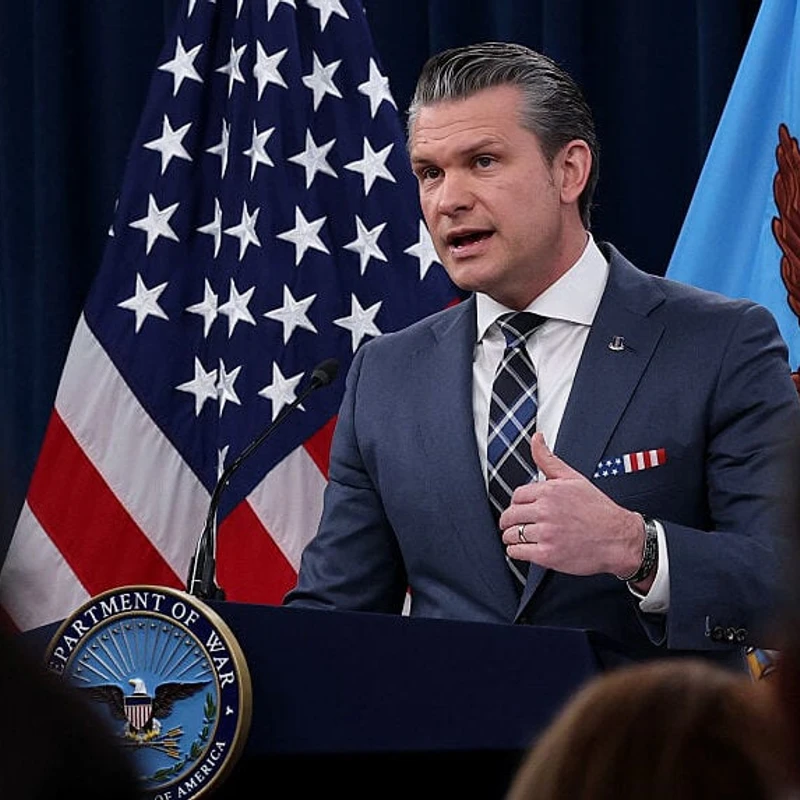
    A cloud of concern is gathering over the Pentagon as reports emerge about significant delays in military promotions. Defense Secretary Pete Hegseth is reportedly taking an unusually hands-on approach to reviewing lists for generals and admirals, leading some officials to worry about the fairness and equity of the process.

    Scrutiny Over Promotion Interventions

    Sources within the military and government suggest that Hegseth has intervened in the advancement of over a dozen senior officers across various branches, including the Army, Navy, Air Force, and Marine Corps. This level of direct involvement is considered rare, as promotion decisions are typically managed by independent boards within each service branch.

    The standard procedure involves these boards evaluating candidates based on merit and their service records. Their recommendations are then passed up the chain for Pentagon approval, White House review, and finally, Senate confirmation. Defense secretaries usually only remove names from these lists if there’s a clear issue, like a pending misconduct investigation.

    Disproportionate Impact on Minority and Female Officers?

    What’s particularly troubling to some officials is the potential for disproportionate impact on certain groups. There are growing concerns that qualified candidates, especially women and Black officers, might be unfairly affected by these delays or outright removals from promotion lists. This raises serious questions about whether factors beyond merit, such as race, gender, or perceived political alignment, could be influencing these critical decisions.

    These worries are amplified by Hegseth’s known public opposition to diversity, equity, and inclusion (DEI) initiatives, which he has previously criticized for potentially undermining merit-based systems. The situation has also gained attention following the recent departure of the Army’s chief of staff, Randy George, whose term was expected to continue for several more years. Reports indicate George had sought to discuss promotion concerns with Hegseth shortly before his removal.

    Official Response and Broader Implications

    In response to these reports, a Pentagon spokesperson has strongly denied the allegations, labeling the claims as inaccurate. The spokesperson defended the integrity of the promotion process under Hegseth’s leadership, asserting that all decisions are based solely on merit and remain apolitical. The White House has yet to issue a public statement on the matter.

    This controversy underscores the ongoing tensions surrounding leadership and personnel decisions within the military. Critics warn that interfering with the established promotion system could erode trust in a process that has long been considered a bedrock of military professionalism and fairness.

    What are your thoughts on the Pentagon’s promotion delays and the concerns raised about equity? Share your perspective in the comments below!

  • Pentagon Closes Media Offices After Credential Ruling

    In a move that has raised concerns about press freedom, the Pentagon has announced the immediate closure of its media offices. This decision comes shortly after a federal judge ruled in favor of The New York Times, restoring press credentials that had been revoked by the Trump administration.

    Correspondents’ Corridor Shut Down

    Sean Parnell, a spokesperson for the U.S. Department of Defense, announced on March 23, 2026, that the “Correspondents’ Corridor”—a long-standing workspace for reporters covering the U.S. military—would be closed immediately. While journalists will eventually be relocated to an annex outside the main building, no timeline has been provided for when this new space will be ready.

    The Pentagon Press Association quickly responded, calling the closure “a clear violation of the letter and spirit of last week’s ruling.” They questioned the timing, asking why the Pentagon would choose to restrict press freedoms “at such a critical time” when transparency is vital for informing the public.

    The Judge’s Ruling and Lawsuit

    The decision to close the media offices follows a ruling by U.S. District Judge Paul Friedman in Washington, D.C. The judge ordered the Pentagon to reinstate press credentials for seven journalists from The New York Times and struck down parts of the agency’s reporting restrictions. The lawsuit, filed in December 2025, argued that the credentialing policy violated the First Amendment and due process rights.

    The lawsuit highlighted how the Trump administration had limited access for legacy media outlets while favoring conservative news organizations. Judge Friedman’s ruling stated that the policy clearly aimed to sideline “disfavored journalists” in favor of those aligned with the government, labeling it as viewpoint discrimination. The Department of Defense, however, disagrees with the ruling and plans to appeal, citing security concerns.

    New Restrictions and Ongoing Challenges

    Under the new Pentagon rules, reporters can still attend briefings and scheduled interviews, but they must be escorted at all times. This adds another layer of restriction for journalists seeking to cover military affairs. Meanwhile, the Associated Press is awaiting a ruling in a separate lawsuit concerning reduced access to presidential events.

    What are your thoughts on the Pentagon’s decision to close media offices and the ongoing debate over press access? Share your views in the comments below!

  • Pentagon Reporters Protest New Rules, Exit Building

    In a significant act of protest, dozens of journalists covering the U.S. military have returned their Pentagon badges and exited the building. The reporters are refusing to comply with new rules imposed by Defense Secretary Pete Hegseth, which they argue severely limit their ability to report freely and access information.

    New Rules Spark Walkout

    The controversial new rules, reported by AP News, threaten expulsion for journalists who report on any information – not just classified material – that has not been officially approved for release. Many reporters viewed this as an unacceptable restriction on journalistic integrity. On October 15th, at the Defense Department’s 4 p.m. deadline, numerous journalists chose to leave their posts rather than agree to these terms.

    Nancy Youssef, a reporter for The Atlantic who has covered the Pentagon since 2007, expressed both sadness and pride in the press corps’ unified stance. “It’s sad, but I’m also really proud of the press corps that we stuck together,” she told the ABQ Journal.

    Defense Secretary Defends Rules, Critics Disagree

    Defense Secretary Pete Hegseth, a former Fox News host, has defended the new rules as “common sense.” He stated that requiring journalists to sign a document is merely an acknowledgment of the rules, not an official agreement. However, reporters and media organizations largely disagree with this distinction, viewing it as a significant hurdle to their work.

    Retired U.S. Army General and Fox News analyst Jack Keane commented on the situation, suggesting the Pentagon’s aim is to “spoon-feed information” to journalists, which he argues is not true journalism. Former President Donald Trump also voiced support for Hegseth’s rules, telling reporters that he believes the press is “very disruptive” and “very dishonest.”

    Broad Media Opposition

    The overwhelming majority of news outlets rejected the new rules. The Pentagon Press Association, representing 101 journalists from 56 different news organizations, formally condemned the restrictions. Major media outlets, including The Associated Press, The New York Times, Fox News, and Newsmax, directed their reporters to leave the Pentagon rather than sign the new agreement. Only One America News Network reportedly signed on.

    NPR reporter Tom Bowman articulated the sentiment of many, writing, “They knew the American public deserved to know what’s going on.” He expressed concern that without reporters present to ask questions, the Pentagon leadership might rely solely on curated social media content and interviews with “partisan commentators,” which he deems insufficient for public understanding.

    What are your thoughts on the Pentagon’s new reporting rules and the journalists’ decision to protest? Do you believe these restrictions hinder transparency? Share your views in the comments below!

  • US Marks 24th Anniversary of 9/11 Attacks

    Twenty-four years ago, the United States experienced a day that forever changed its course. Today, the nation pauses to remember the nearly 3,000 lives tragically lost in the horrific terror attacks of September 11, 2001. From solemn ceremonies to acts of service, Americans are honoring the victims and reflecting on the profound impact of that fateful day.

    Commemorations Across the Nation

    Dignitaries, politicians, and countless loved ones are gathering at key sites – New York City’s World Trade Center, the Pentagon in Virginia, and a field near Shanksville, Pennsylvania – for official commemorations. These events feature the reading of victims’ names, moments of silence marking the exact times of the attacks, and wreath-laying ceremonies.

    For many, like James Lynch, who lost his father at the World Trade Center, the grief remains a part of life. “It’s one of those things where any kind of grief, I don’t think it ever goes away,” he shared while volunteering at a charity event. He added, “Finding the joy in that grief, I think, has been a huge part of my growth with this.”

    A Day of Service and Unity

    Beyond the official ceremonies, the anniversary is also observed as a national day of service. Thousands of volunteers are participating in food and clothing drives, neighborhood cleanups, and blood banks. These acts of kindness and community spirit embody the resilience and unity that emerged in the aftermath of the attacks.

    This year’s commemorations occur amidst heightened political tensions, a stark contrast to the day’s traditional promotion as a symbol of national unity. Security measures are expected to be increased, particularly at the World Trade Center site.

    Lasting Repercussions of the Attacks

    The 9/11 attacks, carried out by al-Qaida militants, not only claimed nearly 3,000 lives but also fundamentally reshaped U.S. foreign and domestic policy. The subsequent “Global War on Terrorism,” including invasions of Afghanistan and Iraq, led to hundreds of thousands of military and civilian casualties.

    The long-term health consequences for those exposed to the toxic dust at Ground Zero are also a significant ongoing concern. Billions have been spent on healthcare and compensation, with over 140,000 people still enrolled in monitoring programs for potential health conditions linked to the hazardous materials.

    The legal proceedings against alleged mastermind Khalid Sheikh Mohammed, arrested in 2003, continue to be a complex and lengthy process, with no trial yet concluded.

    How do you plan to honor the 9/11 anniversary? Share your thoughts and plans in the comments below.

  • Trump Eyes Pentagon Rebrand: “Department of War” Name Returns?

    In a move that could signal a shift in tone and perception, former President Donald Trump is reportedly looking to reintroduce a historic name for the Pentagon. According to recent reports, Trump is preparing to sign an executive order that would bring back the title “Department of War” as a secondary designation for the Department of Defense.

    A Return to the “Department of War”?

    This proposed executive order would allow Defense Secretary Pete Hegseth to officially be addressed as “Secretary of War.” The Pentagon itself could adopt this older identity in official communications, signage, and ceremonial contexts. While the White House is framing this as a way to project strength, critics are raising concerns about the potential global implications of such a dramatic tonal shift.

    It’s crucial to understand that this executive order would not legally change the Pentagon’s formal name. The actual title, “Department of Defense,” would remain unless Congress were to pass a law. Trump’s initiative would simply permit the use of the “Department of War” branding, reviving a name associated with America’s more aggressive military periods.

    Historical Context of the Name Change

    Historically, the United States operated under the “War Department” until 1947. Following the end of World War II, the department was renamed the “Department of Defense” as part of a broader restructuring of the U.S. military. This change reflected a move towards a more unified and coordinated defense strategy.

    Trump’s push to reintroduce the “Department of War” name is seen by some as a symbolic gesture, aiming to evoke a sense of historical power and a more assertive military posture. However, the implications of such a rebranding on international relations and perceptions of U.S. foreign policy remain a significant point of discussion.

    What are your thoughts on renaming the Pentagon the “Department of War”? Share your perspective in the comments below!