Tag: PBS

  • PBS Doc Explores W.E.B. Du Bois’ Complex Legacy

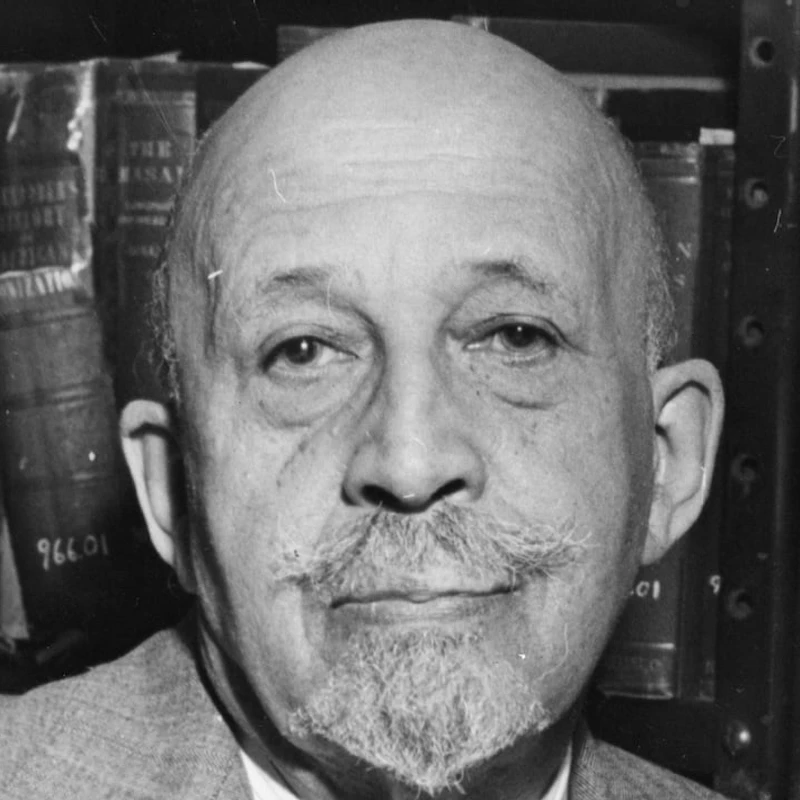
    Even decades after his passing, the voice and influence of W.E.B. Du Bois resonate powerfully. A new documentary, ‘W.E.B. Du Bois: Rebel With A Cause,’ from Emmy and Peabody Award-winning director Rita Coburn, aims to bring the complexities and enduring legend of this towering figure to life.

    A Life of Passion and Complexity

    The two-hour film chronicles nearly a century of Du Bois’ life, utilizing dramatic retellings by a star-studded cast including Common, Courtney B. Vance, and Jeffrey Wright, with the iconic Viola Davis providing narration. Coburn, who began working on the film in 2022, sought contemporary voices to read Du Bois’ powerful writings, ultimately assembling a team that felt a cultural duty to participate.

    The documentary delves into Du Bois’ multifaceted life: his journey from a free man in the North to encountering deeply entrenched racism across the country, his academic achievements, his advocacy for civil rights and Pan-Africanism, and even his public feuds with contemporaries like Booker T. Washington and Marcus Garvey. It explores his evolution from the Reconstruction era through the 1960s, culminating in his death on the eve of the 1963 March on Washington – a moment often seen as a symbolic passing of the torch.

    The Truth and Its Transformative Power

    Coburn emphasizes that documentaries, unlike narrative films, strive to uncover truth, and the process of finding that truth can be transformative. She found inspiration in Du Bois’ expansive thinking, noting his willingness to challenge presidents and intellectual rivals alike, teaching her to continuously expand her own horizons. The film doesn’t shy away from the personal toll his activism took, including strains on his first marriage and relationship with his daughter, highlighting his humanity alongside his icon status.

    The documentary also examines Du Bois’ significant influence on modern journalism and media. His creation of newsletters and magazines aimed at informing Black Americans from a trusted voice demonstrates his understanding of media’s power. Coburn stresses the importance of good journalism and truth-telling in preventing an ‘insular society.’

    Challenging Perceptions and Sharing Power

    Coburn hopes the film pushes back against the common perception of Du Bois solely through the lens of the ‘Talented Tenth’ concept, which can sometimes be misconstrued as elitist. She argues that the underlying questions about sharing power fairly in America, particularly for Black, brown, and poor people, remain relevant today. The film aims to present Du Bois as a whole person – an intellectual, an icon, and a human being who used every tool at his disposal to fight for his people.

    ‘W.E.B. Du Bois: Rebel With A Cause’ premieres on PBS on May 19 at 9 p.m. ET. Check your local listings to learn more about this essential exploration of a pivotal American figure.

    What aspect of W.E.B. Du Bois’ life or work do you find most compelling? Share your thoughts in the comments below!

  • Judge Blocks Trump’s Ban on NPR, PBS Funding

    In a significant victory for free speech and public broadcasting, a federal judge has permanently blocked President Trump’s executive order aimed at cutting federal funding for NPR and PBS. Judge Randolph D. Moss declared the order unlawful and unenforceable, affirming the First Amendment rights of these broadcasters.

    First Amendment Victory for Public Media

    Judge Moss ruled that the executive order, titled “Ending Taxpayer Subsidies for Bias Media” and issued in May 2025, directly violated the First Amendment. He stated that the government cannot use its power, including financial leverage, to “punish or suppress disfavored expression.”

    The ruling came as a result of a lawsuit filed by plaintiffs including NPR, Aspen Public Radio, Colorado Public Radio, and KSUT Public Radio. The judge found that the administration’s actions clearly indicated an intent to deny federal benefits based on the perceived “left wing” coverage of news organizations.

    Addressing Allegations of Bias

    The executive order had accused NPR and PBS of promoting certain viewpoints and failing to provide fair, accurate, or unbiased reporting. It specifically targeted NPR’s news coverage by mentioning the banning of certain speakers from federally funded programs. However, Judge Moss concluded that the Constitution prohibits the government from discriminating against entities based on their expressed views.

    President Trump had previously expressed a desire to defund NPR and PBS, believing they were biased towards the Democratic Party. This executive order had already led to cuts in funding for PBS children’s programming, resulting in layoffs for some PBS Kids staff.

    Reactions from Public Broadcasting Leaders

    Leaders from both NPR and PBS celebrated the ruling. Paula Kerger, CEO and President of PBS, affirmed their commitment to their mission of educating and inspiring Americans, calling PBS the nation’s most trusted media institution. Katherine Maher, NPR’s President and CEO, described the decision as a strong affirmation of the rights of a free and independent press, emphasizing that public media serves the public interest, not political agendas.

    The White House, however, criticized the ruling. Spokesperson Abigail Jackson called it “ridiculous” and an “activist judge attempting to undermine the law,” reiterating the administration’s belief that NPR and PBS have no inherent right to taxpayer funds and that Congress had previously voted to defund them.

    What do you think about this judge’s ruling? Does public broadcasting deserve federal funding? Share your thoughts in the comments below!
  • PragerU Cartoon Downplays Slavery

    A concerning trend is emerging in children’s media, and it’s raising serious red flags. PragerU, a right-wing nonprofit media company, is under fire for a resurfaced video that appears to downplay the horrors of slavery, all while the company is being considered as a potential replacement for PBS. Is this the kind of “education” we want for our kids?

    Slavery as “No Big Deal”?

    The controversial clip features a cartoon version of Christopher Columbus, who suggests that slavery, being “as old as time,” was perhaps not so bad. In fact, Columbus argues in the video, “Being taken as a slave is better than being killed, no?” He further prompts viewers to consider what the culture of the time treated as “no big deal” before judging. This framing, presented in a colorful, kid-friendly animation, is part of PragerU’s extensive library of content.

    The company’s co-founder, Dennis Prager, has been quite open about his mission. He’s admitted that the goal of PragerU’s programming is to actively indoctrinate children with right-wing ideology. In their 2022 annual report, they even stated their intention to compete directly with major youth media companies like PBS Kids and Disney, aiming to provide “pro-America content.” This approach has drawn significant criticism, especially given the content of their other videos, which have been accused of denying Native American history, dismissing Indigenous Peoples’ Day, rejecting climate change science, and promoting Islamophobia.

    Political Endorsements and Shifting Landscapes

    Despite the widespread criticism, PragerU has managed to secure official partnerships in several states, including Alaska, Louisiana, and South Carolina. Florida even became the first state in 2023 to approve PragerU content for its public school curriculum. The most significant endorsement, however, comes from the Trump administration.

    President Trump recently signed a bill that significantly cuts funding for the Corporation for Public Broadcasting, directly impacting PBS and NPR. Just a day later, PragerU partnered with the Department of Education to launch a White House museum exhibit titled β€œThe Road to Liberty,” which featured AI-generated commentary from Founding Fathers pushing conservative viewpoints. This move is part of a broader effort by the administration to reshape cultural institutions, focusing on “American exceptionalism” and removing “divisive or partisan narratives.” This has already led to changes in museums, including temporary removals of references to Trump’s impeachments.

    The Danger of Historical Revisionism

    Let’s be clear: a cartoon character telling children that slavery was “no big deal” is not just offensive; it’s dangerous historical revisionism. When combined with political efforts to reshape our understanding of history and potentially replace established educational platforms like PBS, it paints a worrying picture. If the atrocities of slavery can be brushed aside as a minor issue, what other critical parts of our history might be erased or distorted next? It’s crucial to stand against such attempts to rewrite our past and protect the integrity of historical education.

    What are your thoughts on PragerU’s content and its potential role in education? Share your views in the comments below and let’s discuss!

  • White House Backs PragerU as PBS Funding Cut

    The landscape of American education is shifting, and the battle over classroom content has reached a new intensity. With federal funding for PBS facing significant cuts, some states are turning to PragerU, a conservative media nonprofit, to fill the void in educational programming. This move, backed by the Trump administration, is raising serious concerns among critics and educators.

    PragerU’s Controversial Content

    Founded in 2009 by Dennis Prager, PragerU is known for its short, politically charged videos. While its content is already present in schools across states like Florida, Texas, and Oklahoma, one particular video has drawn sharp criticism. This video controversially suggests that slavery, while negative, also provided enslaved people with skills they could use later in life.

    Historians and civil rights groups argue that this framing minimizes the brutality and systemic oppression inherent in slavery, presenting a distorted view of history. Supporters, however, view PragerU’s content as a necessary antidote to what they perceive as overly negative portrayals of American history, aiming to foster ‘patriotic pride’ in students.

    A Shift in Educational Priorities

    The Trump administration has actively promoted PragerU as a ‘preferred alternative’ to PBS. While schools are not mandated to use PragerU materials, making them available represents a significant cultural shift, especially when they are replacing programming from PBS, a long-trusted source for educational content.

    Debate Over Facts vs. Values

    This development has ignited a national debate about the fundamental purpose of education. The core question is whether schools should prioritize factual accuracy and historical truth, or focus on instilling a specific set of values. The increasing presence of ideologically driven content in classrooms raises important questions about curriculum control and the narrative of American history being taught to students.

    What are your thoughts on PragerU’s content being used in schools? Should education focus more on facts or values? Share your opinions in the comments below!

  • PragerU Video Minimizes Slavery, Sparks Outrage

    A video from the conservative media company PragerU, which has partnered with the Trump administration, is causing significant controversy. The clip, featuring a cartoon Christopher Columbus, appears to minimize the horrors of slavery, suggesting it was “no big deal” and even beneficial.

    Downplaying Historical Atrocities

    The video, shared by comedian D.L. Hughley on Instagram, has been widely criticized for its historical inaccuracies and offensive framing. The cartoon Columbus character suggests that slavery, being “as old as time and has taken place in every corner of the world,” was perhaps better than being killed, and that one should consider what was considered “no big deal” at the time.

    Critics, including historians and civil rights advocates, argue that this narrative distorts the brutal reality of slavery and its lasting impact. PragerU, co-founded by Dennis Prager, has been accused of indoctrinating children with its content, which has also been criticized for denying Native American history, climate change, and promoting Islamophobia.

    Partnerships and Funding Cuts

    This controversy comes at a time when the Trump administration has been promoting PragerU as an alternative to PBS, especially as PBS faces substantial federal funding cuts. The administration signed a bill to cut $1.1 billion in funding for the Corporation for Public Broadcasting, impacting PBS and NPR.

    Furthermore, PragerU and the Department of Education unveiled an exhibit at the White House’s Founders Museum, featuring AI-generated commentary from the Founding Fathers that aligns with conservative rhetoric. President Trump’s administration has also been reviewing Smithsonian museums, aiming to promote “American exceptionalism” and remove perceived divisive narratives.

    The Debate Over Education’s Purpose

    The increasing involvement of organizations like PragerU in public education raises critical questions about the role of schools in shaping historical understanding and values. The debate centers on whether education should prioritize factual accuracy or promote a specific ideological viewpoint, especially concerning sensitive historical topics like slavery.

    What are your thoughts on PragerU’s video and its potential role in education? Share your views in the comments below!