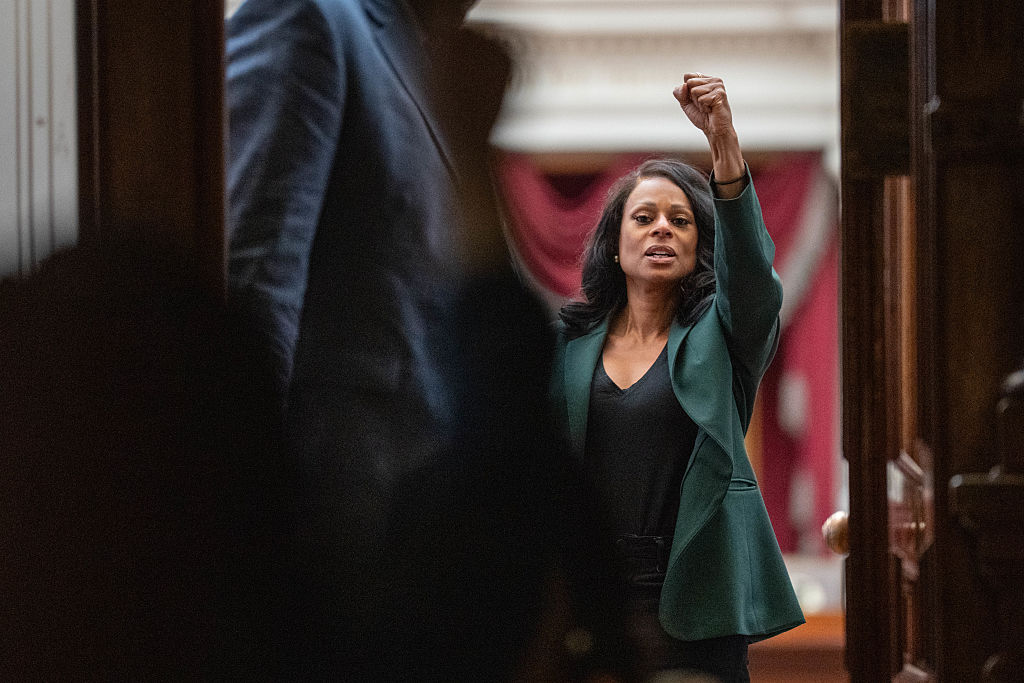
In 1835, Harriet Jacobs endured seven years of confinement in a cramped crawl space to escape enslavement and oppression. More than a century later, Texas Rep. Nicole Collier chose a different form of confinement—sleeping on the House floor—to protest a system she felt was designed to humiliate her. Both acts, separated by time and circumstance, stem from the same powerful logic: Black women resisting being boxed in.
A Legacy of Defiance
Collier’s protest involved refusing to sign a “permission slip” that would have subjected her to constant police escort during a redistricting standoff. By choosing to remain on the House floor, she framed her action as “civil disobedience,” echoing Congressman John Lewis’s call to “make good trouble.” Her protest wasn’t just about a legislative rule; it was a deliberate act of resistance rooted in a deep historical understanding.
When Collier drew parallels between her protest and the historical resistance of enslaved people fleeing oppression and Jewish people escaping the Holocaust, she ignited significant backlash. Critics, particularly from conservative and some Jewish outlets, accused her of trivializing atrocities and being “historically inappropriate.” Headlines like “Texas Democrat Sparks Outrage After Comparing Herself to Runaway Slaves and Holocaust Victims” quickly emerged.
Beyond Equivalence: Claiming Lineage
However, the criticism often flattened Collier’s words into a caricature. She wasn’t claiming personal equivalence to enslaved people or Holocaust victims; rather, she was asserting a historical continuity of resistance. Her point was that oppressed people, across different contexts, inevitably resist systems designed to break them. This historical literacy, rather than “historical cosplay,” highlights the enduring patterns of survival against imposed power.
The backlash, critics argue, often serves to police the language of Black resistance. By twisting Collier’s words and manufacturing outrage, these outlets distract from the uncomfortable truth she was highlighting: America’s ongoing demand for resistance from the oppressed. This manipulation aims to silence dissent and reinforce systems of denial, rather than grapple with the historical context she invoked.
The Uncomfortable Truths of Comparison
The comparison also touches a raw nerve for some Jewish individuals, potentially stirring up a “competition over historical suffering.” When Black activists place slavery and Jim Crow in the same continuum as the Holocaust, it can feel like a trespass to those who view the Holocaust as a singular, untouchable atrocity. However, this defensiveness can mask complicity in perpetuating white supremacy, as some Jewish communities have assimilated into whiteness by accessing structures from which Black people were historically excluded.
Collier’s analogy threatens this assimilation bargain by exposing the shared architecture of oppression—the white supremacy that underpins slavery, lynching, the Holocaust, and contemporary legislative actions. The outrage, therefore, isn’t solely about “historical inappropriateness” but about guarding whiteness and refusing to acknowledge the interconnectedness of oppressive systems.
Honoring History Through Defiance
Comparisons like Collier’s are effective precisely because they are uncomfortable. They remind us that authoritarian creep doesn’t always announce itself with overt symbols of hate; it can manifest in smaller humiliations, legislative maneuvers designed to silence dissent, and demands for conformity. Collier’s defiance honored history by reminding us that resistance is not polite; it is disruptive and meant to unsettle those who benefit from oppression.
Jacobs’s seven years in a crawl space and Collier’s night on the House floor, though separated by centuries, are united by a fundamental truth: resistance is an inevitable response to systems designed to break marginalized people. In a moment when Black women are often urged to be quiet or dilute their words, preserving and amplifying their refusal to yield is crucial. Their acts of defiance, whether hiding or protesting, are part of the same enduring story of survival.
What are your thoughts on Rep. Collier’s protest and the historical parallels she drew? Share your perspective in the comments below!