Tag: Newsletter 3

  • Georgia’s New Election Law Sparks Racism Claims

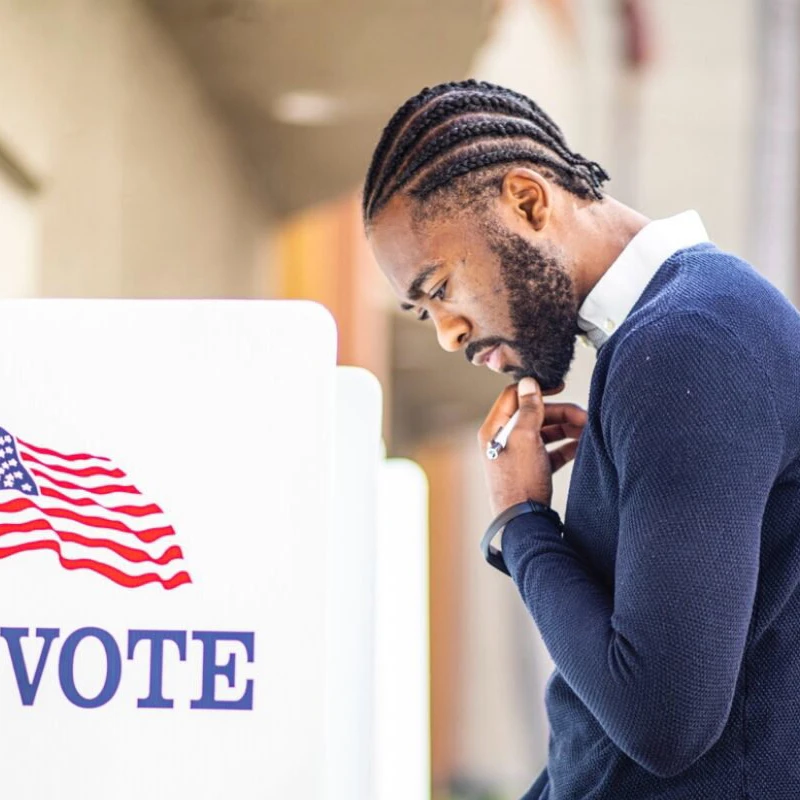
    A new law signed by Georgia Governor Brian Kemp is igniting a firestorm of controversy. House Bill 369, which aims to make several local elections nonpartisan in five Metro Atlanta counties, is being slammed by local leaders and voting rights advocates as a racist measure designed to suppress the vote, particularly among Black communities.

    Targeting Democratic Strongholds?

    The legislation, set to take effect in 2028, will remove party labels from candidates running for key local offices like district attorney, county commissioner, and sheriff in Clayton, Cobb, DeKalb, Fulton, and Gwinnett counties. While supporters claim the goal is to encourage voters to focus on qualifications over party affiliation, opponents argue the law specifically targets heavily Democratic and predominantly Black counties.

    Mary-Pat Hector, CEO of RISE, a youth advocacy nonprofit, stated, ‘These are counties that have historically been Democratic. These are counties that are predominantly African American. This contributes to a more concerted effort to suppress Black voters.’ Leaders like Cobb County Chairwoman Lisa Cupid and labor leader Sandra Lee Williams have also voiced strong opposition, calling the bill an ‘effort to suppress the vote.’

    Confusion and Disenfranchisement Concerns

    Political experts suggest that removing party identifiers, especially in local races that often lack extensive media coverage, could confuse voters. Emory University professor Zachary Peskowitz noted that party labels provide crucial information to voters about a candidate’s platform, information that might be lost without them.

    The selective nature of the law is also a major point of contention. DeKalb County CEO Lorraine Cochran-Johnson questioned the rationale, asking, ‘If fairness and election integrity are truly the goal, why does this bill target five counties and not all 159 across the entire state of Georgia?’ This selective application fuels accusations of racial and political motivations.

    Racial Motivations and Legal Challenges

    Adding to the controversy, critics have pointed out that many of the offices affected by the legislation are currently held by Black women. This observation has intensified concerns that the bill is rooted in racism. One local leader bluntly stated, ‘It is definitely, definitely racism at its fullest.’

    With the law slated to take effect in 2028, local officials are already signaling their intent to pursue legal action. The fight against what many see as a voter suppression tactic is likely to continue, with voting rights advocates mobilizing nationwide.

    What are your thoughts on Georgia’s new nonpartisan election law? Do you believe it’s a measure to improve elections or a tactic for voter suppression? Share your perspective in the comments below!
  • Charlotte Newman: Championing Black Art & Wealth

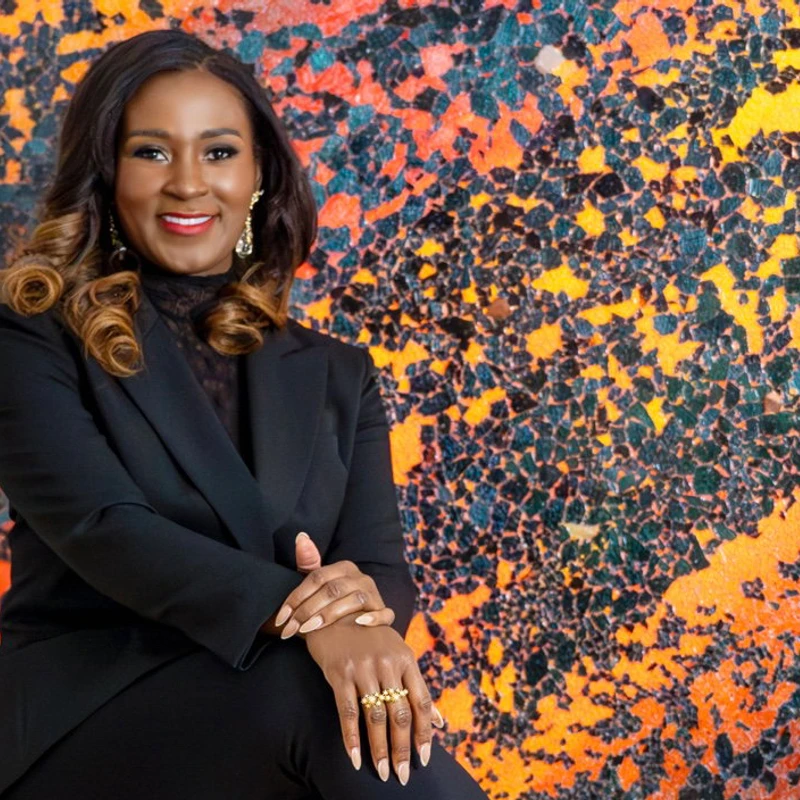
    Charlotte Newman, a distinguished fine art collector, is on a mission to democratize the art world. Drawing inspiration from her upbringing, her extensive education, and a career spanning politics, entrepreneurship, and technology, Newman is leveraging her passion and expertise to expand access to art by Black artists and those from the African diaspora. She sees fine art not just as aesthetic beauty, but as a powerful vehicle for wealth creation and cultural legacy.

    Bridging the Gap in Art Ownership

    Newman, who holds degrees from Wellesley College and Harvard Business School, recognizes the significant underrepresentation of Black collectors and artists in the fine art industry. With white men dominating the collector landscape and Black artists historically undervalued, Newman aims to shift this paradigm. She believes fine art is ‘culture’ and should be engaged with through ‘seeing’ rather than solely through acquisition, making it less intimidating.

    Her commitment extends beyond her personal collection. Newman founded the Scott Newman Collection to support artists of African descent, continuing a family tradition of arts appreciation. This collection focuses on diverse works, including figurative and abstract pieces that explore themes of politics, race, gender, and sexuality, serving as a ‘vehicle for legacy’ and a means to ‘contribute to generational wealth.’

    Beyond Affordability: Information, Proximity, and Confidence

    Newman acknowledges that the high cost of fine art can be a barrier for many in the Black community. However, she emphasizes that increasing access involves more than just affordability. ‘It is also about information, proximity and confidence,’ she stated. The art world can often feel inaccessible due to a lack of knowledge about where to start, what questions to ask, or how to trust one’s own perspective.

    To address this, Newman actively uses platforms like online viewing rooms, art fairs, and the Clubhouse app to share insights into art history and foster appreciation. Through her Substack column, ‘Crown and Capital,’ she provides valuable perspectives on the art world, demystifying the process for aspiring collectors and enthusiasts.

    Building Cultural Legacy and Community Support

    Artists like Lindsay Adams, whose piece ‘The Source of Self Regard’ is in Newman’s collection, highlight the importance of Black collectors. ‘It helps to further ground our cultural legacy and voice… and the role that we play in the art historical canon,’ Adams noted. Newman’s support ensures that the work of Black artists is not only preserved but also celebrated within the broader art historical narrative.

    Her collection includes significant pieces, such as an 1880s work by Edward Mitchell Bannister, the first Black artist to win a national art award. Newman also experienced a full-circle moment winning a Gordon Parks photograph at a foundation gala, having previously helped draft a Congressional Resolution commemorating Parks’ life and legacy.

    Connecting Through Art and Shared Values

    Newman’s approach goes beyond mere acquisition; she seeks deep connections with artists. She is intrigued by their inspirations, their reading materials, and how they weave literature, science, and culture into their work. This led her to become an executive producer on Alteronce Gumby’s upcoming film, ‘Color In Nature,’ showcasing her commitment to supporting artists holistically.

    Her diverse background, influenced by her godmother, renowned artist Tina Dunkley, provides a unique perspective. Newman understands that value extends beyond the financial, encompassing culture, relationships, reputation, and trust. She applies this holistic view to her collecting, recently purchasing Candice Tavares’s intricate piece, ‘Wade In The Water,’ appreciating the artist’s unique techniques and the story behind the work.

    What does art mean to you as a form of cultural expression or wealth building? Share your thoughts in the comments below!

  • Jake Paul Considers Blackface After Druski Skit

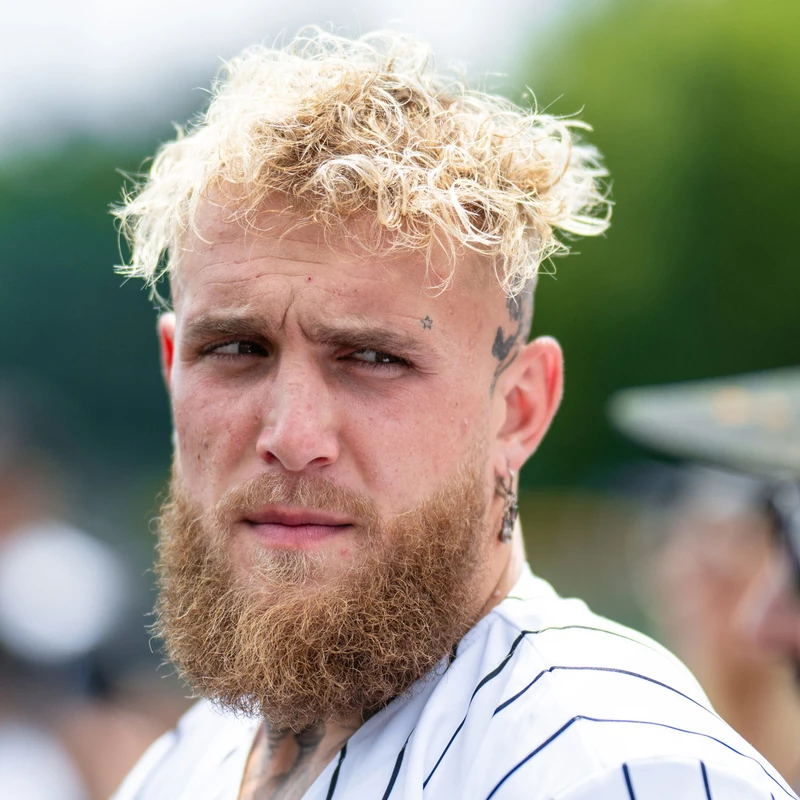
    YouTuber and boxer Jake Paul is facing significant backlash after suggesting he considered using blackface in response to a recent skit by comedian Druski. The controversial comments were made during an appearance on Theo Von’s “This Past Weekend” podcast, where Paul discussed Druski’s portrayal of a conservative white woman.

    Defending Druski’s Skit

    Paul expressed strong support for Druski’s skit, calling it “f—ing hilarious” and criticizing the Republican backlash it received. “Even though it’s fu–ing dark and twisted, this is what comedy fu–ing is—that we are fu–ing humans. Let’s make fun of ourselves, and there’s truth in this,” Paul argued. He felt the criticism was an “L for Republicans” because the skit was genuinely funny.

    His defense of the skit quickly escalated when he revealed his own idea for a response. Paul admitted he had been contacting makeup artists about creating a video where he would use blackface to mirror Druski’s portrayal. “I want to ask you something because I’ve been, over the last couple of days, calling makeup artists, and I was going to do a response to this [Druski’s video] and like go and do like the full on… Darker?” he asked Von, confirming his intention.

    The ‘We Should Make Fun of Each Other’ Argument

    Paul’s rationale for considering blackface was rooted in his belief that people should be able to “make fun of each other” and that comedy should operate on a level playing field. He pushed back against Von’s suggestion that such a bit would require “Black support” to land properly, calling it “pu–ying out” and arguing that it would be prejudiced to rely on others to validate the humor.

    “Doesn’t that make us more prejudiced? … That makes us [prejudiced] if we have to partner with someone. Duski just dropped this,” Paul insisted. He concluded his point by stating, “We should fu–ing make fun of each other. And I don’t see in color, I see in truth and comedy. So like, what are we talking about? What era are we living in?”

    Online Reactions and Controversy

    Paul’s comments immediately sparked a heated debate online. While some users supported his view that comedy should be boundary-pushing and that people should be able to “make fun of each other,” many others strongly condemned the idea of blackface. Critics argued that blackface is inherently racist due to its historical context and cannot be equated with Druski’s skit.

    One X user pointed out the difference: “And yes, that will be racist. The fact people don’t understand why blackface is bad, and different from what Druski did, is proof of our poor education system and racism.” The discussion highlights the ongoing sensitivity and historical weight surrounding the use of blackface in any context.

    What are your thoughts on Jake Paul’s comments about blackface and comedy? Do you think his proposed response is acceptable, or does it cross a line? Share your perspective in the comments below!
  • NYC Mayor Launches Free Childcare Program

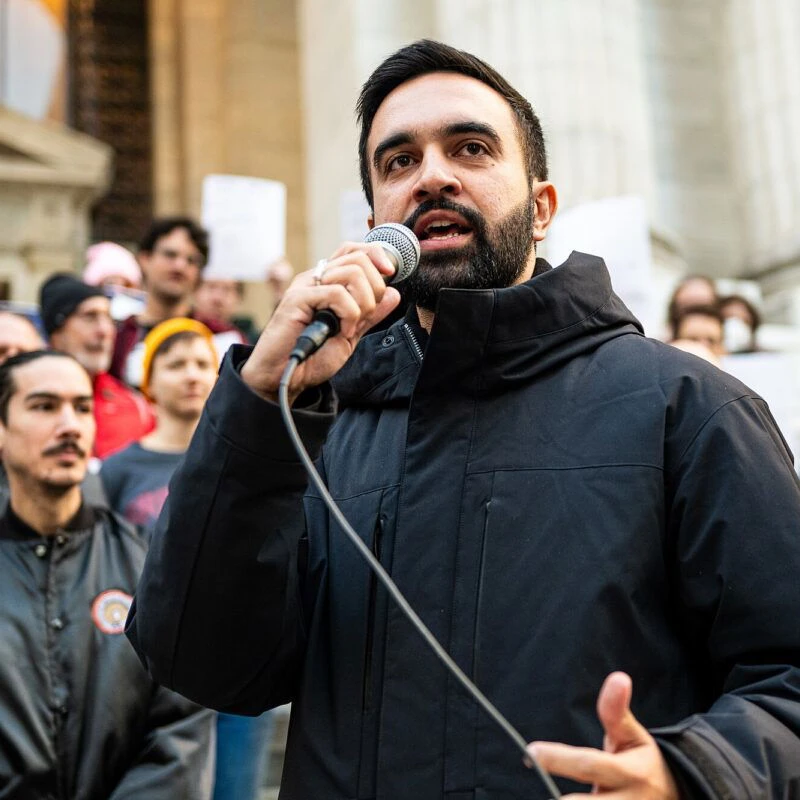
    New York City Mayor Zohran Mamdani is making good on a key campaign promise by launching the city’s first-ever on-site childcare program for municipal employees. This initiative, which offers 100% free, full-day care for children as young as six weeks old up to three years old, is a significant step towards his vision of universal childcare.

    A Boost for Working Families and City Productivity

    The new program, set to open applications on April 30th, will be available to all workers in the David Dinkins building and the Department of Citywide Administrative Services (DCAS), regardless of their location. Mayor Mamdani highlighted that this expansion of free childcare could save families nearly $20,000 annually, helping to retain top talent and increase productivity among city workers.

    ‘Change begins at home,’ Mamdani stated, emphasizing that public servants who keep the city running deserve accessible childcare. ‘We are bringing year-round, no-cost childcare right here to Lower Manhattan — not just saving families money, but giving them back hours of their time. No parent should have to spend hours commuting just to ensure their child is safe and cared for.’

    Prioritizing Early Childhood Education

    In his first six months in office, Mamdani has made free childcare a central focus. He even partnered with popular YouTube educator Ms. Rachel (Rachel Griffin Accurso) for a campaign to underscore the importance of early childhood education and accessible childcare solutions.

    The average cost of childcare in the U.S. is nearly $14,760 per year, a figure that can nearly double in New York City. This program aims to alleviate that significant financial burden for many families. The initiative is in capable hands, with Emily Liss overseeing the Mamdani’s Office of Child Care and Early Education. Liss was instrumental in architecting former Mayor Bill de Blasio’s successful Pre-K and 3-K programs, positioning New York City as a leader in early childhood services.

    A Growing National Trend

    While some users on social media have raised concerns about government involvement in childcare and potential impacts on private sector costs, universal childcare remains a hot political topic. New Mexico made history in November 2025 by becoming the first state to implement a no-cost, universal childcare program, signaling a broader national conversation about making childcare more accessible and affordable.

    What do you think about New York City’s new free childcare program? Do you believe universal childcare should be a priority nationwide? Share your thoughts in the comments below!

  • Startup Equity: Founders Still Value Ownership

    In the fast-paced world of startups, there’s a growing conversation about equity. While some employees are starting to question the real value of stock options due to market uncertainties and longer liquidity timelines, founders remain steadfast in their belief in shared ownership. For them, equity isn’t just a financial tool; it’s the bedrock of trust, motivation, and collective success.

    The Rise of Equity Skepticism

    Many startup employees today approach equity with more caution than in the past. This skepticism often stems from a lack of understanding about how ownership actually works, coupled with the complexities of vesting schedules and valuations that hinge on the possibility of a future liquidity event. This creates a perception gap: while employees might see equity as unpredictable, founders largely view it as indispensable for building shared success.

    The core issue often lies in the communication gap between offering equity and ensuring recipients truly grasp its value. When ownership feels abstract or overly complicated, its power to motivate naturally diminishes. Founders need to bridge this understanding gap to ensure equity remains a powerful tool.

    Founders’ Unwavering Belief in Ownership

    Within founder communities, like those observed on the Cake Equity platform, a consistent theme emerges: equity is treated as a cornerstone of company culture. Leaders use ownership to connect their teams not only to the company’s purpose but also to its potential future outcomes. Equity represents fairness, motivation, and a sense of shared stewardship.

    Founders leverage ownership to align incentives, attract top talent, and ensure that everyone contributing to the company’s growth has a tangible stake in its success. This enduring perspective highlights that even as employee confidence fluctuates, founders continue to see ownership as essential cultural infrastructure, transforming contributors into invested stakeholders.

    Ownership as Culture, Not Just Compensation

    The persistence of ownership culture points to a deeper truth about how startups thrive. While initial compensation attracts talent, it’s ownership that fosters long-term investment and commitment. Equity encourages long-term thinking and shared accountability, building teams that are driven by a common goal rather than just short-term rewards. For founders, equity signifies belonging, giving everyone who helps build the company a real stake in its achievements.

    The Importance of Transparency and Education

    For equity to maintain its motivational power, transparency is key. Complex jargon, unclear valuations, and poor communication can make ownership feel inaccessible. Founders who prioritize educating their teams—explaining concepts like vesting, dilution, and value in simple terms—empower employees to understand how their equity connects to tangible outcomes. Startups that foster clear, open communication about ownership tend to build stronger engagement and trust.

    Turning Skepticism into Motivation

    If employee skepticism is on the rise, founders have a prime opportunity to bridge the gap. This involves making ownership more tangible and easier to understand. Key strategies include communicating value consistently, simplifying complex terms, celebrating ownership milestones like vesting, leading with transparency about decision-making, and crucially, linking equity to the company’s mission and purpose, not just financial gain.

    Equity may not always guarantee a financial windfall, but its symbolic value remains immense. Founders continue to believe that shared ownership strengthens teams, builds trust, and keeps companies anchored in purpose. In an era where equity skepticism exists, the enduring power of ownership culture persists, representing the fundamental startup ethos: when the company succeeds, everyone succeeds.

    How do you view startup equity as an employee or founder? Share your experiences and perspectives on ownership in the comments below!

  • Roc Nation Distribution Launches Indie Artist Platform

    In a move set to shake up the independent music scene, Roc Nation Distribution has launched a cutting-edge platform designed to give emerging artists greater global reach and control over their careers. Announced on November 17th, this new initiative offers a suite of powerful tools and resources, all accessible through a free, personalized dashboard.

    Empowering Artists with Data and Control

    The platform provides independent artists with access to advanced streaming analytics, real-time audience insights, and social media data. Crucially, it allows for distribution to over 200 platforms worldwide. What sets this offering apart is its artist-centric model: artists retain full ownership of their masters and keep 85% of their earnings. Roc Nation Distribution President Krystian Santini described it as a “game-changer” and a “one-stop shop” that democratizes access to tools previously reserved for major label artists.

    Santini emphasized the platform’s unique technology, stating, “Our technology is uniquely ours and sets a new standard with no equivalent in today’s music industry.” Beyond analytics and distribution, the dashboard streamlines royalty payments, offers publishing administration, rights management, and simplifies the process of uploading motion artwork for digital service providers (DSPs).

    Mixed Reactions to the Royalty Split

    While the platform boasts significant advantages, the 15% royalty split has drawn criticism from some corners of the music industry. Popular independent artist Russ took to X (formerly Twitter) to voice his concerns: “An 85/15 split to press ‘upload’ is madness… Major labels take 15% distro off the top too so it seems like they just modeled the business off of that. If you’re an artist, this makes no sense to sign up for imo.”

    Other users echoed this sentiment, pointing out that some distribution services offer 100% royalty retention for a small annual fee. The criticism suggests that while Roc Nation’s platform offers valuable tools, the 15% cut might be seen as steep by artists accustomed to keeping a larger share of their earnings, especially when compared to other distribution models.

    A Platform for Established and Emerging Talent

    Despite the debate over the royalty split, many artists recognize the value of distributing through a powerhouse like Roc Nation. The platform is already being utilized by Grammy winners like Rapsody, Grammy nominees like Clipse, and notable artists such as Flau’jae, The LOX, SAINt JHN, Westside Gunn, and Bootsy Collins. This blend of established and emerging talent suggests that Roc Nation Distribution’s new platform could indeed become a significant player in shaping the future for independent artists.

    What are your thoughts on Roc Nation Distribution’s new platform and the 85/15 royalty split? Do you think it’s a good deal for independent artists? Share your opinions in the comments below!

  • Texas A&M Restricts Race & Gender Instruction

    The Texas A&M University System has enacted a significant new policy that requires professors across its 12 campuses to obtain prior authorization from their campus president before teaching specific subjects related to race, gender, or sexual orientation. This directive represents one of the most extensive efforts in Texas to regulate discussions of identity-based topics within higher education.

    New Rules for Classroom Content

    Under the new rule, courses are prohibited from “advocat[ing] race or gender ideology, or topics related to sexual orientation or gender identity” without explicit prior approval. System officials have stated that the rule establishes a formal review process for sensitive content, aiming for transparency. However, faculty critics argue that this policy infringes upon academic autonomy and potentially violates First Amendment protections.

    Rana Jaleel, chair of the American Association of University Professors’ academic freedom committee, expressed deep concern, stating, “It really strikes at the heart of what education means and what universities do, which is circulate the exchange of knowledge without fear of retaliation, without fear of censorship.”

    Political Scrutiny and University Speech

    This policy emerges amidst heightened political scrutiny of university curricula concerning diversity, equity, inclusion (DEI), and campus speech. Institutions nationwide, including Harvard, Columbia, and the University of Texas at Austin, have faced pressure from conservative groups and political figures. Notably, President Trump recently urged major universities to eliminate race and sex considerations in admissions and increase conservative representation.

    The Texas A&M policy defines “race ideology” as concepts that “shame a particular race or ethnicity, accuse them of being oppressors in a racial hierarchy or conspiracy,” or assign “intrinsic guilt based on the actions of their presumed ancestors.” “Gender ideology” is defined as a “concept of self-assessed gender identity… disconnected from the biological category of sex.” James Hallmark, vice chancellor for academic affairs, clarified that the goal is to create a “transparent and document cocurricular review, not policing individual speech.”

    Faculty Pushback and Defining ‘Truth’

    The vote follows the dismissal of Melissa McCoul, a senior English lecturer, after a classroom discussion on gender identity in a children’s literature class sparked political backlash, including from Texas Governor Greg Abbott. Faculty members feel the new rule solidifies these political pressures. Leonard Bright, head of the university’s AAUP chapter, stated, “Our job is to teach facts, teach the truth. And if we have to use a litmus test of whether or not it meets someone’s approval… then we have no truth.” Despite significant faculty opposition, Regent Sam Torn defended the policy, asserting it ensures the system is “educating, not advocating.”

    What are your thoughts on Texas A&M’s new policy regarding race and gender instruction? Do you believe it impacts academic freedom? Share your views in the comments below!

  • KFC Franchisee Donates $18M for Jamaica Relief

    In the wake of Hurricane Melissa’s devastating impact on Jamaica, a major franchisee for KFC and Pizza Hut is stepping up in a significant way. Restaurants of Jamaica (ROJ) has pledged a substantial $18 million to aid the island’s recovery efforts, providing both financial contributions and much-needed meal support.

    A Commitment to Rebuilding

    ROJ’s commitment extends to supporting government agencies and nonprofit organizations working on the ground. Mark Myers, ROJ’s managing director, emphasized the company’s deep connection to the island, stating, “Jamaica is our home, and we are deeply committed to helping our people rise again.” This donation aims to bolster national relief efforts while also providing direct assistance to ROJ employees and their families who have been negatively impacted by the hurricane.

    The organization has already initiated internal relief programs to support its team members most in need during this challenging time. This dual focus ensures that both the broader community and its own workforce receive crucial aid.

    Direct Support for Vulnerable Communities

    The $18 million donation will be distributed to several key organizations, including the Salvation Army Corps in St. James, Westmoreland, and Trelawny. Support will also reach Manning’s Boys Home and St. Matthew’s Mothers’ Union in St. Elizabeth, as well as Windsor Lodge Children’s Home and Friends in Need in Manchester. These contributions will directly benefit children, families, and community support systems.

    A History of Giving Back

    This isn’t the first time ROJ has demonstrated its commitment to Jamaica. In August, the organization donated $7 million to 14 children’s homes as part of its 50th-anniversary celebration. Andrei Roper, ROJ’s Marketing Manager, highlighted this past generosity as a way of expressing gratitude for the community’s support over five decades, emphasizing investment in the younger generation and their caregivers.

    Hurricane Melissa made landfall on October 28th as a Category 5 storm, with winds reaching up to 185 mph. The storm overwhelmed infrastructure and left thousands homeless, underscoring the critical need for robust recovery efforts. While ROJ’s substantial donation will undoubtedly provide a significant boost, the scale of the devastation means continued support will be essential for Jamaica’s rebuilding process.

    What are your thoughts on ROJ’s generous donation to Jamaica? How else can businesses contribute to disaster relief efforts? Share your opinions in the comments below!