Tag: NABJ

  • NABJ Defends Black Women Journalists After Trump Tirade

    It’s a pattern that’s become all too familiar: President Trump engaging in public spats with Black women journalists. The latest incident involves ABC News’ Rachel Scott, and the National Association of Black Journalists (NABJ) is speaking out, demanding an end to the hostility and disrespect.

    A Troubling Pattern of Attacks

    Throughout his presidencies, Trump has frequently targeted Black women journalists, often labeling them ‘second-rate’ or ‘losers’ for asking tough questions. Figures like Yamiche Alcindor, April Ryan, Jemele Hill, and Abby Phillip have all been on the receiving end of his criticism. Alcindor and Ryan were frequent targets between 2017 and 2021, while Jemele Hill faced backlash after calling Trump a ‘white supremacist’ on Twitter in 2017, leading Trump to attack her employer, ESPN.

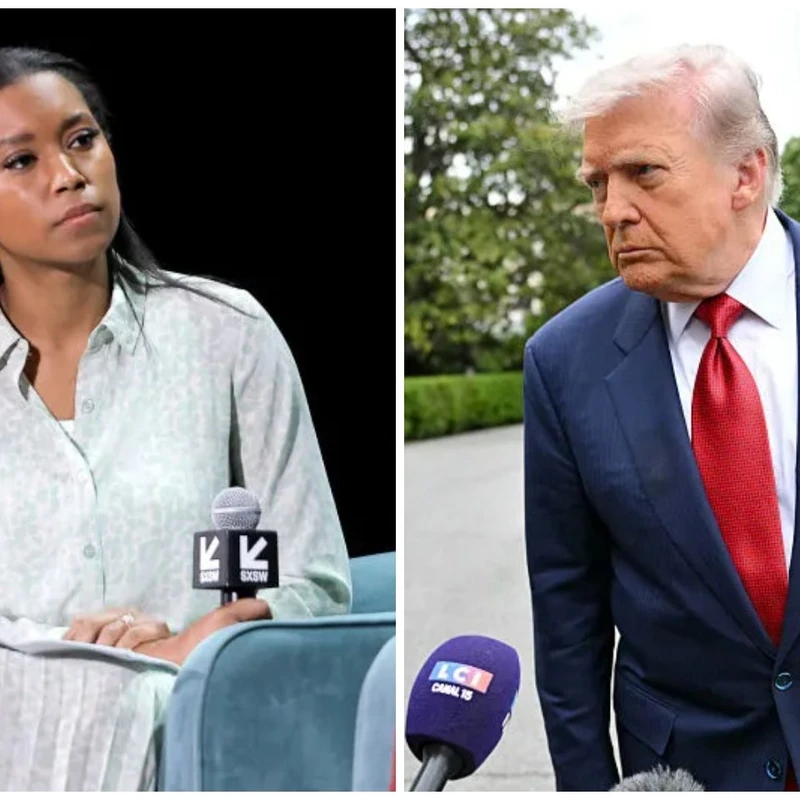
    The clashes continued recently when Trump, speaking near the Lincoln Memorial, took a question from Rachel Scott. Scott asked why his focus was on projects like cleaning the reflection pond while the U.S. was involved in a war in Iran. While some interpreted his remarks as calling her a ‘bitch,’ his actual words added to a well-documented pattern.

    Trump’s Remarks and NABJ’s Response

    Trump responded to Scott’s question by saying, ‘You can understand dirt maybe better than I can, but I don’t allow it.’ He continued, ‘This is one of the worst reporters. She’s with ABC Fake News, and she’s a horror show. A question like that is a disgrace to our country.’

    The NABJ swiftly condemned these remarks in a statement, calling for an ‘immediate end to the continued tone of disrespect, hostility and public denigration directed at Black women journalists.’ The organization highlighted that Scott’s experience is part of a larger, troubling pattern where Black women journalists are singled out, insulted, or demeaned for asking legitimate questions and holding power accountable.

    NABJ President Errin Haines emphasized the significance of these attacks: ‘When Black women journalists are targeted, insulted or demeaned for asking legitimate questions, it is not only an attack on them personally – it is an attack on the role of a free press in our democracy.’

    A History of Targeted Criticism

    This isn’t the first time NABJ has defended journalists against Trump’s rhetoric. They issued a similar statement last September defending Yamiche Alcindor and others when Trump berated Alcindor for a question about deploying the National Guard to majority Black, Democrat-led cities. The organization specifically named Alcindor, Ryan, and Jasmine Wright as journalists who have faced Trump’s ire in recent years.

    Even during a controversial appearance at the 2024 NABJ conference, Trump referred to Rachel Scott as ‘nasty’ and ‘hostile’ when she questioned him about his previous attacks on Black journalists. His response at the time was dismissive, calling her question ‘horrible’ and questioning her affiliation with ‘fake news.’

    What are your thoughts on President Trump’s interactions with Black women journalists? Share your perspective in the comments below.
  • Trump’s Pattern of Bullying Black Female Reporters

    In the current political landscape, the behavior of elected officials, particularly the President, is under constant scrutiny. While Donald Trump has frequently set a low bar for acceptable conduct, his pattern of targeting Black women reporters with dismissive and personal attacks warrants particular concern. ABC News’ Rachel Scott has become a recent focal point, illustrating a disturbing trend of Trump’s intolerance for substantive journalistic questions from this demographic.

    An Incident at the Lincoln Memorial

    During a recent visit to the Lincoln Memorial, Trump was questioned by Rachel Scott about his priorities amidst a war in Iran and soaring gas prices. Instead of providing a presidential response, Trump launched into a defensive, almost childlike tirade about cleaning up the Reflecting Pool. He deflected from the core of Scott’s question, which was about policy and national concerns, by focusing on aesthetics and cleanliness.

    Trump then escalated his response by personally attacking Scott, calling her question “stupid” and labeling her “with ABC fake news and she’s a horror show.” He continued to ignore the substance of her inquiry, instead fixating on perceived “dirt” and “filth.” Many observers also noted that Trump appeared to call Scott a “b—h” as he walked away, further highlighting his lack of decorum.

    A Recurring Pattern of Behavior

    This incident is not isolated. The article points to a similar encounter in 2024 when Trump addressed the National Association of Black Journalists (NABJ). There, Scott directly questioned him about his use of racist language and insults directed at Black media. Trump’s response was similarly defensive and dismissive, accusing Scott of asking a “horrible” question and labeling her network “fake news.”

    The author argues that Trump’s behavior, including calling female reporters “piggy” and berating them for critical questions, has worsened since his reelection. This pattern extends to his Cabinet members and press secretary, who have also been observed telling reporters their questions are “stupid,” even when they are relevant and topical.

    Lowering the Standard of Discourse

    The piece suggests that Trump’s actions, including his public outbursts and dismissive attitude towards critical questions, have significantly lowered the standard for presidential conduct. The author laments a time when journalists were expected to uphold a certain craft, contrasting it with the current environment where a “moronic, outwardly bigoted, woefully incompetent man-child” seems to set the tone.

    The article posits that Trump’s consistent targeting of Black women reporters, specifically, is not accidental but a deliberate pattern. When faced with questions that challenge his narrative or highlight his controversial actions, his go-to response appears to be personal attacks, deflection, and an attempt to discredit the questioner, particularly when they are Black women asking substantive journalistic questions.

    What are your thoughts on Donald Trump’s interactions with reporters, particularly Black women journalists? Share your perspective in the comments below.

  • Trump’s Attacks on Black Female Journalists

    It’s a familiar pattern: President Donald Trump launching personal attacks on journalists, particularly Black female reporters. His recent outburst against Yamiche Alcindor of PBS NewsHour, calling her “second-rate,” is just the latest example in a history of targeting women of color who dare to ask tough questions.

    Escalation Over Chicago Comments

    The incident occurred as Alcindor questioned Trump about a jarring social media post where he seemed to threaten “war” in Chicago. Trump had renamed his Cabinet-level department for the U.S. Armed Forces to the “Department of WAR” and posted, “Chicago is going to learn why it’s called the Department of WAR.” This came after weeks of Trump criticizing crime in majority Black and brown cities and threatening to deploy the National Guard.

    When Alcindor pressed him for an explanation, Trump fired back, “When you say that, darling, that’s fake news.” When she persisted, asking why he’d use the Department of Defense, Trump retorted, “Listen. Be quiet. Listen. You don’t listen. You never listen. That’s why you’re second-rate.”

    A Pattern of Attacks

    This isn’t the first time Trump has clashed with Alcindor. In 2018, he dismissed her question about his use of the term “nationalist” and its connection to white supremacists as “racist.” In 2019, he called her “untruthful” regarding reports about his administration’s transparency. And in 2020, when she questioned his administration’s slow response to the COVID-19 pandemic, he called it a “nasty” and “snarky” question, urging her to “be nice.”

    Civil rights attorney Sherrilyn Ifill suggested Trump’s reaction stemmed from Alcindor hitting a nerve. “He screwed up and has been trying to walk it back. She embarrassed him by being an actual reporter and raising what he wanted to avoid. Coward!” Ifill wrote on social media.

    Targeting Black Female Journalists

    The attacks extend beyond Alcindor. Longtime White House reporter April Ryan was called a “loser” by Trump in 2018 and told she “doesn’t know what the hell she is doing.” He infamously asked her to “set up” a meeting with the Congressional Black Caucus in 2017. More recently, he criticized CNN’s Abby Phillip, calling her a “3rd rate” talent with “no idea what she is talking about” regarding tariffs.

    These repeated personal insults against Black female journalists have drawn condemnation from organizations like the National Association of Black Journalists (NABJ). NABJ President Errin Haines emphasized the importance of respecting journalists, stating, “When journalists show up to do their jobs, they should not be personally attacked and impounded by subjects they cover.”

    • Trump recently called reporter Yamiche Alcindor “second-rate” during a press scrum.
    • The exchange occurred after Alcindor questioned Trump’s use of the term “Department of WAR” regarding Chicago.
    • This incident is part of a pattern of Trump attacking Black female journalists.
    • Previous targets include April Ryan and Abby Phillip.
    • The NABJ has vowed to defend Black journalists and the freedom of the press.

    Defending the Press

    Haines affirmed NABJ’s commitment to supporting journalists like Alcindor, who was named their 2020 Journalist of the Year. “NABJ will continue to champion Black journalists… who show up every day with integrity, rigor, and clarity,” she stated. The association stresses that protecting the press is essential for protecting the people and upholding democracy.

    What are your thoughts on President Trump’s interactions with journalists, particularly Black female reporters? Share your perspective in the comments below!