Tag: Morehouse College

  • HBCU Homecoming: A Father’s Reflection on Legacy

    For many, HBCU homecoming season is more than just a tradition; it’s a vibrant celebration of Black legacy, community, and the enduring spirit of institutions that have shaped generations. This year, for Panama Jackson, it was also a profound moment of reflection as he watched his 16-year-old daughter experience the magic of SpelHouse (Spelman and Morehouse Colleges) homecoming for the first time.

    The Effervescence of Black Joy

    Jackson describes homecoming as a unique effervescence – a chance for alumni to revisit the grounds that shaped them and for current students to witness their potential futures. It’s a space where professionals embrace their inner “hoodrat” for a weekend, a powerful display of Black joy amidst the complexities of modern America. He notes the special energy that non-HBCU grads experience when they witness such a concentrated celebration of Blackness.

    While Jackson typically attends with friends, this year’s homecoming held a different significance. His daughter, a junior in high school, was actively exploring potential college destinations. Having visited Howard University since childhood (due to her maternal grandmother being an alumna), this was her first time stepping onto Spelman’s campus with a discerning eye for her future.

    A Father’s Hopes and Evolving Desires

    As a father who cherishes his own SpelHouse experience, Jackson admits he’d love for his daughter to attend Spelman. However, he emphasizes that her happiness is paramount. “Am I more concerned about her happiness wherever she is? Absolutely,” he states. He was eager to see her immerse herself in the Spelman experience and the homecoming festivities.

    Jackson recognizes homecoming as a powerful tool for inspiring students to consider HBCUs. He watched as his daughter toured Clark Atlanta University, Spelman College, attended a Morehouse football game, and experienced Spelman’s Market Friday and the iconic Morehouse Tailgate. Her simple observation, “There are a lot of Black people!” resonated deeply, highlighting the profound impact of being surrounded by such a vibrant Black community.

    A Taste of the Future, A Feeling of Home

    For his daughter, the experience was more than just seeing many Black people; it was about feeling a sense of belonging. “She also shared she could see herself down there, and that the experience was one that gave her a taste of a possible future,” Jackson shares. The feeling of being “at home” was a significant takeaway, creating a baseline for her college search.

    Jackson found it surreal to see his daughter walking the same streets that shaped him. He hopes to one day expose his three sons to Morehouse College as well. Witnessing her smile and enjoy the October Atlanta sunshine, he saw not just his daughter, but a potential college student on the cusp of her future. A photo of her with Spelman’s Giles Hall in the background, a building famously featured in “A Different World,” felt profoundly “full circle.”

    The Enduring Power of HBCU Legacy

    While he remains open to wherever his daughter’s path may lead – be it Spelman, another HBCU, or a different institution entirely – he’s grateful she experienced a piece of what makes Morehouse and SpelHouse so special to him. He credits these spaces with fostering his network and teaching him that any life was possible with hard work. Most importantly, he’s glad she saw him, even briefly, in his element, a reminder of the profound impact these institutions have on shaping identity and possibility.

    What are your most cherished memories of HBCU homecoming? Share your experiences and thoughts on the importance of Black legacy in education in the comments below!

  • SpelHouse Trademark: Morehouse & Spelman Unite

    Ever heard of “SpelHouse”? It’s more than just a catchy nickname; it’s a powerful symbol of the unique connection between Morehouse College and Spelman College. These two iconic Historically Black Colleges and Universities (HBCUs) in Atlanta have officially joined forces to trademark this beloved term, ensuring their shared legacy is protected for years to come.

    What Does “SpelHouse” Truly Represent?

    For generations, “SpelHouse” has embodied the vibrant community, immense pride, and shared experiences of students from both Morehouse and Spelman. It signifies a unity that transcends physical proximity, representing excellence and a leadership legacy that resonates far beyond the Atlanta University Center.

    In a joint statement, the institutions highlighted that “SpelHouse” stands for much more than just their neighboring campuses. It’s a testament to shared history, cherished traditions, and the enduring bond between two of the nation’s most respected HBCUs.

    Protecting HBCU Culture Through Ownership

    By legally owning the “SpelHouse” trademark, Morehouse and Spelman are taking a crucial step to safeguard a cultural brand deeply intertwined with Black academic excellence. This move ensures that the term’s future use, whether on merchandise, at events, or in media, will authentically reflect the values and spirit of the institutions it represents.

    This initiative aligns with a growing trend among HBCUs to assert ownership over their intellectual and cultural property. From unique slogans to digital content, Black colleges are increasingly recognizing and capitalizing on the commercial and cultural significance of their influence.

    Exciting New Collaborations and Creative Ventures

    To celebrate this milestone, Morehouse and Spelman are teaming up with the Collegiate Licensing Company (CLC) and ProStandard for a special limited-edition capsule collection. Get ready for some awesome gear that truly captures the “SpelHouse” essence!

    But that’s not all! Both campuses will host a design competition, inviting students, alumni, and staff to help shape the new “SpelHouse” visual identity. It’s a fantastic opportunity to honor the past while creatively reimagining the brand for the future, blending culture, creativity, and school spirit.

    Why This Matters for All HBCUs

    The “SpelHouse” trademark is a powerful example for the entire HBCU community. It demonstrates how brand ownership can be a strategic tool for preserving cultural authenticity while simultaneously unlocking new avenues for innovation and economic growth. As HBCUs continue to forge partnerships and expand their reach, owning their unique identity becomes paramount.

    Morehouse and Spelman’s proactive approach sets a precedent, offering a roadmap for other HBCUs looking to protect their valuable intellectual property and ensure their rich heritage remains firmly in their hands.

    What’s Next for “SpelHouse”?

    Keep an eye out for the “SpelHouse” capsule collection, set to launch soon! This marks the beginning of an exciting new chapter, offering officially licensed merchandise that genuinely represents the spirit of both Morehouse and Spelman. The upcoming design competition will further solidify the visual direction of this iconic brand.

    With the trademark secured, Morehouse and Spelman are not just protecting a name; they are preserving a cultural cornerstone that has inspired generations of HBCU pride and excellence.

    What are your favorite memories or traditions associated with ‘SpelHouse’? Share your thoughts and experiences in the comments below!

  • Robert F. Smith Brings AI Education to HBCUs

    Billionaire investor and philanthropist Robert F. Smith is making a significant push to bring the transformative power of Generative AI to Historically Black Colleges and Universities (HBCUs). Recognizing the critical role AI will play in the future, Smith is committed to ensuring Black professionals are not just participants but leaders in this technological revolution.

    Bridging the Gap with Generative AI

    In a recent fireside chat, Smith, founder of Vista Equity Partners, highlighted how Generative AI is already yielding systemic change and economic value within his company’s portfolio. As a top-tier customer for major tech players like Amazon, Microsoft, and Google, his organization gains unique access to resources, enabling them to be industry pioneers in AI-enabled products.

    Smith emphasized his responsibility to the Black community, stating the importance of creating “on-ramps” to emerging technologies like AI. He believes that by leveraging his influence, he can ensure Black professionals are at the forefront of this technological wave. Hackathons have already been instrumental in involving HBCU students and familiarizing them with this cutting-edge tech.

    AI Curricula at Morehouse and Spelman

    Building on this success, Smith has spearheaded the implementation of AI-focused curricula at Morehouse and Spelman Colleges, both part of the Atlanta University Center. His company, Stats Perform, launched these courses, including an initial class titled “AI in Basketball,” which explored the intersection of AI and sports while offering career growth opportunities for students.

    Smith is acutely aware of the racial equity gaps that exist within the tech industry. However, he remains steadfast in his commitment to using his platform to create more opportunities for Black scholars at HBCUs. This initiative underscores the importance of embracing new technologies while simultaneously building diverse talent pipelines across various industries.

    Further demonstrating his dedication, Smith also launched InternXL, an AI-learning platform offering over 4,000 technical and certification courses accessible to any student. Robert F. Smith’s commitment to excellence and his proactive approach to shaping the future of technology education were recently recognized at the 2025 XCEL Summit For Men.

    What are your thoughts on Robert F. Smith’s initiative to bring AI education to HBCUs? How important is it to ensure diverse representation in the tech industry? Share your views in the comments below!

  • Arthur Blank Donates $50M to Atlanta HBCUs

    In a powerful display of support for higher education and Black communities, Arthur Blank, founder of Home Depot and owner of the Atlanta Falcons, has announced a monumental $50 million donation to Atlanta’s four historically Black colleges and universities (HBCUs). The Arthur M. Blank Family Foundation is committing these funds over 10 years to provide crucial gap scholarships, aiming to help students overcome financial hurdles and achieve their graduation goals.

    Investing in Opportunity and Graduation

    The foundation’s announcement highlighted that financial barriers, rather than academic challenges, often prevent students from earning their diplomas. The $50 million commitment will support students at Clark Atlanta University, Morehouse College, Morris Brown College, and Spelman College. Beginning in 2026, this program is projected to assist nearly 10,000 students, enabling them to stay enrolled, graduate on time, and launch their careers.

    “Our hope is that by helping more students earn their degrees, launch successful careers and become alumni who give back, we are investing in a cycle of opportunity that benefits young people and their families in Atlanta and communities across the nation for years to come,” the foundation stated. This initiative is particularly timely, coming shortly after reports of the Trump administration’s plans to redirect federal funding from HBCUs.

    Transformative Impact on Atlanta’s HBCUs

    This donation represents the foundation’s largest gift to Georgia-based HBCUs to date, building on previous contributions. For instance, Spelman College previously received $10 million for an innovation lab, and Clark Atlanta, Albany State, Miles College, and Savannah State received $6 million for athletic field improvements. The leadership at these institutions expressed immense gratitude for Blank’s transformative investment.

    Dr. George T. French Jr., President of Clark Atlanta University, called the donation “transformative,” stating it will “empower Clark Atlanta students to succeed and lead globally.” Similarly, Dr. F. DuBois Bowman, president of Morehouse College, believes the funds will shape the future for tomorrow’s leaders, ensuring that “talent, ambition, hard work, and integrity, not financial hardship, will determine their futures.”

    The Economic Power of HBCUs

    The foundation’s investment is backed by data highlighting the significant economic impact of Atlanta’s HBCUs. According to their research, these institutions contribute $1 billion annually to the city’s economy and play a crucial role in advancing students from lower-income households into higher economic brackets. This donation not only supports individual students but also strengthens the broader community and economy.

    What are your thoughts on Arthur Blank’s generous donation to Atlanta’s HBCUs? How important do you think these gap scholarships are for student success? Share your views in the comments below!

  • Atlanta HBCUs Lift Shelter-In-Place After Threats

    Students at several prominent Atlanta Historically Black Colleges and Universities (HBCUs) can breathe a sigh of relief. Shelter-in-place orders, enacted out of an abundance of caution following threats, have now been lifted. The situation caused a brief period of concern on September 11, 2025.

    A Precautionary Measure

    The advisory began when Clark Atlanta University issued a shelter-in-place order just before noon after receiving unspecified threats. Officials described the move as a “precautionary measure to address a situation on campus,” urging everyone to stay indoors while law enforcement assessed the campus for any active threats. The safety of students, faculty, and staff was the top priority.

    Spelman College, Morehouse College, and Morehouse School of Medicine, all part of the Atlanta University Center (AUC) consortium, also enacted similar advisories. While Spelman stated it didn’t receive direct threats, it acted out of concern due to its proximity and shared spaces with Clark Atlanta University. Security was visibly increased at Spelman’s entrances.

    Orders Lifted, Investigations Continue

    Fortunately, by approximately 2 p.m. on the same day, the shelter-in-place orders and advisories were withdrawn across all affected institutions. Spelman College confirmed the alert was rescinded, while reminding its community to remain vigilant. No physical incidents or emergencies were reported during the scare.

    Investigations into the credibility and origin of the threats are currently underway. The institutions have reiterated their commitment to ensuring the highest level of safety for their campus communities as authorities continue their assessment.

    What are your thoughts on campus safety measures in response to threats? Share your perspective in the comments below.

  • Spike Lee’s Education Funded by Grandmother’s Sacrifice

    Spike Lee, the acclaimed Academy Award-winning director, owes a significant part of his educational foundation to the profound sacrifice of his grandmother, Zimmie Retha Shelton. Her dedication to his future meant she diligently saved her Social Security checks to fund his studies at the prestigious Morehouse College.

    A Foundation Built on Art and Sacrifice

    Lee often credits his mother and grandmother for nurturing his creative spirit from a young age. His mother, a cinephile herself, ensured her children were exposed to the arts through Broadway plays, museums, and libraries, laying the groundwork for his future in filmmaking. This early exposure to culture was instrumental in shaping his artistic sensibilities.

    While Lee began his Morehouse College journey in 1975, following in the footsteps of his father and grandfather, his academic path wasn’t initially clear. He described himself as a C and D student and hadn’t declared a major. The situation became even more challenging during his sophomore year when his mother, Jacqueline, tragically passed away from liver cancer.

    The summer of 1977 proved to be a turning point for Lee. Broke and without summer jobs, he discovered a Super 8 camera at a friend’s house. This discovery ignited his passion for filmmaking, leading him to spend the entire summer documenting New York City, including the infamous blackout and its aftermath. This project became his first short film, ‘Last Hustle in Brooklyn,’ which caught the attention of a teacher at Clark Atlanta University.

    Grandmother’s Enduring Support

    Throughout his time at Morehouse, Lee relied heavily on the financial support of his grandmother, Zimmie Retha Shelton. A former art teacher in Georgia for 50 years, she made immense personal sacrifices. ‘For 50 years, she saved the social security checks for her grandchildren’s education… She put me through Morehouse,’ Lee shared, highlighting the depth of her commitment.

    Sadly, Zimmie Retha Shelton passed away in 2006 at the remarkable age of 100. Her sacrifices, however, were far from in vain. Spike Lee went on to create a remarkable body of work, including iconic films like ‘Do the Right Thing,’ ‘Inside Man,’ and ‘Malcolm X,’ solidifying his legacy in cinema.

    His dedication to his craft continues, with his latest project, ‘Highest 2 Lowest,’ a crime thriller starring A$AP Rocky and Denzel Washington, marking his fifth collaboration with the acclaimed actor.

    What inspiring stories of family support have impacted your journey? Share your thoughts in the comments below!

  • Essence HBCU Classic Debuts at Harvard Stadium

    History is being made in Boston this Labor Day weekend as Harvard Stadium welcomes the inaugural Essence HBCU Classic. This new college football tradition aims to celebrate Black college culture beyond the game itself, transforming the historic stadium into a vibrant hub of HBCU pride.

    More Than Just a Football Game

    The centerpiece of the weekend is a matchup between the Morehouse College Maroon Tigers and the Johnson C. Smith University Golden Bulls. However, organizers emphasize that the football game is just the beginning. Derek Brown, co-founder of the Essence HBCU Classic, described it as an “appetizer,” with the “entrée” being the rich cultural experiences that accompany it.

    The four-day celebration, created by Campus Rise (also behind the HBCU NY Classic), is designed to emulate the feeling of an HBCU homecoming. The event’s schedule includes a pep rally, tailgate, battle of the bands, and a step show, all curated to highlight the significant influence and vibrant spirit of historically Black colleges and universities.

    Amplifying HBCU Excellence in Boston

    Essence is serving as the title sponsor, with Michele Ghee, chief content officer, stating their goal is to “amplify HBCUs and the amazing folks that go to those schools.” The choice of Boston and Harvard Stadium is strategic, leveraging the city’s significant HBCU alumni community and the stadium’s historical connection to Black college football, dating back to a 1971 game between Howard University and the University of Maryland Eastern Shore.

    Leaders from Morehouse College and Johnson C. Smith University see the event as a crucial opportunity to share the legacy of HBCUs with broader audiences. F. Dubois Bowman, president of Morehouse College, noted it’s a chance to “bring the product of Morehouse, the product of the pride of HBCUs on the road to showcase.” Valerie Kinloch, president of Johnson C. Smith University, added that the event prompts important conversations about representation and the impact of Black institutions on American culture, especially in spaces where Black people are typically underrepresented.

    Are you excited about the Essence HBCU Classic? What aspect of HBCU culture are you most looking forward to seeing celebrated? Share your thoughts in the comments below!

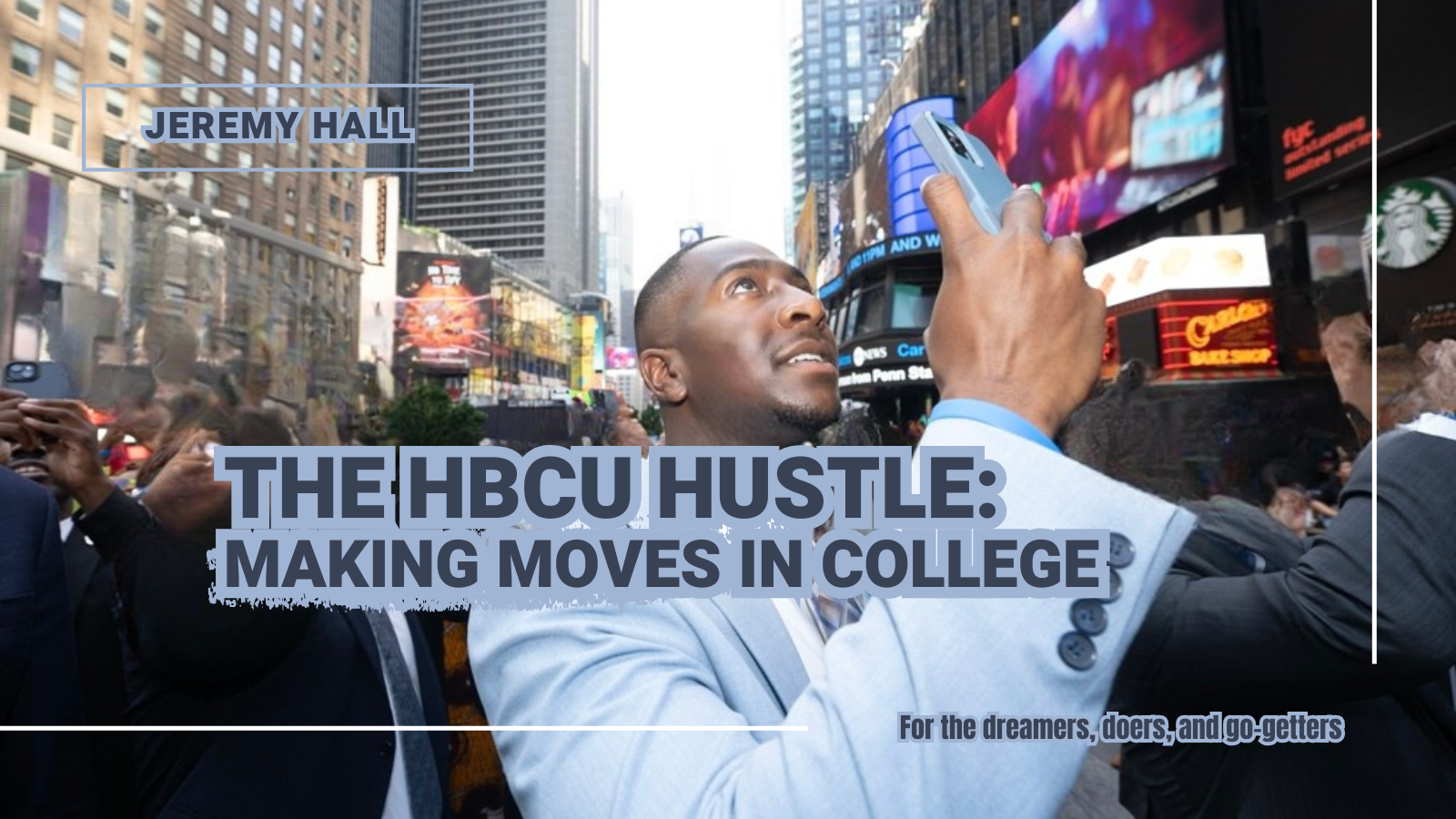
  • Morehouse Man Jeremy Hall’s ‘HBCU Hustle’ Playbook

    Ready to level up your college experience? Forget generic advice – Jeremy Hall, a proud Morehouse College alumnus, has just dropped a game-changing guide called ‘The HBCU Hustle: Making Moves in College.’ This isn’t your average survival manual; it’s a powerful movement designed to equip students to absolutely dominate in the classroom, on campus, and in life beyond graduation.

    From Chicago’s South Side to National Recognition

    Hall’s journey started on Chicago’s South Side, a place that instilled in him grit, resilience, and the invaluable skill of transforming setbacks into stepping stones. Today, he’s a recognized national voice for ambition and purpose. You might have seen him featured on ABC, Nasdaq Watch, WSB-TV Atlanta, or read about him in The Atlanta Voice. He’s addressed thousands of donors at prestigious events like the UNCF Atlanta Mayor’s Masked Ball, shared stages with influential leaders, and still dedicates time to mentoring the next generation.

    What makes ‘The HBCU Hustle’ stand out? Hall focuses on the ‘how’ – how to navigate challenges when you’re under-resourced, underestimated, or overlooked. He provides practical strategies for building influence, discovering your purpose, and maximizing every opportunity that comes your way. His core principles are simple yet incredibly impactful.

    Hall’s Powerful Principles

    • **Write Your Own Story:** Don’t let anyone else dictate your narrative; take the pen and write your own path.
    • **Defy Every Limit:** Challenge both the visible and hidden limitations placed upon you.
    • **Lift As You Climb:** True success is shared; ensure you’re bringing others up with you.

    “Where you start does not define where you can go. With faith, hustle, and heart, you can surpass expectations — even your own.” — Jeremy Hall

    Proven Success: More Than Just Theory

    This isn’t just theoretical advice; Hall’s track record speaks for itself. He’s a UNCF Michael L. Lomax Scholar, a Forbes 30 Under 30 nominee, and has interned with Goldman Sachs. He’s also been a leader in Morehouse’s University Innovation Fellows program and served as a Center for Black Entrepreneurship Lead Ambassador. His international representation, from ringing the Nasdaq closing bell to speaking in Capetown, South Africa, demonstrates the real-world impact of his approach.

    Industry leaders describe Hall as ‘authentic,’ ‘magnetic,’ and ‘the kind of leader the world needs more of.’ His diverse experiences in education and entrepreneurship prove that ‘The HBCU Hustle’ is a proven system, not just hype. Those who have worked with him consistently praise his follow-through, professionalism, and positive impact on students.

    Why HBCUs Need This Now

    HBCUs consistently produce incredible trailblazers, but often, students graduate without a clear roadmap for translating their ambition into lasting impact. Hall’s book directly addresses this gap, offering more than just a degree – it provides the tools to master the art of strategic hustle. The goal is to empower students to leave campus with a strong network, a clear sense of purpose, and significant influence.

    ‘The HBCU Hustle: Making Moves in College’ is more than just a book; it’s a powerful rallying cry. It’s for students, alumni, and advocates who are ready to stop playing small and embrace their potential. It’s for the dreamers who work with the dedication of visionaries, and for every underdog who knows that victory is achievable if you play the game strategically.

    Are you ready to embrace your own ‘HBCU Hustle’? Visit thehbcuhustle.com to learn more and join the movement. What strategies from Jeremy Hall’s playbook resonate most with you? Share your thoughts in the comments!