Tag: midterm elections

  • Democrats Flip Florida Seats, Hinting at Midterm Shifts

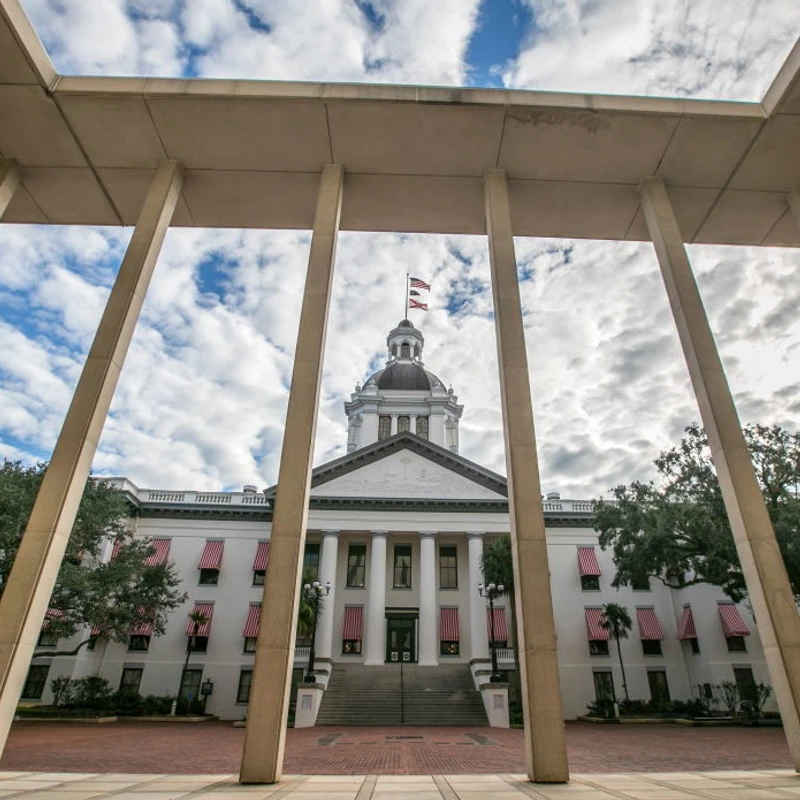
    In a surprising turn of events, Florida Democrats have managed to flip two legislative seats in recent state contests. These victories, especially one in a district encompassing President Trump’s Mar-a-Lago residence, are being watched closely as potential indicators for the upcoming November midterm elections.

    Key Victories in Special Elections

    Democrat Emily Gregory secured House District 87 in Palm Beach County, defeating Trump-endorsed Republican Jon Maples. This win represents a significant 11-percentage-point swing to the left compared to the previous Republican victory in 2024. This district is notable as it includes the location of Trump’s Mar-a-Lago estate.

    The Democratic success didn’t end there. In the sole state Senate election, Democrat Brian Nathan narrowly beat Rep. Josie Tomkow in Hillsborough County’s Senate District 14. Nathan clinched the win by just 408 votes, securing 50.25% of the vote. Tomkow has stated her intention to run again in November for the seat, which became vacant in August when Governor Ron DeSantis appointed GOP incumbent Jay Collins as his lieutenant governor.

    Implications for the Midterms

    While these wins won’t alter Florida’s current Republican supermajority in the legislature, they carry significant symbolic weight. They add to a growing trend of Democrats flipping Republican-held seats in state legislatures across the country over the past year, according to Politico.

    Florida Democratic Party Chair Nikki Fried emphasized the importance of these victories, stating, “This victory reiterates an undeniable trend in Florida: With year-round organizing and infrastructure investment, Democrats can run and win anywhere, including Donald Trump’s backyard.” She added that Floridians are reportedly “tired of the chaos, corruption, and sky-high prices.”

    A Warning to Republicans?

    House Minority Leader Hakeem Jeffries (D-NY) has interpreted these wins as a warning to Republicans, particularly concerning potential gerrymandering efforts. He tweeted, “Mar-a-Lago will now be represented by Emily Gregory, a strong Democratic voice. We will crush House Republicans in November if DeSantis tries to gerrymander the Florida congressional map.”

    Both Gregory and Nathan are first-time candidates. Nathan brings a background as a Navy veteran and union organizer, while Gregory has experience in public health and mental health administration, and runs a fitness center for postpartum mothers. Their victories highlight the potential impact of grassroots organizing and targeted investment in political campaigns.

    What do you think these Florida special election results mean for the upcoming midterm elections? Will this trend continue nationwide? Share your predictions in the comments below!
  • Supreme Court Allows Texas’ Disputed Voting Map, For Now

    Hold onto your hats, folks! The U.S. Supreme Court has stepped in, granting Texas a temporary win by allowing it to use its recently redrawn congressional voting map for the upcoming 2026 midterm elections. This decision comes as a relief for Republican lawmakers but is a point of contention for civil rights groups who argue the map unfairly dilutes the voting power of minority communities.

    A Temporary Reprieve for Texas

    Late Friday, Justice Samuel Alito issued an administrative stay, essentially pausing a lower court’s ruling that had blocked the map. This move gives the full Supreme Court more time to consider the case and decide whether Texas can keep the map in place while the legal challenges play out. Justice Alito also set a quick deadline for responses, suggesting the high court might be eager to address this issue.

    This decision followed an urgent request from Texas Attorney General Ken Paxton, who asked the justices to allow the state to proceed with the map approved by Republican lawmakers over the summer. This redistricting effort is part of a larger push, reportedly backed by former President Donald Trump, to redraw political boundaries in GOP-led states before the midterms.

    The Lower Court’s Ruling and Paxton’s Response

    Just days before the Supreme Court’s intervention, a three-judge federal panel in El Paso delivered a blow to Texas Republicans. They ruled 2-1 that the new map was likely an unconstitutional racial gerrymander. U.S. District Judge Jeffrey V. Brown, appointed by Trump, even stated there was “substantial evidence” of racial gerrymandering in the 2025 map.

    The panel ordered Texas to revert to its 2021 congressional map while the case proceeded. However, Attorney General Paxton was quick to announce his intention to appeal to the Supreme Court, asserting Texas’s sovereign right to draw districts for partisan advantage. He expressed confidence that the court would uphold this right.

    A Nationwide Redistricting Battle

    The situation in Texas is just one piece of a larger, nationwide puzzle. Redistricting, typically a once-a-decade process tied to the census, is happening with unusual intensity ahead of the 2026 midterms. While some states are following Trump’s lead on redrawing maps, others, like Indiana, have pushed back against his influence.

    Adding to the complexity, the Supreme Court is already considering another significant redistricting case involving Louisiana’s map. This case, brought by white voters challenging the creation of a second majority-Black district, could set a precedent for how the court approaches the Texas dispute. The outcome of these cases could significantly impact the balance of power in Congress for years to come.

    What are your thoughts on the Supreme Court’s decision to allow Texas to use the disputed map for now? Do you think it’s fair to voters of color? Let us know in the comments below!

  • Trump’s Redistricting Plan Threatens Black Lawmakers

    Get ready, because the fight for fair representation is heating up, and it could have major consequences for Black lawmakers in Congress. President Trump is pushing a strategy to help Republicans redraw congressional maps, and it’s raising serious concerns about voting rights and the future of the Congressional Black Caucus (CBC) as we head towards the 2026 midterm elections.

    A New Battleground: Redistricting and Political Power

    This isn’t your typical redistricting cycle. Usually, these map changes are tied to the U.S. Census, which happens every decade. But now, we’re seeing Republican-led efforts, particularly in states like Texas, to redraw maps in a way that could give their party a significant advantage. The goal? To help Donald Trump maintain control of Congress and push forward his MAGA agenda.

    What does this mean in practice? It means that districts currently held by Black and Latino representatives, who often vote for Democrats, are being targeted. These maps are being drawn to dilute their voting power, essentially splitting communities to make it easier for Republicans to win seats.

    Texas Takes the Lead in Controversial Map Changes

    Texas is a prime example of this new playbook. After Trump called for the state to deliver five more House seats for his party, state Republicans quickly drafted a new map. This map directly impacts the 9th Congressional District, represented by Rep. Al Green, and the 33rd Congressional District, held by Rep. Marc Veasey, both Black Democrats. They would be forced to run in different districts if they want to stay in Congress.

    Unsurprisingly, this has led to lawsuits from groups representing Black and Latino voters, who argue that the new map constitutes racial gerrymandering and violates the Voting Rights Act of 1965. It’s a clear sign that similar tactics could be employed in other states.

    The Ripple Effect Across the Nation

    This isn’t just a Texas issue. We’re seeing similar moves in other states. In Missouri, a new map targets the district of Rep. Emanuel Cleaver, a Black Democrat. Ohio Republicans are looking to redraw the 13th Congressional District, currently represented by Black congresswoman Rep. Emilia Sykes, which is notably majority-white.

    Even Vice President JD Vance has reportedly met with Republican leaders to encourage special sessions for map redrawing. Indiana’s 7th Congressional District, represented by Democratic Rep. Andre Carson, the only Black member of the state’s congressional delegation, is also reportedly in the crosshairs.

    Targeting ‘Opportunity Districts’

    In Alabama and Louisiana, where courts have mandated the creation of a second majority-Black district to better reflect the population, Republicans are reportedly trying to eliminate these ‘opportunity districts.’ This puts Rep. Shomari Figures (Alabama) and Rep. Cleo Fields (Louisiana) at risk of losing their seats, despite being elected in 2024.

    Even veteran lawmakers like 85-year-old Rep. Jim Clyburn in South Carolina are reportedly facing challenges as calls for map redrawing intensify. It’s a coordinated effort to shift the political landscape.

    The Congressional Black Caucus Fights Back

    The Congressional Black Caucus isn’t staying silent. They held a press conference on September 9th, vowing to resist these changes and emphasizing that the law is on their side. Rep. Yvette Clarke, chairwoman of the CBC, stated that Republicans are systematically trying to rig the upcoming election by diluting the voting power of Black and brown communities.

    Their strategy is clear. Dilute the voting power of Black and brown communities to cling to power by any means necessary. — Rep. Yvette Clarke

    She warned that if these gerrymandered maps are upheld, the CBC could lose critical seats, undoing decades of progress in securing fair representation. The caucus is determined to prevent a return to a time when Black voices were excluded from the democratic process.

    Why This Matters: Protecting Representation

    Political analysts point out that the CBC is often seen as the conscience of Congress and a powerful voting bloc that stands firm against efforts to undermine progress. Some argue that this push against Black representation stems from a fundamental disbelief in the political power and even the citizenship of Black people.

    This coordinated effort to redraw maps and potentially unseat Black lawmakers isn’t just about political advantage; it’s about silencing communities and eroding decades of hard-won progress in ensuring fair and equal representation in our democracy. It’s a stark reminder that the fight for voting rights is ongoing.

    What are your thoughts on these redistricting efforts and their potential impact on Black representation? Share your views in the comments below!