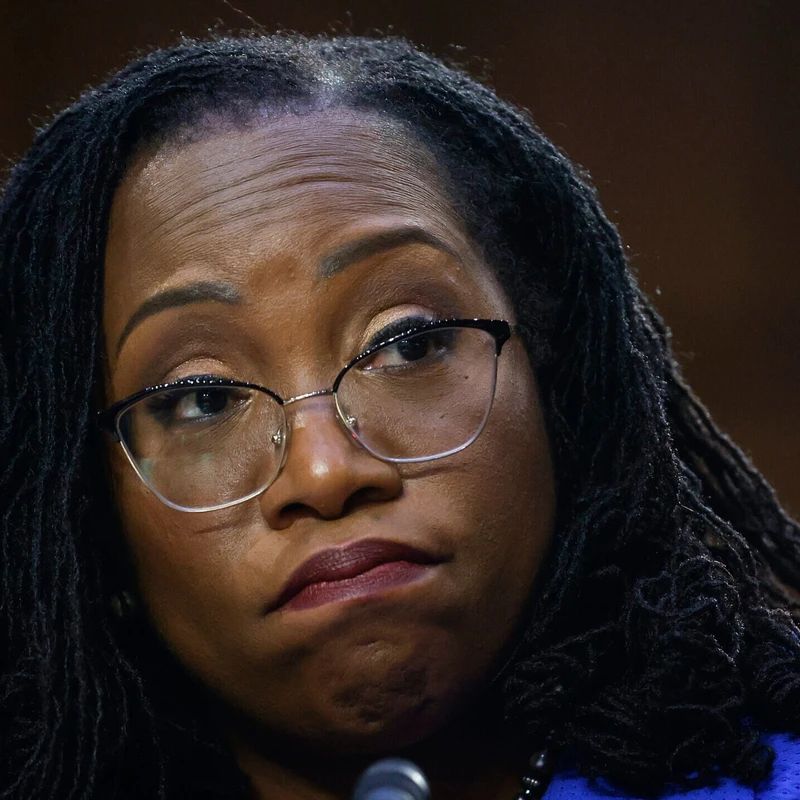
Tag: Justice Ketanji Brown Jackson

  • Ketanji Brown Jackson: Supreme Court Trust at Risk

    In today’s often politically charged environment, maintaining public trust in institutions is more critical than ever. Justice Ketanji Brown Jackson recently highlighted a significant concern: the potential erosion of public confidence in the Supreme Court, particularly following a key decision impacting voting rights.

    Concerns Over a Landmark Decision

    Justice Jackson’s remarks came after the Supreme Court’s conservative majority issued a ruling that weakened parts of the Voting Rights Act. This decision allowed Louisiana to proceed with new congressional maps, a move that has drawn significant attention and criticism. Speaking at an event hosted by the American Law Institute, Jackson stressed the vital role of public confidence in the judiciary.

    “Public confidence is really all the judiciary has,” Jackson stated, emphasizing that courts must actively demonstrate their independence from political influence to maintain trust. Her comments underscore the delicate balance courts must strike to uphold the law while ensuring the public believes in their impartiality.

    A Dissenting Voice on Redistricting

    The specific case that prompted Jackson’s concerns involved Louisiana’s redistricting. The court’s decision effectively overturned a district previously established to comply with the Voting Rights Act, allowing for revised maps. Jackson, who was the sole dissenter in this instance, criticized the court’s timing, arguing that altering district maps after early voting had already commenced created unnecessary confusion and instability.

    This ruling is part of a broader trend where public trust in the Supreme Court has seen a decline. High-profile decisions on issues like abortion, affirmative action, and voting rights have contributed to a perception among some that the court is becoming increasingly politicized. Even Chief Justice John Roberts has acknowledged and pushed back against this perception.

    A Voice for Democracy and Civil Rights

    Since joining the Supreme Court in 2022 as its first Black female justice, Ketanji Brown Jackson has become a prominent liberal voice. She has increasingly spoken out on critical cases involving race, democracy, and civil rights, advocating for principles that resonate deeply with many Americans.

    What are your thoughts on Justice Ketanji Brown Jackson’s concerns about public trust in the Supreme Court? Share your views in the comments below!
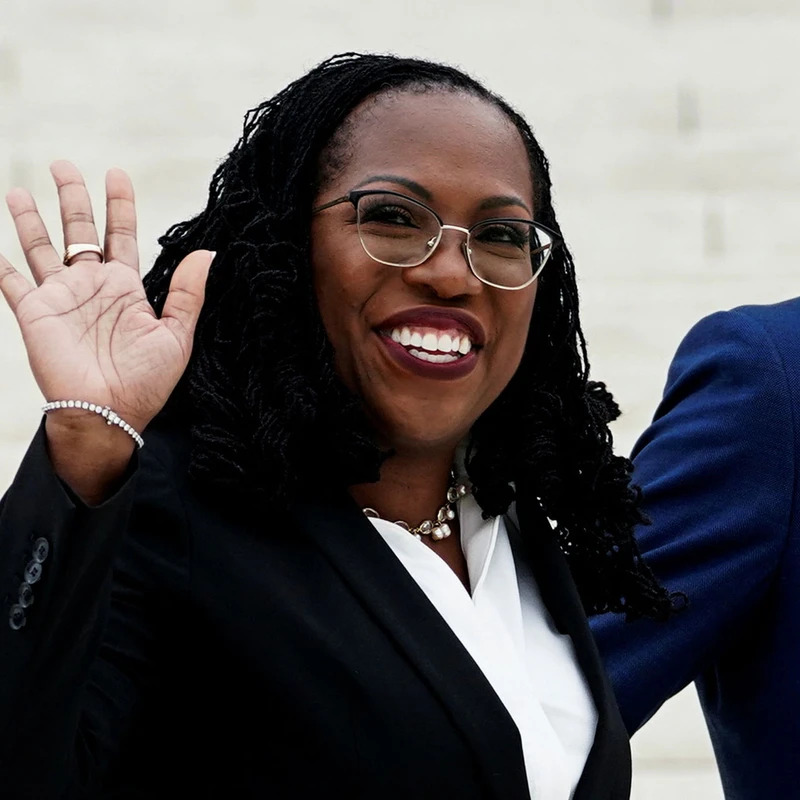
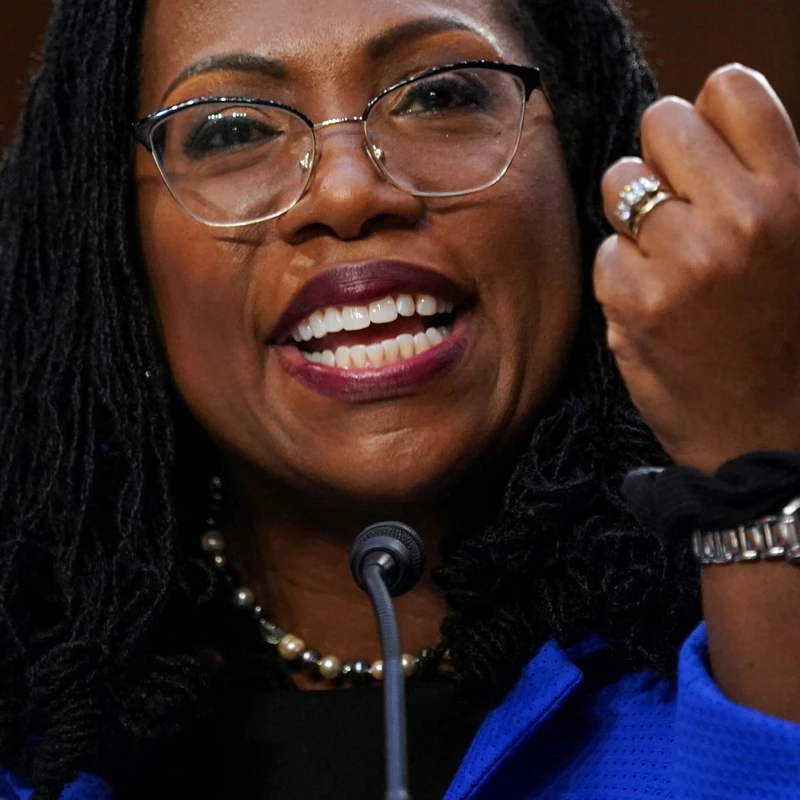
  • Ketanji Brown Jackson’s Viral Birthright Citizenship Arguments

    Supreme Court Justice Ketanji Brown Jackson is making headlines and going viral for her incisive questioning during arguments concerning birthright citizenship. As the nation grapples with the potential end of this long-standing policy, Jackson’s sharp legal mind is on full display, challenging the core arguments presented.

    Challenging the ‘Subject to Jurisdiction’ Clause

    The case centers on arguments presented by Solicitor General D. John Sauer, who contended that the 14th Amendment’s phrase “subject to the jurisdiction” should only apply to children whose parents have a clear “allegiance” to the U.S., often determined by being “domiciled” here. This interpretation could significantly alter the landscape of birthright citizenship.

    Justice Jackson pushed back forcefully, questioning the practical implications of such a rule. “How does this work? Are you suggesting when a baby is born people have to present documents? Is this happening in the delivery room?” she asked, highlighting the logistical and ethical challenges of verifying parental status at the moment of birth.

    The Practicalities of Enforcement

    When Sauer referenced Social Security Administration documents as a potential basis for determining status, Jackson re-engaged, pointing out that the core of the argument seemed to hinge on a person’s “intention to stay in the United States.” She pressed further, asking, “Are we bringing pregnant women into depositions? What are we doing to figure this out?” This line of questioning underscored the potential for invasive and impractical enforcement measures.

    Her follow-up questions probed whether there would be any opportunity for individuals to prove their intent to remain in the U.S. after birth, suggesting that the proposed rule might be applied “after the fact,” creating further complications.

    Reactions and Criticisms

    Justice Jackson’s arguments have been widely praised on social media, with many commending her sharp intellect and defense of established legal principles. However, as often happens with high-profile legal discussions, her comments also drew criticism from some conservative circles. Florida Governor Ron DeSantis, for instance, took to X (formerly Twitter) to criticize her analogy comparing the issue to stealing a wallet in Japan, calling it a defense of “the suicide pact of birthright citizenship for illegals.”

    Despite the criticism, Justice Jackson’s engagement in this pivotal case is a significant moment, highlighting the ongoing debate over citizenship and its interpretation in the United States.

    What are your thoughts on Justice Ketanji Brown Jackson’s arguments regarding birthright citizenship? Share your views in the comments below!
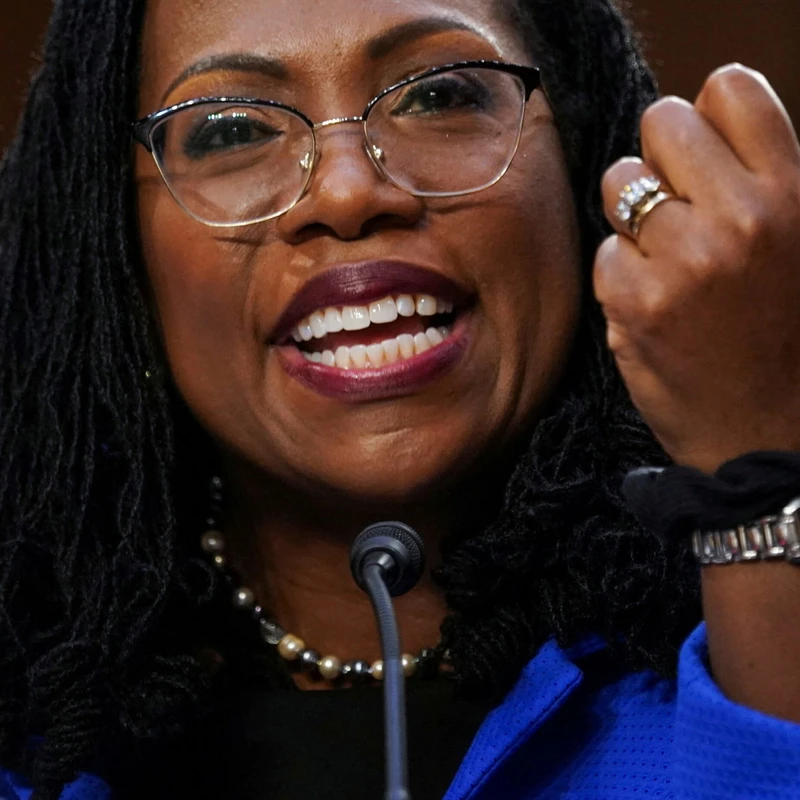
  • Ketanji Brown Jackson Dissents on Conversion Therapy Ruling

    In a significant display of her commitment to equality and justice, Supreme Court Justice Ketanji Brown Jackson cast the sole dissenting vote against a recent ruling concerning conversion therapy. While her liberal colleagues, Justices Sotomayor and Kagan, sided with the conservative majority, Jackson’s powerful dissent highlights critical concerns about the ruling’s potential impact on minors and medical care standards.

    The Ruling and Jackson’s Dissent

    The case centered on Kaley Chiles, a Christian counselor who argued that Colorado’s ban on conversion therapy violated her First Amendment right to free speech. The Court sided with Chiles, distinguishing her talk-based counseling from physical interventions. However, Justice Jackson, in her 34-page dissent, argued that the majority failed to grasp the crucial context: Chiles was providing therapy to minors as a licensed healthcare professional, not merely speaking freely.

    Jackson emphasized that this ruling could undermine states’ ability to regulate medical care standards, potentially setting a dangerous precedent. She stated the decision “extends the Constitution into uncharted territory in an utterly irrational fashion. And it ultimately risks grave harm to Americans’ health and well-being.”

    Protecting Minors and Upholding States’ Rights

    A key focus of Jackson’s dissent was the potential harm to children subjected to conversion therapy. She cited studies showing that minors often experience the shame and stigma associated with such practices more acutely due to their “increased emotional vulnerability.” Jackson’s stance underscores the importance of protecting vulnerable populations from practices widely condemned by medical and mental health organizations.

    By delivering her dissent from the bench, Jackson signaled the gravity of her disagreement and its potential implications for states’ rights to regulate professional conduct and protect public health. Her argument suggests that validating this controversial practice could pave the way for broader governmental overreach into medical standards.

    A Stand for Equality and Foresight

    Dr. Christina M. Greer, a political science professor at Fordham University, commented on Jackson’s actions, highlighting the historical role of Black women in advocating for marginalized groups. “This is the Black woman who’s making this argument for a group of people she is not even a part of, but understands the danger that this rule could present… how it will be weaponized and expanded for other groups of people,” Greer told theGrio. Jackson’s dissent, though not directly impacting her personally, demonstrates a profound understanding of how policies can have far-reaching and harmful consequences.

    Justice Jackson’s principled stand serves as a powerful reminder of the ongoing fight for equality and the critical role of judicial dissent in challenging potentially harmful precedents. Her lone vote against the ruling underscores her dedication to safeguarding the well-being of all Americans, particularly the most vulnerable.

    What are your thoughts on Justice Ketanji Brown Jackson’s dissent? Do you agree with her concerns about the conversion therapy ruling? Share your views in the comments below!
  • Ketanji Brown Jackson Stands for Immigrants’ Rights

    Supreme Court Justice Ketanji Brown Jackson has once again demonstrated her commitment to immigrants’ rights, notably dissenting in a case concerning the Trump administration’s efforts to revoke Temporary Protected Status (TPS) for over 350,000 Haitian and Syrian immigrants. Her stance highlights a critical division within the court regarding executive power and the treatment of vulnerable populations.

    Dissenting Voice on TPS and Executive Power

    In a significant move, the Supreme Court allowed TPS for immigrants from Haiti and Syria to continue legally residing and working in the U.S. while the administration’s arguments regarding its power to revoke protections are reviewed. However, Justice Jackson’s dissent underscores her opposition to what she views as a “grave misuse” of the court’s “shadow docket” and an “unconstrained executive power” that disregards families’ pleas for stability.

    She advocated for resolving the dispute through the standard judicial process, maintaining the status quo for immigrants rather than issuing swift judgments that favor the Trump administration. Jackson’s dissent, which has been ongoing for the past 10 months, supports hundreds of thousands of law-abiding noncitizens who rely on the government’s promised stability.

    Broader Implications for Immigrant Protections

    Jackson’s stance extends beyond specific nationalities; she stands with all immigrants facing potential deportation. Following the Supreme Court’s decision to allow the administration to remove legal protections for over 300,000 Venezuelan immigrants, she issued a strong statement criticizing the court’s “repeated, gratuitous, and harmful interference.” She views the court’s involvement in such matters as a “grave misuse of our emergency docket” and believes the court “should have stayed its hand.”

    In a rare joint appearance with conservative Justice Brett Kavanaugh, Jackson recently spoke out against the use of shadow dockets, which allow policies to take effect quickly, even during early legal challenges. She described the increasing willingness of the court to get involved in such cases as an “unfortunate problem” that “is not serving the court or this country well.”

    • Justice Ketanji Brown Jackson dissented against the Supreme Court’s decision regarding TPS for Haitian and Syrian immigrants.
    • She criticized the “grave misuse” of the shadow docket and “unconstrained executive power.”
    • Jackson advocates for resolving cases through standard judicial processes rather than emergency rulings.
    • Her stance supports immigrants facing potential deportation and calls for government stability.
    • She has also spoken out against the court’s “repeated, gratuitous, and harmful interference” in immigrant cases.

    What are your thoughts on Justice Ketanji Brown Jackson’s dissents regarding immigrant protections? Do you agree with her stance on the use of shadow dockets? Share your opinions in the comments below!

  • Justice Jackson Pauses SNAP Cuts Amid Appeal

    In a significant development for millions of Americans relying on food assistance, Supreme Court Justice Ketanji Brown Jackson has stepped in to pause a lower court ruling that would have restored full Supplemental Nutrition Assistance Program (SNAP) benefits. This temporary halt comes as the Trump administration appeals a decision that mandated the resumption of these crucial disbursements.

    A Temporary Reprieve for SNAP Recipients

    Justice Jackson’s order directs the 1st U.S. Circuit Court of Appeals to expedite its review of the administration’s request to block a previous court order. As the liberal justice overseeing emergency appeals for this circuit, her involvement ensures the case moves forward swiftly. Experts suggest this move could lead to a faster resolution than if the matter proceeded directly to the Supreme Court.

    The controversy centers around a federal judge’s October 31st order, which required the administration to tap into reserve funds to cover the estimated $8-9 billion cost of full SNAP benefits. While $3 billion in emergency funding was already earmarked for such necessities, the Trump administration argued this amount was insufficient to meet the full financial obligation.

    The Financial Tightrope Walk

    Instead of finding additional funds, the federal government proposed redirecting money from U.S. Child Nutrition Programs, which fund school lunches nationwide. This proposal sparked strong opposition from plaintiffs in the case, including various coalitions of municipalities and nonprofits. They argued that delaying or partially paying SNAP benefits would cause ‘irreparable harm,’ particularly to vulnerable populations like children and the elderly.

    Before this pause, USDA contingency funding had only covered about 65 percent of typical monthly SNAP benefits. The program currently serves approximately 42 million Americans, many of whom are no longer receiving their full supplement due to the ongoing federal shutdown and funding disputes. The Justice Department contends that diverting funds from child nutrition programs to cover SNAP would be a violation of congressional spending laws, essentially ‘starv[ing] Peter to feed Paul.’

    The federal government is directing states to lower benefit amounts as opposed to finding additional funding. — Original Article Context

    Justice Jackson’s stay order effectively halts any immediate disbursement of funds until the appeals court can thoroughly consider the administration’s arguments. This decision provides a crucial, albeit temporary, period of stability for millions who depend on these benefits.

    What are your thoughts on Justice Jackson’s decision to pause SNAP benefit cuts? How do you think this situation will be resolved? Share your views in the comments below!