
Tag: Greeks

  • Morehouse President’s Son Joins Omega Psi Phi

    Imagine the pride: Morehouse College President Dr. F. DuBois Bowman recently witnessed a truly special moment as his son, Brandon Bowman, was initiated into the Psi Chapter of Omega Psi Phi Fraternity, Inc. right there at Morehouse. This isn’t just any story about joining a fraternity; it’s a powerful narrative weaving together family, institutional pride, and the deep-rooted traditions that make Black college culture so unique.

    A Legacy Moment at the Psi Chapter

    This event resonated deeply because it’s more than just a student joining a historic fraternity at a renowned Black institution. It’s a son following in his father’s footsteps, joining the very same chapter at the same alma mater over three decades later! In a season filled with notable Greek life events, this one stood out for its genuine sense of lineage, rather than just fleeting hype.

    The significance is amplified by Dr. Bowman’s own history. He’s not only Brandon’s father but also a proud Morehouse alumnus and an Omega Psi Phi brother himself. Having graduated in 1992, his return as the 13th president in 2025 marked a full-circle homecoming, deeply connecting his past and present roles.

    More Than Just a President’s Son

    Brandon’s initiation extends the Bowman family’s already strong ties to Morehouse. Their relationship with the institution is built on alumni status, mentorship, and now, fraternity legacy. For a school like Morehouse, where history and symbolism carry immense weight, seeing a president watch his son join the same chapter he entered in 1991 creates an image that speaks volumes, both on and off campus.

    This story gains even more poignancy with Dr. Bowman’s new presidency. His return to Morehouse was already an emotional moment for many alumni and students. Witnessing his son become part of the same fraternity chapter transforms that homecoming into something profoundly personal, highlighting generational continuity rather than just presidential leadership.

    Morehouse Values in Action

    The story also feels distinctly Morehouse. Omega Psi Phi’s core tenets—manhood, scholarship, perseverance, and uplift—align perfectly with the values that have long defined Morehouse College. Brandon joined the Spring 2026 line, and President Bowman shared how meaningful it was to see his son become both an Omega man and a Psi Chapter brother.

    This public reflection framed the moment not just as a family celebration, but as an affirmation of the high standards upheld by both the fraternity and the college. For those who follow HBCU culture, this blend of the personal and the institutional is what gives such stories lasting power. It’s about upholding scholarship, service, and excellence.

    Brandon’s Own Path

    While the family legacy is significant, it’s also important to recognize Brandon Bowman’s individual achievements. He’s a sophomore double majoring in applied physics and aerospace engineering! This academic pursuit highlights his own drive and reinforces Morehouse’s reputation as a place where excellence is expected and achieved.

    Brandon is stepping into a visible tradition, but he’s also forging his own path in a challenging academic field. This balance honors the Bowman family connection while celebrating the start of Brandon’s unique journey, ensuring it’s not just a replay of his father’s story.

    A Snapshot of HBCU Legacy

    The family dimension makes this moment even richer. Brandon was pictured with his father and Morehouse First Lady Cynthia Bowman, a member of Delta Sigma Theta Sorority, Inc. This image beautifully captures the interwoven nature of Black Greek-letter organizations, family identity, and leadership within HBCU culture.

    For HBCU enthusiasts, this isn’t just a family photo; it’s a powerful symbol of how these institutions and organizations remain central to community life and leadership. It’s a reminder that probate season is more than entertainment—it’s testimony to traditions that are vibrantly alive and shaping the next generation.

    Why This Moment Matters

    This story resonates because it encapsulates what HBCUs do best: transforming education into inheritance, culture into continuity, and milestones into personal rites of passage. The Brandon Bowman Omega Psi Phi moment is significant not just for who crossed, but where, who witnessed it, and what it represents.

    At Morehouse, where history is ever-present, a president watching his son join his fraternity chapter becomes instant modern folklore. It’s a profound reminder that the institution doesn’t just produce graduates and leaders; it cultivates enduring family legacies that continue to come full circle.

    What do you think about this powerful display of family legacy at Morehouse? Share your thoughts in the comments below!


  • Deyjah Harris Joins Delta Sigma Theta: More Than Just Fame

    When Deyjah Harris, daughter of rapper T.I., officially crossed into Delta Sigma Theta Sorority, Inc. at Clark Atlanta University, it was more than just a celebrity moment. It was a powerful testament to the enduring traditions and deep meaning found within Historically Black Colleges and Universities (HBCUs). This event resonated online, not just because of her famous last name, but because it highlighted how Black college traditions continue to shape new generations, even those who grow up in the spotlight.

    A Tribute Woven into the Reveal

    What made Deyjah’s induction particularly touching was her line name, “Precious Heir.” Reports linked this name to her late aunt, Antoinette “Precious” Harris, who was also a proud member of Delta Sigma Theta. This personal connection added a profound layer of emotional weight to the occasion. It wasn’t just about joining a prestigious sorority; it was about honoring family legacy and memory.

    Adding another personal touch, Deyjah stepped into her moment to the tune of her father’s hit song, “Bring Em Out.” This blend of personal tribute and sorority significance struck a perfect balance, making the event memorable and deeply meaningful. It perfectly captured the essence of impactful HBCU Greek moments: a fusion of tradition with personal narrative.

    Clark Atlanta: The Perfect Setting for Legacy

    Clark Atlanta University provided a fitting backdrop for this significant event. The university’s Sigma Chapter boasts a rich history, and Deyjah is more than just a visitor; she’s an active student. As a sophomore majoring in speech communications, her involvement grounds the story in authentic student life, moving beyond mere spectacle.

    This connection deepens with the university’s own history with the Harris family. Years prior, T.I. co-taught a course on the “Business of Trap Music” at Clark Atlanta, linking the family to the school’s cultural landscape. Deyjah’s induction now adds a personal and significant chapter to that ongoing connection, showing her active role in shaping the university’s current narrative.

    Beyond the Viral Moment: Substance and Sisterhood

    Deyjah’s journey into Delta Sigma Theta challenges the often superficial conversations about celebrity children at HBCUs, which tend to focus only on visibility. Founded in 1913 at Howard University, Delta Sigma Theta has grown into a global organization with over 350,000 members, representing a legacy far beyond social status.

    Joining this esteemed sorority is a milestone rooted in scholarship, service, leadership, and social action. While social media amplified the story, the true staying power comes from the sorority’s deep-seated traditions and values. This distinction is crucial for understanding the impact of such moments within the HBCU community: virality fades, but legacy endures.

    HBCU Legacy in Action

    Deyjah Harris’s induction into Delta Sigma Theta powerfully illustrates how HBCUs remain vital spaces for personal rites of passage that are simultaneously communal and culturally specific. These institutions continue to foster traditions that are aspirational and deeply meaningful, allowing students to honor family history while forging their own identities.

    The attention drawn by her crossing into Clark Atlanta’s Sigma Chapter underscores the enduring significance of these organizations. For many on campus, it wasn’t just a celebrity headline; it was a celebration of sisterhood, lineage, and the profound choice to become part of a tradition that transcends fame.

    What are your thoughts on Deyjah Harris’s induction and the importance of HBCU traditions? Share your perspective in the comments below!

  • Vince Carter’s Daughter Joins Delta Sigma Theta at Howard

    In a moment that resonates deeply within the Black college community, Kai Carter, the daughter of NBA legend Vince Carter, has officially become a member of Delta Sigma Theta Sorority, Inc. What makes this milestone particularly significant is that she crossed through the historic Alpha Chapter at Howard University, the very birthplace of the esteemed organization.

    More Than Just a Celebrity Name

    While Kai’s father is a household name, her journey into Delta Sigma Theta at Howard is about forging her own identity. Joining the Alpha Chapter means she’s now part of a living legacy, deeply intertwined with the history and culture of Black Greek life at HBCUs. This isn’t just a social media moment; it’s a connection to a tradition of scholarship, service, and leadership.

    For those familiar with the significance of HBCU Greek life, crossing through Alpha Chapter at Howard carries a unique weight. It signifies becoming part of the institution’s very DNA, a place where traditions are not just remembered but actively renewed.

    A Student-Athlete’s Journey

    Kai Carter isn’t just a celebrity daughter; she’s an active member of the Howard community. As a student-athlete on the women’s track and field team and a health science major from Charlotte, North Carolina, she’s immersed in the everyday reality of HBCU student life. This distinction is crucial – she’s not just visiting the culture; she’s a part of its rhythm.

    Her public profile now reflects both her affiliation with Howard University and Delta Sigma Theta, underscoring that this is a self-defined identity, not a borrowed one or a fleeting viral trend. This grounding in the institution is what makes HBCU narratives so powerful.

    Family Legacy Meets Black Greek Tradition

    Adding another layer to this story, Vince Carter himself is a proud member of Omega Psi Phi Fraternity, Inc. Kai’s decision to join Delta Sigma Theta creates a beautiful intersection of family legacy and Black college Greek culture. However, the narrative rightly centers on Kai building her own path.

    HBCUs offer a unique environment where status can open doors, but tradition and process are paramount. Kai’s crossing signifies earning her place in a lineage that predates her famous last name, highlighting the enduring value of these institutions in shaping leaders.

    Howard: A Center of Renewed Legacy

    Kai Carter’s experience at Howard exemplifies why the university continues to be a vital hub for Black culture and leadership. It’s a place where prominent families entrust their children for more than just branding; they seek belonging, discipline, community, and cultural grounding.

    Her crossing is a testament to Howard’s enduring power and the deep reverence commanded by its traditions and the organizations born within its walls. It’s a story that reminds us of the profound impact HBCUs have in shaping generations.

    What does Kai Carter’s journey at Howard and Delta Sigma Theta mean to you? Share your thoughts on the significance of HBCU Greek life in the comments below!

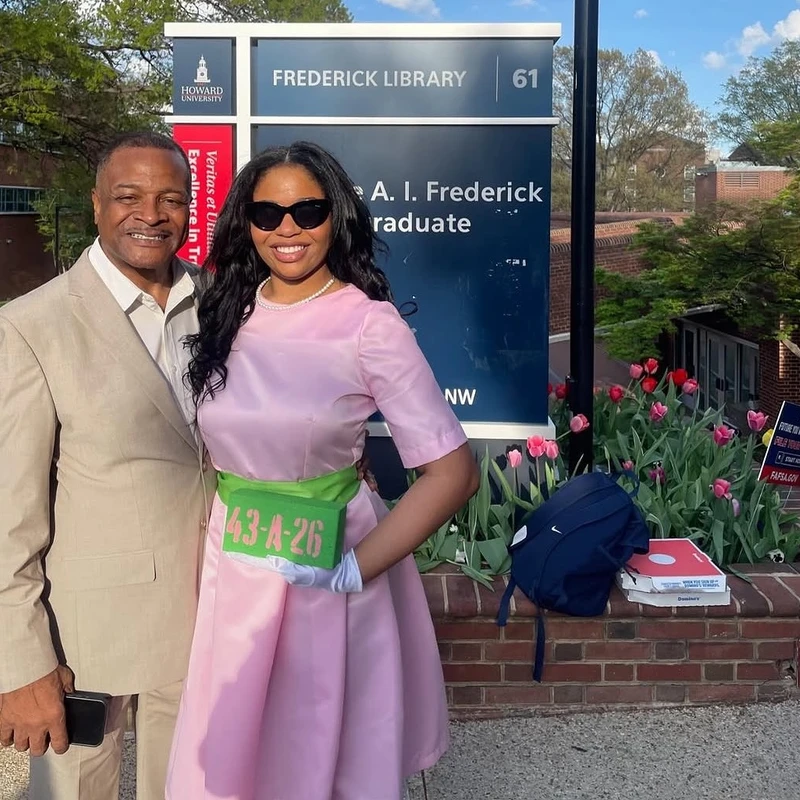
  • CAU President Celebrates Daughter’s AKA Initiation at Howard

    Family pride took center stage this past weekend, resonating throughout the entire HBCU community. Clark Atlanta University President George T. French Jr. was spotted celebrating a deeply personal and historically significant milestone: his daughter’s initiation into the esteemed Alpha Chapter of Alpha Kappa Alpha Sorority, Incorporated at Howard University.

    A Moment of Deep HBCU Connection

    The celebration, shared online, quickly identified Spring ’26 initiate @meglan.hannah as President French’s daughter. This personal achievement instantly became a broader cultural moment, capturing the attention of individuals across the HBCU and Divine Nine communities. It served as a powerful reminder of the interconnectedness of Black college legacies.

    The significance of this moment is amplified by its location. Howard University is not just any campus; it’s the very birthplace of Alpha Kappa Alpha Sorority, Incorporated, founded in 1908. The Alpha Chapter holds a unique and revered place in the history of Black Greek-letter organizations.

    The Legacy of the Alpha Chapter

    Initiation into the Alpha Chapter is more than just a personal accomplishment; it’s a direct connection to over a century of scholarship, sisterhood, leadership, and service. This chapter embodies the sorority’s founding principles and its enduring tradition of excellence, making it a particularly meaningful experience for new members.

    The context of this initiation ties a contemporary celebration to one of the most foundational stories in Black collegiate history. It highlights how traditions are passed down and how personal milestones can reflect broader institutional and cultural significance.

    A Father’s Pride Beyond the Presidency

    For George T. French Jr., serving as the fifth president of Clark Atlanta University, this was a moment to step away from his administrative duties and embrace the role of a proud father. In the often-complex world of HBCU leadership, focused on fundraising and institutional politics, seeing him present for his daughter’s major life event offered a powerful, humanizing perspective.

    This image of a father celebrating his child resonated deeply within the HBCU community, reminding everyone that behind the titles and responsibilities are individuals with families, pride, and cherished traditions being passed to the next generation.

    A Tapestry of HBCU Legacy

    This event beautifully illustrates the multifaceted nature of HBCU culture. It connects Clark Atlanta University, a prominent institution led by a visible president, with Howard University, the historic home of AKA. It also highlights the lasting impact of Black Greek-letter organizations in shaping leadership and identity.

    Ultimately, this story transcends a single weekend. It serves as a snapshot of how HBCU traditions continue to unite families, institutions, and communities across different affiliations and locations. It affirms that these institutions are not merely places of education but powerful builders of legacy.

    What are your favorite stories that highlight the power of HBCU legacy and tradition? Share them in the comments below!

  • Gizelle Bryant’s Daughter Angel Joins AKA at Spelman

    Big news from the world of HBCU Greek life! Angel Bryant, daughter of reality TV star Gizelle Bryant, has officially crossed over and joined the esteemed Alpha Kappa Alpha Sorority, Inc. at Spelman College. This momentous occasion marks Angel as a legacy member, deepening her family’s rich history with Historically Black Colleges and Universities (HBCUs) and the Divine Nine.

    A Cherished Family Legacy

    Gizelle Bryant herself shared her immense pride in her daughter’s achievement, calling it a full-circle “legacy” moment. Angel’s sister, Adore, also took to social media to express how proud the entire Bryant family is of Angel’s dedication to Spelman and her new sisterhood. This induction is particularly special given the family’s strong ties to HBCU culture.

    Gizelle is a proud alumna of Hampton University and a longtime member of Alpha Kappa Alpha. Angel’s father, Jamal Bryant, is a member of Kappa Alpha Psi Fraternity, Inc. This generational connection to Black Greek life and HBCUs highlights the enduring importance of tradition and leadership within the Black community.

    The Significance of Legacy in HBCU Greek Life

    Angel Bryant’s induction into AKA at Spelman comes at a time when HBCU Greek life continues to play a vital role in shaping student identity, leadership, and community. Legacy membership within the Divine Nine is deeply significant, often representing a continuation of family traditions focused on scholarship, service, and sisterhood.

    Gizelle Bryant’s public celebration underscores how meaningful these rites of passage are for Black families who view HBCUs as crucial cultural anchors. Stories like Angel’s demonstrate that even with public-facing families, students are choosing HBCUs and Black Greek life for authentic community, cultural grounding, and a strong sense of purpose.

    A New Chapter at Spelman

    With Angel Bryant now a member of Alpha Kappa Alpha, the Bryant family further solidifies its deep-rooted connection to Black educational institutions and Greek organizations. This milestone is not just a personal triumph for Angel but also a significant cultural moment, adding to the family’s rich HBCU history.

    As Angel embarks on this new chapter at Spelman, her involvement in AKA’s service initiatives and campus life will undoubtedly connect her to the traditions that have defined both the sorority and the college for over a century. It’s a testament to the enduring power of legacy and leadership.

    Congratulations to Angel Bryant on her induction into Alpha Kappa Alpha Sorority, Inc.! What does legacy and tradition mean to you in the context of HBCUs and Greek life? Share your thoughts in the comments below!
  • Southern University Investigates Alpha Phi Alpha Hazing Claims

    Southern University is taking a serious stance against hazing, launching a formal investigation into allegations involving the Beta Sigma chapter of Alpha Phi Alpha Fraternity, Inc. As a result, the chapter has been suspended indefinitely while the university and the national fraternity organization examine the claims of misconduct.

    Hazing Allegations Halt Fraternity Operations

    The suspension came after reports surfaced alleging that pledging activities violated both university policy and state anti-hazing laws. University officials confirmed that all fraternity operations are on hold until the investigation concludes. This move underscores the university’s commitment to student safety and maintaining the integrity of campus life.

    Alpha Phi Alpha’s national headquarters has publicly stated its zero-tolerance policy towards hazing, emphasizing that it has “no place in Alpha Phi Alpha and will not be tolerated.” The fraternity has deployed its internal Rapid Response Team to assist with the inquiry and pledged swift disciplinary action against any members found to be involved.

    A Recurring Issue on HBCU Campuses

    This investigation comes at a time when fraternity culture, particularly hazing practices, is under increased national scrutiny. Reports from outlets like The Guardian and Associated Press indicate that Southern University has faced similar hazing-related controversies in the past, involving other Greek organizations. This latest probe serves as a stark reminder of how pervasive hazing culture can be within collegiate settings.

    The pressure to maintain tradition and brotherhood within secretive intake processes has become increasingly challenging in an era demanding greater transparency and prioritizing student well-being. Schools like Southern University, Florida A&M, and Prairie View A&M have faced public pressure to implement stricter oversight of their Greek organizations, especially when new-member processes risk causing physical or emotional harm.

    Evolving Traditions and Accountability

    For the Southern University community, these allegations strike a sensitive chord. Alpha Phi Alpha, one of the oldest and most respected Black fraternities, has a rich legacy of producing leaders and scholars. Incidents like these challenge the organization to adapt and evolve while upholding its historical commitment to excellence. Southern University has previously taken decisive action, expelling other fraternities found in violation of anti-hazing rules, setting a precedent for accountability.

    The outcome of this investigation could significantly influence how fraternities operate on HBCU campuses nationwide. There’s a growing emphasis on transparency, mental health awareness, and active alumni involvement as crucial elements for reform. Universities like Southern are increasingly focusing on prevention and education, aiming to shift the culture from punishment to proactive well-being initiatives.

    What are your thoughts on the hazing allegations at Southern University? How can HBCUs better balance tradition with student safety? Share your views in the comments below!