Tag: Fitness

  • Tone Your Inner Thighs: Effective Exercises

    In an ideal world, our bodies would be perfectly symmetrical, with curves and definition exactly where we want them. But in reality, some areas require a little extra attention. If your inner thighs are a concern, you’re not alone! Incorporating targeted exercises can make a significant difference in toning and strengthening this often-neglected muscle group.

    Understanding Inner Thigh Muscles

    To effectively work your inner thighs, it’s helpful to understand how they function. You primarily engage your outer thigh muscles when you move your legs away from your body (hip abduction). Conversely, you challenge your inner thigh muscles when you bring your legs towards the midline of your body (hip adduction).

    Building muscle in your inner thighs isn’t just about aesthetics; it also offers a metabolic advantage. Stronger inner thigh muscles can increase your resting metabolic rate, meaning you’ll burn more calories even when you’re not actively exercising, which contributes to overall fat loss.

    Key Exercises for Inner Thigh Toning

    Squats Targeting Inner Thighs

    The squat is a powerhouse exercise that works multiple muscle groups, including the glutes, quads, and inner thighs. To specifically target your inner thighs, the key is to widen your stance. Stand with your feet about 6 inches to a foot wider than shoulder-width apart, then perform your squats.

    This wider stance significantly engages the adductor muscles in your inner thighs, helping to tone and strengthen that area effectively. Remember to maintain good form throughout the movement.

    Inner Thigh Lunges

    Lunges can be incredibly effective for inner thigh development when performed correctly. Focus on taking large strides and achieving a deep stretch with each repetition. Start with your right leg forward and your left leg back, as if you’re in a running stride.

    Squat down into this position, then jump explosively to switch your legs mid-air, landing with your left leg forward. Aim for a set of 10 reps, repeated for three total sets. This plyometric movement adds an extra challenge and boosts calorie burn.

    Leg Presses Targeting the Inner Thigh

    When using the leg press machine, prioritize form and controlled movements over heavy weight. Position your feet wider than you normally would on the platform to emphasize the inner thighs. Aim for a slow, deliberate pace, counting to 10 as you press the weight out and another 10 as you slowly bring it back.

    Ensure you fully extend your legs at the top of the movement and squeeze your glutes. This controlled motion maximizes muscle engagement in the inner thighs.

    A Comprehensive Treadmill Routine

    For an all-around leg workout that firms both inner and outer thighs, as well as your glutes, consider this multi-directional treadmill routine. Start with a warm-up walk, then incorporate shuffling and backward walking to challenge your muscles in different ways. Gradually increase speed and intensity as you become more comfortable.

    • Warm-up: Walk at a moderate pace (3.0-3.5 mph).
    • Shuffle: Turn sideways and walk (2.0-2.5 mph).
    • Brisk Walk: Normal form (3.5-4.0 mph).
    • Backward Walk: Reduce speed as needed.
    • Cool-down: Moderate pace walk.

    Remember to listen to your body and adjust the routine as needed. Consistency is key to seeing results and achieving your fitness goals!

    What are your favorite exercises for toning your inner thighs? Share your tips and experiences in the comments below!
  • No Gym? Try These High-Intensity Micro-Workouts

    Feeling overwhelmed by the time, cost, or commitment often associated with fitness routines? What if you could get noticeable benefits from quick, effective workouts that fit into even the busiest schedules? Micro-workouts are the answer! Whether you’re traveling, on vacation, or just stuck at your desk, these short bursts of activity can make a real difference. All you need is your body, and maybe a resistance band.

    Maximize Your Minutes with These Micro-Workouts

    Let’s dive into some of the best micro-workouts you can start doing today, no matter your location:

    1. **EMOM Bodyweight Blitz:** EMOM stands for ‘Every Minute on the Minute.’ The goal is to complete a set number of reps (e.g., burpees, push-ups, squats) within 60 seconds, resting for the remainder of the minute before starting the next round. Aim for 8-12 rounds. This intense, short workout (under 12 minutes) is fantastic for shedding fat, building endurance, and improving metabolic conditioning, all without needing any equipment.
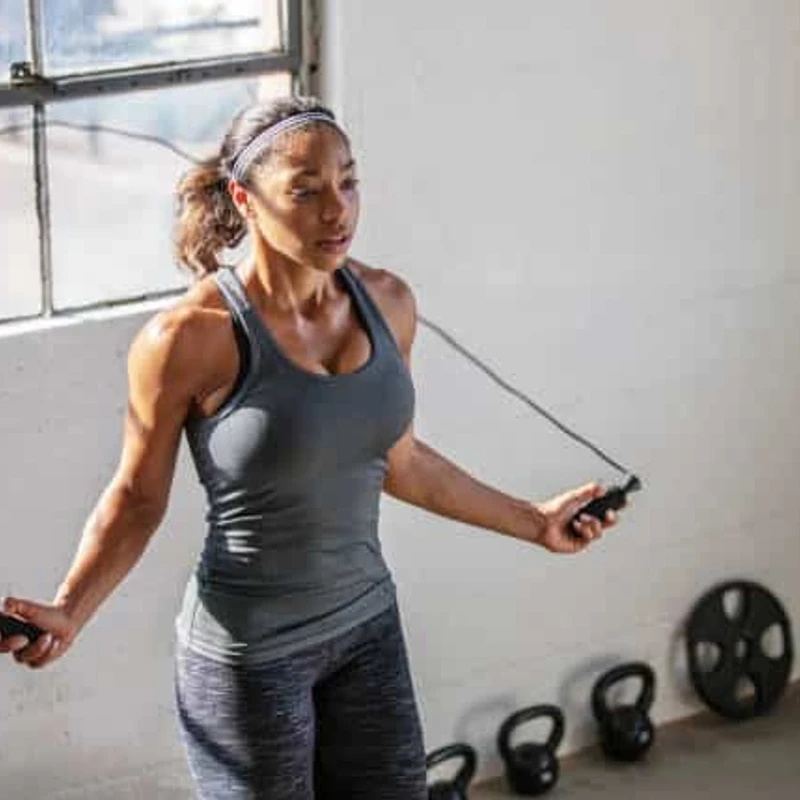
    2. **Tabata Jump Rope:** Take the classic jump rope to the next level with the Tabata protocol. Go all out for 20 seconds, rest for 10 seconds, and repeat for eight rounds. This totals just four minutes of exercise! You can do it almost anywhere, varying your jumps (high knees, fast pace) to keep your heart pumping. Studies show Tabata training can reduce body fat, boost cardiorespiratory fitness, and even improve cognitive function.
    3. **Desk Jenga (Isometrics):** This workout uses isometric holds – contracting muscles without movement – perfect for when you’re seated. Think planks or wall sits, but adapted for your desk. Try gripping your chair arms and pressing down, or squeezing your glutes discreetly during a Zoom call. Hold contractions for 20-60 seconds, repeating for 3-5 rounds (under 5 minutes total). These exercises prime your body for power, reduce soreness, and can even lower blood pressure.
    4. **Boredom Band-Aids (Resistance Bands):** Don’t underestimate the power of a small resistance band! Dedicate 30-45 seconds per move (pulls, rows, presses) with minimal rest for a quick five-minute session. Resistance bands act like free weights, triggering muscle growth (hypertrophy) and increasing strength. Consistent use can significantly reduce visceral fat and improve insulin sensitivity.
    5. **Core & Mobility Mash-Up:** This routine focuses on flexibility, mobility, and strength through flowing movements like bird-dog reaches, cat-cows, and seated spinal twists. Aim for 45 seconds per move, incorporating 4-6 exercises for a six-minute session. It’s excellent for releasing tension, easing back pain, increasing agility, and enhancing explosiveness.

    Consistency is Key

    The beauty of micro-workouts is their accessibility. You don’t need hours in the gym; just a few minutes each day can lead to significant fitness improvements. By ditching the excuses and incorporating these short, effective routines into your daily life, you’ll be well on your way to a healthier, stronger you. Remember, consistency trumps duration when it comes to building lasting fitness habits.

    Which of these micro-workouts are you excited to try first? Let us know in the comments below!

  • Drop 10 Pounds in 2 Weeks: Your Weight Loss Challenge!

    Dreaming of shedding those extra pounds fast? You’re in luck! Losing 10 pounds in just two weeks is absolutely achievable, but it requires a focused approach. The key lies in two main areas: what you eat and how you move. Get ready to dive into a challenge that can help you reach your goals!

    The Expert’s Take on Motivation

    Fitness Guru Corey S. Taylor, CEO of Fitness As A Lifestyle, emphasizes that your motivation needs to be bigger than your ego. “Most people fail because their goals aren’t big enough,” he explains. “Make sure that your reason for losing weight is big enough to drive you to work past your pride and personality.” Without a strong ‘why,’ it’s easy to get complacent or give up.

    Taylor also highlights the importance of time. “Time is your only weapon,” he states. “If you’re not executing effort each hour (mind, body, diet, activity) then you’re not going to reach your goal as fast as you’d like. Invest time, don’t waste it. Utilize your weekends, evenings and early mornings.”

    The Math Behind Weight Loss

    Let’s talk numbers. A pound of fat is roughly 3,500 calories. To lose 10 pounds, you need a deficit of about 35,000 calories over two weeks. That breaks down to a daily deficit of approximately 2,500 calories. Yes, you really have to *want* it!

    Your 14-Day Action Plan

    So, how do you create that significant calorie deficit without feeling deprived? Here’s a breakdown:

    • **Limit Sugar:** Keep your daily sugar intake under 100 grams.
    • **Boost Fiber:** Aim for 30 grams of fiber daily. Load up on leafy greens like spinach, kale, and collard greens (prepared without added fat).
    • **Smart Food Choices:** Steer clear of high-sodium dips and dressings. Opt for whole grains, lean proteins like turkey, chicken, and salmon.
    • **Unlimited Fruits & Veggies:** Taylor advises that you can enjoy unlimited fruits and vegetables throughout the day.
    • **Strategic Exercise:** Alternate between cardio and weight lifting, dedicating at least 30 minutes to one activity per day. Think a jog on Monday, weights on Tuesday, a hike on Wednesday, and more weights on Thursday. Remember, you don’t need a gym for a great workout!
    • **Hydration is Key:** “Water is your only friend,” Taylor stresses. “Nothing will heal you faster, quench your thirst quicker and revitalize your mind, body and spirit better than water.” Aim for a gallon a day to see results in your waistline and muscle definition.

    Don’t Forget Recovery!

    While clean eating and intense training are crucial, your body also needs rest. “I can’t stress enough how important proper rest and recovery is when it comes to your goals,” Taylor emphasizes. This includes icing your legs nightly, taking a daily multivitamin, stretching daily, drinking amino acids during workouts, and scheduling rest days.

    Making recovery a priority is just as important as your workout. It builds a foundation for lasting fitness and ensures your body is ready to tackle your next challenge. Are you ready to commit to this two-week transformation?

    What are your biggest weight loss challenges? Share your thoughts and tips in the comments below!

  • Keep Your Muscle While Losing Weight

    So, you’re on a weight loss journey, and the scale is finally moving! That’s fantastic news. But here’s a crucial point: are you losing fat, or are you also losing precious muscle? It’s a common pitfall. When we cut calories without the right strategy, our bodies might start using muscle for energy, which can slow down your metabolism and decrease your strength. Let’s dive into how to keep that hard-earned muscle while shedding pounds.

    The Science: Fat Loss vs. Muscle Loss

    When you reduce your calorie intake, your body seeks fuel from two main sources: fat reserves and muscle tissue. Ideally, we want to target fat, but muscle contains readily available amino acids that the body can convert into glucose for quick energy. Without adequate nutrition and resistance training, your body might tap into muscle. This can lead to a lower number on the scale, but without improved body composition – meaning you might feel weaker, have less energy, and a slower metabolism.

    The American College of Sports Medicine notes that adults who lose weight without resistance training can lose up to 25% of that weight as lean muscle. This is significant because muscle isn’t just about looks; it’s a vital organ for longevity, supporting your metabolism, bones, and overall resilience.

    Strength Training: Your Muscle’s Best Friend

    The absolute best way to protect your muscle during weight loss is strength training. When you challenge your muscles through lifting, pushing, pulling, or squatting, you send a clear signal to your body: “This muscle is important, keep it!” Even moderate resistance training can:

    • Preserve lean muscle mass during a calorie deficit.
    • Improve metabolic health and insulin sensitivity.
    • Strengthen bones and joints.
    • Boost your mood and confidence.

    You don’t need to spend hours in the gym. Just two to three full-body resistance training sessions per week, using weights, machines, bands, or even your own body weight, can make a huge difference. Focus on consistency and gradually increasing the challenge (progressive overload) to keep your muscles adapting.

    Fueling Your Muscles: Nutrition is Key

    Nutrition plays a critical role in retaining muscle. Even when aiming for a calorie deficit, you need sufficient protein and overall calories to support muscle repair and preservation. Here’s what to focus on:

    1. **Prioritize Protein:** Aim for 1.2–1.6 grams of protein per kilogram of body weight daily. This provides the essential amino acids for muscle repair. Great sources include lean meats, fish, eggs, Greek yogurt, cottage cheese, lentils, tofu, beans, and protein supplements.
    2. **Spread It Out:** Your body utilizes protein best when consumed in smaller amounts throughout the day. Aim for about 20–30 grams per meal to stimulate muscle protein synthesis multiple times.
    3. **Don’t Fear Carbs and Fats:** Healthy carbohydrates provide energy for your workouts, while healthy fats support hormone balance. Cutting these too drastically can hinder performance and recovery.
    4. **Stay Hydrated:** Muscle tissue is largely composed of water. Proper hydration is crucial for preventing cramps, fatigue, and aiding recovery.

    Smart nutrition is about fueling your muscles effectively, not just eating less.

    Recovery, Sleep, and Hormones: The Unsung Heroes

    Muscle growth and repair happen during recovery, not just during your workout. Adequate rest, quality sleep, and balanced hormones are vital. Aim for 7–9 hours of sleep per night, as this is when crucial hormones like growth hormone and testosterone are released, aiding muscle repair and fat metabolism. Don’t forget rest days – they allow your muscles to rebuild stronger.

    Tracking Progress Beyond the Scale

    Since muscle is denser than fat, the scale might not tell the whole story. Focus on other progress markers like body measurements (waist, hips), progress photos, increased strength (more reps, heavier weights), improved energy levels, and better mood. Body composition scans can also provide a clear picture of your lean mass versus fat mass.

    Shift Your Mindset: Celebrate Strength

    In a society that often emphasizes thinness, redefining success is powerful. True wellness is about building strength, confidence, and vitality. When you shift your goal from “losing weight” to “gaining strength,” your entire approach changes. Focus on what your body can *do* – climb stairs with ease, lift groceries without strain, and age with power. This mindset fosters sustainable progress and a healthier relationship with your body.

    How do you prioritize muscle maintenance during your fitness journey? Share your tips and experiences in the comments below!
  • Tone Thighs in 15 Minutes: Treadmill Workout

    We all know walking is fantastic for overall health – it’s simple, accessible, and great for burning calories. But if sculpted, toned thighs are your goal, simply walking forward might not be cutting it. Traditional walking primarily targets your quads, often leaving your inner and outer thighs less sculpted. Ready to change that? It’s time to switch up your treadmill routine!

    Why Forward Walking Isn’t Enough

    When you walk straight ahead, you’re mainly engaging the muscles at the front of your legs. While this helps with overall fat reduction, it doesn’t give those often-stubborn inner and outer thigh muscles (adductors and abductors) the workout they need. This can lead to muscle imbalances and a plateau in your toning efforts. To truly firm up your legs, you need to challenge your muscles from every angle.

    The secret? Multi-directional movement on the treadmill. By incorporating side shuffles, backward walking, and brisk forward walking, you recruit a wider range of muscles, leading to more balanced strength and definition. This approach is key to achieving that smooth, firm look everyone desires.

    The Power of Multi-Directional Movement

    Switching directions on the treadmill might sound tricky, but it’s a game-changer for your leg toning goals. Here’s how each movement contributes:

    • **Side Shuffles:** These are fantastic for targeting your inner and outer thighs. Moving sideways forces your adductor and abductor muscles to work hard to stabilize you, leading to firmer sides.
    • **Backward Walking:** This engages your hamstrings and glutes, crucial muscles for overall thigh strength and shape. It also helps improve your coordination and balance.
    • **Forward Brisk Walking:** While you know this one, it’s still essential! It ramps up calorie burn, helping to shed fat and reveal the toned muscles underneath.

    Beyond just sculpting your thighs, this multi-directional approach enhances agility, strengthens your core, and boosts overall stability. It’s a comprehensive workout for your lower body!

    Your 15-Minute Toned Thigh Treadmill Routine

    You don’t need hours to see results! This efficient routine combines all the key movements to target every muscle in your legs and glutes. For beginners, start with a speed of 2 mph or lower for side and backward walking, gradually increasing as you get comfortable. If you’re more advanced, you can even double your speed to cut the workout time to just 15 minutes while achieving the same great results!

    • **Warm-up:** Prepare your body for exercise.
    • **Side Shuffles:** Focus on sculpting inner and outer thighs.
    • **Backward Walking:** Engage glutes and hamstrings.
    • **Brisk Forward Walking:** Maximize fat burn.
    • **Cool-Down:** Promote recovery and flexibility.

    Aim to do this workout at least three times a week. You’ll likely feel increased strength within a few weeks and see visible results—firmer, smoother, and more toned thighs—in about six weeks.

    Maximize Your Results

    To get the most out of your routine, try these expert tips:

    • **Add Incline:** Even a slight incline (2-3%) increases resistance, making your thighs and glutes work harder.
    • **Engage Your Core:** Keep your abs tight for better balance and posture.
    • **Use Proper Form:** Avoid locking your knees and leaning on handrails; focus on smooth movements.
    • **Include Strength Training:** Complement your treadmill work with squats, lunges, and leg lifts.
    • **Stay Consistent:** Regular workouts are key to seeing results.
    • **Stretch Afterwards:** Improve flexibility and reduce stiffness.

    More Than Just Toned Thighs

    While toned thighs are a fantastic outcome, this workout offers broader benefits. It enhances cardiovascular health, boosts your metabolism, improves coordination, and strengthens your entire lower body. You won’t just look stronger; you’ll feel it too!

    Don’t underestimate the power of walking when done creatively. By incorporating multi-directional movements, you can transform your treadmill sessions into a dynamic workout that delivers visible results and makes you feel confident and strong.

    Ready to sculpt those thighs? Try this 15-minute routine and let us know how it goes in the comments below! What are your favorite ways to tone your legs?

  • Ellen Ector: The 73-Year-Old Fitness Phenomenon

    Forget everything you thought you knew about aging! Ellen Ector, a vibrant 73-year-old from Atlanta, is on a mission to shatter stereotypes and inspire a generation. This fitness powerhouse is not only redefining what it means to age gracefully but is also passionately empowering Black women to take charge of their health and wellness.

    Redefining Aging Through Fitness

    Ellen Ector brings an infectious energy, confidence, and a whole lot of fun to the health and wellness scene. As the co-owner of Gymnetics Fitness, a studio she founded with her daughter Lana Ector, she’s built a business on the principle that fitness should be ingrained in our lives. Gymnetics offers personalized nutrition, custom weight-loss programs, and tailored workouts for everyone, regardless of their fitness level.

    With over 25 years of combined experience and more than eight different fitness regimes, Ector and her daughter provide expert guidance. Ector herself leads popular classes like “Baddie Pump,” focusing on core strength and weightlifting, alongside a variety of engaging group workouts. She also co-created the “Black Girls Workout Too” DVD, complete with a healthy meal plan.

    A Journey That Started at 40

    What makes Ector’s story even more remarkable is that she didn’t start her fitness journey until she was 40! During a 2023 interview on “Sherri,” she shared her motivation: seeing a photo of herself that revealed nothing but “butt and gut.” “I just didn’t like the way I looked,” she admitted. “So, I started working out and within nine months, I had these first lady arms. And I have maintained it now for 30 years.”

    After two decades as a social worker, Ector made the bold decision to leave her job in 2009 to fully dedicate herself to fitness, eventually opening her gym. She’s a vocal opponent of ageism, challenging the notion that older individuals are destined for a sedentary life. “I’m here to show you guys you can start this fitness journey at any age,” she declared.

    Dismantling Generational Health Curses

    Ector’s mission goes deeper than just physical transformation. She’s committed to breaking down the barriers that prevent Black women from prioritizing their health, noting the disproportionate rates of high blood pressure, obesity, and cancer among this demographic. Inspired by her mother’s passing from uterine cancer, Ector adopted a fully plant-based, vegan diet in 2017.

    “My mom was overweight, and she died of uterine cancer… I thought, ‘I’m not going to go out like that,’” she shared. Ector emphasizes the importance of Black women knowing their health numbers and actively working to break generational health curses. She has successfully taught her own children healthy eating and exercise habits.

    Ector’s Wellness Tips for Vitality

    So, how does Ector maintain her glowing health and strength at 73? Her routine combines a plant-based diet with consistent movement and strength training, particularly weightlifting. She credits weightlifting for her sculpted physique and strong bones, noting that studies support its effectiveness against age-related bone loss. Ector focuses on upper body strength training, especially her shoulders, believing that strong shoulders project confidence.

    • **Weight Training:** Incorporate exercises like front lateral raises and overhead presses.
    • **Cardio:** Enjoys trail running for its challenging and varied terrain, and swimming.
    • **Consistency:** Prioritizes regular movement to maintain cardiovascular health (aiming for at least 150 minutes per week, as recommended by the American Heart Association).

    Beyond the gym, Ector launched “Aging Blackwards,” a lifestyle community and training system designed to celebrate aging with grace and refinement. Through events, seminars, retreats, and a curated shop, Aging Blackwards encourages members to embrace life’s chapters with vitality. She even hosted a 5K Walk & Run for her 73rd birthday!

    What inspires you most about Ellen Ector’s journey? What steps can you take today to prioritize your own health and wellness, no matter your age? Share your thoughts and goals in the comments below!

  • Toxins Found in Protein Powders: Are Yours Safe?

    If you’re a regular user of protein powders for fitness or muscle recovery, it’s time to pay close attention. A recent, major investigation by Consumer Reports has uncovered troubling levels of toxic heavy metals, including lead, arsenic, and cadmium, in many popular protein powders and ready-to-drink shakes. This news carries particular weight for Black Americans, who are more likely to use these supplements and already face higher exposure to environmental toxins.

    Troubling Findings in Popular Products

    The report tested 23 bestselling protein products and found that over two-thirds contained lead at levels exceeding what Consumer Reports deems safe for daily consumption. While plant-based powders often showed higher lead levels – with one product containing over 1,500% of the daily concern threshold – even dairy-based and beef-based options weren’t entirely in the clear. No product was found to be completely free of concern.

    Tunde Akinleye, a chemist and food-safety researcher at Consumer Reports who led the project, expressed alarm, noting, “It’s concerning that these results are even worse than the last time we tested.” Experts emphasize that while a single serving might not cause immediate harm, the real danger lies in the cumulative effects of daily consumption over time.

    Disproportionate Impact on Black Communities

    The findings are especially alarming for Black communities. Due to historical factors like housing segregation, zoning decisions, and the placement of industrial sites in predominantly Black neighborhoods, Black Americans already bear a heavier burden of exposure to environmental toxins. Studies have shown persistent racial and socioeconomic disparities in lead exposure across the U.S., with Black children often having higher blood-lead levels.

    Given that Black Americans are reportedly more likely to use protein supplements for fitness and wellness, and often live in areas with higher environmental risks, the presence of heavy metals in these products is a significant concern. Lead is a persistent toxin that can contribute to serious health issues over time, including high blood pressure, kidney damage, immune suppression, and reproductive problems.

    What Can You Do?

    Nutrition specialists suggest that many healthy adults already get enough protein from whole foods and may not need supplements. If you do use protein powders, experts recommend limiting your intake, especially from plant-based options, unless they are certified by a reputable third-party standard. Look for products that disclose their source ingredients and have undergone third-party testing for heavy metals.

    • Limit use of protein powders, especially plant-based ones.
    • Choose products certified by reputable third-party organizations.
    • Look for companies that disclose source ingredients and heavy-metal testing.
    • Consider safer protein sources like dairy-based powders, Greek yogurt, or lean meats.
    • Always check product reviews and verify heavy-metal testing.

    For Black Americans and other communities already facing disproportionate environmental risks, this report serves as a critical wake-up call. The lack of strict FDA oversight and comprehensive limits for heavy metals in supplements means consumers must be vigilant. Given the link between heavy-metal exposure and chronic illnesses, particularly in populations already dealing with health disparities, the need for safer options is more urgent than ever.

    Are you concerned about the toxins in protein powders? What steps will you take to ensure your supplements are safe? Share your thoughts and tips in the comments below!

  • Starting Pilates: Feeling Welcome & Empowered

    Thinking about diving into Pilates? It promises a fantastic blend of strength, flexibility, and that sought-after mind-body connection. But let’s be real – walking into a new studio for the first time can feel a bit intimidating, especially if you don’t see many people who look like you, or if you’re worried about mastering those classical moves. The good news? More studios and instructors are actively working to create inclusive spaces where everyone feels safe, respected, and empowered. This guide is for you, especially if you’re a beginner, to help you start your Pilates journey feeling welcomed and seen.

    Finding Your Perfect Pilates Sanctuary

    The first step to a positive Pilates experience is finding the right studio and instructor. Look for places that offer introductory or “Foundations” classes. These are designed with beginners in mind, featuring simpler movements, a slower pace, and plenty of demonstrations and corrections. Smaller class sizes are also a huge plus, as they allow instructors to provide more personalized attention, correct your alignment, and offer modifications tailored to your needs.

    Pay attention to the studio’s vibe. Is the space clean, calming, and not overly flashy? Is there enough room between equipment so you don’t feel cramped? How do the front desk staff and instructors respond to your questions? Visiting a class beforehand can give you a real feel for the energy. Also, seek out instructors with experience working with diverse body types, varying mobility levels, and who demonstrate cultural sensitivity.

    Your Rights in the Studio: Space, Voice, and Respect

    Knowing your rights as a participant is crucial for advocating for yourself and ensuring a positive experience. You have the right to be heard: If a move hurts, doesn’t feel right, or you don’t understand an instruction, don’t hesitate to ask for clarification, a modification, or even permission to rest. A good instructor will welcome these questions.

    Your comfort matters – physically and emotionally. You should feel safe in class. If an instructor pushes you to “tough it out” or suggests you need to “fix your body,” consider it a red flag. The best classes adapt to you, not the other way around. Respect for your boundaries is also key, whether it’s physical touch, the use of props, or the pace of the class. You don’t have to do every move if it doesn’t feel right for you.

    Making Moves Work for Your Body

    Pilates is precise, but “precision” doesn’t mean a single, rigid form. Modifications are essential for everyone, especially beginners or those with different body types and mobility levels. For classic moves like The Hundred or Plank, try bending your knees or using props like blocks or cushions to support your alignment. Progress gradually, starting with simpler versions (like mat work before reformer) and fewer repetitions. Focus on proper alignment and form over speed or depth – doing fewer reps well is far more beneficial than doing many poorly.

    • **Start with modified moves:** Bend knees in The Hundred, use props for Plank and Bridge.
    • **Utilize props:** Blocks, chairs, straps, and cushions can aid alignment and reduce strain.
    • **Progress gradually:** Begin with easier variations and build up intensity.
    • **Prioritize form:** Focus on quality of movement over quantity or speed.

    Building Confidence in a Community Setting

    Pilates is as much a mental and emotional practice as it is physical. Fears of judgment or comparison can hinder confidence. To combat this, try going with a friend, attending classes during less crowded off-peak hours, or wearing comfortable clothing that makes you feel good. If possible, starting with private or semi-private sessions can help you get grounded with proper form and expectations.

    Celebrate your small victories – lasting longer in a hold, feeling less shaky, or understanding a cue. Remember, everyone’s journey is unique; don’t compare your progress to others. As you become more comfortable, gradually challenge yourself while always listening to your body and modifying when needed.

    Your Pilates Journey: A Step-by-Step Plan

    1. **Reflect:** Identify your goals (strength, flexibility, injury healing) and concerns (safety, judgment).
    2. **Research:** Look for studios/online options with inclusive marketing (diverse bodies, beginner classes, modifications).
    3. **Inquire:** Contact studios about trial classes, cancellation policies, and beginner/mobility modifications.
    4. **Start slow:** Try a private session, foundations class, or beginner online workout.
    5. **Observe & Adapt:** Pay attention to how your body feels, use mirrors or video for alignment checks, and note instructor feedback.
    6. **Be consistent & patient:** Progress takes time; even one class a week makes a difference.
    7. **Celebrate progress:** Acknowledge small wins and adjust your practice as needed.

    Starting Pilates without feeling out of place is absolutely achievable. The key lies in finding welcoming spaces, instructors who listen and adapt, movements that honor your body, and a mindset of patience and self-compassion. When Pilates embraces inclusivity, it transforms from a niche trend into a powerful tool for empowerment, healing, and lasting wellness for everyone.

    Are you ready to start your Pilates journey? What are your biggest concerns or hopes? Share your thoughts in the comments below!

  • Master the Pull-Up: 7 Exercises to Build Strength

    The pull-up is an impressive display of upper-body strength, often perceived as achievable only by elite athletes. However, with a targeted approach involving specific exercises, anyone can build the necessary strength to perform a perfect pull-up. This guide outlines seven key exercises to help you on your journey.

    Building Foundational Strength: 7 Key Exercises

    1. **Renegade Rows:** Start in a tabletop position with dumbbells on either side of your shoulders. Transition to a plank (or knee plank), keeping your core engaged and hips square. Drive your left elbow towards the ceiling, lowering back to the start. Alternate arms for 10 repetitions per side.
    2. **Dumbbell Holds:** Grip a pair of challenging dumbbells (heavy enough that holding them for 10 seconds is difficult). Hold for 30 seconds, working up to a minute, for three sets per workout with rest in between. Ensure a firm grip.
    3. **Inverted Rows:** Stand tall and grip a bar or TRX bands with both hands, arms straight. Lean back, keeping legs straight, until your body is at an angle (closer to parallel means a harder exercise). Pull your elbows towards your ribcage, lifting your chest towards the bar/bands. Lower slowly. Repeat 10 times.
    4. **Modified Inverted Rows:** If standard inverted rows are too challenging, bend your knees with feet flat on the floor. This modification supports some bodyweight, making it easier to build upper-body strength as you pull towards the handles or bar.
    5. **Lateral Pull Down:** Using your upper back and lats, pull the bar down towards your chest. Keep the tops of your shoulders down, avoiding shrugging them towards your ears. Perform 10 repetitions.
    6. **Hollow Hold:** Lie on your back, extending legs and arms a few inches off the ground. Engage your core by pulling your navel towards your spine, gently pressing your back into the ground.
    7. **Dead Hang:** Jump or use a chair to grab pull-up bars with both hands. Keep shoulders slightly active (not shrugged) and ribs down, engaging your core without swinging. Start with 10-second holds and gradually increase duration.

    Progressing to Pull-Up Variations

    After consistently performing these exercises 3-4 times per week for about four weeks, you’ll be ready to start trying pull-ups. Experts recommend beginning with beginner variations before moving to more advanced techniques:

    1. **Chair-Assisted Pull-up:** Use a chair or bench under the pull-up bar at a height that allows your feet to rest lightly on it. Pull yourself up as high as possible, then press through your feet to complete the movement.
    2. **Assisted Pull-Up (Bands or Machine):** Loop a resistance band around the pull-up bar and step into it with your feet or knees. Alternatively, use an assisted pull-up machine, gradually decreasing the counterweight as you get stronger.
    3. **Regular Pull-Up:** Jump or use a chair to grab the bars, bend your knees, cross your ankles, and engage your core. Pull your body up towards the bar, aiming to get your chin over it. Lower yourself slowly and repeat.
    4. **Advanced Pull-Up:** Once you’ve mastered regular pull-ups, challenge yourself further by adding weights or attempting one-handed variations.

    The Health Benefits of Pull-Ups

    Beyond aesthetics, pull-ups offer numerous health benefits. They strengthen your back, arms, and shoulders, improving your ability to perform daily activities requiring heavy lifting. Pull-ups also enhance grip strength, boost athletic performance through strength and resistance training, improve posture, and contribute to bone and heart health. Studies suggest strength training can also positively impact mental health, reducing anxiety, improving cognitive function, and boosting self-esteem.

    Are you ready to conquer the pull-up? What’s your biggest challenge when it comes to upper body strength? Share in the comments below!

  • Mo’Nique Launches ‘Mo’Nique’s Movement’ for Health Journey

    Academy Award-winning actress and comedian Mo’Nique is embracing a new chapter focused on health and wellness, launching ‘Mo’Nique’s Movement’ to share her journey. After receiving some tough love from her husband, Sidney Hicks, Mo’Nique realized it was time for a significant change in her lifestyle, moving away from focusing solely on weight loss towards a broader commitment to health and longevity.

    Tough Love Sparks a Health Transformation

    During a September appearance on ‘The Tamron Hall Show,’ Mo’Nique recounted a pivotal moment that prompted her to re-evaluate her health. She described feeling out of breath just climbing stairs and realizing the impact of her lifestyle choices. A pointed question from her husband, Sidney Hicks—’Do you think that’s cute? Is she tying your shoes because you can’t bend down, or does she think that’s something she needs to do?’—made her confront her physical limitations.

    Hicks’s candid feedback, particularly after a night where Mo’Nique overindulged in food, served as a wake-up call. His stark reminder, ‘I can deal with you being mad, I can’t deal with you being dead,’ spurred Mo’Nique to commit to a healthier future, envisioning herself active well into her seventies and eighties alongside her husband.

    Focusing on Health Over Weight

    Mo’Nique has previously shared that she weighed under 200 pounds for the first time since high school. However, her current focus is not strictly on weight loss but on overall health and wellness. ‘You don’t need a pill,’ Mo’Nique told Tamron Hall. ‘You don’t need surgery, in my humble opinion. If you really commit, the weight will go away. That’s why I no longer talk about weight, I talk about health.’

    This shift in perspective emphasizes sustainable lifestyle changes and the importance of holistic well-being. The message resonates with many who are seeking healthier habits without resorting to quick fixes.

    Introducing ‘Mo’Nique’s Movement’

    To support her journey and inspire others, Mo’Nique has launched ‘Mo’Nique’s Movement.’ This platform features a dozen full-length workout videos with her trainer, Dwight Holt Jr., alongside shorter clips designed to encourage consistency and motivate followers. Mo’Nique expressed pride in her progress, feeling empowered to make a positive change for future generations, including her daughter and granddaughters.

    What are your thoughts on Mo’Nique’s new health initiative? Do you agree that focusing on health over weight loss is more beneficial? Share your opinions in the comments below!