Tag: filmmaker

  • Clifton Powell Criticizes Spike Lee’s Business Practices

    Veteran actor Clifton Powell is once again making his voice heard regarding filmmaker Spike Lee, clarifying that his criticisms are strictly about business practices, not personal animosity. During a recent interview with The Art of Dialogue, Powell addressed his stance on the acclaimed director, making it clear he stands by his previous remarks.

    Concerns Rooted in Business Dealings

    When asked directly about Lee, Powell urged listeners to do their own research: “I am not going to comment about Spike Lee. I said what I said and I stand by what I said. Go read about it. And a lot of y’all don’t have the facts.” He explained that his issues stem from what he perceives as questionable business practices, particularly concerning actors.

    While Powell himself has never worked with Lee, he shared that close friends have been negatively impacted. He stressed that his respect for Lee’s artistic achievements, especially his collaborations with Denzel Washington, remains intact. The core of his critique lies in “some of his business practices.”

    Pushing Back Against Critics and Advocating for Solidarity

    Powell pushed back against those who have dismissed his comments as bitterness, emphasizing his commitment to research. “I do my research and I’m never going to accept a Black man doing to us what the man has been doing for the last 70,000 years,” he stated. He even cited fellow actor Charles Dutton as someone who supports his claims, noting, “He knows.”

    Powell acknowledged that his initial comments, made jokingly in a studio, went viral and perhaps could have been handled differently. “I should have called him and told him that or I should have saw him out and pulled him aside. So, I learned something from that.” He used the interview as an opportunity to advocate for greater solidarity and research among Black creators.

    A Call for Better Business Practices

    He also highlighted Tyler Perry as an example of resilience, noting Perry’s past struggles with homelessness. Powell shared his own experiences with homelessness, underscoring the importance of supporting each other. “Black folks, do your research before you comment and condemn somebody. We got to be better than the man to each other,” he urged.

    Powell reiterated that his intention is not to condemn anyone but to encourage constructive dialogue. “If we have grievances, let’s sit down, have dinner, and talk about it,” he suggested, even extending an invitation to Spike Lee for such a conversation. “Maybe as a Pisces like I am, he might take it in and try to do better.”

    Ultimately, Powell believes the conversation is larger than just him and Lee. “We got to do better business with each other than the man has ever done business with us,” he concluded, encouraging everyone to research his claims. He also referenced past comments from a 2021 interview where he detailed issues with Lee allegedly not paying people fairly and making public criticisms of other Black men.

    What are your thoughts on Clifton Powell’s critique of Spike Lee’s business practices? Do you believe open dialogue is the best way to address industry grievances? Share your opinions in the comments below!

  • Spike Lee’s Education Funded by Grandmother’s Sacrifice

    Spike Lee, the acclaimed Academy Award-winning director, owes a significant part of his educational foundation to the profound sacrifice of his grandmother, Zimmie Retha Shelton. Her dedication to his future meant she diligently saved her Social Security checks to fund his studies at the prestigious Morehouse College.

    A Foundation Built on Art and Sacrifice

    Lee often credits his mother and grandmother for nurturing his creative spirit from a young age. His mother, a cinephile herself, ensured her children were exposed to the arts through Broadway plays, museums, and libraries, laying the groundwork for his future in filmmaking. This early exposure to culture was instrumental in shaping his artistic sensibilities.

    While Lee began his Morehouse College journey in 1975, following in the footsteps of his father and grandfather, his academic path wasn’t initially clear. He described himself as a C and D student and hadn’t declared a major. The situation became even more challenging during his sophomore year when his mother, Jacqueline, tragically passed away from liver cancer.

    The summer of 1977 proved to be a turning point for Lee. Broke and without summer jobs, he discovered a Super 8 camera at a friend’s house. This discovery ignited his passion for filmmaking, leading him to spend the entire summer documenting New York City, including the infamous blackout and its aftermath. This project became his first short film, ‘Last Hustle in Brooklyn,’ which caught the attention of a teacher at Clark Atlanta University.

    Grandmother’s Enduring Support

    Throughout his time at Morehouse, Lee relied heavily on the financial support of his grandmother, Zimmie Retha Shelton. A former art teacher in Georgia for 50 years, she made immense personal sacrifices. ‘For 50 years, she saved the social security checks for her grandchildren’s education… She put me through Morehouse,’ Lee shared, highlighting the depth of her commitment.

    Sadly, Zimmie Retha Shelton passed away in 2006 at the remarkable age of 100. Her sacrifices, however, were far from in vain. Spike Lee went on to create a remarkable body of work, including iconic films like ‘Do the Right Thing,’ ‘Inside Man,’ and ‘Malcolm X,’ solidifying his legacy in cinema.

    His dedication to his craft continues, with his latest project, ‘Highest 2 Lowest,’ a crime thriller starring A$AP Rocky and Denzel Washington, marking his fifth collaboration with the acclaimed actor.

    What inspiring stories of family support have impacted your journey? Share your thoughts in the comments below!

  • Denzel Washington Admits He’s ‘Tired of Movies’

    Denzel Washington, a towering figure in Hollywood with a career spanning over five decades and numerous accolades, has made a surprising confession: he’s simply “tired of movies.” The acclaimed actor recently revealed in a candid conversation with GQ that he no longer actively watches films, even as he continues to build an impressive filmography.

    An Honest Confession from a Hollywood Icon

    During a discussion alongside director Spike Lee and co-star A$AP Rocky for their film ‘Highest 2 Lowest,’ Washington was asked about filmmakers he admires. His response was refreshingly direct: “I don’t watch movies, man. I really don’t.” Both Lee and Rocky reacted with laughter, but Washington stood firm in his admission, reiterating, “I’m just being honest with you. I don’t watch movies, man. I don’t go to the movies, I don’t watch movies.”

    When questioned if his disinterest stems from his own extensive involvement in filmmaking, Washington didn’t shy away. “Probably. I’m tired of movies,” he admitted. This sentiment echoes his previous comments about Hollywood, where he’s expressed a lack of concern for industry accolades, even downplaying his Oscar wins. “I don’t do it for Oscars. I really don’t care about that kind of stuff,” he told Jake’s Takes, adding that he feels some wins were undeserved while others were missed opportunities.

    A Legacy Beyond the Screenings

    Despite his nonchalant attitude towards watching films or chasing awards, Washington’s legacy in Hollywood is undeniable. Having appeared in approximately 50 films, including classics like ‘Malcolm X,’ ‘Philadelphia,’ ‘American Gangster,’ ‘Training Day,’ and his recent work in ‘Highest 2 Lowest’ and ‘Gladiator II,’ his impact is profound.

    His Oscar win for ‘Glory’ made history, marking him as the second Black actor to win Best Supporting Actor. He also holds the distinction of being the first Black actor to receive two nominations in that category. Washington’s career is a testament to his dedication and talent, proving that his influence extends far beyond his personal viewing habits.

    What are your thoughts on Denzel Washington’s statement about being ‘tired of movies’? Does it change how you view his dedication to his craft? Share your opinions in the comments below!
  • Spike Lee on Black & Puerto Rican Unity in Films

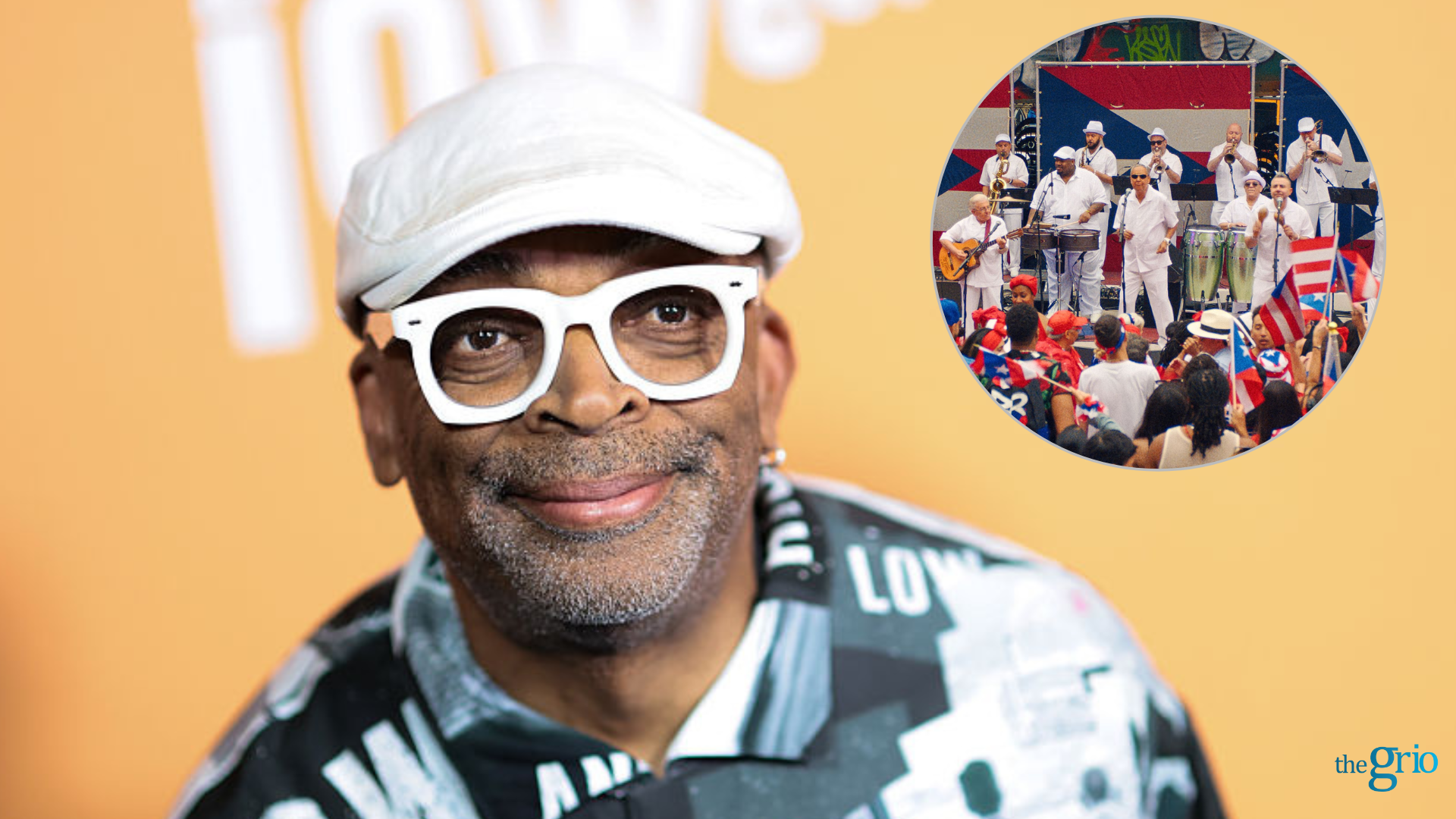
    Legendary filmmaker Spike Lee has a signature touch that often graces his New York City-based films: the seamless integration of Black American and Puerto Rican communities. From Rosie Perez’s iconic role in “Do The Right Thing” to nods in “Crooklyn” and a full episode of “She’s Gotta Have It” celebrating Afro-Puerto Rican heritage, Lee consistently showcases the intertwined lives of these communities. In a recent interview with theGrio, Lee discussed why this representation is so vital, particularly in his latest film, “Highest 2 Lowest.”

    Roots in New York City’s Cultural Fabric

    Lee attributes this consistent portrayal to his upbringing in Fort Greene, Brooklyn, before gentrification changed the neighborhood’s landscape. “I grew up in Fort Greene and back then before gentrification, it was Black and Puerto Rican,” Lee shared. “The Dominicans had not taken over yet from the Puerto Ricans.” He fondly recalled the “love” and intermingling between these communities, noting the significant presence of Puerto Ricans and African Americans in the early days of hip-hop, originating in the Bronx. “Black people and Puerto Rican intermarried, man,” Lee recalled. “It’s like, it was all love.”

    Historical accounts support Lee’s recollections. According to scholar Sonia Song-Ha Lee, Black Americans and Puerto Ricans collaborated in the 1960s on civil rights issues, with groups like the Black Panthers partnering with the Puerto Rican militant group The Young Lords. While acknowledging that the relationship wasn’t always perfect, with some Puerto Ricans strategically distancing themselves from Black Americans to gain social advantages, Lee emphasizes the overall spirit of connection he witnessed and experienced.

    Reflecting Reality and Fostering Understanding

    Lee also touched upon the differences in community dynamics between New York and Los Angeles, noting that while Black and Mexican relations have their own complexities, the broader point is the diversity within Hispanic and Latino communities. He highlighted how the Puerto Rican identity is a national one, reflecting a history of diverse influences, including slavery and battles against colonialism. Lee pointed out that in his Netflix revisitation of “She’s Gotta Have It,” the character Mars, originally played by Lee as African American, was portrayed as Afro-Puerto Rican in the series, a casting choice that went unquestioned, underscoring the natural integration of these identities.

    His latest film, “Highest 2 Lowest,” features a memorable scene at the Puerto Rican Day parade, with music from the legendary Eddie Palmieri and his Salsa Orchestra. Lee expressed his deep respect for Palmieri, who passed away shortly after the film’s screening. The vibrant depiction of salsa music and Afro-Puerto Rican dancers in the film serves as a powerful visual and auditory testament to the cultural fusion that Lee champions.

    In an era where discussions about allyship and navigating white nationalism are crucial, Spike Lee’s intentional storytelling plays a significant role. By showcasing the interconnectedness and shared experiences of Black Americans and Puerto Ricans, his work helps audiences reimagine the past and future, fostering a clearer understanding and appreciation of diverse communities.

    What do you think about Spike Lee’s consistent portrayal of Black American and Puerto Rican unity? How important is this kind of representation in film today? Share your thoughts in the comments below!