Tag: Fentanyl

  • FBG Casino Arrested in Major Fentanyl Bust

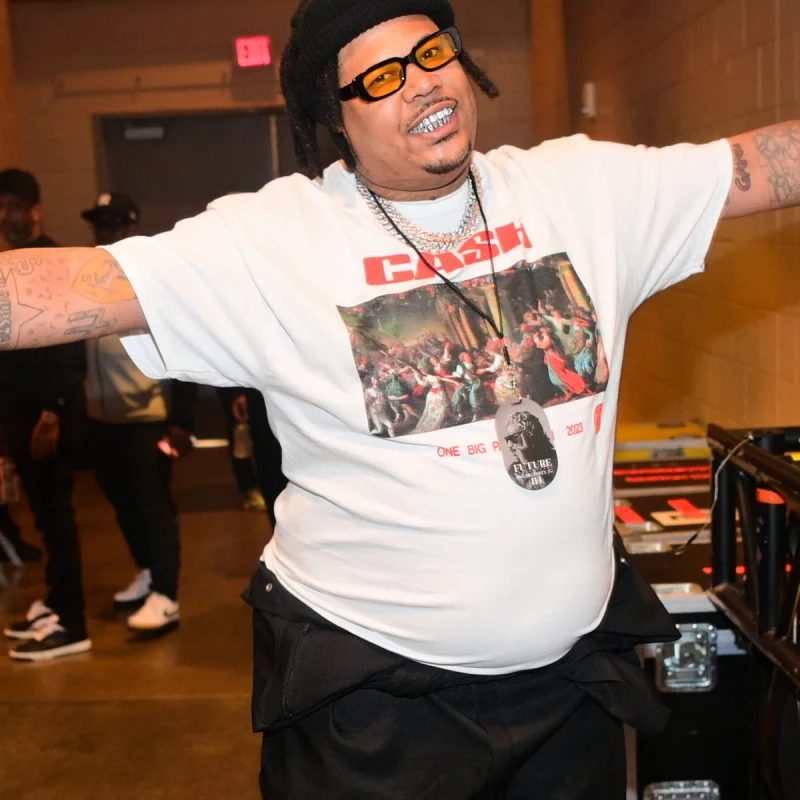
    It’s been a tough week for the FBG crew. Rico Deville Buice, better known as rapper FBG Casino and notably the older brother of Future, has been taken into federal custody following a massive drug bust in Georgia. Authorities reportedly seized a staggering 21 kilograms of fentanyl, making this one of the largest busts of its kind in the area.

    The Arrest: A Raid in Forest Park

    The arrest occurred on November 14, 2025, as part of a larger federal initiative called Operation Take Back America. Agents from the FBI, DEA, and local law enforcement targeted an Airbnb-style rental property in Forest Park, Georgia, south of Atlanta. The operation aimed to dismantle fentanyl trafficking networks.

    As agents approached the property, FBG Casino allegedly attempted to flee through a side door but was apprehended outside. At the time of his arrest, he was found with approximately $4,000 in cash. The scene inside the residence painted a grim picture of a large-scale drug operation.

    Evidence Uncovered at the Scene

    Inside the rental property, investigators discovered a substantial amount of fentanyl – 21 kilograms, to be exact. Alongside the drugs, authorities found roughly $380,000 in cash, a Glock 19 handgun, a money counter, a food sealer, and various packaging materials. Notably, at least one brick of fentanyl was stamped with a designer logo, a tactic reportedly used to disguise the dangerous substance.

    The cash was found in multiple locations, with $300,000 discovered in the kitchen and bathroom, and an additional $80,000 recovered from a bag believed to belong to Buice himself. This discovery has led to serious federal charges.

    Federal Charges and Bail Concerns

    FBG Casino, whose real name is Rico Deville Buice, now faces federal charges of conspiracy to possess fentanyl with intent to distribute. He is not alone; co-defendant David Estevan Montillo Diaz, 23, of Coachella, California, faces the same charges. This offense carries a severe penalty, with a mandatory minimum of 10 years and a maximum sentence of life in prison.

    Prosecutors are pushing for FBG Casino to be held without bail. They cite the overwhelming evidence, the gravity of the charges, and a significant risk of flight due to his alleged wealth and lifestyle, which reportedly includes luxury homes and cars. It’s important to remember that these are currently accusations, and both Buice and Diaz are presumed innocent until proven guilty.

    Why This Arrest Matters: Fentanyl and the Rap World

    This case has drawn particular attention because of how prosecutors are framing FBG Casino’s alleged involvement. While he has released music and reportedly worked as a studio manager, his claimed income of $2,166 as a studio manager seems starkly at odds with a lifestyle reportedly involving a $4 million home and multiple luxury vehicles. This discrepancy raises questions about the true nature of his business ventures.

    The raid is part of a broader investigation by a Homeland Security Task Force, suggesting this bust could be linked to a larger, possibly international, trafficking network with potential cartel connections. This could mean further investigations and potential arrests down the line.

    A Second Tragedy for the FBG Crew

    This arrest marks another significant blow to those associated with Future and the FBG crew this year. Earlier in 2025, rapper Young Scooter tragically passed away following a police chase that resulted from a false 911 call. The woman who made the call has since been arrested and charged. During the incident, Scooter attempted to evade authorities and sustained a fatal injury.

    What Happens Next?

    As of late November 2025, FBG Casino remains in federal custody, with the prosecution actively seeking to deny him bail. No plea has been entered yet, and a trial date has not been set. Given the ongoing federal investigation into transnational fentanyl trafficking, the situation remains fluid, and further developments are expected. We’ll be keeping an eye on this case and will provide updates as they become available.

    What are your thoughts on this massive fentanyl bust and FBG Casino’s arrest? Share your reactions in the comments below!
  • Future’s Brother FBG Casino Faces Federal Charges

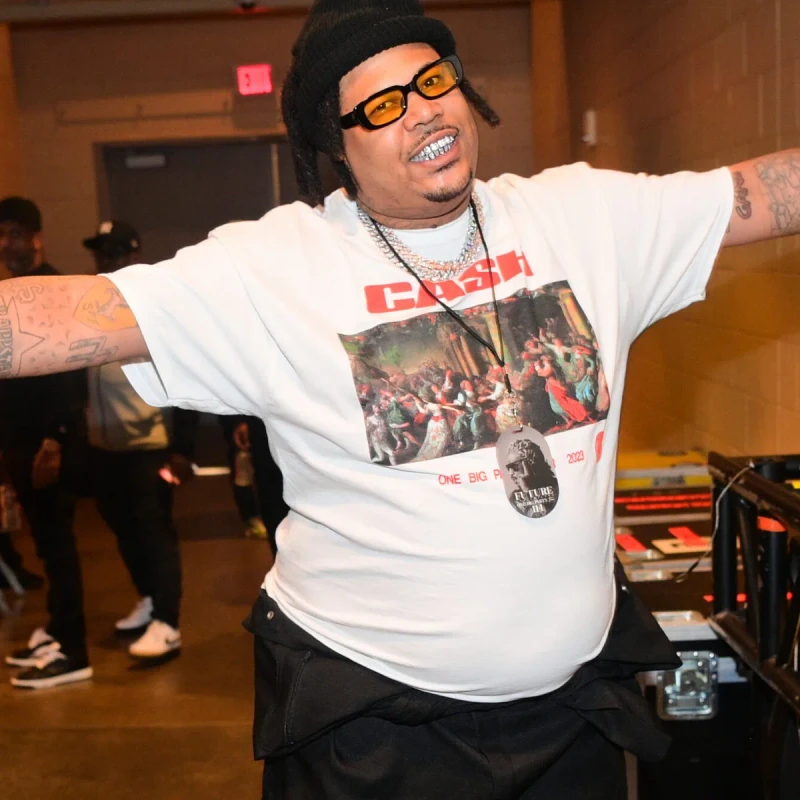
    While rapper Future has been navigating copyright issues and other relatively minor legal matters, his brother, FBG Casino, is facing a much more serious challenge. Reports indicate that FBG Casino, whose real name is Rico Deville Buice, was recently arrested during a joint FBI and DEA operation in Georgia.

    The Federal Raid and Charges

    The bust went down on Friday, November 14, when federal agents raided an Airbnb in Forest Park, Georgia. Inside, authorities reportedly discovered a massive 21 kilograms of fentanyl. Prosecutors allege that FBG Casino attempted to flee the scene when agents arrived. He was arrested along with a codefendant, identified as David Estevan Montillo Diaz.

    Adding to the findings, agents reportedly found a significant amount of cash: $300,000 in a cardboard box and another $80,000 stashed in a Goyard bag. Authorities suspect the luxury bag belongs to FBG Casino, citing an Instagram post where he’s seen holding a similar item. Upon his arrest, agents also found $4,000 in cash on his person.

    Allegations and Bail Concerns

    Prosecutors are questioning FBG Casino’s reported income of $2,166.67 per month as a studio manager. They’ve pointed to his former residence valued at $4 million and multiple luxury cars as evidence that his financial claims might be inaccurate. Given the gravity of the alleged crimes, prosecutors are pushing for FBG Casino to be held without bail, fearing he might flee.

    The circumstances surrounding the raid suggest a potential drug transaction was in progress. Prosecutors stated that “the totality of the circumstances here strongly suggest” that Diaz was selling drugs to FBG Casino at the time of the raid. This operation is seen as a significant disruption to deadly drug trafficking.

    The seizure of 21 kilograms of fentanyl and over $380,000 in drug proceeds is a direct hit to those who seek to poison our communities. — Paul Brown, FBI Atlanta Special Agent in Charge

    Paul Brown of the FBI Atlanta emphasized the task force’s success in disrupting dangerous drug operations and vowed that law enforcement will continue to pursue and hold accountable those involved in poisoning communities. As FBG Casino’s case unfolds, Future has maintained a relatively low profile this year, with his activities mostly involving rumors, appearances, and performances.

    What are your thoughts on this serious drug bust involving FBG Casino? Let us know in the comments below!

  • Mike Tyson’s Past Fentanyl Use Revealed

    Iron Mike Tyson is a name synonymous with power and dominance in the boxing world. But behind the legendary career, the champ recently shared a surprising and concerning detail about his past: he used fentanyl as a painkiller during the peak of his career. It’s a stark reminder of the hidden struggles athletes can face, even at the height of their success.

    A Painful Revelation

    In a candid interview on The Katie Miller Podcast, Tyson revealed his past use of the potent drug. “That fentanyl stuff, I’ve done fentanyl before in the late 90s when it first came here,” he explained. He clarified that he initially used it for pain relief, specifically for a toe injury. “It was for painkillers, it was a painkiller. I used to use it to patch on my toe,” he said.

    Tyson described the immediate effects, noting its similarity to heroin. “it was like heroin, once you take it off, wears off. You take the band-aid off, you start withdrawing and throwing up, just like if you were on heroin or something,” he recounted.

    The Dangers of Fentanyl

    Fentanyl is an extremely powerful synthetic opioid, often prescribed for severe pain management, especially for conditions like advanced-stage cancer or post-surgery recovery. However, it’s also a highly dangerous illicit street drug. A dose as small as two milligrams can be lethal, and it’s frequently mixed into other drugs without the user’s knowledge, making it incredibly risky.

    The former heavyweight champion emphasized that despite using the drug, he managed to avoid falling into addiction. He stated that he didn’t stay on it for too long, recognizing its narcotic nature and the potential it had to derail his career. “My friend told me cuz it’s brand new. I told my friend ‘Hey can I use this?’ because he was a commissioner. ‘Will I be able to use this?’ You know, no one ever heard of it. Then he looked it up and said ‘Mike, that’s a narcotic, you couldn’t use it.’ I didn’t know that. I thought of it as a painkiller.”

    A Close Call

    Tyson’s story highlights the pervasive nature of powerful painkillers, even within the demanding world of professional sports. His awareness and decision to stop using fentanyl, coupled with advice from a commissioner, likely saved him from a potentially devastating addiction that has tragically impacted many others.

    What are your thoughts on Mike Tyson’s revelation about using fentanyl? Share your perspective in the comments below!

  • Mike Tyson Used Fentanyl During Boxing Career

    Mike Tyson, a legend in the boxing world, has opened up about a surprising aspect of his past: his use of fentanyl during his active career. In a recent interview, the 59-year-old shared that he used the potent opioid as a painkiller, initially unaware of its illegal status for professional athletes.

    A Painkiller Past

    Speaking on The Katie Miller Podcast about his journey as a cannabis entrepreneur, Tyson detailed his experience with fentanyl in the late 1990s. He explained that he used it to manage pain, particularly for a toe injury. “It was like heroin, once it wears off and you take the Band-Aid off, you start withdrawing, throwing up, just like if you were on heroin or something,” Tyson recalled.

    Tyson admitted to using it “quite a few times.” He mentioned that a friend introduced it to him, and at the time, it was a relatively new substance that few had heard of. He believed it was simply a painkiller and didn’t realize it was a prohibited narcotic for athletes. He even suggested he would have continued using it if it had been permissible.

    Understanding Fentanyl’s Potency

    The DEA describes fentanyl as a powerful synthetic opioid, significantly more potent than heroin and morphine. Its use, even as a prescribed painkiller, carries substantial risks, and the CDC reported a high number of overdose deaths in the U.S. related to the drug in 2024.

    This revelation adds another layer to Tyson’s well-documented history of battling substance abuse. In his autobiography, “The Undisputed Truth,” he openly discussed fighting under the influence of marijuana and cocaine, even admitting to being a “full-blown cokehead” during certain periods of his career. He also tested positive for marijuana before a fight in 2000.

    A Look Back at Recent Events

    Tyson recently made headlines for his exhibition match against Jake Paul in November 2024, where he was defeated by unanimous decision after 8 rounds. His candidness about past struggles, including his use of fentanyl, offers a raw look into the challenges faced by athletes both inside and outside the ring.

    What are your thoughts on Mike Tyson’s revelation about using fentanyl? Share your reactions in the comments below.

  • DEA Operation Nets 617 Arrests in Sinaloa Cartel Takedown

    In a major victory against international drug trafficking, the Drug Enforcement Administration (DEA) has executed a massive, coordinated operation targeting the notorious Sinaloa Cartel. This unprecedented five-day action, spanning multiple continents, has resulted in hundreds of arrests and the seizure of vast quantities of deadly narcotics, marking a significant blow to one of the world’s most dangerous criminal organizations.

    Global Takedown: 617 Individuals Detained

    From August 25th to August 29th, federal agents conducted simultaneous raids and arrests across 23 domestic field divisions and seven international regions. This extensive operation led to the detention of 617 individuals linked to the Sinaloa Cartel’s operations. The scale of the arrests highlights the cartel’s vast global reach and the extensive planning required for such a coordinated law enforcement response.

    The individuals arrested range from street-level distributors to higher-ranking operatives responsible for coordinating international drug shipments. Each arrest disrupts the cartel’s capacity to distribute dangerous substances and move forward with its illicit activities.

    Massive Drug Seizures to Save Lives

    Beyond the arrests, the operation yielded an astonishing quantity of illegal drugs destined for American communities. Authorities seized 480 kilograms of fentanyl powder, a synthetic opioid known for its extreme potency. Additionally, agents confiscated 714,707 counterfeit pills containing fentanyl, along with 2,209 kilograms of methamphetamine and 7,469 kilograms of cocaine. These seizures represent millions of doses that will never reach the streets, potentially saving countless lives and mitigating the ongoing addiction crisis.

    Weapons and Financial Assets Confiscated

    The operation also targeted the cartel’s violent infrastructure and financial resources. Agents seized 420 firearms, removing dangerous weapons from criminal hands and weakening the cartel’s capacity for violence. Furthermore, nearly $13 million in currency and assets, including cash, real estate, and vehicles, were confiscated. These financial seizures strike at the heart of the cartel’s ability to fund its operations and fuel corruption.

    The Cartel’s Resilience and Global Network

    Despite this significant success, law enforcement officials acknowledge the immense challenge posed by the Sinaloa Cartel’s vast network. The organization is estimated to have tens of thousands of members and associates operating in at least 40 countries. Its decentralized structure and sophisticated international operations, including production facilities and distribution networks, make it highly resilient to disruption.

    Terrorist Organization Designation

    This operation follows the Trump administration’s designation of the Sinaloa Cartel as a foreign terrorist organization in February. This classification provides enhanced legal tools for prosecution and asset forfeiture, recognizing the cartel’s profound impact on national security and public safety through violence and intimidation.

    Ongoing Enforcement Efforts

    Federal agents emphasize that efforts to combat the Sinaloa Cartel are a year-round commitment. The recent five-day operation represents an intensification of ongoing investigative work, which includes surveillance, undercover operations, financial investigations, and international cooperation. These sustained efforts are crucial in gradually weakening the cartel’s operations and dismantling its global network.

    What are your thoughts on the DEA’s operation against the Sinaloa Cartel? Share your views in the comments below.

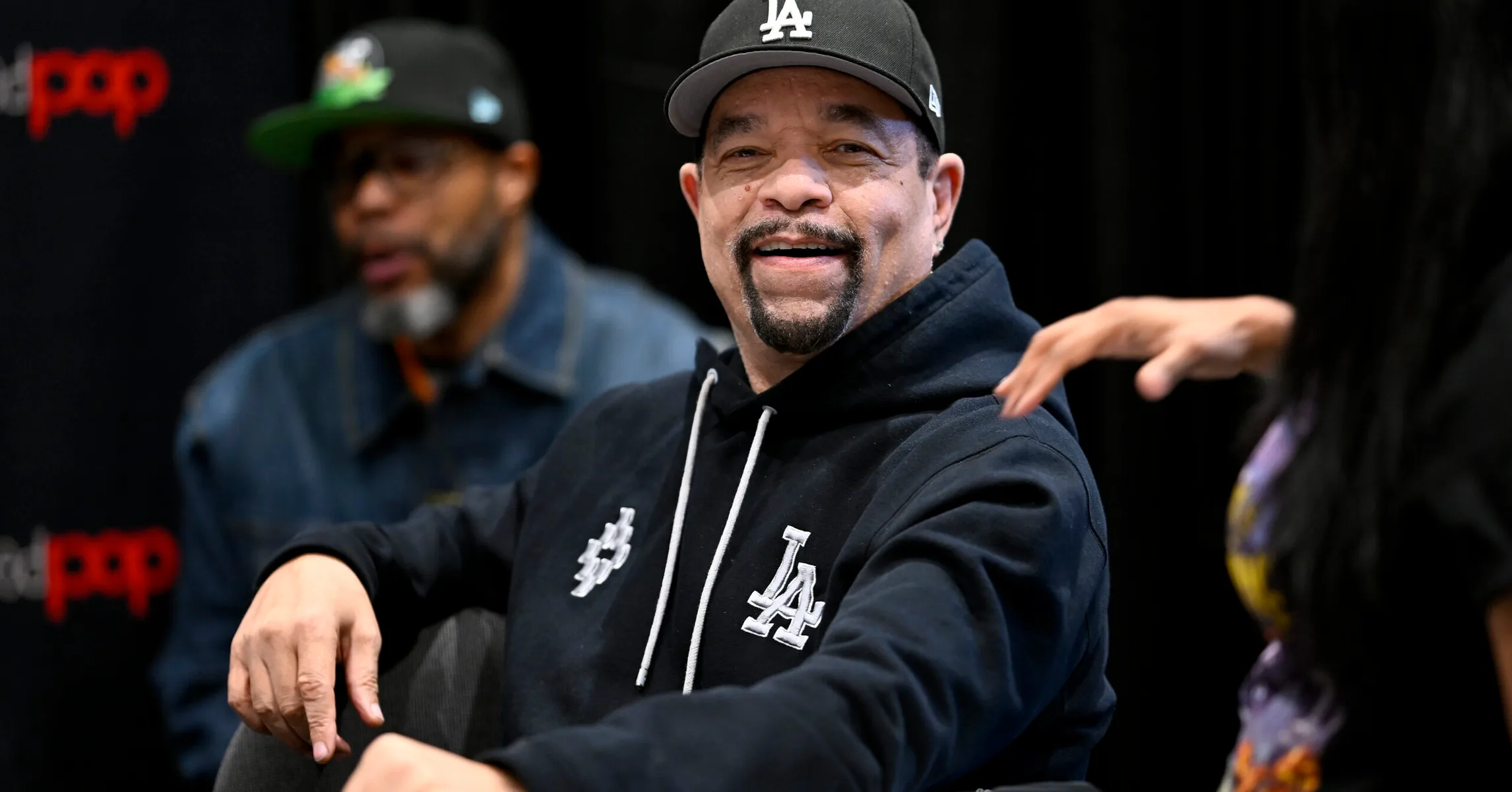
  • Ice-T Tackles Fentanyl Crisis in New Doc Special

    The opioid crisis, particularly the devastating impact of fentanyl, continues to claim lives, and legendary artist Ice-T is stepping up to shed light on this critical issue. He’s hosting a new two-hour special on A&E titled “Fame and Fentanyl,” which delves into how this potent synthetic drug has tragically affected celebrities in recent years.

    A Wake-Up Call from the Front Lines

    In a powerful teaser for the show, Ice-T reflects on the recent deaths of fellow artists Coolio and Michael K. Williams, both of whom tragically passed away from accidental fentanyl overdoses. Coolio died in 2022 at age 59, and Williams in 2021 at age 54. Their untimely deaths served as a stark reminder of fentanyl’s pervasive danger.

    “When it hit Coolio and it hit Mike, that was the nail in the coffin,” Ice-T shared in the trailer. “That’s when you go, ‘Yo, this sh*t‑‑‑ is real.’ You know what I’m saying? It’s real.”

    From Recreation to Tragedy

    Reflecting specifically on Coolio, Ice-T noted the rapper’s apparent good health, emphasizing that recreational drug use can quickly turn deadly. “Coolio was healthy. I know he didn’t want to die. He spoke freely about it, but that’s the thing. If you’re doing drugs recreationally, you’re not trying to take your own life. Recreation is a game, but this is no longer a game.”

    Ice-T also revealed a personal connection, sharing that he and Michael K. Williams had planned to collaborate before the actor’s death. “We had never worked together, but we had planned to,” he explained. “I hoped to work with him. When people die of fentanyl, it’s like they got hit by a car, like they got shot. This is a person who’s healthy, and tomorrow they’re outta there.”

    A Personal Stance and a Public Warning

    Ice-T himself stated that he does not use drugs, but he recognizes the widespread impact of fentanyl. “Everyone has someone in their life who has been affected by fentanyl. These are the narratives that everyone should be aware of,” he urged, highlighting the importance of public awareness.

    Understanding the Scope of the Crisis

    “Fame and Fentanyl” promises a deep dive into the crisis, featuring stories from families affected by the drug, alongside insights from experts and special agents. The special aims to shine a light on the devastating losses experienced by both celebrities and everyday families, hoping to prevent future tragedies.

    The special will cover stories of notable figures like Prince, Angus Cloud, Tom Petty, and Michael K. Williams, among others. “Fame and Fentanyl” premieres on A&E on Monday, August 25.

    What are your thoughts on Ice-T’s documentary special? How can we better raise awareness about the dangers of fentanyl? Share your views in the comments below!