
Tag: enterainment

  • Betty Boop’s Origins: A Complex Jazz Age Tale

    Get ready for a live-action Betty Boop! With Quinta Brunson set to bring the iconic flapper to life, the buzz around the beloved cartoon character is higher than ever. But this casting has also reignited a long-standing urban legend: Was Betty Boop actually based on a Black jazz singer? The answer, as it turns out, is a bit more nuanced than a simple yes or no.

    The Legend of ‘Baby Esther’ Jones

    The popular theory often points to Esther Jones, known as “Baby Esther,” a Black jazz singer who performed in Harlem during the Jazz Age. Taraji P. Henson even championed this idea during the 2021 BET Awards, suggesting that Betty Boop was a Black icon and that her style was appropriated. This narrative suggests that creators Max Fleischer and animator Grim Natwick may have borrowed heavily from Black culture, potentially erasing a significant piece of Jazz Age history.

    The idea is that Betty Boop’s signature “Boop-Oop-a-Doop!” scat and her overall persona were inspired by performers like Baby Esther. This has led many to believe that Betty Boop, as we know her, is fundamentally a creation rooted in Black artistry, even if not explicitly credited.

    A Legal Battle and Evolving Character

    The story gets more complex when we look at the 1932 lawsuit filed by white vaudeville singer Helen Kane against Betty Boop’s creators and Paramount Studios. Kane claimed her likeness and her signature “boop” scat were being used without authorization. However, this lawsuit inadvertently brought attention to Black jazz singers of the era.

    Managers of Black performers, including Baby Esther’s, testified that Kane herself might have been the one appropriating the jazz style. They argued that their clients had been using similar scatting techniques years prior. Ultimately, the studio won the case, but the legal proceedings highlighted the influence of Black musicians on the era’s entertainment landscape.

    Betty Boop’s True Origins: A Collective Influence

    So, who is Betty Boop actually based on? Mark Fleischer, the grandson of Max Fleischer, clarified in 2022 that while Betty Boop absolutely reflected the vibrant Jazz Age culture, she wasn’t modeled after any single performer. “The concept that Betty Boop grew out of and reflected the Jazz Age culture of her time is absolutely true, yet, as history shows, she was not modeled after any single performer,” he explained.

    He emphasized the importance of distinguishing the collective creativity of the Jazz Age from individual artists. Betty Boop is best understood as a composite, embodying the spirit and style of numerous artists and performers who contributed to that dynamic era. The influence of Black musicians and artists was undeniably central to the Jazz Age, and therefore, indirectly, to Betty Boop’s creation.

    Quinta Brunson: A Worthy Successor

    Given this complex history, Quinta Brunson’s casting feels particularly fitting. Her ability to embody characters with heart and nuance, as seen in “Abbott Elementary,” suggests she can capture the essence of Betty Boop while acknowledging the character’s multifaceted inspirations. It’s a chance to celebrate a character born from a rich cultural moment, acknowledging all the influences that shaped her.

    What do you think about Betty Boop’s origins? Share your thoughts in the comments below!
  • Erica Tazel Stands by Fiancé Russell Andrews Amid ALS Battle

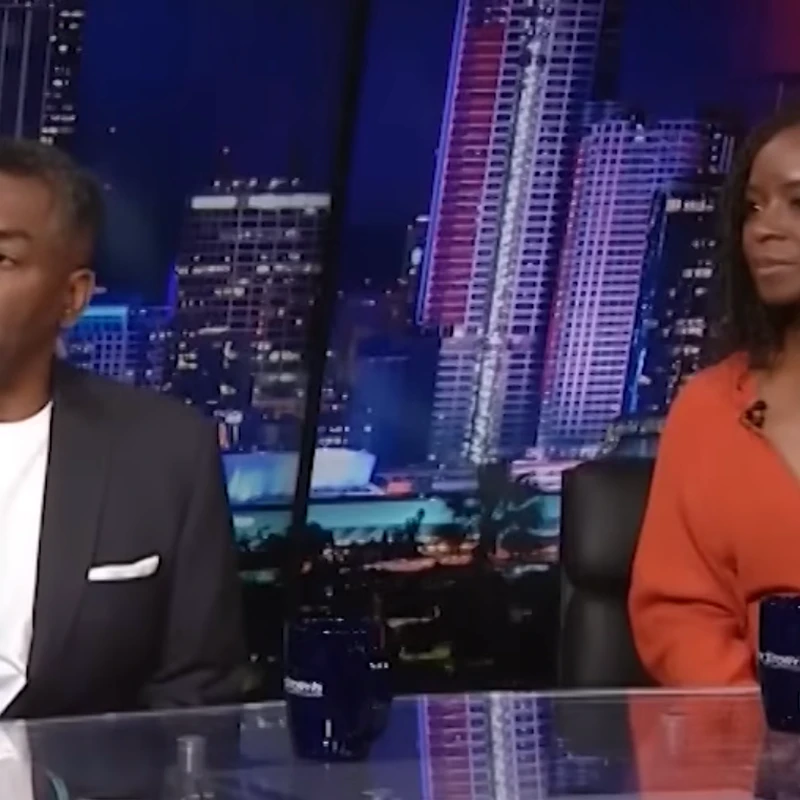
    In a powerful display of love and commitment, actress Erica Tazel is standing firmly by her fiancé, veteran actor Russell Andrews, as he navigates a challenging health battle. Andrews recently revealed his diagnosis with Amyotrophic Lateral Sclerosis (ALS), also known as Lou Gehrig’s disease, and Tazel’s unwavering support is truly inspiring.

    A Public Revelation During ALS Awareness Month

    The couple chose to share their story during ALS Awareness Month, a time dedicated to shedding light on this devastating neurodegenerative disease and the profound impact it has on individuals and their families. Andrews, 64, made the emotional announcement during an interview on CNN, with Tazel by his side, now serving as his caregiver.

    Their decision to speak openly about their experience is particularly significant for many Black families, where conversations about chronic illness and caregiving often remain private. Andrews and Tazel’s openness brings much-needed visibility to a reality many face: the immense emotional, physical, and financial strain that serious illness can place on loved ones.

    Navigating the Symptoms and Diagnosis

    Andrews, known for his roles in “Better Call Saul,” “Straight Outta Compton,” and “Insecure,” recalled initially dismissing early symptoms. During the COVID-19 pandemic and subsequent industry shutdowns, he experienced muscle twitches and weakness, attributing them to stress. It wasn’t until after the Hollywood strikes, when he regained health insurance, that he sought medical attention and was referred to a neurologist.

    Tazel also noticed subtle changes before the official diagnosis. “The way he walked,” she shared during the interview, “there were just the subtle little things.” Despite the devastating news, Tazel’s response was one of profound love and commitment.

    At least now we know what it is. I still want to be your wife. — Erica Tazel

    Unconditional Love and Support

    Tazel’s declaration has deeply resonated online, touching viewers with its honesty about partnership, vulnerability, and unconditional love. Andrews also highlighted the crucial support he’s found through the ALS Network, a nonprofit organization dedicated to providing advocacy, resources, and care for those affected by ALS.

    He shared in a statement released through the ALS Network, “What I didn’t expect was the depth of connection and support.” Their openness contributes to a growing movement of public figures candidly discussing health struggles, helping to break down stigmas surrounding disability and chronic illness, especially within Black communities where caretaking is often normalized but rarely discussed openly.

    A Testament to Resilience

    Russell Andrews and Erica Tazel are allowing the world to witness not only the profound uncertainty that accompanies an ALS diagnosis but also the incredible tenderness, resilience, and unwavering commitment required to face such a challenge together. Their story is a powerful reminder of the strength found in love and partnership.

    What are your thoughts on Erica Tazel and Russell Andrews’ courageous decision to share their story? Let us know in the comments below!

  • Reginald Hudlin on Black Panther’s Legacy

    When you see kids dressed as Black Panthers and characters from Wakanda this Halloween, give a nod to Reginald Hudlin. This acclaimed writer, producer, and director, known for classics like “House Party” and “Boomerang,” penned the seminal “Black Panther” comic series with the next generation of Black dreamers firmly in mind.

    Creating Characters for All Children

    Hudlin shared that a primary motivation behind his writing was ensuring all children could see themselves reflected in the stories. He specifically highlighted the creation of Shuri, T’Challa’s brilliant, STEM-loving sister, as an example of wanting to inspire both his son and daughter, who could both dress as Black Panther for Halloween.

    His comic series laid the groundwork for the culturally transformative $1.3 billion “Black Panther” film, catapulting director Ryan Coogler and stars like Chadwick Boseman, Michael B. Jordan, and Lupita Nyong’o to global superstardom. Now, with the release of his “Black Panther Omnibus,” Hudlin revisits Wakanda with fresh storylines, including T’Challa’s marriage to Storm and a United States fractured by civil war.

    Wakanda: A Symbol of Strength and Morality

    While Wakanda is a fictional nation, Hudlin emphasizes that its stories hold profound real-world symbolism. “They’re the global leaders, not only with technology, but morally,” he stated, referring to Wakanda’s advanced society and its history of resilience against invasion. He stressed the importance of understanding the ‘land’ to understand the ‘man’ – the leader.

    Hudlin’s intentionality extends to portraying the power of Black masculinity and leadership. He drew parallels to his documentaries like “The Black Godfather” (about Clarence Avant) and the film “Marshall” (about Thurgood Marshall), highlighting diverse examples of Black greatness. “You can be great in a lot of different ways,” he noted, “but here’s all this greatness to inspire Black men… because you don’t get great Black men without great Black women raising them.”

    Encouraging Bold Dreams in Uncertain Times

    “Black Panther,” for Hudlin, was another effort to broaden cultural perceptions of what Black people can be. “Like, here’s all the things we can be. Don’t be afraid to dream.” This message is particularly vital for Black creatives today, navigating a shifting job market and facing political agendas that sometimes seek to silence Black history.

    Hudlin firmly believes that Blackness is far from “out of style” in media. He pointed to the success of projects in 2025, like Keke Palmer’s movie “Just One of Them Days,” Kendrick Lamar’s Super Bowl performance, and shows like “Sinners” and Mara Brock Akil’s “Forever,” as proof. “When you deliver the dope product, people are devouring it,” he asserted. “We are more in style than ever.”

    • Wakanda represents technological advancement and moral leadership.
    • Black Panther stories inspire dreams and showcase diverse Black excellence.
    • Black culture remains highly relevant and popular globally.
    • Creatives must address contemporary issues and desires.

    While acknowledging challenges in corporate America’s relationship with Black content, Hudlin remains optimistic about the economic viability and broad appeal of Black-created culture. He concluded by emphasizing the timeless advice of Miles Davis: “Jazz is the music of the day.” For creatives, the question remains: “Are you saying what needs to be said right now?” And the answer, he believes, is a resounding yes, with global demand for Black voices stronger than ever.

    What does the legacy of ‘Black Panther’ mean to you? Share your thoughts on inspiring Black dreamers in the comments below!