
Tag: Engineering

  • Birmingham Students Honored for Engineering Prowess

    In a wonderful display of support for the next generation of innovators, young engineering students from Birmingham, Alabama, have been celebrated for their academic excellence and leadership skills. This recognition came from two esteemed organizations: The Birmingham Chapter of The Links, Incorporated, and its members from the Society of Women Engineers (SWE).

    This initiative highlights the ongoing commitment to broadening opportunities for girls and underrepresented students in STEM fields. The students were honored at a special ceremony dedicated to celebrating middle and high schoolers who are actively pursuing engineering and technology education across Alabama.

    Celebrating Excellence in STEM

    The honorees were selected based on their outstanding performance in academics, their innovative projects, and their contributions to the community. This recognition is a testament to their hard work and dedication to fields crucial for future technological advancement.

    Andrea Montgomery, a member of The Links and a mechanical engineer, emphasized the importance of community in STEM. ‘The importance of the NSBE program is that it’s family, it’s a community, it’s a group of people who look like you,’ she shared, highlighting the impact of seeing relatable role models in these professions.

    Inspiring Future Innovators

    The students recognized this year have been actively involved in a variety of engineering-focused activities. These include robotics competitions, leadership academies, and mentorship programs, all designed to foster a deeper engagement with science and technology.

    The Birmingham Chapter of The Links, Incorporated, honored 28 students from Carver High School, Ramsay High School, and Parker High School during the National Society of Black Engineers (NSBE) Junior Honors and Awards Day. This event underscores the growing investment by local school systems and community partners in STEM education.

    Addressing Underrepresentation in Engineering

    • The NSBE, founded in 1950, is one of the oldest advocacy groups for women engineers in the U.S.
    • National studies show women remain underrepresented in many engineering disciplines.
    • Programs like SWE aim to bridge this gap through scholarships and networking.
    • Honoring students early builds confidence and long-term interest in STEM careers, especially for girls.

    Organizations like the Society of Women Engineers are actively working to combat these disparities through scholarships, networking opportunities, and outreach programs. By celebrating these young scholars, Birmingham is reinforcing its commitment to building strong educational pathways into science and technology industries across Alabama, encouraging more young women and underrepresented students to pursue fulfilling careers in engineering and beyond.

    What are your thoughts on the importance of recognizing young STEM talent? Share your insights in the comments below!

  • Black Woman Engineer Invents Automated Double Dutch Machine

    Remember the distinct sound of beaded ropes slapping against pavement, the rhythmic chants, and the thrill of jumping into the middle of a Double Dutch game? For many Black girls, Double Dutch was more than just a game; it was a cultural cornerstone, fostering rhythm, coordination, community, and creativity. Now, a Black woman engineer is ensuring this cherished tradition continues to evolve with a groundbreaking invention.

    From Childhood Dream to Automated Reality

    Dr. Tahira Reid Smith, a mechanical engineering professor at Penn State, has unveiled what is believed to be the world’s first automated Double Dutch machine. Dubbed ‘Jump Dreams,’ this innovative device was recently showcased during Philly Girls Jump’s Double Dutch Day celebration in Philadelphia. The invention is the culmination of a decades-long dream, tracing back to Reid Smith’s own childhood.

    Growing up in the Bronx as an only child, Reid Smith harbored a vivid imagination and a passion for jumping rope. At just 8 years old, she sketched an idea for a machine that could keep the ropes turning continuously, allowing anyone to jump without needing human rope-turners. This childhood vision has now transformed into a remarkable reality.

    Blending Culture, Nostalgia, and STEM

    Dr. Reid Smith emphasizes the cultural significance of Double Dutch, stating, ‘Jumping double Dutch is like being a part of a club. It’s culture. It’s a part of our history. It’s part of our heritage.’ This sentiment resonates deeply with generations of Black women who grew up with Double Dutch as a central part of their social and recreational lives, particularly in urban communities where it evolved into both a pastime and a competitive sport.

    The ‘Jump Dreams’ machine ingeniously merges this cultural nostalgia with cutting-edge engineering. The app-controlled prototype features mechanized arms that swing the ropes, allowing participants to jump in the center. Attendees at the Philly event, ranging from children to adults, eagerly lined up to experience the machine firsthand, with some traveling from as far as Atlanta.

    Future Visions and Community Impact

    While participants noted that jumping with the automated system required an adjustment period compared to human turners, the potential was widely recognized. Dr. Reid Smith acknowledges that the current prototype is a step in a larger development process. Future versions are planned to better accommodate beginners and jumpers with varying skill levels.

    Through her company, Jump Dreams Inc., Reid Smith aims to officially launch an updated design in 2027. Her long-term vision extends beyond mere nostalgia; she hopes the machine will be integrated into schools, youth programs, and recreation centers. This could introduce a new generation to a cherished tradition, reinforcing its place in Black communities for decades to come.

    Ultimately, Dr. Reid Smith’s invention is a powerful symbol of Black innovation. It demonstrates that groundbreaking ideas can emerge from anywhere, even from the childhood dreams of a young girl in the Bronx imagining a way to keep the ropes turning forever. It’s a testament to the enduring spirit of creativity and cultural preservation.

    What do you think of Dr. Tahira Reid Smith’s ‘Jump Dreams’ machine? Does it capture the spirit of Double Dutch for you? Share your thoughts and memories in the comments below!

  • TSU’s $50M Engineering Hub: A Game-Changer for HBCU STEM

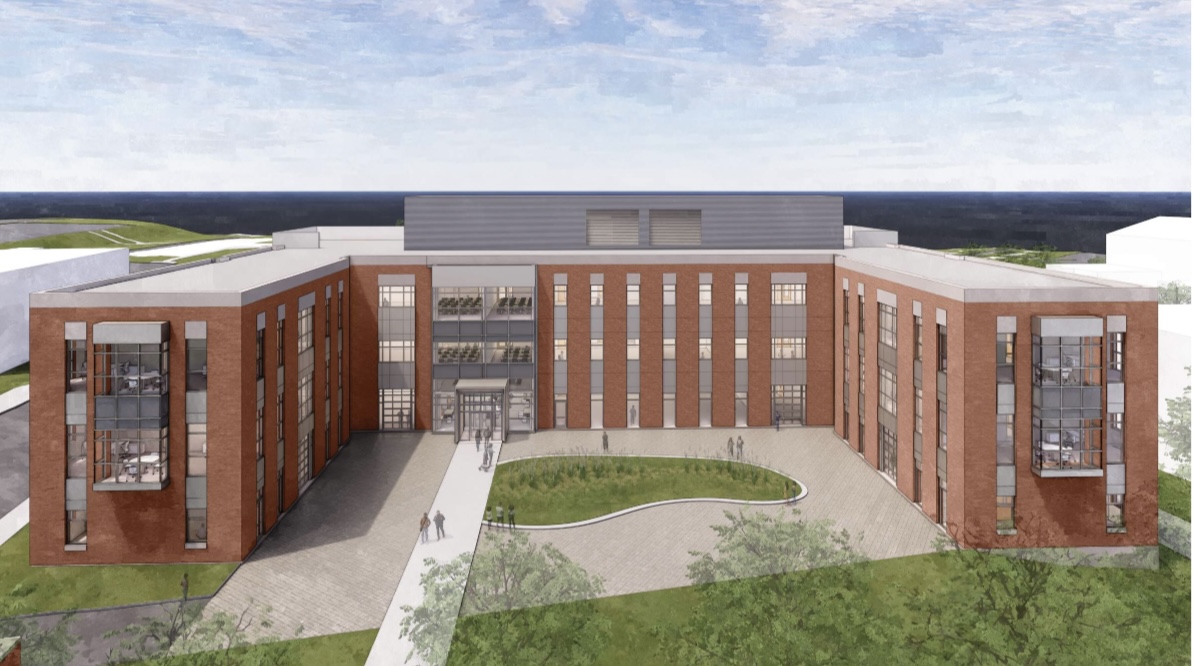
    Get ready for some exciting news from Tennessee State University (TSU)! They’re gearing up to build a brand-new, $50 million engineering hub right on their Nashville campus. This isn’t just any building; it’s a state-of-the-art facility designed to supercharge hands-on learning, boost research capabilities, and forge stronger connections with industry leaders. Imagine a place where innovation thrives and students get the cutting-edge experience they need to succeed!

    What’s Inside This Impressive New Hub?

    This massive project, spanning nearly 70,000 square feet, has already received the green light from the Tennessee State Building Commission. Construction is set to kick off later this year, with the grand opening anticipated for summer 2027. Once completed, it will bring TSU’s Engineering and Applied & Industrial Technology programs together under one roof.

    Think consolidated classrooms, advanced computer labs, and over 30 specialized research and teaching labs. TSU is really pulling out all the stops to create an environment that fosters discovery and practical application. This move is a significant step in enhancing the educational experience for all engineering students.

    Cutting-Edge Labs for Future-Ready Careers

    The plans highlight three flagship spaces that are particularly exciting: a Future Energy Lab, an Additive Manufacturing Lab, and a Drone Flight & Air Traffic Lab. These specialized areas are designed to prepare students for the rapidly evolving job market in fields like advanced energy systems, cutting-edge fabrication techniques, and the growing world of autonomous flight operations.

    The entire complex is being meticulously designed by Melvin Gill & Associates and Bauer Askew Architecture, working hand-in-hand with TSU’s own Planning, Design, and Construction team. The focus from the ground up is on collaboration, fostering innovation, and ensuring sustainability is a core principle.

    A Boost for Students and the City of Nashville

    Nashville is booming, especially in tech, healthcare, and advanced manufacturing, making it one of the South’s fastest-growing metros. This new engineering hub positions TSU perfectly to strengthen its ties with local employers. It means undergraduates, master’s students, and doctoral researchers will have access to the latest tools and technologies, directly translating into skills that meet real-world workforce demands.

    TSU is all about preparing students to be ‘future-ready.’ This means seamlessly blending classroom learning with project-based work, internships, and research that tackles actual challenges. This initiative builds on recent successes for TSU Engineering, including new funding aimed at improving smart mobility and safety research within Nashville, showcasing a commitment to applying academic expertise to city-wide solutions.

    Why This Matters for HBCUs

    • **STEM Capacity at Scale:** Investments like TSU’s serve as a powerful model for Historically Black Colleges and Universities (HBCUs) to expand vital lab spaces, attract more research grants, and grow their graduate programs.
    • **Hands-On Learning Focus:** The emphasis on specialized labs in areas like energy, additive manufacturing, and drone systems equips students with portfolio-ready skills before they even enter the job market.
    • **Industry Pipeline:** With Nashville’s rapid growth, this hub solidifies a crucial talent pathway, connecting TSU graduates with regional and national employers.
    • **Recruitment Advantage:** A modern, dedicated facility like this is a significant asset for attracting prospective students, highlighting the extensive research and tech opportunities available at an HBCU.

    The Timeline and the Big Picture

    University leaders are framing this project as a strategic move to foster interdisciplinary collaboration and ensure graduates are perfectly aligned with industry needs. Following the August 15th approval, construction is slated to begin in 2025, with the goal of opening the doors in summer 2027, assuming standard construction timelines.

    Ultimately, TSU’s $50 million engineering hub is a forward-thinking investment that sends a clear message about the future of STEM education at HBCUs. By providing cutting-edge labs, expanded research opportunities, and deeper industry connections, this project is set to significantly accelerate student success, faculty research, and positive regional impact for years to come.

    What are your thoughts on TSU’s new engineering hub? How do you see it impacting STEM education at HBCUs? Share your insights in the comments below!

  • High-Paying Majors & HBCUs: Your Career Guide

    In today’s economy, where student debt is a major concern and career paths can seem uncertain, selecting the right college major is more critical than ever. Your degree choice influences not only your first job but also the long-term trajectory of your career, financial stability, and overall social mobility. While passion remains vital, potential salary and job security are increasingly important factors in college decisions.

    Degrees That Pave the Way to Wealth

    Not all degrees offer the same path to financial success. While wealth accumulation isn’t solely tied to a major, certain fields consistently lead to high-paying roles. Data suggests that engineering degrees are a strong indicator, with 11% of millionaires having studied some form of engineering. The technical and problem-solving skills developed in these programs are highly transferable and crucial for innovation and entrepreneurship in high-demand sectors like technology, energy, and infrastructure.

    Other lucrative degrees include MBAs (12.1% of high-net-worth individuals), economics (8.2%), and law (4.7%). These fields equip graduates with essential skills for leadership, strategy, and financial management, preparing them to navigate complex corporate environments and drive organizational change.

    The CEO’s Common Denominator: Degrees for Leadership

    While the path to becoming a CEO isn’t solely determined by a major, certain degrees provide a strong foundation. Engineering, economics, and business administration are frequently held by CEOs. Business administration, in particular, offers direct relevance to leadership, strategy, and financial management, teaching students to think on both macro and micro levels. Economics degrees foster analytical thinking and efficiency, crucial for navigating corporate challenges and driving change.

    Engineering degrees also contribute to a CEO’s perspective by focusing on scalability and technological possibilities, helping leaders identify market opportunities and drive innovation.

    Degrees Shaping the Future: Earning Potential and Job Security

    For students prioritizing earning potential and job security, fields like computer science, finance, economics, and health care administration stand out. Computer science is a leading choice due to the growth of AI and tech companies, boasting a 23% job growth projection through 2032. Finance and economics majors translate insights into strategic business decisions, commanding above-average median salaries of $96,220 and $113,940, respectively.

    Health care administration is also rapidly advancing due to increasing public health concerns, offering significant career growth potential. With a $113,940 median salary and a 28% growth projection by 2032, this major ensures long-term career viability. Selecting a major that aligns with industries poised for future growth, such as automation, digital transformation, sustainability, and advanced healthcare, is key to long-term value.

    High-Paying Majors at HBCUs

    HBCUs have a rich history of producing leaders and innovators. Many popular HBCUs offer programs that consistently lead to high-paying careers. Here are some top options:

    • **Engineering:** Graduates often start with salaries between $70,000–$80,000, with strong long-term earning potential into the six figures. HBCU engineering alumni are making significant contributions in aerospace, energy, construction, and tech. (Recommended HBCUs: North Carolina A&T, Howard University, Florida A&M)
    • **Computer Science:** Prepares graduates for roles in software development, data analytics, and tech entrepreneurship. CS graduates from HBCUs often compete successfully in the booming tech industry, with average starting salaries around $74,000. (Recommended HBCUs: Howard, Morehouse, Spelman)
    • **Finance & Economics:** Strong programs at many HBCUs lead to careers in banking, asset management, consulting, and government policy, with high mid-career salaries and potential for executive or entrepreneurial roles. (Recommended HBCUs: Howard University, Xavier University)
    • **Business Administration:** A versatile major leading to careers in marketing, operations, project management, and human resources. Many graduates pursue MBAs, potentially earning over $150,000 annually in leadership positions. (Recommended HBCUs: Hampton University, Clark Atlanta University)
    • **Health & Pre-Med:** HBCUs are recognized for producing a high number of African American graduates entering medicine, dentistry, or pharmacy, all offering six-figure salaries. Other options include nursing (starting around $65,000 with advancement opportunities) and public health. (Recommended HBCUs: Xavier University of Louisiana)

    What major are you considering or what advice do you have for students choosing their path? Share your thoughts in the comments below!