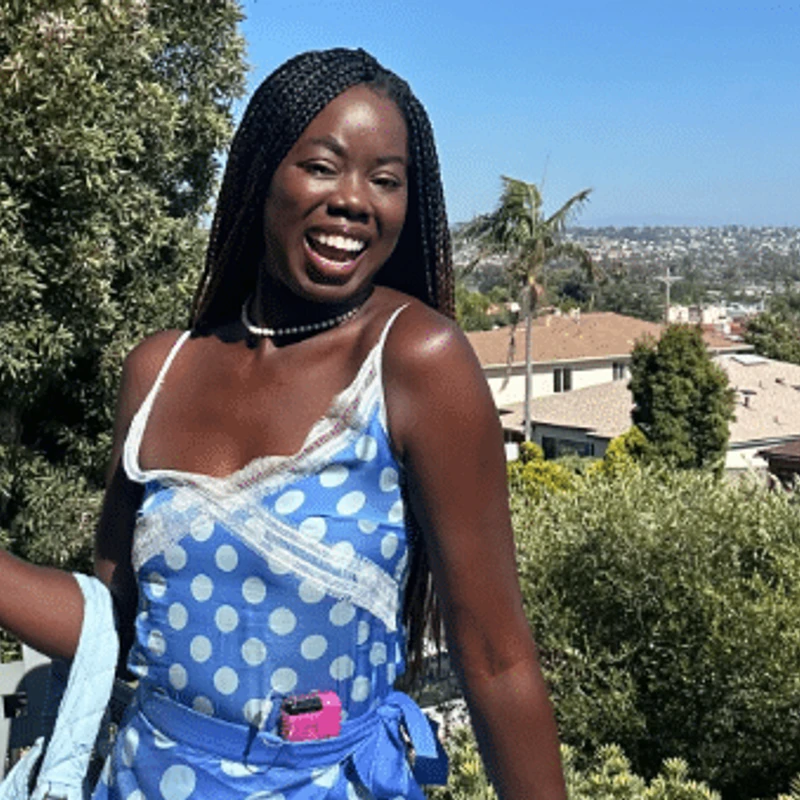
Imagine being a teenager, living and breathing for basketball, when suddenly your life takes an unexpected turn. That’s exactly what happened to Danica Collins, whose passion for sports was interrupted by a Type 1 diabetes diagnosis at just 15 years old.
An Unexpected Diagnosis
What started as a doctor’s visit for an ankle injury during a tournament quickly revealed a much more serious issue. Danica’s blood sugar levels were alarmingly high, soaring into the 700s. The news hit hard: “I just remember them coming and they were like, ‘Hey, like your ankle’s good, but you need to go to the hospital.’” This was the beginning of a life-changing journey.
Hospitalized for days, Danica struggled to grasp the reality of managing a chronic illness. Her initial reaction was one of disbelief and frustration: “I don’t have time for this. Like, I don’t [have] cancer. Can we deal with this later? I want to go to my game.” She had no idea how profoundly her life had changed forever.
Family Support and Sports Challenges
Despite the overwhelming diagnosis, Danica was determined to return to the basketball court. Her family became her rock, with her parents and younger sister rallying around her, embodying the mantra, “Look, we can do hard things.” This support system was crucial.
Playing sports presented unique challenges. The adrenaline of games caused her blood sugar to spike dramatically, often reaching 300 or 400, only to plummet dangerously low later at night. Her dad’s nightly ritual of checking her blood sugar at 3:00 AM highlights the constant vigilance required, especially without the modern technology like continuous glucose monitors (CGMs) available today.
Finding Community and Purpose
Years later, a chance encounter in Chicago changed everything. Meeting another woman living with diabetes was a revelation for Danica, who had felt isolated on her journey. This connection led her to a diabetes meet-up, a moment she describes as her “first no-brainer moment.” She finally found the “unique community in the diabetes space” she had been missing.
This experience sparked a new mission. Danica started sharing her life online, creating a platform that has grown into a thriving community of over 25,000 people worldwide. She realized her calling was to prevent others from feeling the same loneliness she experienced.
Advocating for Realities and Holistic Care
Danica’s authenticity has led her to be featured in national PSAs, like the Diabetes Research Institute Foundation’s “Our Best Shot.” She aims to showcase the daily realities of diabetes management and emphasize the critical need for ongoing research. While technology has advanced, she stresses that it’s “not perfect” and managing diabetes is a “24/7 constant need.”
As a scientist and certified health coach, Danica brings a unique perspective. She champions holistic care, recognizing that true well-being extends beyond doctor’s visits to include diet, movement, and stress management. She also advocates for greater representation of underrepresented communities in research, stating, “If we’re not having a seat at the table in these studies, some of these findings might not work for us.”
Words of Hope for the Newly Diagnosed
For anyone newly diagnosed, Danica’s message is one of empowerment: “Yes, it’s going to be hard… But with the tools and active measures and thinking of things holistically, you can achieve, and you can lead this healthy life.” If she could speak to her 15-year-old self, she’d say, “It’s okay to be different. Being different is what makes you powerful. It gets easier. There’s hope.”
Through her platform, Danica the Diabetic, and her ongoing media projects, Danica continues to normalize diabetes representation, proving that life with this chronic illness is “messy, it’s beautiful, it’s real,” but most importantly, “it’s full of hope.”
What message would you give to your younger self if you were facing a similar diagnosis? Share your thoughts and experiences in the comments below!
