Tag: Department of Homeland Security

  • DHS Considers Halting Airport Processing in Sanctuary Cities

    The U.S. Department of Homeland Security (DHS) is reportedly considering a significant and controversial policy shift: halting the processing of international travelers at airports located in so-called “sanctuary cities.” This idea is reportedly under review amid ongoing tensions between federal authorities and local jurisdictions that limit cooperation with federal immigration enforcement.

    A Potential Response to Local Policies

    Newly appointed Homeland Security Secretary Markwayne Mullin confirmed that the proposal is being considered. He stated that the idea is a potential response to cities that refuse to enforce federal immigration policies. “If cities are going to say they’re not going to enforce immigration policies, it doesn’t make sense for us to process international travelers through that city,” Mullin explained on April 7.

    While Mullin emphasized that no final decision has been made, the mere consideration of this policy highlights the escalating standoff over immigration enforcement. It’s one of several options being discussed as Congress remains deadlocked on funding for border and immigration agencies.

    Widespread Implications for Travel and Trade

    The potential consequences of such a policy could be massive. Major U.S. cities like New York City, Los Angeles, Chicago, and San Francisco are home to some of the nation’s busiest international airports. Suspending customs processing in these hubs could severely disrupt global travel, tourism, and international trade.

    The timing is also notable, with the 2026 FIFA World Cup set to draw millions of international visitors across North America. This proposal could impact major international events and strain diplomatic relations.

    Differing Perspectives on the Proposal

    Critics argue that halting processing would create logistical chaos and damage international relationships. Supporters, however, might see it as a way to pressure local governments into greater cooperation with federal immigration laws. For now, the plan remains a possibility, underscoring the deep divisions in the ongoing immigration debate.

    What do you think about the DHS’s potential plan to halt airport processing in sanctuary cities? Share your thoughts in the comments below!
  • ICE Detention Center Conditions Slammed

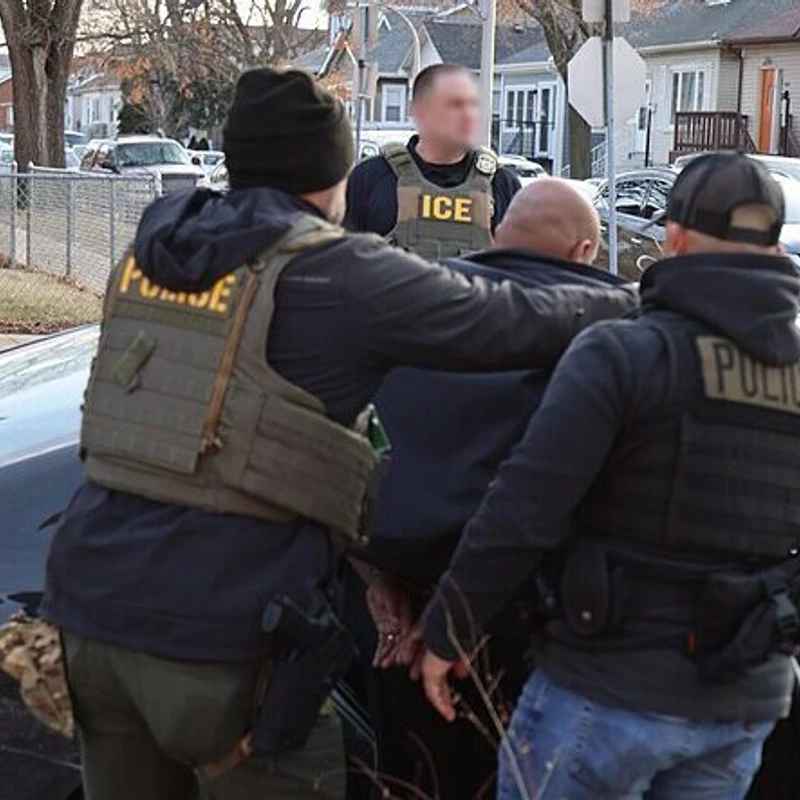
    Imagine being held in a place described as worse than prison, where basic needs like food and healthcare are scarce, and the environment is unsanitary and dangerous. This is the grim reality for thousands of detainees at the Associated Press’s report on ICE’s Camp East Montana in El Paso, Texas, the country’s largest detention center.

    A Disturbing Picture of Neglect

    Data reveals a shocking pattern: within the first five months of opening in August 2025, staff made at least one 911 call per day from the facility. These calls paint a harrowing picture of overcrowding, medical neglect, malnutrition, and severe emotional distress. Detainees struggle with inadequate healthcare and live in fear of security guards.

    One former detainee, Owen Ramsingh, who spent weeks at Camp East Montana before being deported, described it as “1,000% worse than a prison.” He recounted experiences of filthy living conditions, insect infestations, inedible food leading to fights over stolen portions, and even overheard security guards taking bets on detainee suicides. Ramsingh drew a chilling comparison to Dachau, a Nazi concentration camp, highlighting the severity of the alleged abuses.

    Suicides and Unreleased Reports

    The issue of suicide attempts and deaths within the facility is particularly alarming. Reports include a Cuban man’s death ruled a homicide by asphyxia after attempting self-harm, and a Nicaraguan man dying by suicide shortly after detention. At least six other suicide attempts have been reported. Adding to the concern, an ICE inspection reportedly found the facility violated roughly 60 federal standards for immigration detention, yet the report was never released.

    Even U.S. Democratic Rep. Veronica Escobar, who represents El Paso, has visited the facility and called for its closure. She stated, “This facility should not be operational. It feels like this contractor is reinventing the wheel, and people are losing their lives in their experiment.” Critics argue that the lack of transparency and the severity of the reported conditions are unacceptable.

    Camp East Montana was 1,000% worse than a prison. Every day felt like a week. Every week felt like a month. Every month felt like a year. — Owen Ramsingh, Former Detainee

    These reports paint a disturbing picture of the conditions within ICE detention centers. What steps do you believe should be taken to address these alleged inhumane conditions? Share your thoughts in the comments below.

  • States Push to Ban Masked Federal Agents, Police

    A growing number of states are taking a stand against law enforcement officers, including federal agents, wearing masks while on duty. Citing concerns that face coverings can encourage aggressive behavior and are “deeply un-American,” lawmakers are introducing bills to ban the practice.

    Pushback Against Masked Agents

    This movement comes partly in response to court rulings that have blocked similar laws. For instance, a federal judge recently halted a California law that would have prohibited federal immigration agents from covering their faces, though it required clear identification. Democratic-led legislatures in states like Oregon and Virginia are spearheading efforts to ban masked agents, particularly those involved in immigration enforcement.

    The criticism stems from incidents where masked federal agents have been accused of aggressive actions, sometimes resulting in the deaths of U.S. citizens. Proponents of the ban argue that transparency is crucial and that officers should be identifiable at all times.

    Washington State Leads the Way

    Washington State has taken decisive action. Democratic Gov. Bob Ferguson signed Senate Bill 5855, which immediately bans masks for federal agents, as well as state and local police. Ferguson, speaking at El Centro de la Raza in Seattle, emphasized the importance of advocacy and passing such laws for future generations.

    The bill includes exceptions for necessary personal protective equipment, helmets, SWAT gear, and religious face coverings. Importantly, it also empowers individuals detained by illegally masked officers to file lawsuits, potentially leading to monetary damages. Sen. Javier Valdez, a sponsor of the bill, called it one of the year’s most significant pieces of legislation, highlighting the negative impact of federal agents’ presence, like those from U.S. Immigration and Customs Enforcement (ICE), in Washington.

    Opposition and Concerns

    However, the push to ban masked officers is not without its critics. Officials from the Department of Homeland Security (DHS) have labeled such legislation as “irresponsible, reckless and dangerous,” vowing not to abide by what they deem unconstitutional bans. They argue that masks can be necessary for officer safety and operational effectiveness.

    Republican lawmakers have also voiced objections, suggesting that bans could negatively impact how the public perceives law enforcement and potentially embolden protesters who engage in riots or attempt to dox officers. Oregon Sen. David Brock Smith noted the “demonization of public safety officers” and the potential for negative perceptions to spread.

    What are your thoughts on banning masks for law enforcement officers? Do you believe it enhances transparency or poses a risk to officer safety? Share your perspective in the comments below!

  • Judge Halts D.C. Immigration Arrests Without Warrants

    Big news out of the nation’s capital! A federal judge has just put a stop to widespread immigration arrests in Washington, D.C., unless officers have a warrant or clear probable cause that someone is an imminent flight risk. This is a significant win for civil liberties and immigrant rights groups who have been fighting against what they describe as indiscriminate enforcement.

    What Does This Injunction Mean?

    U.S. District Judge Beryl Howell granted a preliminary injunction, essentially blocking the Trump administration from conducting broad immigration arrests without proper legal justification. This ruling comes after a lawsuit filed by groups like the American Civil Liberties Union (ACLU) and other attorneys representing immigrants.

    Generally, immigration officers need an administrative warrant to make civil arrests. The law does allow for warrantless arrests, but only if there’s probable cause to believe the person is in the U.S. illegally and is likely to flee before a warrant can be secured. Judge Howell’s decision emphasizes that this standard wasn’t being met.

    Arguments from the ACLU and Plaintiffs

    The plaintiffs argued that federal officers were frequently seen patrolling neighborhoods with large Latino immigrant populations in D.C. They claimed these patrols often led to checkpoints and indiscriminate stops and arrests. To back their case, they presented sworn statements from individuals who said they were arrested without warrants or the required flight risk assessment.

    They also pointed to public statements from administration officials, suggesting a disregard for the probable cause standard. While the administration’s attorneys denied having a policy that allowed for such arrests, the judge found the plaintiffs had shown a “substantial likelihood of an unlawful policy and practice.”

    The Judge’s Strong Words

    Judge Howell, who was nominated by President Barack Obama, stated that the government’s “systemic failure to apply the probable cause standard, including the failure to consider escape risk, directly violates” immigration law. This is a pretty clear statement about the administration’s actions.

    Defendants’ systemic failure to apply the probable cause standard, including the failure to consider escape risk, directly violates” immigration law and the Department of Homeland Security’s implementing regulations. — U.S. District Judge Beryl Howell

    Beyond blocking the policy, the judge mandated that any agent conducting a warrantless civil immigration arrest in D.C. must document the specific facts supporting their belief that the person was a flight risk. This documentation must then be shared with the plaintiffs’ attorneys. This adds a layer of accountability to the process.

    A Pattern of Legal Challenges

    This isn’t the first time the ACLU has been involved in similar legal battles. Similar rulings have come from federal lawsuits in Colorado and California. While a previous restraining order in Los Angeles aimed at preventing stops based solely on race, language, or location was eventually lifted by the Supreme Court, this D.C. injunction represents a significant victory for immigrant rights advocates.

    What are your thoughts on this judge’s ruling and its implications for immigration enforcement in D.C.? Share your perspective in the comments below!

  • DHS to Award $10K Bonuses to TSA Officers

    In recognition of their dedication during the recent 43-day federal shutdown, the Department of Homeland Security (DHS) plans to issue $10,000 bonuses to Transportation Security Administration (TSA) officers. Homeland Security Secretary Kristi Noem announced the initiative on November 13th, highlighting the exceptional service of these frontline workers.

    Recognizing Exceptional Service

    Secretary Noem stated that the bonuses are intended to honor “tens of thousands of individuals who stepped up and continued to serve,” even without receiving pay during the lengthy shutdown. While the exact parameters for qualification are still being defined, Noem clarified that the department will evaluate “every individual that did exceptional service during this period of time when there were so many hardships.”

    The announcement came via a message posted on X (formerly Twitter), where Noem praised TSA staff for their continued excellence and commitment to protecting the country. “President Trump and I are giving a $10,000 bonus to exemplary TSA officers across our nation who went above and beyond their performance. Thank you to the men and women of @TSA — patriots!” she wrote.

    Funding and Impact of the Shutdown

    The DHS plans to cover the cost of these bonuses using leftover funds from the 2025 fiscal year. The shutdown significantly impacted travel, with TSA officers calling out and contributing to longer security lines. Additionally, Federal Aviation Administration (FAA) air traffic controllers also faced disruptions, with some missing work due to lack of pay, leading to increased travel delays and cancellations.

    The announcement follows criticism from former President Donald Trump regarding air traffic controllers who missed work during the shutdown. He also endorsed similar $10,000 payouts for controllers who remained on duty. Transportation Secretary Sean Duffy supported the bonus plan, acknowledging that some employees had legitimate financial reasons for missing shifts, particularly younger staff with lower incomes.

    Resuming Operations and Scrutiny

    According to an Office of Management and Budget memo, TSA and other affected federal workers are expected to resume receiving paychecks by November 19th. While Duffy supported the bonus plan, he also noted that the FAA would scrutinize “continual bad actors” who might have used the shutdown as an excuse to skip work.

    What are your thoughts on the DHS awarding bonuses to TSA officers? Do you think this is a fair recognition of their service? Share your opinions in the comments below!

  • New U.S. Citizenship Test Requirements Raise Concerns

    Aspiring U.S. citizens might find the path to naturalization a bit more challenging. The Trump administration has significantly updated the requirements for the U.S. citizenship test, effectively doubling the difficulty and raising concerns among immigration advocates about potential barriers for immigrants and visa holders.

    Stricter Requirements for the Civics Test

    The changes, which went into effect for those who filed for naturalization on or after October 20th, primarily affect the Naturalization Civics Test administered by the U.S. Citizenship and Immigration Services (USCIS). Previously, applicants needed to answer 6 out of 10 questions correctly. Now, test-takers must answer 12 out of 20 questions correctly to pass. The agency stated these changes aim to “ensure proper assimilation of lawful immigrants into the United States and promote a unified American identity.”

    The test itself has also been expanded, with questions drawn from a new pool of 128, up from the previous 100. Topics cover everything from the original 13 colonies and the functions of federal lawmaking to details about the Constitution and federal holidays. The test concludes once a candidate answers 12 questions correctly or nine incorrectly.

    Beyond the Test: ‘Good Moral Character’

    The changes aren’t limited to the civics test. Applicants are now required to demonstrate “good moral character” in a more proactive way, moving beyond simply having a clean record. This could involve officials interviewing coworkers, neighbors, or family members to gather evidence of “positive contributions to American society.”

    Advocates Raise Concerns

    Immigration advocates have voiced significant concerns about these new requirements. They argue that the updates create unnecessary barriers, potentially making it harder for immigrants and visa holders to obtain citizenship. Eric Welsh, a partner at Reeves Immigration Law Group, called the move an “extremely dangerous and slippery slope,” warning it could lead to “more biased decision-making based on arbitrary factors like race.”

    Julie Mitchell, legal director at the Central American Resource Center in Los Angeles, expressed worry for applicants facing literacy challenges or limited access to preparation courses. “It’s hard to imagine these changes don’t reduce the number of people who can complete the naturalization process,” she stated. A coalition of over 120 organizations has urged the administration to pause these changes, citing the lack of substantial evidence that they are necessary to protect the integrity of the naturalization process.

    Despite the challenges, immigration law firm Vega & Associates advises test takers to focus on understanding concepts rather than rote memorization, as some questions may be rephrased. They note that approximately 75% of the new test material is based on previous questions, offering some familiarity for those preparing.

    What are your thoughts on these new U.S. citizenship test requirements? Do you think they create fair barriers or unnecessary hurdles? Share your opinions in the comments below!

  • Kristi Noem & DHS Under Fire for Doctored Video

    In a move that has sparked significant outrage, the Department of Homeland Security (DHS), under the leadership of Director Kristi Noem, shared a video on its official X account that has been widely criticized as fake and racially charged. The video, which depicted a group of Black teenagers, was captioned to imply they were threatening Immigration and Customs Enforcement (ICE) agents, but social media users quickly uncovered the original footage, revealing a starkly different context.

    The Doctored Video Controversy

    The DHS posted the video on October 17th with the caption “FAFO,” an acronym for a well-known Black American phrase, implying a threat of retaliation. The caption continued, “If you threaten or lay hands on our law enforcement officers we will hunt you down and you will find out, really quick. We’ll see you cowards soon.” However, the original video, found by eagle-eyed social media users, showed the teenagers issuing their statement as a joke, directed at Iran, not ICE.

    This digital manipulation has drawn sharp criticism, with many calling it a dangerous and racist tactic. The original creator of the video expressed shock that their joke was being used by the federal government as a scare tactic, highlighting the disturbing implications of such actions.

    Calls for Accountability

    Representative Eric Swalwell (D-CA) was among the first to call out Kristi Noem directly, demanding the tweet be deleted and threatening congressional action. In a now-deleted post, Swalwell stated, “Kristi – DELETE THIS TWEET or answer for it in Congress. It’s FAKE. You’re the Queen of Photoshopping. This is the same smear you pulled on Kilmar Garcia. You’re destroying these kids’ lives over a doctored video. Take it down.”

    The incident raises serious questions about the DHS’s use of technology and social media. Critics argue that the department’s actions demonstrate incompetence, racism, and a dangerous disregard for truth, especially given the advanced surveillance and AI tools at their disposal. The use of such tactics is seen as a form of “shitposting” – a deliberate embrace of incoherence and meaninglessness to mock seriousness and sow division.

    Broader Concerns About Surveillance

    This controversy also highlights broader concerns about the expansion of artificial intelligence in immigration enforcement. Tools like Palantir’s ImmigrationOS are being used to create a “ruthless efficiency,” as described by Acting ICE Director Todd Lyons. Coupled with advanced surveillance technologies, including facial recognition and cellphone monitoring, there are significant worries about the erosion of civil liberties for both citizens and immigrants.

    Senator Ron Wyden (D-OR) has expressed deep concern about how ICE might utilize spyware and other technologies, potentially trampling on the rights of Americans and anyone labeled an “enemy” by political figures. The line between security and liberty is increasingly blurred, and incidents like this doctored video only amplify those anxieties.

    What are your thoughts on the DHS sharing a doctored video? Do you believe Kristi Noem should be held accountable? Share your views in the comments below!

  • US Coast Guard Repatriates Nearly 200 Haitian Immigrants

    The U.S. Coast Guard Cutter Spencer has repatriated nearly 200 undocumented Haitian immigrants after intercepting a dangerously overloaded vessel approximately 40 miles north of Cap-Haïtien, Haiti. This operation comes as the group attempts to flee escalating violence and instability plaguing their home country.

    Interception and Repatriation Process

    According to the Department of Homeland Security (DHS), the crew of the U.S. Coast Guard Cutter Spencer alerted the U.S. Coast Guard Southeast District about a disabled, overloaded vessel in international waters. Upon boarding the cutter, the Haitian migrants were processed to confirm their identities. They were provided with essential resources, including food, water, shelter, and basic medical attention, before being transported back to Haiti days later.

    Lt. Cmdr. Cory Arsenault, Coast Guard liaison officer to the U.S. Embassy in Port-au-Prince, emphasized the Coast Guard’s commitment to its mission. “The Coast Guard is committed to our mission to safeguard America by securing our maritime borders and preventing illegal entry into the United States and its territories,” he stated. “Anyone attempting to enter the United States illegally by sea will be interdicted and repatriated, consistent with U.S. law and policy.”

    Escalating Crisis in Haiti

    The situation in Haiti has reached catastrophic levels, according to Human Rights Watch. Criminal groups united under the “Viv Ansanm” coalition are intensifying large-scale, coordinated attacks, severely disrupting public services such as electricity, water, sanitation, and healthcare. Data from the World Food Program indicates that Haiti faces one of the highest proportions of acutely food-insecure people globally.

    From August 2024 to February 2025, over five million people require humanitarian assistance, with more than five million facing acute food insecurity, including two million in emergency situations. The United Nations reports that nearly 1.7 million people in Haiti are displaced and in need of humanitarian aid. U.S. officials warn that these numbers could rise significantly as Haiti’s crisis deepens.

    Comparing current figures to the previous fiscal year, DHS notes that U.S. Coast Guard crews repatriated over 600 undocumented Haitians in FY2025 (starting October 1st) compared to 857 in FY2024. However, the worsening crisis in Haiti suggests these numbers may increase.

    What are your thoughts on the ongoing crisis in Haiti and the U.S. Coast Guard’s role in repatriating immigrants? Share your perspective in the comments below!