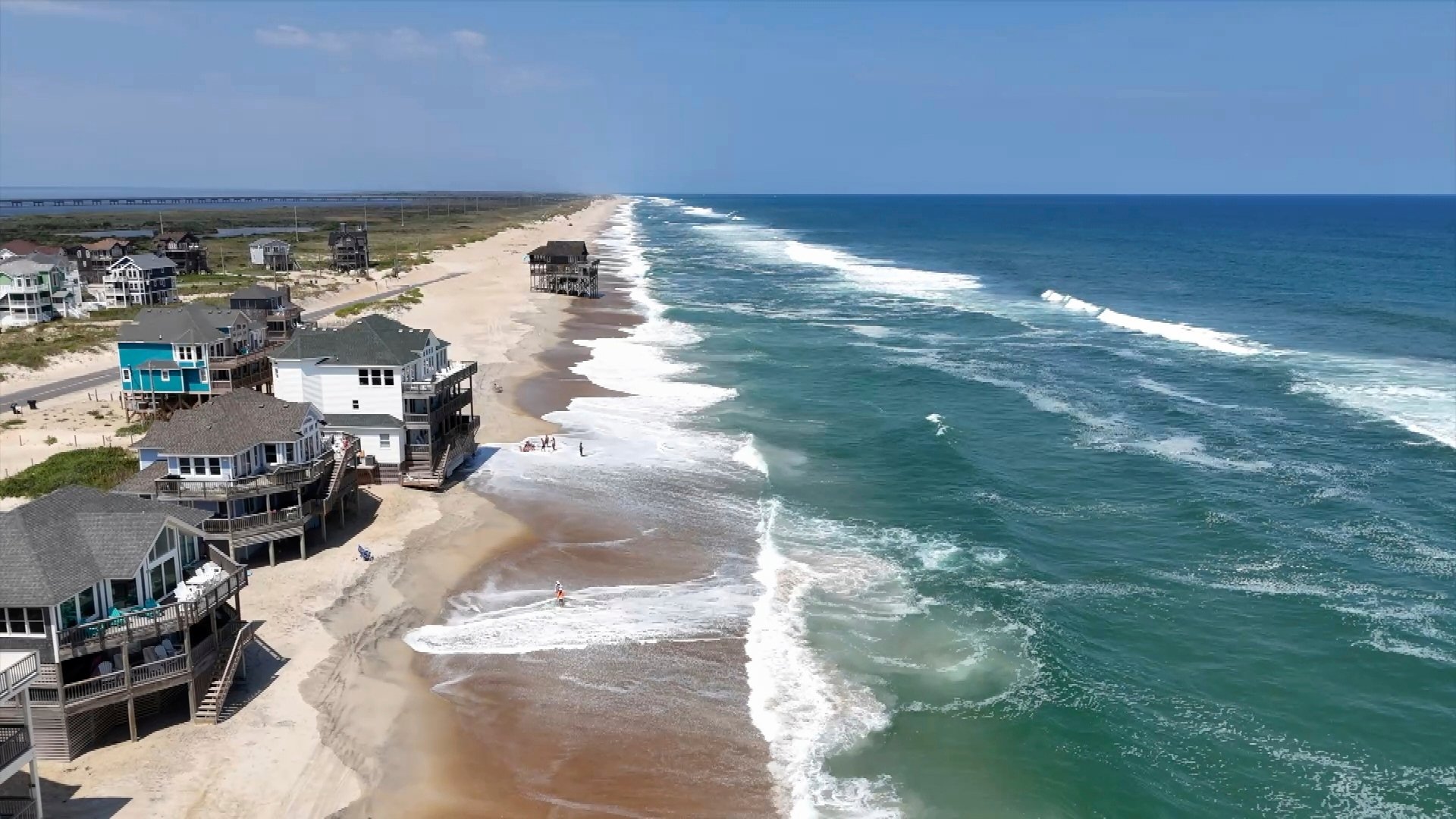
Even though Hurricane Erin isn’t making a direct landfall, its immense power is already causing significant disruptions along the entire East Coast. From Florida all the way up to New England, the storm is generating dangerous conditions, prompting evacuations and widespread alerts.
A Dangerous Storm’s Reach
Having rapidly intensified from a tropical storm to a Category 5 hurricane over the weekend before settling back to a Category 4, Erin’s sheer size is a major concern. Its outer bands have already brought heavy rain to Puerto Rico, leaving approximately 100,000 residents without power, according to Governor Jenniffer González-Colón. The Turks and Caicos Islands and parts of the Bahamas are also under tropical storm warnings, with the potential for flash flooding and mudslides.
The National Weather Service in Morehead City, North Carolina, issued a stark warning: “This is not the week to swim in the ocean.” Dare County Emergency Management in North Carolina declared a mandatory evacuation for Hatteras Island, citing the life-threatening risks from surf and flooding. Officials are emphasizing that even though Erin is expected to stay offshore, the threat of rip currents and high surf along the beaches is very real.
Coastal Impacts and Warnings
Forecasters are predicting waves as high as 20 feet, which will likely lead to extensive beach erosion, particularly along the Outer Banks. Officials have warned that sections of N.C. Highway 12 on Hatteras Island may be impassable for several days due to the severe weather. With August still bringing heavy beach crowds, authorities are strongly urging everyone to heed the rip current alerts and stay informed about the storm’s progression throughout the week.
Have you been affected by Hurricane Erin’s conditions? Share your experience in the comments below!