Tag: Civil Rights Movement

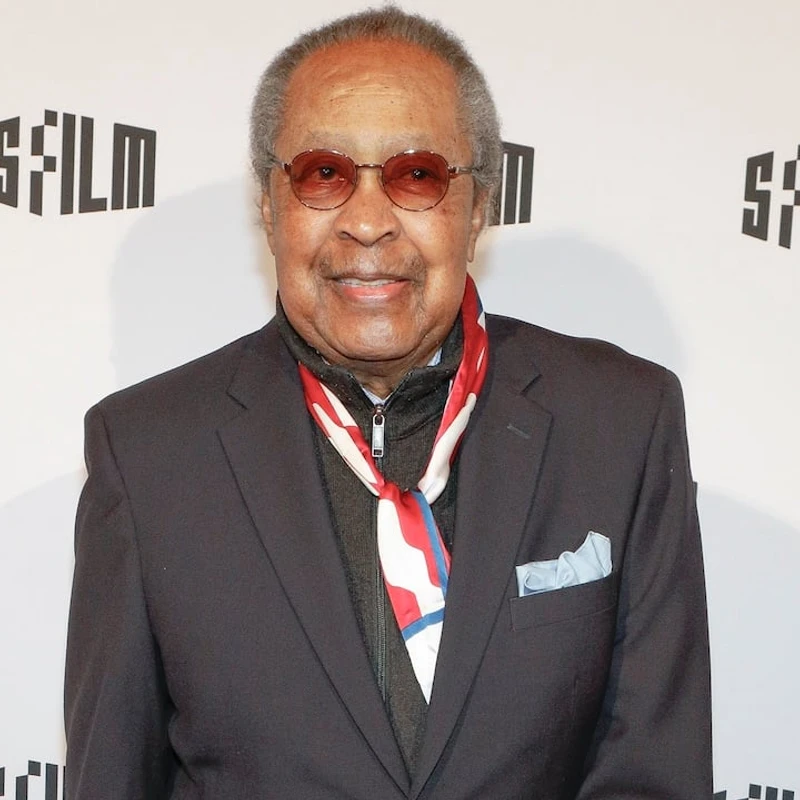
  • Clarence B. Jones, MLK Advisor, Dies at 95

    A towering figure in the fight for civil rights has passed away. Clarence B. Jones, a brilliant lawyer, key advisor to Dr. Martin Luther King Jr., and instrumental in shaping some of the most iconic moments of the movement, has died at the age of 95. His passing marks the end of an era for those who fought for equality and justice.

    A Central Role in History

    Jones’s influence was profound. For eight pivotal years, from 1960 until Dr. King’s assassination in 1968, he served as King’s chief legal counsel and confidant. His contributions extended to helping draft the opening lines of the monumental “I Have A Dream” speech, delivered at the 1963 March on Washington. He was, as described by the University of San Francisco, where he co-founded the Institute for Nonviolence and Social Justice, “a man who stood at the center of history.”

    Beyond his work on major speeches and events, Jones was also entrusted with King’s personal security and privacy, even using King’s name to book hotel rooms to avoid unwanted attention. His close proximity to King and the movement meant he faced intense scrutiny, including having his phones tapped by the FBI.

    From Jail Cells to Academia

    Jones’s dedication was unwavering. He recalled a daring act of sneaking legal paper into Birmingham jail so King could write what would become the powerful “Letter from Birmingham Jail.” King would write furiously on the smuggled pages, which Jones would then discreetly deliver to King’s secretary. This clandestine effort highlights the immense trust and collaboration between the two leaders.

    So many of us owe a great debt to Clarence Jones. He was a brilliant strategist, lawyer, author, and philanthropist. — Rev. Al Sharpton

    Born in Philadelphia in 1931, Jones’s involvement deepened through his legal counsel for the Southern Christian Leadership Conference (SCLC) and its fundraising arm. He also played a role in the landmark “Sullivan v. New York Times Co.” lawsuit, which significantly reshaped libel laws in the U.S. After King’s death, Jones transitioned to academia, sharing his insights with students at Stanford and the University of San Francisco.

    Honors and Legacy

    His lifelong commitment to civil rights and humanitarian efforts was recognized in 2024 when President Joe Biden awarded him the Presidential Medal of Freedom, the nation’s highest civilian honor. This year also saw the release of “The Baddest Speech Writer of All,” a short film produced by NBA star Steph Curry about Jones’s life, set to premiere on Netflix.

    Clarence B. Jones’s legacy is one of courage, intellect, and unwavering dedication to justice. His contributions continue to inspire and resonate, reminding us of the power of one individual to shape history.

    What are your thoughts on Clarence B. Jones’s incredible impact? Share your reflections in the comments below!
  • Montgomery’s ‘A Fine & Dandy Affair’ Heads to Essence Fest

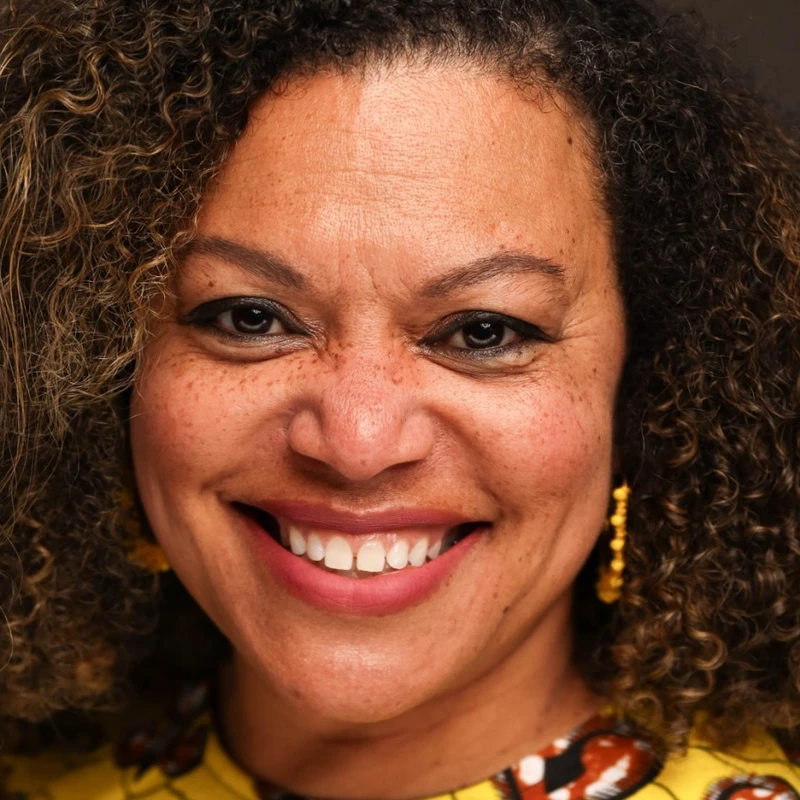
    Montgomery, Alabama, a city steeped in history and resilience, is set to host an event that adds a dazzling new chapter to its cultural landscape. Dr. Jennifer D. Dobbs, the Director of Cultural Affairs for the City of Montgomery, has spearheaded “A Fine & Dandy Affair™,” an event designed to celebrate style, community, and local businesses. Now, thanks to a partnership with Essence, this affair is becoming an official stop on the Road to Essence Festival of Culture®.

    The Vision Behind ‘A Fine & Dandy Affair™’

    The concept for “A Fine & Dandy Affair™” grew from a conversation with Mayor Steven L. Reed, who envisioned raising the visibility of Montgomery’s arts and culture scene. Dr. Dobbs took this vision and developed an event that encourages residents to dress up and celebrate, while also making a significant impact.

    “We need to focus on involving as many businesses and vendors, creatives, and influencers as possible,” Dr. Dobbs explained. The event aims to be more than just a gala; it’s a platform to showcase local talent, from chefs creating artful cuisine to fashion students designing the next generation of Dandy style. The term “affair” itself, which Dr. Dobbs has trademarked, carries an “elevated touch.”

    Understanding Dandyism

    At the heart of the event is the concept of Dandyism, a mindset rooted in self-expression through impeccable style. Originating in the 18th century with the aristocracy, Dandyism has evolved to become accessible to everyone. Dr. Dobbs, a former clothier, sees it as a way to express individuality, politics, art, and rebellion.

    She notes how the 2025 Met Gala theme, “Superfine: Tailoring Black Style,” brought Dandyism into the global spotlight. For Montgomery, with its rich Black history, embracing Dandyism felt like a natural fit. Dr. Dobbs emphasizes that being a Dandy means being thoughtful about one’s appearance and the message it conveys, understanding that “God made them and he’s perfect.”

    A Partnership with Essence

    The collaboration with Essence has been instrumental in scaling the event. Dr. Dobbs described an “instant love” upon meeting the Essence team, recognizing a shared passion for highlighting Black culture. This partnership has made Montgomery an official stop on the Road to Essence Festival, a significant achievement for the city.

    “It’s a big deal. You know why? Because we are the only city this year that is a newbie to the National Series. So all eyes on us and Montgomery is deserving of that,” Dr. Dobbs stated. The partnership brings valuable resources and ideas, creating a “win-win celebration” for Montgomery and Essence.

    “A Fine & Dandy Affair™” is scheduled to take place from May 15–17, 2026, as part of the official Road to ESSENCE Festival of Culture®. It promises to be a vibrant celebration of style, community, and the enduring spirit of Montgomery.

    What does Dandyism mean to you? How do you express your individuality through style? Share your thoughts in the comments below!

  • Andrew Young Recounts ‘Dirty Work’ of Civil Rights

    At 93, civil rights icon and former UN Ambassador Andrew Young is looking back on the less-celebrated, yet crucial, efforts that fueled one of America’s most transformative movements. In a new documentary, ‘Andrew Young: The Dirty Work,’ airing on MSNBC, Young delves into the unglamorous but essential tasks he often undertook alongside Dr. Martin Luther King Jr. during the 1960s.

    The ‘Dirty Work’ Behind the Movement

    Young describes his early role in the movement as handling “the dirty work” – the behind-the-scenes efforts that kept momentum going, even if they didn’t make headlines. When he joined Dr. King’s cause in 1957, his first task was responding to letters sent to King, a role that quickly expanded as King recognized his capabilities. “With that kind of role, you didn’t get to take part in marches,” Young recalled. “You were always in the back of the bus, the back of the line. But I really wasn’t seeking any recognition. I was trying to do some things that no one else would do.”

    His role often involved being an advance man for King’s campaigns. Young would meet with local clergy and business leaders to explain King’s objectives, even if they didn’t agree. This crucial groundwork, often unknown to the public, was vital for the success of demonstrations. He contrasted this with the immediate, widespread response following George Floyd’s death in 2020, where planning circumstances were vastly different.

    From Behind the Scenes to the Spotlight

    One pivotal moment Young recounts in the film occurred during civil rights demonstrations in St. Augustine, Florida, in 1964. King had asked him to avoid confrontation with the Ku Klux Klan while the Civil Rights Act was being debated in the Senate. Instead, Young was beaten, an event that generated public revulsion and ultimately aided the legislation’s passage. “I think it was the most successful ass-whuppin’ I had ever received,” Young wryly recalls.

    After Dr. King’s assassination in 1968, Young initially intended to remain behind the scenes, supporting efforts to elect civil rights advocates to office. However, the climate of danger following the assassinations of King and Malcolm X made others hesitant to run. This led Young to enter politics himself, eventually winning a seat in Congress, being appointed Ambassador to the United Nations by President Jimmy Carter, and later serving as the Mayor of Atlanta.

    Lessons for Today

    Executive producer Rachel Maddow was inspired to create the documentary after hearing Young use the phrase ‘dirty work’ to describe his contributions. She recognized the title and theme immediately. Young’s willingness to share his memories, especially given the limited time left with figures from that era, makes the documentary particularly poignant. Maddow emphasized that bravery in abstract terms is romantic, but living it involves sacrifice, pain, and loss – something Young eloquently conveys.

    Maddow sees enduring lessons for contemporary America in Young’s experiences, particularly regarding internal movement conflicts and the challenges of achieving goals against incredible odds. She believes his example teaches the importance of understanding one’s strengths and capacities for political contribution. Even at 93, Young continues his work, reflecting on his journey and the dream he has lived, partly through sharing these vital reflections.

    What lessons from the Civil Rights Movement do you think are most relevant today? How does Andrew Young’s perspective on the ‘dirty work’ change your understanding of activism? Share your thoughts in the comments below!

  • Emmett Till’s Lynching Gun Displayed 70 Years Later

    Seventy years after the horrific lynching of Emmett Till, the very weapon used in his murder is now on public display. The Mississippi Department of Archives and History recently unveiled the .45-caliber pistol and its holster, marking a somber anniversary and a powerful moment for reflection.

    A Catalyst for Change

    The gun belonged to John William “J.W.” Milam, one of the two white men, along with Roy Bryant, who abducted, tortured, and murdered 14-year-old Emmett Till. The brutal act occurred on August 28, 1955, after Till was accused of whistling at a white woman in a Mississippi grocery store. His body was later found in the Tallahatchie River.

    Despite the overwhelming evidence and witness testimonies, Bryant and Milam were acquitted by an all-white jury. This injustice, however, did not silence the call for change. Till’s mother, Mamie Till-Mobley, bravely insisted on an open-casket funeral, allowing the world to see the horrific brutality inflicted upon her son, galvanizing the burgeoning Civil Rights Movement.

    An Artifact of History and Legacy

    The pistol, authenticated through its serial number matching FBI reports from the case, was anonymously donated by a family in the Mississippi Delta. It is now a central piece of the Emmett Till exhibit at the Mississippi Civil Rights Museum.

    Michael Morris, director of the Mississippi Civil Rights Museum, shared his hope that the display will encourage deep reflection. “To me, that’s the legacy. It’s not just his death. It’s the way that he still finds a way to inspire folks to be the change that they want to see in the world,” Morris stated. The display aims to connect Till’s tragic story to ongoing societal progress and the fight for justice.

    Honoring Emmett Till’s Memory

    The display of this artifact comes at a time when Emmett Till’s legacy continues to be recognized. The U.S. House of Representatives has unanimously passed a bill to posthumously award the Congressional Gold Medal to both Emmett Till and his mother, Mamie Till-Mobley, acknowledging their profound impact on American history and the Civil Rights Movement.

    What are your thoughts on displaying artifacts like the gun used in Emmett Till’s lynching? Share your perspective in the comments below.