Tag: Centers for Disease Control and Prevention

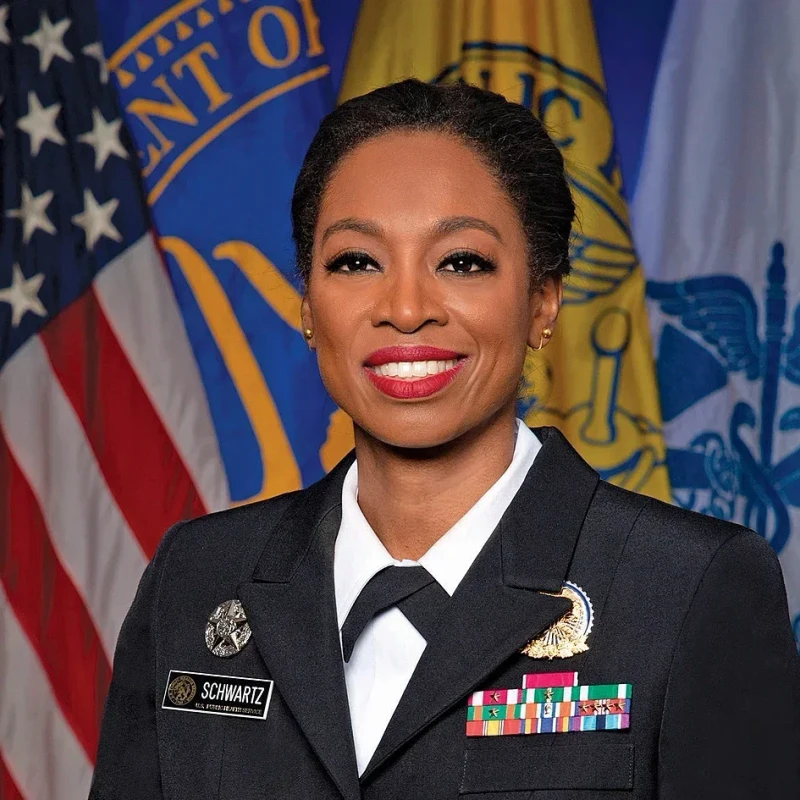
  • Trump Taps Dr. Erica Schwartz for CDC Director

    President Donald Trump has put forward a significant nomination for the U.S. Centers for Disease Control and Prevention (CDC), selecting Dr. Erica Schwartz as his choice for the agency’s permanent director. This move, announced on April 16, 2026, could make Dr. Schwartz the first Black woman to ever head the CDC, marking a potentially historic milestone.

    A Public Health Veteran with Military Experience

    Dr. Schwartz is a seasoned public health professional with a distinguished career that includes service in the U.S. Military. She previously served as Deputy Surgeon General during Trump’s first term, playing a key role in the U.S. response to the COVID-19 pandemic. Her nomination comes at a time when the CDC is navigating complex policy changes and staffing shifts.

    Potential Shift in Vaccine Approach?

    The timing of Dr. Schwartz’s nomination is particularly noteworthy. It arrives shortly after Robert F. Kennedy Jr., the Secretary of Health and Human Services, made supportive remarks regarding vaccine safety during a congressional hearing. Kennedy, who recommended Schwartz and other leadership picks, stated that the measles vaccine is safe and effective for most people. This nomination, coupled with Kennedy’s comments, suggests a possible shift in the administration’s stance on vaccines.

    A Team Poised for Change

    Kennedy expressed confidence in the incoming team, stating, “I think this new team is really going to be able to revolutionize CDC and get it back on track and get it doing the job that it does better than any other health agency in the world.” Other key appointments include Sara Brenner as public health adviser, Jennifer Shuford as deputy director and chief medical officer, and Sean Slovenski as deputy director and chief operating officer.

    Navigating Challenges at the CDC

    Dr. Schwartz’s potential leadership comes as the CDC faces significant challenges, including proposed budget cuts and the need to rebuild public trust. The agency has been operating without a permanent director, with the previous leader removed by Kennedy. Under the Federal Vacancies Act, the role had a deadline of late March to be filled, a deadline that has now passed.

    A Look at Dr. Schwartz’s Extensive Background

    Dr. Schwartz brings a wealth of experience, including 24 years in the U.S. Public Health Service Commissioned Corps and service as a Coast Guard rear admiral. She holds degrees from Brown University and the University of Maryland. Her expertise spans disease surveillance, vaccination programs, pandemic policy, and federal disaster response efforts.

    Her confirmation hearing before the Senate Health, Education, Labor and Pensions Committee will be a crucial step in her potential appointment. If confirmed, Dr. Schwartz will be tasked with guiding the CDC through a critical period, focusing on its core public health mission while adapting to new challenges and strategies.

    What are your expectations for Dr. Erica Schwartz if she is confirmed as the new CDC Director? Share your thoughts in the comments below!

  • US Fertility Rates Hit Record Low in 2025

    The United States is experiencing a significant demographic shift as fertility rates hit a record low in 2025. New data from the Centers for Disease Control and Prevention (CDC) indicates a continuing downward trend, with experts pointing to evolving social dynamics and lifestyle choices as key factors making parenthood seem “less desirable” for younger generations.

    Declining Birth Rates Mirror Global Trends

    Provisional data released by the CDC shows that U.S. birth rates have reached a new low, extending a decline that began nearly twenty years ago. Since 2007, the general fertility rate has dropped by almost 23%. This trend is not unique to the U.S., as many countries worldwide are observing similar patterns of fewer women choosing to have children.

    Phillip Levine, an economics professor at Wellesley College, suggests that factors such as more demanding job markets, increased leisure options, and the heightened intensity of modern parenting contribute to making the decision to have children “less desirable” for younger women. The CDC’s data, based on nearly all birth records processed in 2025, indicates that the number of babies born fell 1% from the previous year to approximately 3.6 million.

    Shifting Demographics by Age Group

    While fertility rates have seen an increase among women in their 30s and 40s over the past decade, these gains have not been enough to counteract the ongoing declines observed in younger age groups. Specifically, the fertility rate for women aged 25-29 decreased by about 4.4% in 2025, whereas the rate for women aged 30-34 saw a modest increase of roughly 2.7% compared to 2024.

    Teen pregnancy rates also continued their downward trajectory, reaching record lows. Rates dropped by 7% for women aged 18-19 and by 11% for younger teens aged 15-17, further contributing to the overall decline in fertility.

    Global Perspective on Declining Fertility

    Research indicates that declining fertility rates are a global phenomenon. Data from the Economic Commission for Latin America and the Caribbean shows that the region now averages 1.8 children per woman, falling below the 2.1 replacement level needed for population stability. This is a dramatic shift from the 1950s when women in Latin America had an average of 5.8 children.

    Sociologists like Martina Yopo Díaz attribute this decline to a growing sentiment where “children, and reproduction more broadly, are playing an increasingly marginal role in the life plans of younger generations.” The pace of this shift in Latin America has been faster than in Europe, even exceeding United Nations projections from two decades ago. Consequently, some countries, including Cuba, Uruguay, and several Caribbean islands, are already experiencing population decline.

    These declining fertility rates have significant societal implications. What factors do you believe are most influential in young people’s decisions about starting a family today? Share your thoughts in the comments below!