
Tag: Black Teachers

  • Black Teacher Appreciation Day: A Legacy of Freedom

    Education is inextricably linked to freedom – that powerful philosophy, championed by historian and educator Carter G. Woodson, lies at the heart of this year’s Black Teacher Appreciation Day. Falling during the national Teacher Appreciation Week, this special day shines a spotlight on the profound and lasting impact of Black educators across the country.

    Celebrating Resistance and Joy Through Teaching

    This year, Black Teacher Appreciation Day, observed on May 7th, coincides with the 100th anniversary of Black History Month. The theme, “Black Resistance and Joy: Celebrating Black Educators and Teaching as a Practice of Freedom,” honors Woodson’s enduring legacy. As Micia Mosely, Ph.D., founder of the Black Teacher Project, stated, Black educators are not just instructors; they are leaders who foster belonging and create inclusive learning environments.

    This celebration is particularly vital given the current climate. Black teachers remain significantly underrepresented in classrooms nationwide, even as discussions around Black history, Critical Race Theory, and DEI initiatives face increasing challenges. Research consistently shows the positive impact of Black teachers, with Black students being 38% more likely to feel a sense of belonging in school when they have at least one Black educator.

    A Legacy of Loss and Resilience

    The journey of Black educators has been marked by both resilience and systemic barriers. Following the landmark Brown v. Board of Education decision in 1954, which declared school segregation unconstitutional, thousands of Black teachers lost their jobs as Black schools were closed and integrated schools often refused to hire them. Experts note that this historical precedent continues to create obstacles for Black individuals pursuing careers in education.

    The “We Need Black Teachers” Campaign

    Black Teacher Appreciation Day is a key part of the Center for Black Educator Development’s (CBED) “We Need Black Teachers” campaign, launched in 2021. This initiative aims to highlight Black educators as mentors and culture bearers, while also advocating for greater institutional investment in their profession. The CBED also announced a $100,000 grant to support groups developing diverse teacher pipelines.

    As Sharif El-Mekki emphasizes, the goal is not just recognition but “real investment in Black educators.” Diversifying and sustaining the teaching workforce is seen as a proven strategy to strengthen schools and improve outcomes for all students.

    Beyond their role as educators, Black teachers often act as surrogate family members, mentors, and cheerleaders for their students. They navigate these crucial roles while facing underresourcing and systemic challenges in their own lives. Mimi Woldeyohannes of CBED highlights that Black educators have always understood teaching as an “act of freedom, resistance, and deep, enduring joy.”

    How do you celebrate the Black educators in your life? Share your stories and appreciation in the comments below!

  • D.C. Teacher Gets Lyft Rides for Teacher Appreciation Week

    Teacher Appreciation Week is a time to honor educators, and this year, a D.C. pre-k teacher received an unexpected and much-needed gift: a week of sponsored rides to and from work, thanks to Lyft. Eliany Puello’s heartfelt plea on social media resonated with many, ultimately leading to a generous gesture from the ride-sharing company.

    A Viral Plea for Support

    Puello, who teaches in Northeast D.C. and relies on rideshares daily, posted on Threads ahead of Teacher Appreciation Week. She directly appealed to Uber, asking if they would consider sponsoring her rides for the week, acknowledging that many teachers face financial constraints. “Is that too much to ask for? THRIENDS… help me make this happen!!!” she wrote, hoping her network would amplify her message.

    While Uber remained silent, their competitor, Lyft, saw the post and responded directly in the comments: “We’re not Ub*r, but we love our teachers! Check your dms.” This quick response turned Puello’s post into an overnight sensation, bringing unexpected attention to her situation and the challenges many educators face.

    The Impact of Community and Corporate Support

    Puello, who identifies as Afro-Latina and has been teaching for six years in an underserved area, expressed her gratitude and surprise. “For Lyft to come through, like, message me directly… I was like, me out of all people? But it feels nice. It feels very nice that they chose me, and I’m able to show up to work easier because sometimes we are pinching pennies as teachers,” she told theGrio.

    Her post has inspired other teachers to share their own stories and seek similar support. Puello emphasized that she doesn’t want to “gatekeep” these opportunities and actively reposts others’ requests, believing in the power of a supportive community. “We don’t gatekeep around here. I like to help other teachers out,” she stated.

    The Importance of the ‘Village’

    Puello hopes her experience highlights the crucial role of the “village” in supporting students, which includes ensuring educators can get to their classrooms. “I feel like when the parents and others feed into the children, it shows,” she explained. “It takes a village to really build up students. So just be there. Support kids as best as you can… you never know how you can impact a child.”

    While Lyft has not announced a broader Teacher Appreciation Week promotion, other deals and discounts are available for educators. These include offers from Chick-fil-A, Chipotle, Whataburger, Buffalo Wild Wings, Nuuly, Rothy’s, Stitch Fix, and Target. Year-round benefits like free Canva Premium for verified teachers and discounts from Tarte and Yeti are also available.

    • Chick-fil-A: Local promotions may be available.
    • Chipotle: Chance to win one of 100,000 free meals (sign up by May 12).
    • Whataburger: Free breakfast for teachers and school staff on May 7.
    • Buffalo Wild Wings: 20% off dine-in orders through May 10.
    • Nuuly: 29% off monthly subscription for verified teachers.
    • Rothy’s: 20% off at checkout.
    • Stitch Fix: $40 off first styling “fix” for teachers.
    • Target: 10% or more off via Target Circle through May 9.
    • Canva: Free Canva Premium for verified teachers (year-round).
    • Peacock: 12 months of Premium for $6.99.
    • Tarte: 40% discount for verified K-12 teachers (year-round).
    • Yeti: 15% off Yeti products via id.me (year-round).

    How are you celebrating Teacher Appreciation Week? Share any great deals you’ve found in the comments below!

  • Black Male Teachers: Unique Paths Through TFA

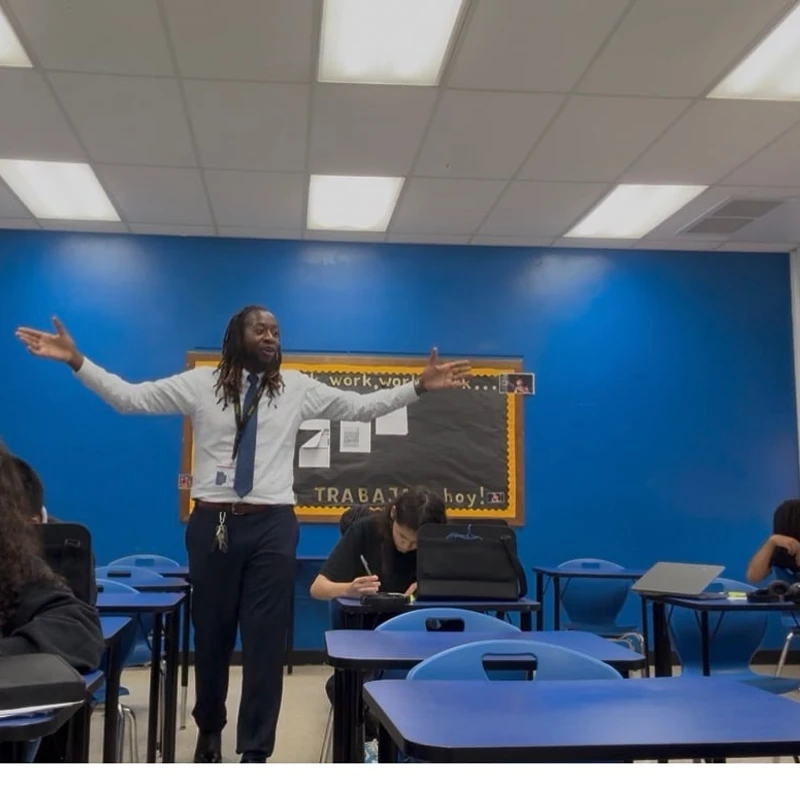
    Have you ever stopped to think about your first Black male teacher? It’s a question that often sparks conversation on social media, highlighting a significant rarity in the education field. Despite studies showing the profound positive impact Black male teachers have on students—boosting graduation rates and fostering long-term success—they remain vastly underrepresented. Yet, through organizations like Teach For America (TFA), unique individuals like Khary Golden and Zahkee Williams are forging distinct paths into the profession, bringing invaluable perspectives and dedication to the classroom.

    The Underrepresentation of Black Male Educators

    The numbers speak for themselves: during the 2020-2021 school year, Black male educators constituted less than 2% of the nation’s 3.8 million teachers. While numbers have seen some improvement, they still lag significantly behind previous years. This scarcity means many students, particularly Black boys, may never have the opportunity to be mentored by someone who shares their background and understands their unique experiences.

    Khary Golden, a native of Camden, New Jersey, understands this challenge deeply. Even as Leon Smith, a Black man, was celebrated as the 2026 National Teacher of the Year, Golden recalls his own pivotal sixth-grade Black male teacher. The interactions he had, both inside and outside the classroom, profoundly shaped his perspective and future aspirations. Now, Golden is paying it forward as a Black male educator himself, driven by a mission to increase the presence of men like him in schools.

    Teach For America’s Role in Diversifying the Corps

    Teach For America has been actively expanding its outreach to attract and support Black male educators. According to the organization, nearly one-third of its teaching corps identifies as Black, and over 58% are people of color—a figure nearly 40 percentage points higher than the national average. This intentional effort aims to address the teacher shortage by tapping into a diverse pool of talented individuals.

    Golden’s commitment extends beyond his first-year teaching role. Previously, he served as an executive director for a teacher pathway and certification program. He dedicated significant effort to advocating at state levels for more homegrown educators, believing that supporting existing talented Black and brown educators in urban schools could be a powerful solution to the teacher shortage. “I believe that we are totally missing the forest for the trees,” Golden shared, emphasizing the potential of providing financial and academic support to finish degrees and certifications.

    Filmmaking to Teaching: Zahkee Williams’ Journey

    Zahkee Williams, another Black male educator with TFA, also took a non-traditional route to teaching, applying his passion for filmmaking to his educational approach. At 23, the Philadelphia native found a connection between directing and teaching during a high school project. “One of the intentions behind this play was to show the administration at my school some of the things that the students were feeling,” Williams explained. He saw his role as a director as bridging the gap between students and administration, helping people achieve a common goal.

    Williams, a graduate of the University of Richmond with degrees in film and leadership studies, recognized the parallels between effective directing and impactful teaching. He understood that when everyone involved operates at their best, magic can happen. This sense of purpose is something TFA actively cultivates, offering meaningful responsibility from day one, as highlighted by a Deloitte survey showing purpose is essential for job satisfaction among young people.

    The Proven Impact of Black Educators

    The importance of Black male educators is backed by compelling data. Studies show that high school students who have just one interaction with a Black male educator are 39% less likely to drop out and 19% more likely to aspire to college. Furthermore, research indicates that Black students who have a Black teacher during their formative elementary years (grades 3-5) see a 33% increase in their graduation rates.

    Both Golden and Williams draw inspiration from their own experiences with impactful Black teachers. Williams fondly remembers his Black Spanish teacher, Mr. Johnson, at Philadelphia’s Central High School, who provided a crucial space for community and connection. Golden recalls Mr. Ward, a science teacher who saw his potential and encouraged him to consider teaching, a moment that crystallized his future path.

    A Continuous Fight for Representation

    Despite the progress and the clear benefits, both Golden and Williams acknowledge the ongoing struggle to increase the number of Black men in the classroom. Golden points to historical context, referencing Leslie Fenwick’s book ‘Jim Crow’s Pink Slip,’ which details how experienced Black educators were often replaced after the Brown v. Board of Education decision, creating a persistent cycle. “It’s been this cycle in our country, in this great experiment together, we build something, and inevitably it gets destroyed,” Golden observed.

    For Golden, a father of three, the motivation is deeply personal: ensuring a positive future for the country. Williams emphasizes the power of incremental progress, encouraging his students to get “1% better every day,” a philosophy that also guides him as a first-year teacher. Their dedication reflects a commitment to not only educating students but also to advocating for a more representative and equitable teaching force for generations to come.

    What impact did your teachers have on your life? How can we better support and recruit Black male educators? Share your thoughts and experiences in the comments below!