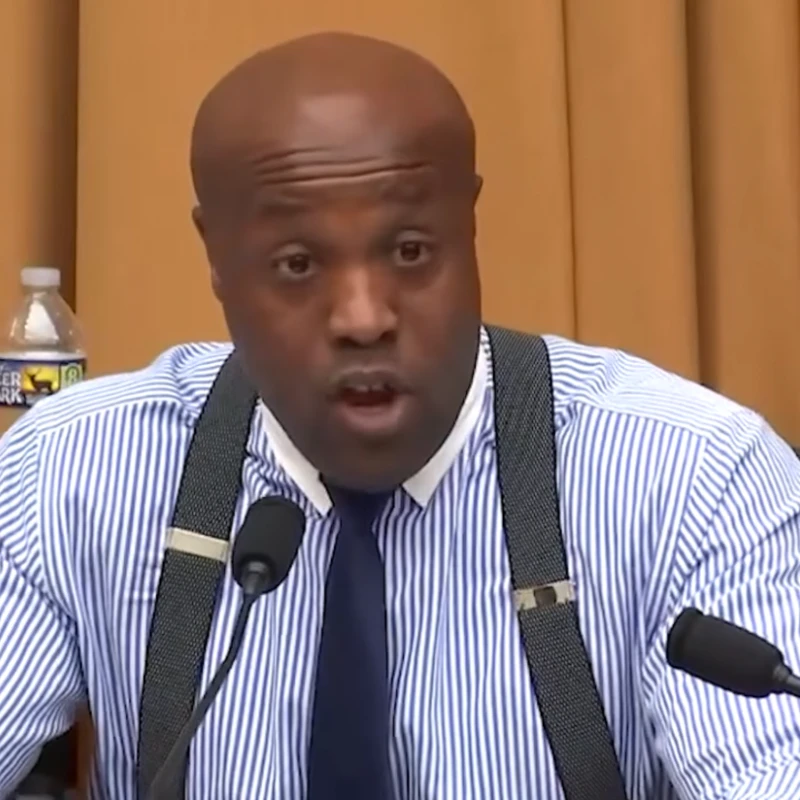
In a recent House Judiciary Committee hearing, U.S. Representative Wesley Hunt, a Black Republican representing Texas’s 38th Congressional District, made waves with his assertion that talk of a new era of Jim Crow is unfounded, declaring, “Racism is over.”
Dismissing ‘Jim Crow 2.0’ Concerns
Hunt, whose term ends in January 2027 after an unsuccessful Senate bid, directly addressed colleagues on the left who suggested that redistricting efforts aimed at diluting the voting power of majority-Black districts signal a return to Jim Crow-like policies. He drew upon his personal history, stating, “As someone who is a direct descendant of a slave, as someone whose great, great-grandfather was born on a plantation, I can assure you, slavery is over.”
He continued, “Jim Crow is dead. When I go anywhere, I don’t see any ‘White Only’ signs. I don’t, I promise you.” Hunt highlighted his own position as a Black man representing a white-majority district in Texas and a conservative Republican, emphasizing his belief in the country’s potential.
Criticism from Advocacy Groups
These remarks have drawn sharp criticism from organizations like People For the American Way. Markus Batchelor, the national political director, accused Hunt of playing a “token” role for former President Trump and prioritizing party loyalty over confronting racial issues. “He has had every opportunity to speak out as Republican legislatures gutted Voting Rights Act protections, carved up Black districts, closed polling places, purged voter rolls, and made voting harder in communities of color,” Batchelor told theGrio.
Batchelor further argued that Hunt’s stance ignores the current political climate. “The message from today’s Republican Party is clear: Black faces are welcome as spokespeople, but Black political power itself is treated like a threat,” he stated. He pointed to the timing of the departure of all four Black Republicans from Congress, coinciding with what he described as “brazen assaults on Black representation since Reconstruction.”
Race, Politics, and Representation
The criticism extends to Hunt’s perceived silence on issues such as attacks on Diversity, Equity, and Inclusion (DEI) initiatives, the demonization of majority-Black cities, and rhetoric surrounding immigrants. Batchelor contends that race has been a central strategy in political movements, citing examples from Trump’s past campaigns and rhetoric. He emphasized that Jim Crow was fundamentally about suppressing Black voices and maintaining political control through racial division, not just about segregation signs.
The debate highlights a significant divide in how racial progress is perceived and the role of political figures in confronting contemporary issues of race and representation. While Hunt believes racism is a relic of the past, critics argue that current policies and rhetoric continue to impact Black communities and political power.
- Rep. Wesley Hunt dismisses ‘Jim Crow 2.0’ claims.
- Hunt states, ‘racism is over,’ citing personal history.
- Critics accuse him of ignoring current racial challenges and party loyalty.
- Advocacy groups highlight attacks on voting rights and Black representation.
- The departure of Black Republicans from Congress is noted.
- Debate centers on the definition and current state of racism.
Do you agree with Rep. Hunt’s assessment that racism is over? Share your perspective in the comments below!