Tag: Black Filmmakers

  • Nina Lee’s Rom-Com Gets Green Light After ‘Tuscany’ Buzz

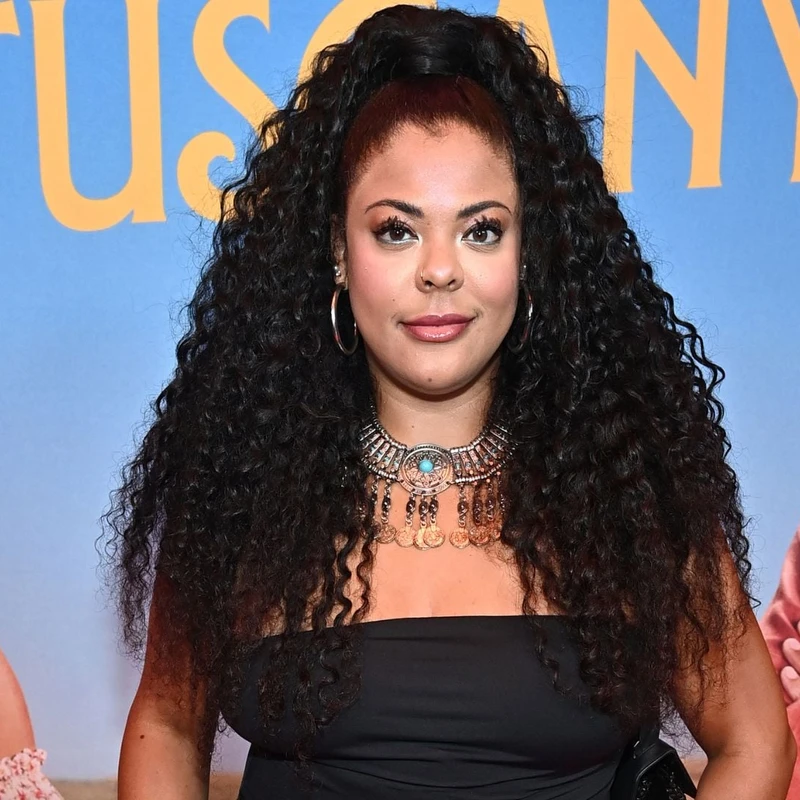
    Remember all that buzz about whether Black romantic comedies could still draw a crowd? Filmmaker Nina Lee found herself at the center of that conversation when she revealed that her own rom-com’s future hinged on the success of ‘You, Me & Tuscany.’ Now, a month later, Lee is back with exciting news, suggesting that the discourse has indeed paved the way for her project.

    From Pressure to Progress: A Viral Moment

    Lee had previously shared on social media that studio executives told her the fate of her completed film, ‘That’s Her,’ depended on how well ‘You, Me & Tuscany’ performed. This sparked a massive online conversation about the unfair pressure placed on Black projects in Hollywood. Lee urged her followers to support the Will Packer-produced film, not just to champion Black creatives, but also because its success could directly impact her own work.

    This week, Lee took to X (formerly Twitter) to share an update, hinting at positive developments. “This random post from Pop Crave really changed the game for me and my film,” she wrote, expressing excitement about sharing new progress in the coming months. It seems the viral moment truly made a difference.

    Hollywood’s Reactive Nature and the Power of Audience Support

    The situation resonated deeply with many, including ‘You, Me & Tuscany’ producer Will Packer and star Halle Bailey. Packer highlighted Hollywood’s tendency to be reactive rather than proactive, emphasizing that audience turnout for diverse films proves their profitability. “Hollywood is a reactive industry, and there is an opportunity to say that this type of film… are profitable and worth making, and Hollywood will make more of them,” he stated.

    Halle Bailey echoed these sentiments, calling the pressure unfair but expressing confidence in the community’s ability to break barriers. “It shouldn’t be like that at all, but I do think that we are known for breaking barriers and not letting anything stop us as a community,” she said. “Her movie is gonna do great, and it’s gonna get greenlit because people want to see our stories on screen.”

    The Impact of Virality and Future Prospects

    Lee admitted that the viral nature of her post brought a mix of nerves and excitement. “I was nervous for what their reaction would be. But then I was excited because it seemed to spark a genuine conversation and connection to them,” she shared. She hopes her experience encourages other creatives to “share your work, talk about your work” and shows executives the significant interest in Black films.

    The success of ‘You, Me & Tuscany’ at the box office—grossing $8.3 million on its opening weekend and $14.4 million after two weeks—demonstrated the audience’s appetite for such stories. Now, all eyes are on Lee’s film, ‘That’s Her,’ which stars Coco Jones and Kountry Wayne as the love interests. Lee assures that the film offers a fresh spin on a familiar storyline, exploring how parental views on love influence dating dynamics, all with a comedic touch.

    Are you excited to see Nina Lee’s rom-com ‘That’s Her’? What other Black-led romantic comedies would you love to see in the future? Share your thoughts in the comments!
  • Filmmaker Revives Historic Black-Owned Film Company

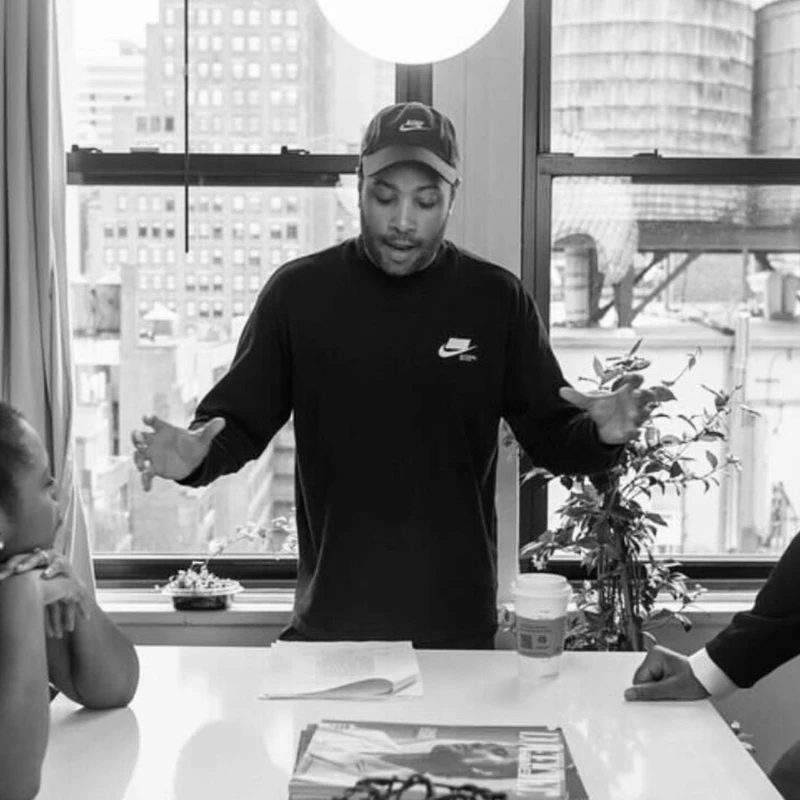
    In 1916, brothers Noble and George P. Johnson made history by founding America’s first Black-owned film production company, the Lincoln Motion Picture Company. At a time when Black people were largely misrepresented or mocked on screen, they created a vital space for positive portrayals. Now, 110 years later, filmmaker Brennan DuBose is reviving this groundbreaking legacy.

    From Finance to Film: A Passion for Storytelling

    DuBose, originally from Maryland and a Howard University graduate, brings a unique blend of social impact investing, finance, art, and history to his work. He was inspired by his time at Howard, a university that validated his dreams and provided a crucial reference point of successful Black filmmakers. “When you go to Howard, you can’t help but be inspired. History is everywhere on that campus,” DuBose shared.

    This inspiration led him to the Lincoln Motion Picture Company. DuBose recognized the company’s dual historical significance: not only was it the first Black-owned production company, but also the first independent one in America. “The Lincoln Motion Picture Company, the original one, was all about telling positive Black stories. It was about sharing stories that kind of combated negative stereotypes,” he explained.

    Reinventing a Legacy with Innovation

    DuBose’s vision for the revived Lincoln Motion Picture Company goes beyond simply retelling positive Black stories. He aims to share relatable human narratives while embracing innovation. “We are a very innovative company. We are 50% research lab and 50% film production company. We’re leveraging both qualitative and quantitative research and data to really kind of shape and hone in on our storytelling,” he stated.

    He plans to incorporate advanced technologies, including artificial intelligence, into the company’s operations, a concept unimaginable to the original founders. This forward-thinking approach mirrors the Johnson brothers’ original pioneering spirit. “The original founders of the Lincoln Motion Picture Company were innovators. They really kind of stepped into their own lane and walked down it. And I think that’s kind of what we’re doing or trying to do with Lincoln Motion today, really kind of create our own lane.”

    As America celebrates its 250th anniversary, DuBose highlights the often-overlooked contributions of Black cinema to the American narrative. He believes “Black history is American history” and emphasizes the importance of acknowledging the past while actively shaping the future. Witnessing recent successes, like “Sinners” and Michael B. Jordan’s Oscar win, inspires him and reinforces his belief in the growing recognition of Black creatives.

    DuBose is currently developing several projects, including a short film titled “The Barber,” more shorts, a documentary on a sports legend, and his first feature film. His focus is on amplifying everyday stories that often go untold by mainstream media, continuing the Lincoln Motion Picture Company’s mission of authentic representation.

    What are your thoughts on Brennan DuBose’s mission to revive the Lincoln Motion Picture Company? How important is it to preserve and promote Black cinema? Share your views in the comments below!

  • Black Creators Injecting Fresh Fear into Horror

    Horror cinema has always been a mirror reflecting societal anxieties, and a vibrant new cohort of Black creators is now holding up that mirror, but with a terrifyingly fresh twist. These filmmakers aren’t just participating in the genre; they’re fundamentally reshaping it, infusing it with their unique cultural textures, lived experiences, and sharp social critiques. From chilling thrillers to unsettling psychological dramas, they’re proving that fear resonates most profoundly when it springs from the heart of real-world struggles.

    Jordan Peele: Ushering in a New Era

    Few have had as significant an impact as Jordan Peele. Transitioning from comedy to horror, Peele’s 2017 directorial debut, “Get Out,” was a game-changer. This film masterfully blended rattling dread with a searing commentary on race in America, igniting what many now refer to as the “Black horror renaissance.” Peele’s approach, centering Black protagonists and weaving in complex cultural layers, challenged the genre’s long-standing tropes and opened doors for a new generation of storytellers.

    His success paved the way for others to explore their own visions within horror. Peele’s brand of terror became a benchmark, proving that horror could be both commercially successful and deeply meaningful.

    Collaborative Voices: Perkins, Oliver, and Story

    Dewayne Perkins, Tracy Oliver, and director Tim Story collaborated on the horror-comedy “The Blackening” (2023). This film cleverly uses satire to skewer racial stereotypes within the genre. Following a group of friends celebrating Juneteenth who find themselves trapped with a killer, the movie forces them into a game that ranks their “Blackness.” After premiering at the Toronto International Film Festival, it garnered significant attention for its sharp wit and subversion of typical horror movie clichés.

    Bomani J. Story also made a notable feature debut with “The Angry Black Girl and the Monster.” This film offers a fresh take on Mary Shelley’s “Frankenstein,” told through the eyes of a teenager grappling with violence and systemic inequities in her neighborhood. Premiering at SXSW, Story uses horror as a lens to explore trauma, societal pressures, and the terrifying nature of living amidst falsehoods.

    Expanding the Definition: Coogler, DaCosta, Jusu, and Diallo

    Ryan Coogler, already acclaimed for “Black Panther” and “Creed,” ventured into horror with his 2025 feature “Sinners.” This film blends folklore with the oppressive atmosphere of 1930s Mississippi, weaving Black history and Southern Gothic aesthetics into a terrifying narrative that expands the definition of “Black horror.”

    Nia DaCosta’s 2021 “Candyman” reimagined the classic tale, resonating with contemporary cultural and economic anxieties in Chicago. The film uses horror to explore Black trauma, gentrification, and enduring myths of violence. Nikyatu Jusu’s debut feature, “Nanny” (2022), is a chilling folk-horror drama that delves into themes of immigration, class, and motherhood through the story of an immigrant nanny in New York.

    Mariama Diallo’s “Master” (2022) offers a psychological thriller set on a predominantly white college campus, confronting racism, elitism, and institutional injustice. By framing these issues within a horror narrative, Diallo provides a fresh perspective on the experiences of women in oppressive environments.

    A Genre Transformed

    These creators, among others, are not just making horror films; they are using the genre as a powerful tool for social commentary, cultural exploration, and personal expression. They are injecting fresh scares, diverse backdrops, and authentic faces into the darkest corners of cinema, proving that horror is a uniquely potent medium when wielded with lived experience and unapologetic imagination.

    Which of these Black horror creators or films has left the biggest impression on you? Share your thoughts and recommendations in the comments below!

  • Chris Stokes: Hollywood’s Prolific Black Filmmaker

    In the fast-paced world of Hollywood, it’s easy for some talents to fly under the radar. But Chris Stokes isn’t just working; he’s dominating! This powerhouse director has quietly achieved a massive milestone, solidifying his place as one of the most active African American directors in the industry today. Even with recent industry challenges, Stokes has kept his foot firmly on the gas, delivering a steady stream of thrillers, dramas, and streaming hits.

    From Music Mogul to Movie Maestro

    Stokes’ journey to cinematic success is fascinating. He first made waves in the music industry, discovering and guiding hit groups like Immature and B2K. This early success gave him a unique understanding of audience engagement, which he masterfully translated to the big screen. His early film projects, including ‘House Party 4’ (2001) and the iconic ‘You Got Served’ (2004), proved his ability to captivate viewers just as effectively as he did with music charts.

    Building a Streaming Empire with Footage Films

    In recent years, Stokes has become a familiar name on Tubi, where his thrillers and suspense films have garnered a massive following. His movie ‘Adopted 1’ even climbed the ranks to become one of the platform’s top three most-streamed originals! This summer, he also made a significant theatrical impact with ‘RUN,’ which premiered in major cities like Atlanta, New York, and Los Angeles on August 29, 2025.

    When creating films the objective is to tell diverse, culturally rich stories with high artistic, creative, technical standards. The cinematography and our actors must be flawless. — Chris Stokes

    The success of ‘RUN’ was echoed by its stars. Actress Drew Sidora praised her time working with Stokes and Footage Films, calling it one of the best on-camera experiences. Annie Ilonzeh, who starred in the sci-fi thriller, also expressed gratitude for the opportunities Stokes provides for actresses to prove themselves.

    What’s Next for This Prolific Director?

    If you think Stokes is slowing down, think again! He has an incredible 6-7 new projects already lined up. Fans can look forward to films like ‘Rockabye’ (starring Annie Ilonzeh) and ‘Twin’ (starring Drew Sidora), alongside ‘Hijack,’ ‘I Didn’t Do It,’ and ‘Nightshift.’ Plus, get ready for ‘Adopted 2’ in October 2025, featuring rising star Jayden Aguirre, Princess Love, and Don Benjamin.

    Looking even further ahead, ‘Leave’ is slated for a theatrical release on MLK Weekend 2026, boasting a cast that includes Shallett Jefferson, V. Bozeman, and Stephanie Barrington. Founded in 2015, Footage Films continues to be Stokes’ creative engine, producing a wide range of content for platforms like BET+, Apple TV+, Prime Video, and UrbanflixTV, all with a focus on culturally rich storytelling.

    What’s your favorite Chris Stokes film? Share your thoughts and recommendations in the comments below!