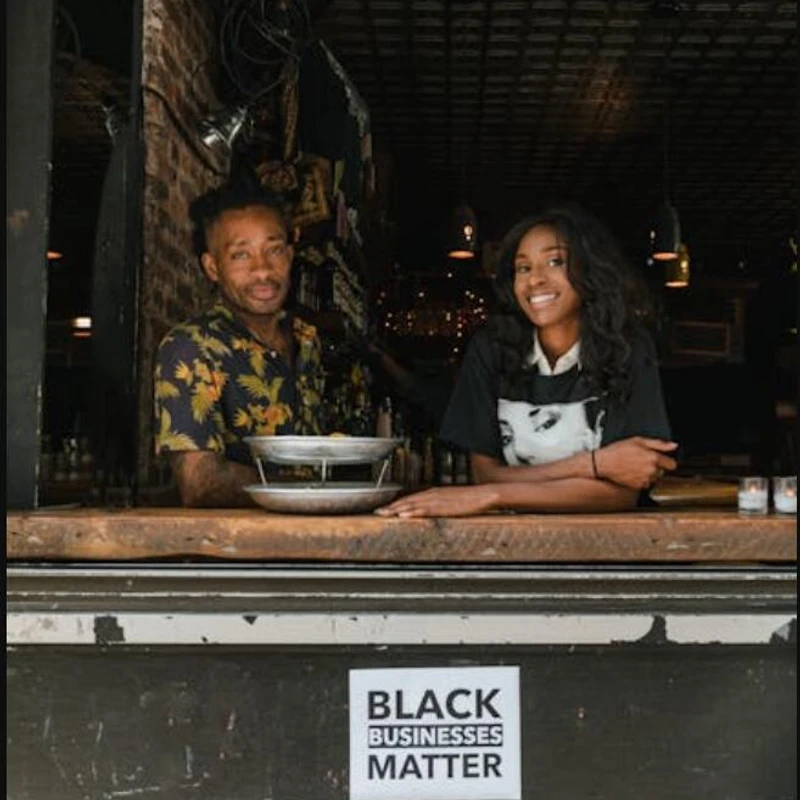
Tag: black business owners

  • Landscaping: Building Roots for Black Businesses

    For Black-owned businesses, a well-maintained exterior isn’t just about curb appeal; it’s about planting deep roots within the community. Investing in beautiful landscaping can significantly elevate a business’s image, increase property value, and foster a stronger connection with customers and employees alike.

    Creating a Polished First Impression

    Think about it: what’s the first thing a client or potential employee sees when they arrive at your business? A thoughtfully designed landscape, complete with colorful plants, inviting walkways, and perhaps even a water feature, creates an immediate sense of professionalism and care. This polished image can make a business stand out in a crowded marketplace.

    Beyond aesthetics, commercial landscaping can boost property value by up to 20%, according to Landscape Workshop. This investment can pay dividends whether you’re leasing space or planning to sell your property down the line. Plus, a more pleasant environment can lead to happier, healthier employees who are less likely to call out sick.

    Embracing Nature and Community Wellness

    Effective landscaping goes beyond just flowers. It involves strategic planning with a landscape architect to incorporate elements like patios, walkways, and lighting that enhance functionality and ambiance. Considering native plants is key, as they are better adapted to the local climate, requiring less water and fewer pesticides, which benefits both the environment and your maintenance budget.

    Incorporating elements like rain gardens can help manage property runoff while creating natural drainage and providing habitats for local wildlife, increasing biodiversity. Using organic mulch not only suppresses weeds but also enriches the soil, supporting the long-term growth and health of your business’s ‘roots’.

    Designing for Diverse Climates and Cultures

    Even in dry climates, beautiful landscaping is achievable through xeriscaping, utilizing drought-tolerant native plants like cacti and succulents, combined with elements like rock gardens and pavers. For Black-owned businesses looking to deepen their connection with the community, landscaping offers a unique opportunity to integrate cultural elements.

    This could involve selecting flora native to ancestral regions, creating gathering spaces that reflect traditional outdoor socialization, or incorporating public art that tells a story of heritage. Such intentional design choices can transform a business’s exterior into a cultural destination, strengthening bonds with the local customer base.

    • Enhance brand image and create a strong first impression.
    • Increase property value and potential for profit.
    • Improve employee well-being and reduce absenteeism.
    • Support local biodiversity with native plants and rain gardens.
    • Incorporate cultural elements to connect with the community.

    Ready to cultivate a more vibrant exterior for your Black-owned business? Explore more business and renovation tips on our website!

  • Amazon’s Generative AI Empowers Black Entrepreneurs

    For generations, Black innovators and entrepreneurs have been at the forefront of cultural and economic change, shaping industries and influencing global trends. However, they’ve often had to build their dreams with limited resources, navigating systems that haven’t always fully supported their contributions. Now, with the rapid advancement of generative AI, Amazon and AWS are stepping in to help level the playing field, creating new opportunities for Black entrepreneurs to innovate and succeed in the digital economy.

    Bridging the Gap: Access and Empowerment

    Dr. Nashlie Sephus, principal AI/ML evangelist for AWS Responsible AI, highlights the core mission: “For me, it’s about access and empowerment.” Generative AI offers sophisticated tools, previously only accessible to major enterprises, to Black professionals without the need for massive infrastructure. This empowers them to shift from being mere consumers of technology to becoming creators and owners of new businesses and platforms.

    Amazon and AWS see generative AI as a crucial bridge, transforming imagination into tangible execution. The goal is to reduce the barriers that have historically hindered underrepresented innovators. Services like Amazon Bedrock and Amazon Q are designed to be user-friendly, allowing individuals with any skill level to build, test, and scale their ideas using natural language, rather than complex coding.

    Leveling the Playing Field for Small Businesses

    Generative AI is fundamentally changing the landscape for small businesses. Entrepreneurs who once needed large teams to compete can now leverage AI to automate tasks like marketing, forecast demand with greater accuracy, and design new products much faster. Dr. Sephus describes this as a “transformational” shift, especially for founders juggling multiple responsibilities.

    Imagine a startup founder in Detroit or Jackson, Mississippi, being able to build tools that previously required an entire engineering department. This levels the competitive playing field, proving that “small doesn’t have to mean limited.” Diya Wynn, principal responsible AI lead at AWS, adds that generative AI enables small businesses to offer customer experiences rivaling Fortune 500 companies, allowing them to compete based on the strength of their ideas, not just their budgets.

    Building a Responsible and Inclusive Future

    As AI becomes more integrated into business operations, Amazon and AWS are deeply committed to developing it responsibly. Their framework prioritizes fairness, transparency, and inclusivity from the initial model development to deployment. Tools like AI Service Cards and guardrails within Amazon Bedrock help ensure ethical and safe AI outputs.

    Wynn emphasizes that responsible AI is people-centric, focusing on education, transparency, and the diversity that mirrors AWS’s global customer base. Diverse teams, data, and perspectives are crucial for ensuring technology serves everyone. “Bias doesn’t disappear on its own,” Dr. Sephus notes. “At AWS, we actively test, audit, and refine our models. Technology plus community is where transformation happens.”

    Amplifying Creativity and Ownership

    For Black innovators, generative AI is more than just a technological leap; it’s an opportunity to amplify their unique cultural perspectives and enhance ownership. It accelerates the process of turning ideas into reality, opening new avenues for entrepreneurship and creative expression. “Black innovators already bring unique cultural and lived perspectives to the table,” says Dr. Sephus. “Generative AI gives those voices a megaphone. It’s about scale, visibility, and impact.”

    Wynn encourages viewing generative AI not as a replacement but as a supplement. “For too long, we’ve been told to adapt to systems that weren’t built with us in mind. This moment is different. We have the chance to shape it.” By combining responsible innovation with intentional inclusion, Amazon and AWS are paving the way for a future where every creator and entrepreneur has the tools to build a lasting legacy.

    How do you see generative AI impacting entrepreneurship in your community? Share your thoughts on this transformative technology in the comments below!

  • Kevin Hart: Friends’ Ideas Were ‘Worst Investment’

    Kevin Hart, the globally recognized comedian and entrepreneur, has shared some candid reflections on his past business decisions, particularly his experiences supporting his friends’ ventures. In a past appearance on James Corden’s ‘The Late Late Show’ in 2022, Hart described backing his friends’ business ideas as his “worst business investment” and an “endless pit of bankruptcy.”

    The Pitfalls of Friend-Focused Investing

    Hart explained that his desire to help his friends achieve success, similar to his own journey in entertainment, led him to invest in their ambitious ideas. However, he found that many of these ventures simply didn’t take off as hoped. “You never want your friends to feel like their ideas are not good ideas, but thus far, these ideas have been an endless pit of bankruptcy,” he admitted.

    He specifically recalled one failed invention: a pair of headphones that could also transform into speakers. While initially intrigued by the innovation, the product never gained traction, resulting in a significant financial loss for both Hart and his friend. “In the beginning, they were just headphones, and people could enjoy them normally,” Hart recounted. “But then if you wanted to make everybody else listen, they opened up … That’s the worst invention I’ve ever put money into.”

    Shifting Focus to Strategic Support

    While Hart has become more discerning about investing directly in friends’ unproven ideas, he continues to leverage his influence and resources to support entrepreneurs. His own Gran Coramino Tequila launched a program offering over $1 million in grants to Black and Latinx business owners through a partnership with Local Initiatives Support Corporation (LISC). Furthermore, his Hartbeat Ventures co-launched an AI Illumination Grant to support Black founders in emerging technologies.

    With an estimated net worth of $400 million and his production company, HartBeat Productions, Kevin Hart remains a powerful figure in the media and business world. His journey, including the lessons learned from his less successful investments, demonstrates a commitment to making a positive impact and fostering diversity across industries.

    Lessons Learned from Failed Ventures

    • Kevin Hart invested in friends’ business ideas, calling it his ‘worst investment’.
    • He described these ventures as an ‘endless pit of bankruptcy’.
    • A specific example includes headphones that doubled as speakers, which failed to launch successfully.
    • Hart now approaches investments more cautiously but still supports entrepreneurs.
    • He actively funds Black and Latinx business owners through programs like the Coramino Fund.

    Hart’s candidness about his investment struggles offers valuable insight for aspiring entrepreneurs and investors alike, emphasizing the importance of due diligence and strategic decision-making, even when personal relationships are involved.

    What are your thoughts on Kevin Hart’s experience with investing in friends’ businesses? Have you ever faced similar challenges? Share your stories and opinions in the comments below!